



Antique Serving Tray Table
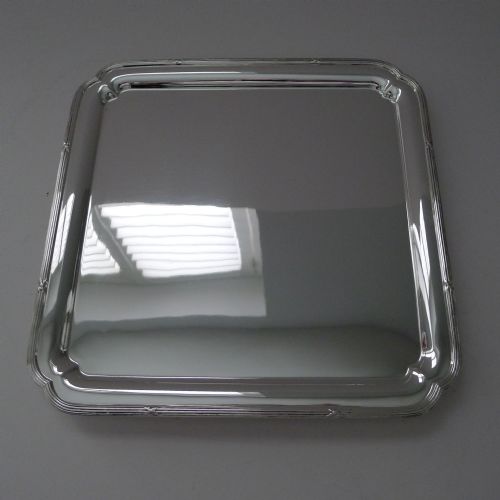
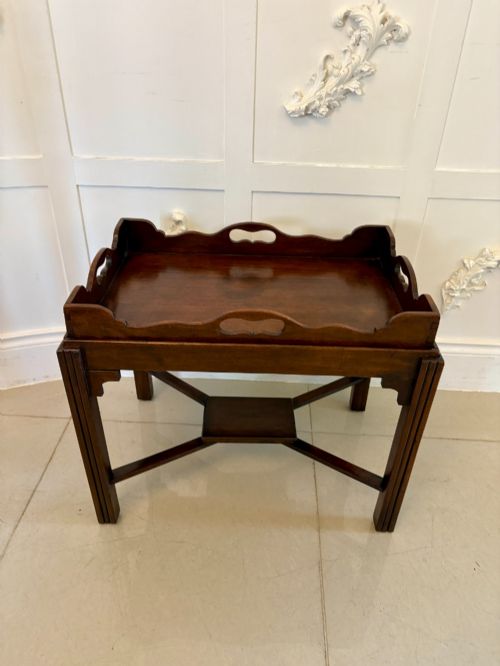
An antique serving tray table brings together a portable tabletop and a folding base to create a versatile surface for drinks or display.
Antique Serving Tray Table
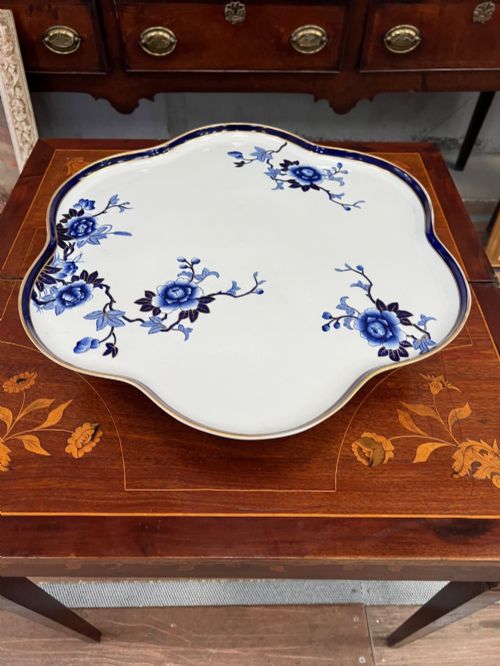
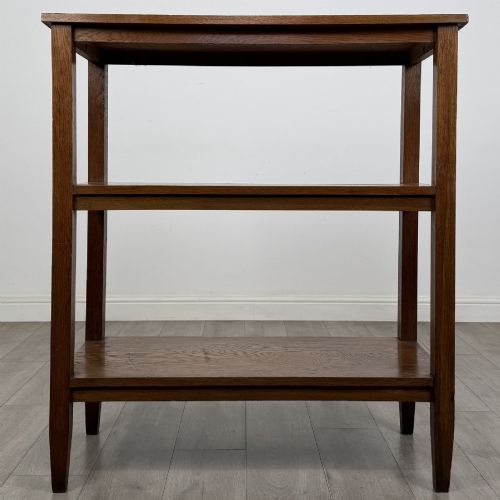
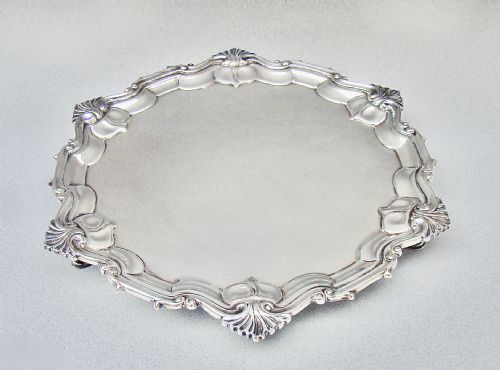
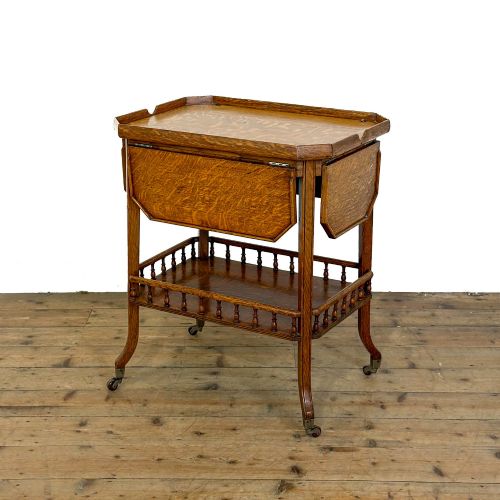
When you search for an antique serving tray table, you find a collection of pieces designed to serve food, tea, and drinks before transforming into functional accent furniture. These objects combine a removable tray top with a supporting stand, offering a dual-purpose design that adapts easily to modern rooms. The items available include tray tables, occasional tables, coffee tables, and side tables.
The pieces on this page span the Georgian, Regency, Victorian, and Edwardian periods, stretching from eighteen hundred to nineteen hundred and ten. You will encounter traditional wooden constructions alongside painted metal and engraved brass tops resting on folding or fixed stands. Each variation reflects the changing domestic habits of British and international households across multiple centuries.
How they were made
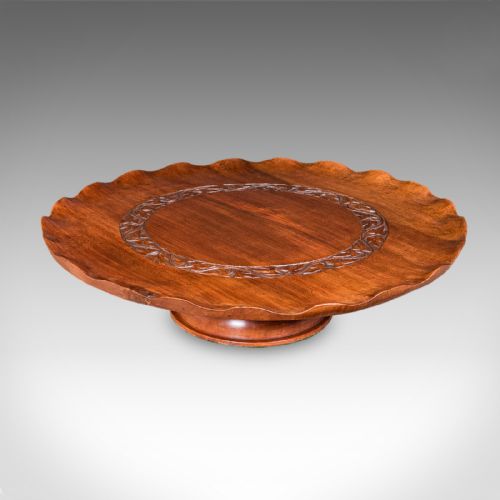
Cabinetmakers and metalworkers utilised materials such as mahogany, Cuban mahogany, walnut, oak, solid ebony, sheet iron, brass, copper, and wood. Trays were constructed using sturdy timbers for raised rims and handles, often paired with matching folding stands designed for easy storage.
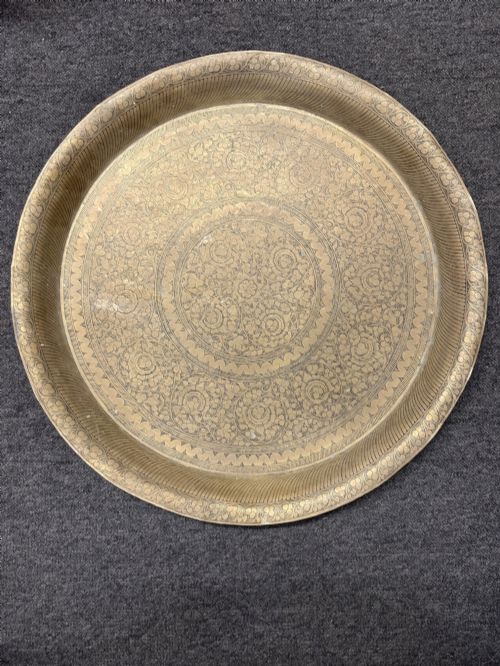
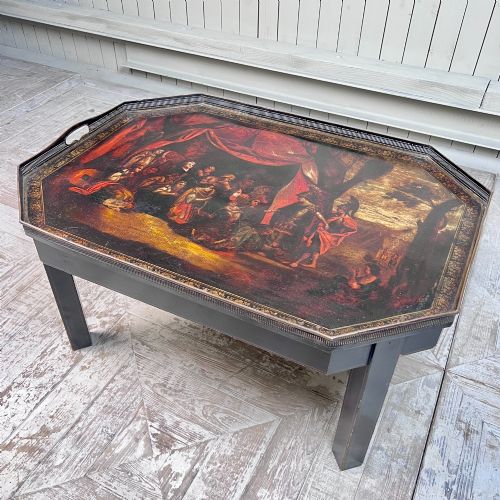
Surface decoration involved careful paintwork, gilding, and intricate metal engraving. Painted tole trays and brass surfaces show detailed ornamentation, while wooden versions highlight the natural grain of polished mahogany and walnut.
Antique Serving Tray Table Retail Price Guide 2026
Typical asking prices for serving tray table among the pieces listed under this phrase on Sellingantiques today, from the lower quarter to the upper quarter. They describe what is for sale here now, not the wider market.
Listings feature mahogany, brass, walnut, and sheet iron across Victorian, Regency, and Edwardian periods.
What varies in quality
Quality rests in the choice of timber and the precision of the joinery between the tray gallery and its base. Dense hardwoods like Cuban mahogany and solid walnut command attention for their weight and durability.
The refinement of the decorative finish distinguishes finer examples from simpler utility pieces. Hand-engraved brass work, crisp gilding, and well-executed painted details elevate the visual presence of the entire assembly.
The Antique Serving Tray Table Glossary
- Tole
- Painted sheet metal used to form decorative serving trays. This material allowed for colourful hand-painted scenes and durable surfaces.
- Butlers tray
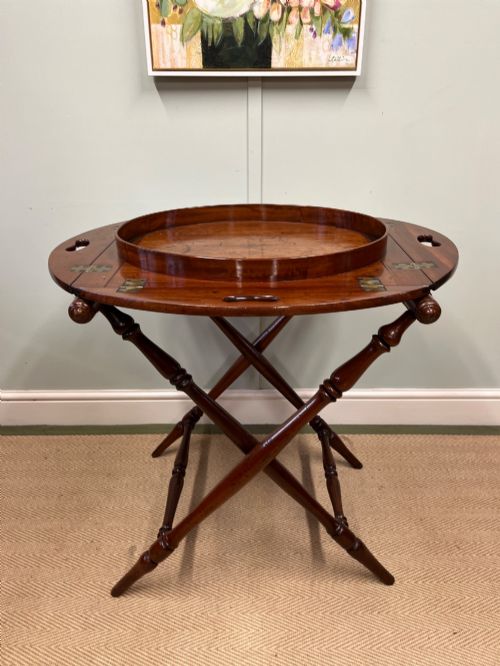
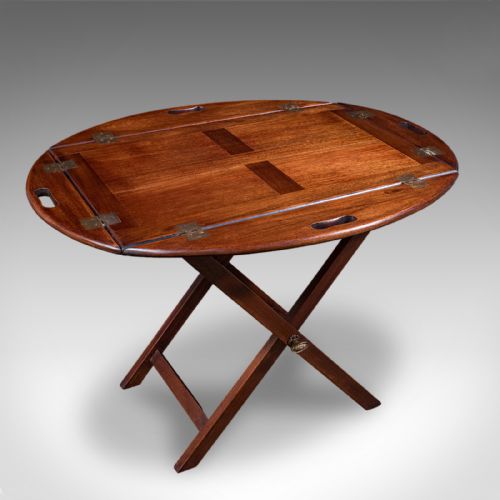
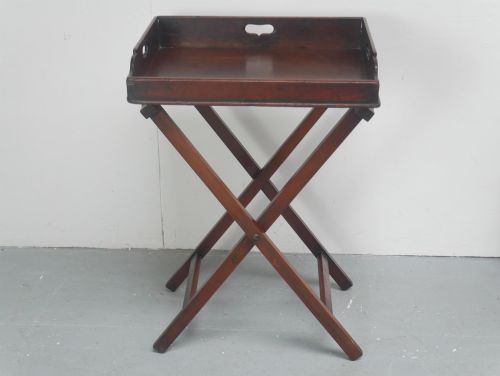
- A removable wooden tray featuring raised sides, often with cutout handles for lifting. It typically pairs with a folding X-frame stand.
- Gallery
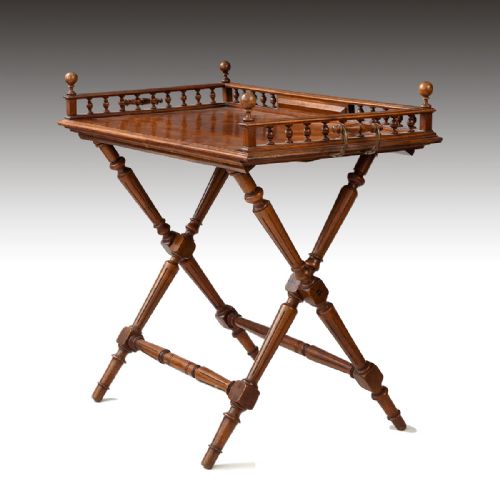
- The raised border surrounding the edge of a tray. This feature prevents glasses and cups from sliding off during transport.
- Stand
- The folding or fixed base that supports the removable tray top at table height. Many examples utilise X-frame designs for compact storage.
Antique Serving Tray Table: Frequently Asked Questions
What is a tray table used for?
These pieces function primarily as movable surfaces for serving drinks, tea, and food in domestic settings. The removable top allows a servant or host to carry items from the kitchen to the parlour before mounting the tray onto its stand.
In contemporary spaces, they serve as occasional tables, coffee tables, or display stands. Their dual nature makes them practical for rooms where floor space requires flexible furniture arrangements.
How do I identify the period?
Dating relies on observing the timber species, construction methods, and decorative styles visible across the piece. Georgian and Regency examples often feature plain or Cuban mahogany, while Victorian and Edwardian items introduce walnut, oak, and brass elements.
Cabinetmaking techniques and edge profiles on the trays also shift over time. Comparing the hardware, paint application, and stand joinery helps place the object within its specific era.
Are the trays removable?
Yes, the defining characteristic of these tables is the detachable tray top resting on an independent base. This construction allowed historical households to carry the tray independently of the support frame.
Most stands feature shaped rails or ledges designed to hold the tray securely in place when assembled. This mobility separates them from standard fixed-top occasional tables.
Where were these tables made?
The pieces originate from various regions, encompassing English cabinetmaking traditions as well as continental European workshops and international trade items. British workshops produced numerous mahogany and walnut butler trays during the nineteenth century.
Other examples incorporate imported materials and designs, such as brass Benares trays from overseas trade. This variety reflects the global reach of interior furnishing styles during the Victorian and Edwardian eras.