





Folding Butler Stand
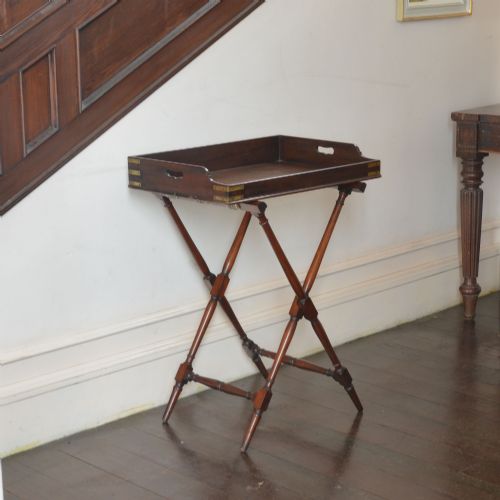
A folding butler stand brings portable serving history into a room, offering a removable tray atop a collapsible wooden base.
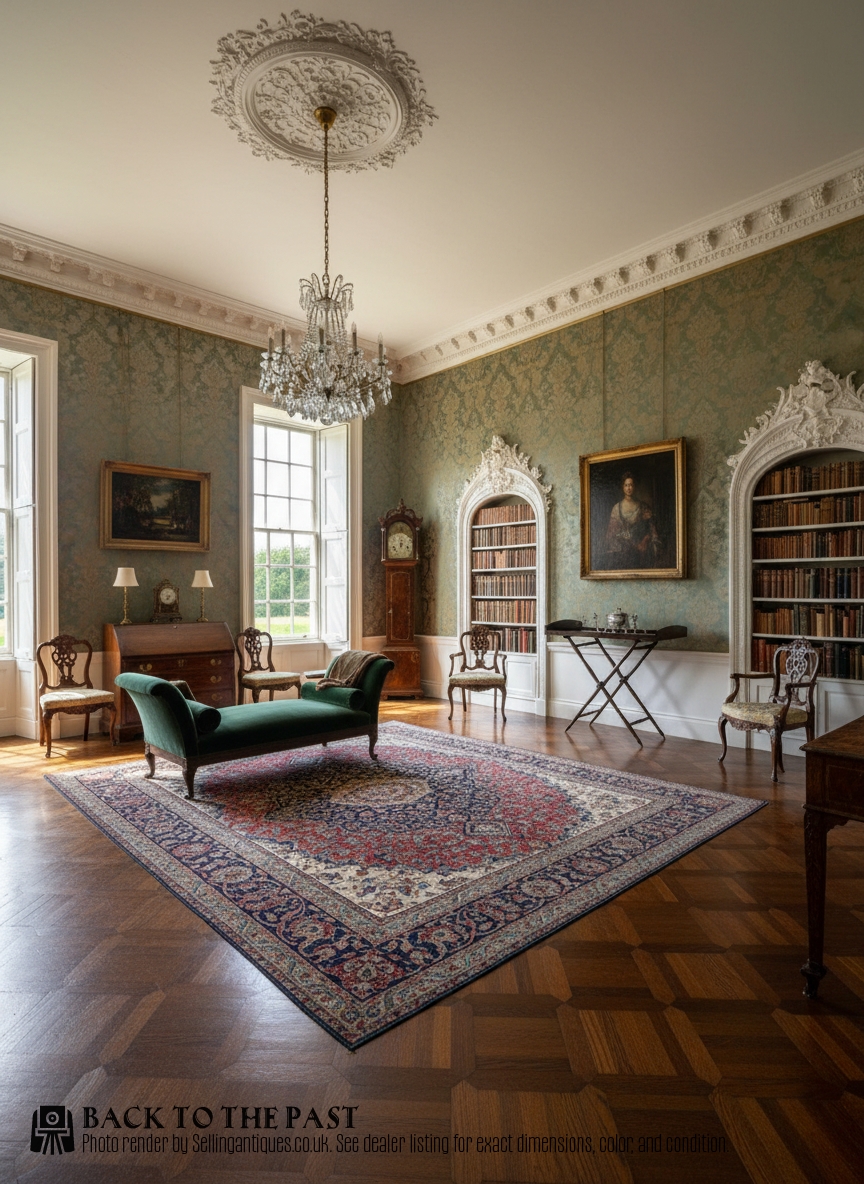
Folding Butler Stand
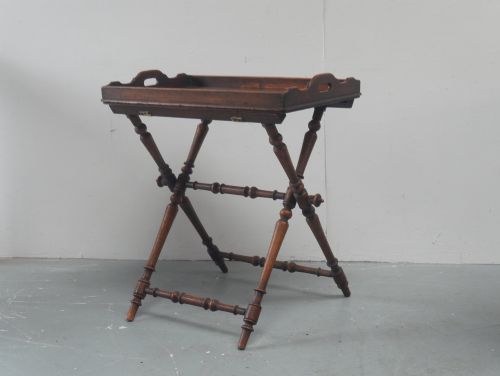
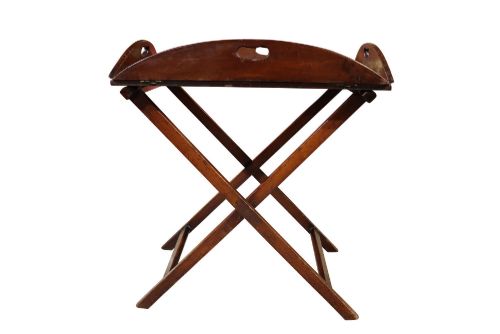
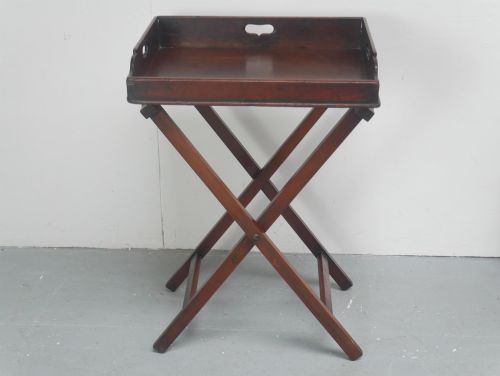
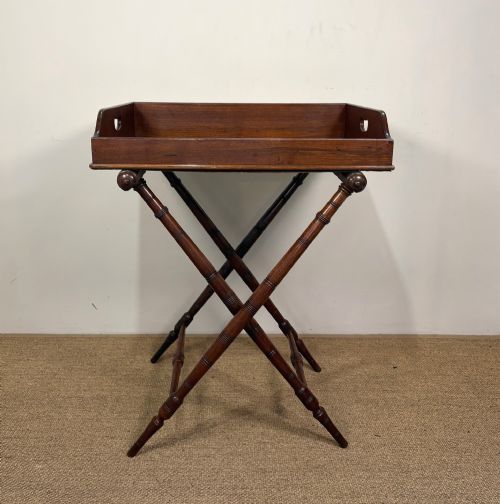
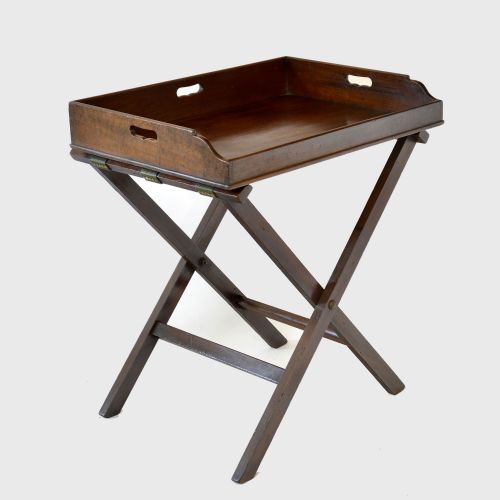
A folding butler stand consists of a removable serving tray paired with a collapsible support frame designed for easy storage and movement. These pieces served domestic households during the Georgian, Regency, and Victorian eras for carrying food, tea, and drinks.
The most common examples encountered on this page date from the nineteenth century and use mahogany as the primary wood. Variants also appear in walnut, rosewood, oak, pine, ebony, and oriental teak.
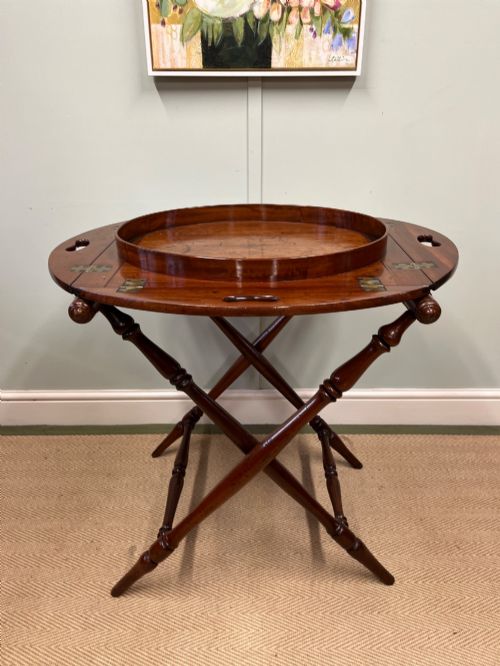
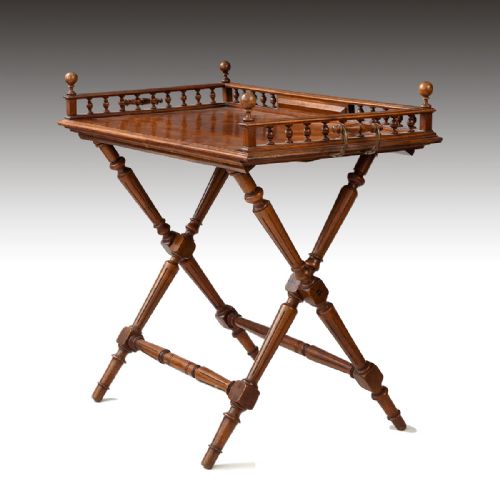
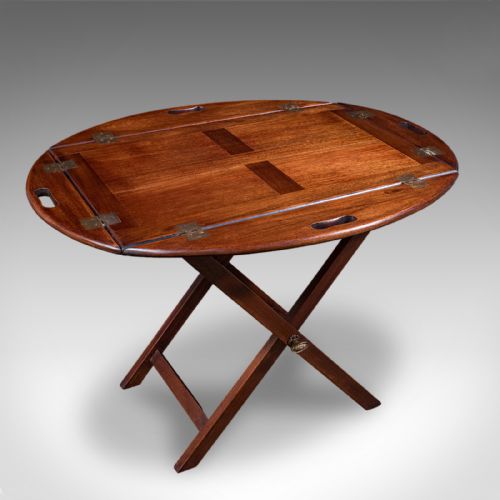
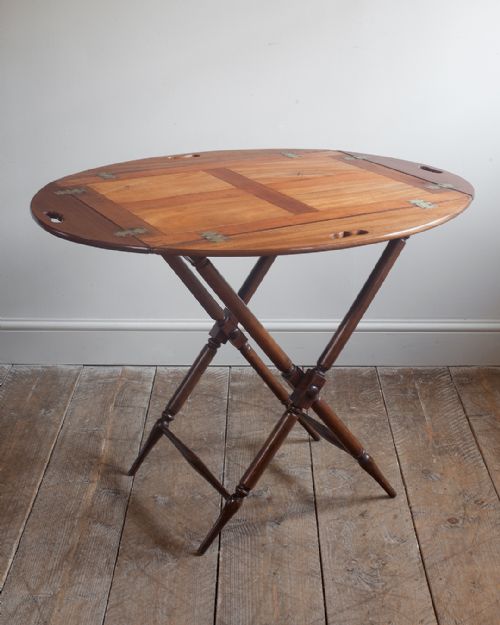
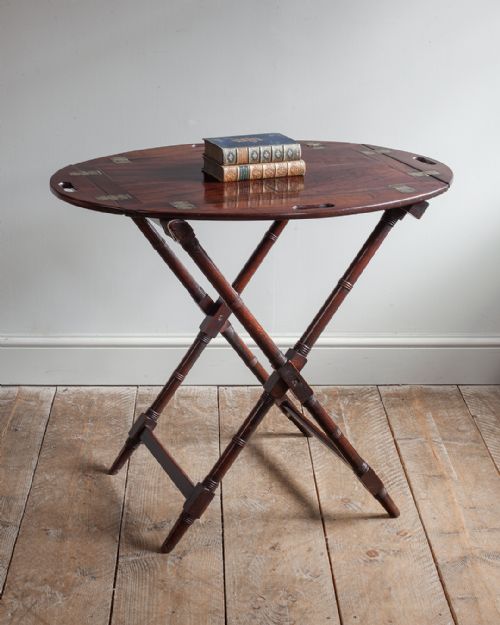
Forms range from simple rectangular trays with hinged sides to oval and carved serving surfaces resting on turned or X-frame folding stands. Many survive as occasional tables, side tables, and tray tables suitable for modern living spaces.
Materials and Construction
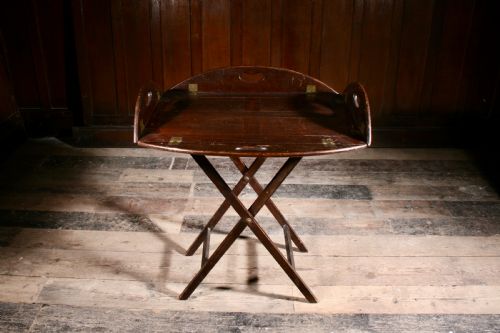
Joinery on these stands relies on traditional turning and hinged mechanisms that allow the wooden frame to collapse flat when not in use. Trays frequently feature hand-cut handles, shaped rims, and occasionally hinged sides for flexible serving configurations.
Cabinet makers utilised dense hardwoods such as mahogany, walnut, and rosewood, alongside durable utility timbers like oak and pine. Fabric webbing sometimes supports the structure or tray base within the folding frame.
Folding Butler Stand Retail Price Guide 2026
Typical asking prices for folding butler stand among the pieces listed under this phrase on Sellingantiques today, from the lower quarter to the upper quarter. They describe what is for sale here now, not the wider market.
Some trays feature folding sides that drop down like miniature drop-leaf tables, perfect for when the tea service suddenly expands.
Judging Quality
The distinction between standard examples and superior pieces rests on timber selection and the crispness of the turning on the stand. Rich grain figures in mahogany and rosewood elevate the visual presence of the tray.
Originality remains paramount, distinguishing pieces that retain their matching folding stand from those assembled from associated parts later. Finer items display careful attention to the hinges, handles, and structural stability of the folding mechanism.
The Folding Butler Stand Glossary
- Butler's tray
- A removable wooden tray with raised sides, often featuring cut-out carrying handles, designed to sit upon a separate support frame.
- Folding stand
- A collapsible wooden base, frequently constructed with turned legs or an X-frame, intended to support a serving tray.
- Hinged sides
- Tray edges that drop down on metal hinges, allowing the surface to convert from an enclosed tray to a flat tabletop.
- Campaign furniture
- Portable furnishings built for travel and easy dismantling, sharing functional folding mechanics with butler stands.
- Turned legs
- Wooden supports shaped on a lathe to create decorative rings, columns, or tapering profiles on the stand.
Folding Butler Stand: Frequently Asked Questions
What is a folding butler stand?
A folding butler stand is a portable piece of antique furniture comprising a removable serving tray and a collapsible wooden base. They were originally used by domestic staff to serve tea, food, and drinks before being folded away.
Today, these pieces function well as versatile occasional tables or side tables in living rooms and kitchens. Their dual-part construction allows owners to move the tray independently from the stand.
How do I date a folding butler stand?
Dating relies on timber choices, construction techniques, and the style of the turned legs on the stand. Georgian and Regency pieces typically feature dense mahogany with simple, elegant lines, while Victorian examples introduce rosewood, walnut, and carved details.
Later nineteenth and early twentieth-century versions often incorporate pine, oak, or different webbing materials. Checking for original matching components helps confirm the period of manufacture.
Are the trays removable?
Yes, the defining feature of these pieces is that the tray lifts off the folding support frame entirely. This design allowed servants to carry the tray into a room and place it directly onto the opened stand.
In modern use, this means you can lift the tray to serve guests before returning it to the base. The base itself folds flat for compact storage when not in use.
How do I use one in a modern home?
These stands fit easily into contemporary spaces as side tables, cocktail servers, or display surfaces for plants and books. Their compact footprint makes them practical for smaller rooms where flexibility is useful.
Leaving the stand folded in a cupboard while using the tray separately offers another way to display the antique woodwork. The variety of woods available allows them to complement both traditional and modern interiors.