
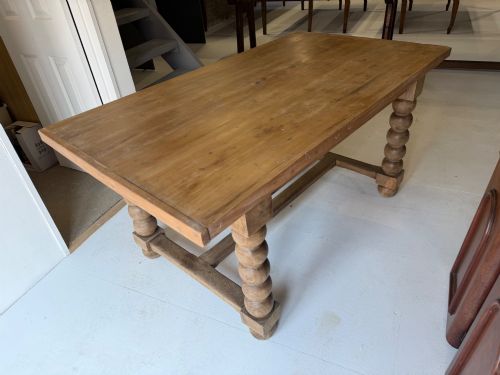
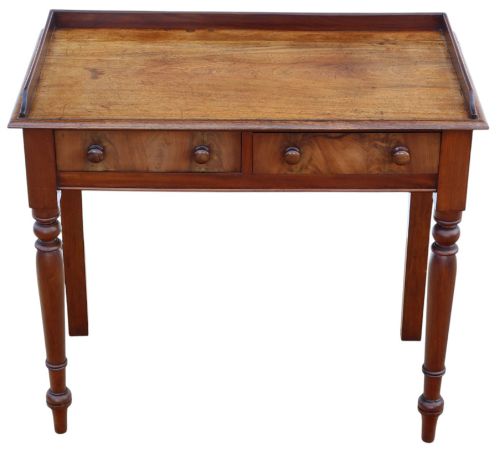
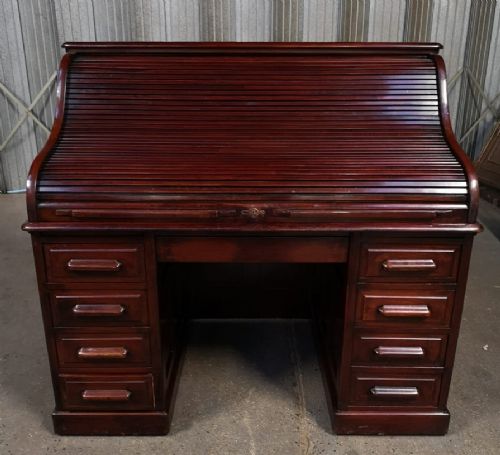
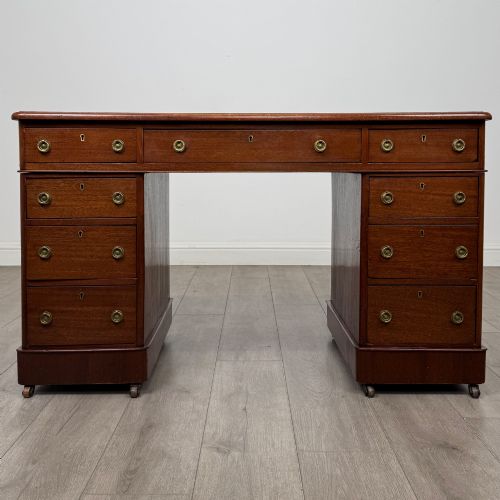

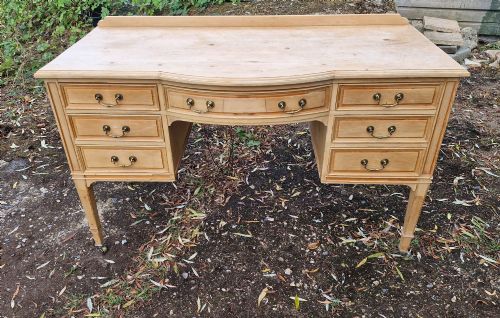
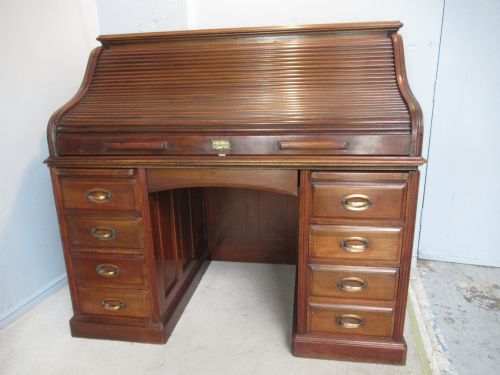
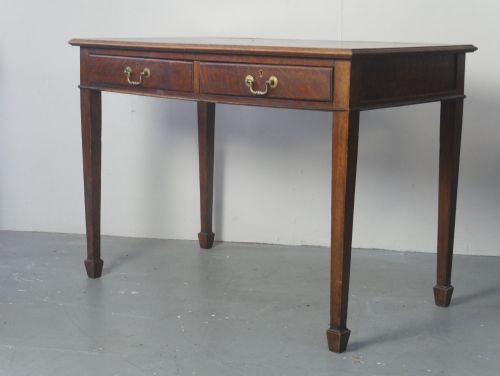
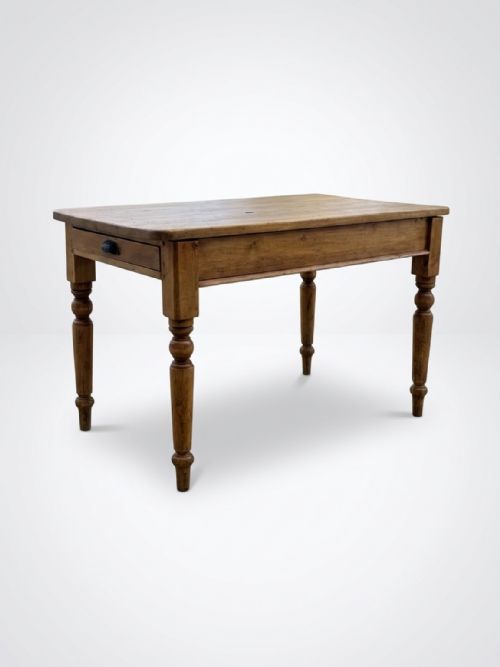
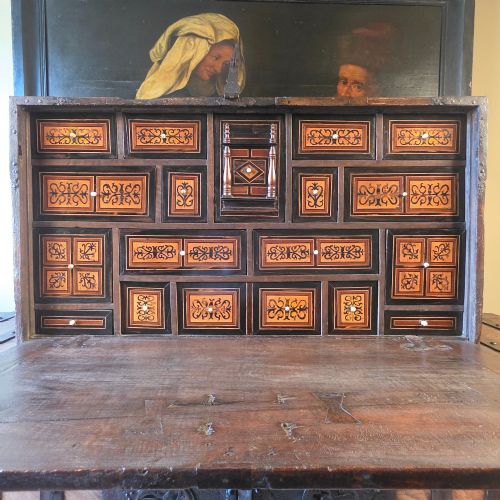
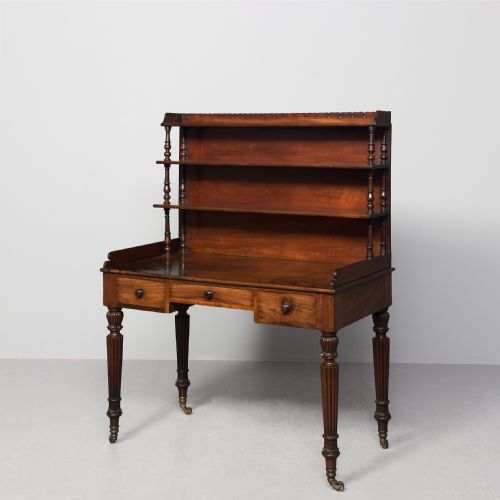
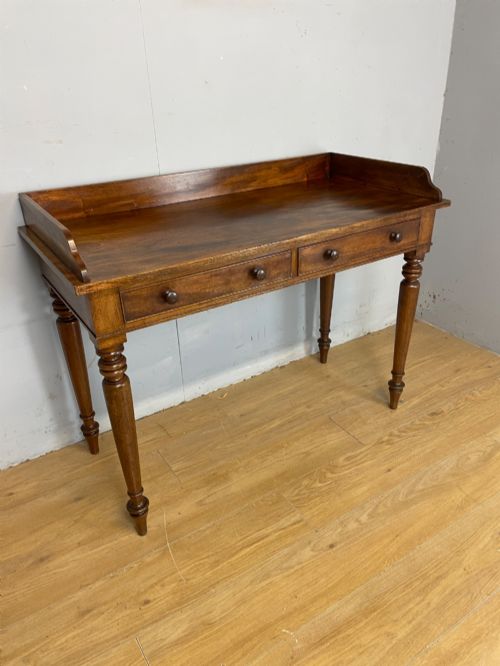
Antique Wooden Writing Table
An antique wooden writing table brings honest craft and a working surface into a room.
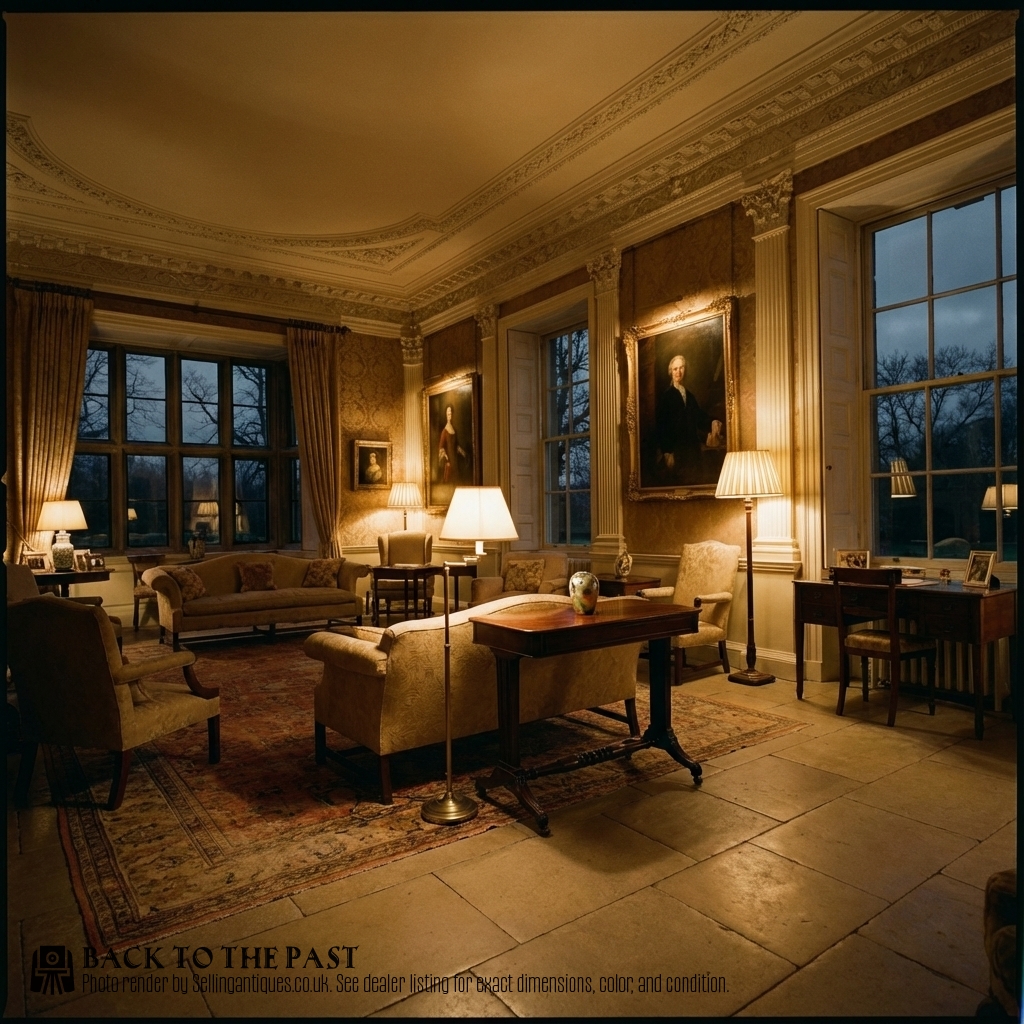
The antique wooden writing table
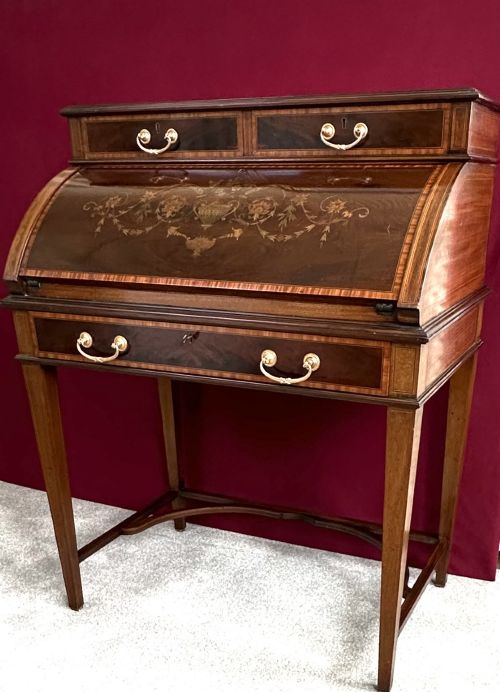
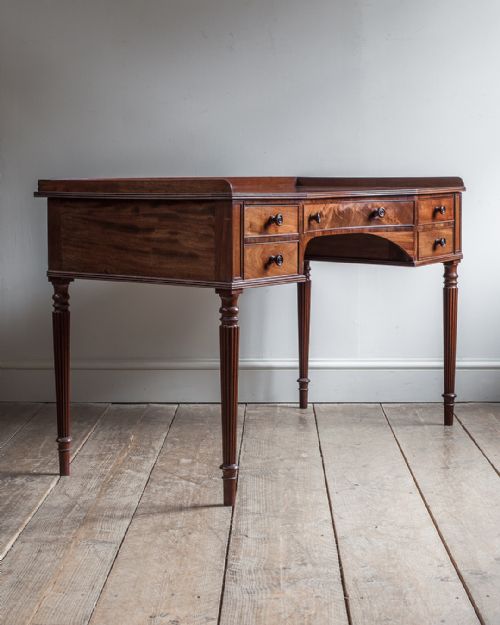
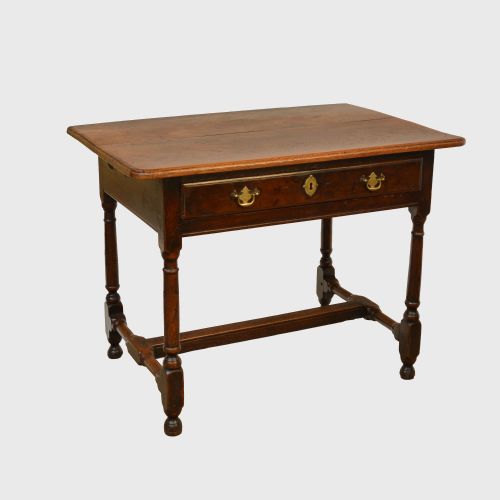
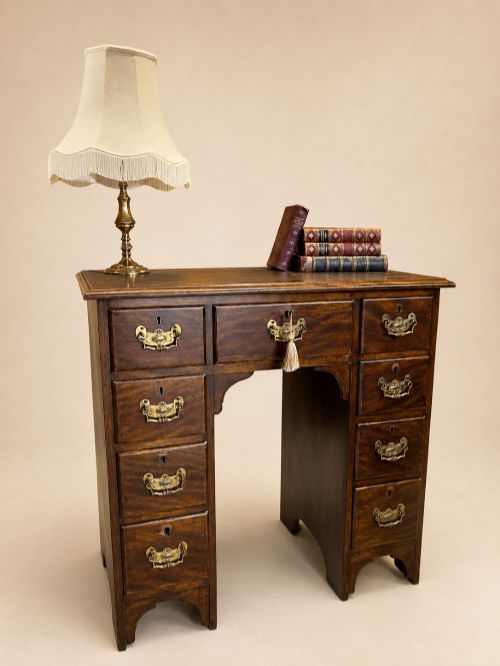
An antique wooden writing table covers a range of forms designed for correspondence and study, including side tables, sofa tables, and library tables. These pieces span the 18th century, the Georgian era, the Regency period, the Victorian era, and the Edwardian period of 1910.
Most items on this page are mahogany, reflecting the dominance of that timber in the records alongside oak, walnut, and boxwood. Examples range from compact Georgian forms to larger library tables and Italian rococo work.
The layout of these tables varies from simple side configurations to freestanding sofa tables and solid mahogany writing desks. Each form serves the practical purpose of writing while holding the distinct stylistic markers of its period.
Construction and materials
Makers utilised solid mahogany, oak, and walnut to build these frames, sometimes incorporating boxwood or parquetry for decorative contrast. Timber selection governed both the structural integrity and the visual weight of the desk.
Metal fittings such as brass appear on specific forms, while joinery techniques kept the tables stable during daily use. The combination of dense hardwoods and careful assembly allowed these writing surfaces to survive centuries of use.
Retail Price Guide 2026
Typical UK retail prices for wooden writing table, calculated from the Sellingantiques database of over a million retail prices indexed since 2003. This retail price guide relies exclusively on Sellingantiques data; no external sources or auction records are used, so the figures do not describe the wider market.
Materials recorded across the inventory include mahogany, solid mahogany, oak, walnut, boxwood, brass, and parquetry.
Judgements of quality
Quality rests in the selection of figured timber and the precision of decorative elements such as parquetry. Tables that display deliberate grain patterns and careful timber matching sit at the upper end of the range.
Structural honesty and the integration of hardware separate standard utility pieces from finer examples. The distinction lies in whether the materials and joinery remain cohesive and true to their period.
The Antique Wooden Writing Table Glossary
- Mahogany
- A durable hardwood prized for its rich colour and stable grain, frequently utilised in Georgian and Victorian furniture.
- Parquetry
- A geometric mosaic of wood pieces used for decorative inlay on tabletops and surfaces.
- Sofa Table
- A freestanding table designed to stand in front of or beside a sofa, often featuring drop leaves and drawers.
- Library Table
- A large, substantial table intended for books and paperwork, typically finished on all sides for placement in the centre of a room.
Frequently Asked Questions
What is an antique wooden writing table used for?
These tables provide a dedicated surface for correspondence, reading, and administrative tasks. They function well as compact desks or decorative side tables in domestic spaces.
Their historical role involved holding inkstands and paper, but today they serve equally well as laptop desks or display surfaces.
How do I identify a Georgian writing table?
Georgian writing tables display the proportions and timber choices characteristic of the 18th century and around 1800. They often feature mahogany construction with restrained ornament.
Examining the secondary woods and the construction of the drawers helps confirm the period of manufacture.
Are these tables suitable for daily use?
Solid mahogany and oak construction makes these tables robust enough for everyday work. Their durable surfaces handle routine writing and computer use.
Placing them away from direct heat sources protects the antique wood and finish over time.
What is the difference between a side table and a writing table?
Writing tables are specifically proportioned for sitting and working, often incorporating drawers for stationery. Side tables serve more general placement functions against walls.
Many pieces share characteristics of both forms, depending on the specific domestic requirements of their era.