
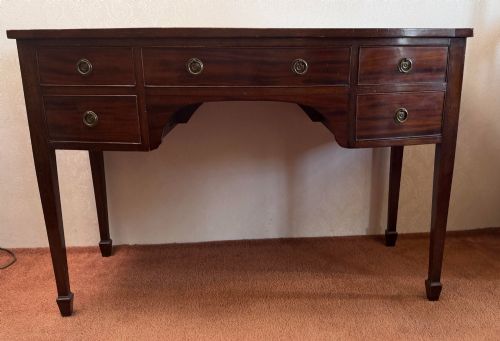
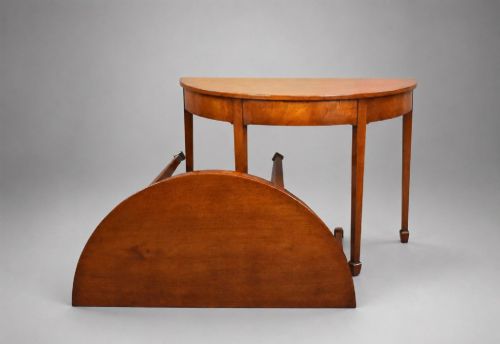
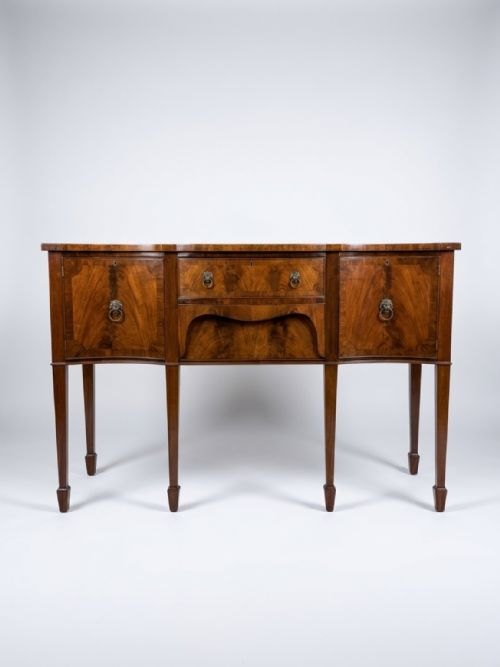
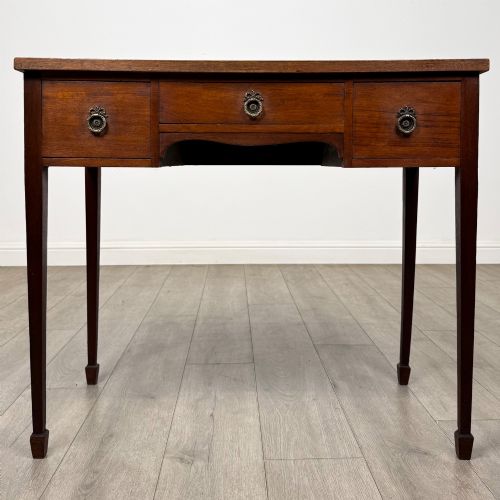
Georgian Tapered Leg Table
A georgian tapered leg table combines the restraint of the period with timber built to endure.
Georgian Tapered Leg Table
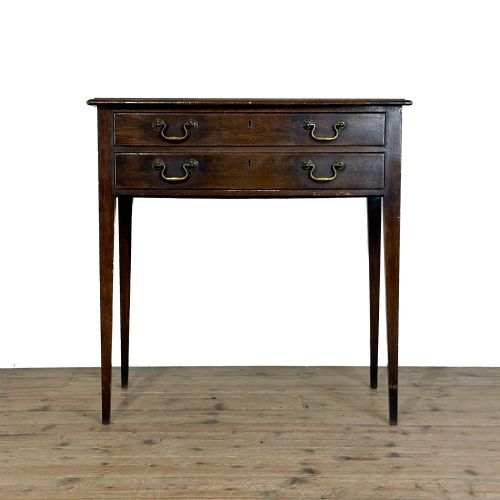
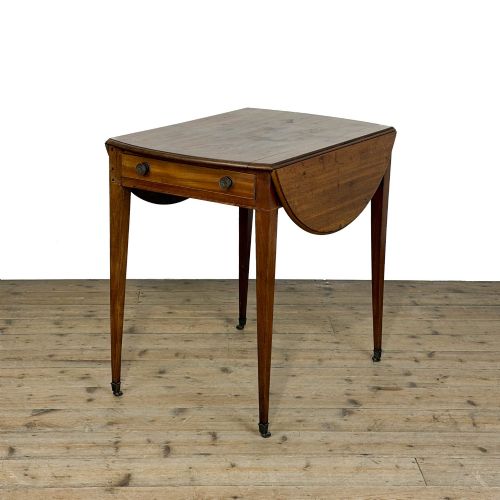
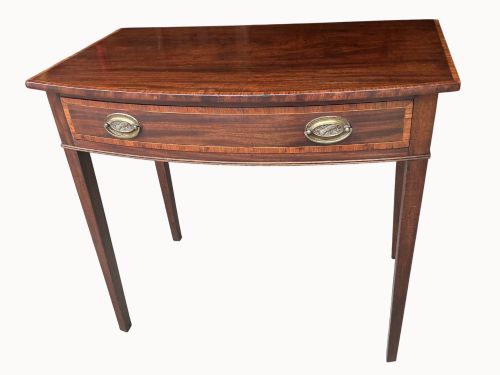
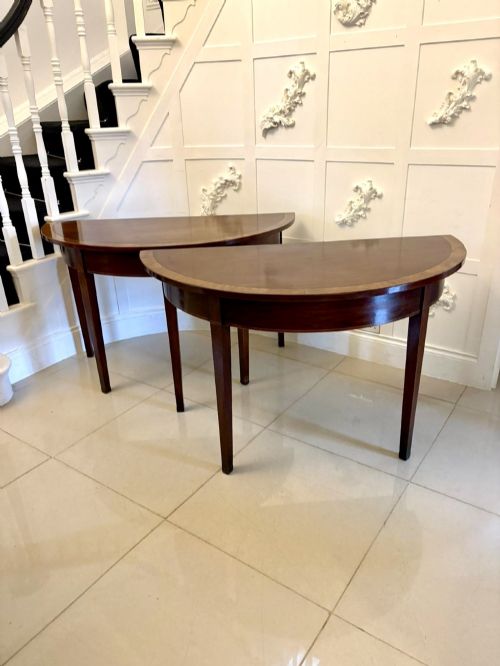
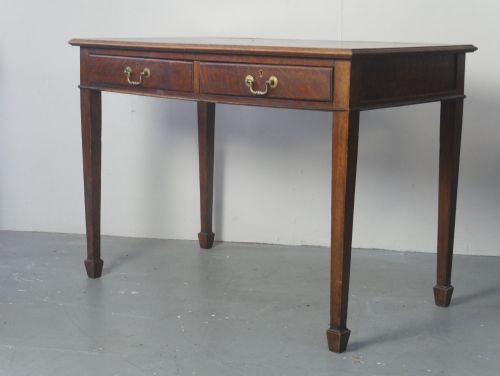
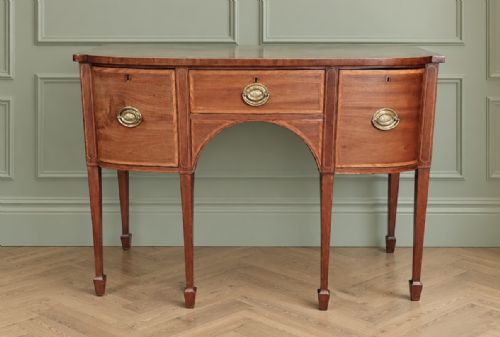
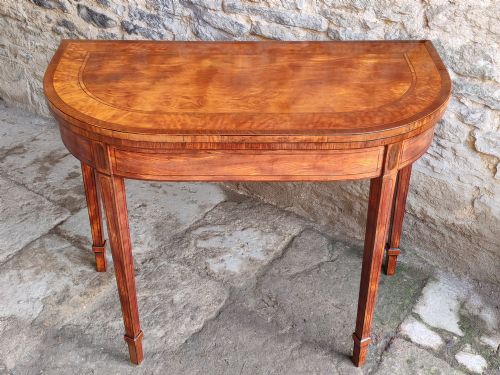
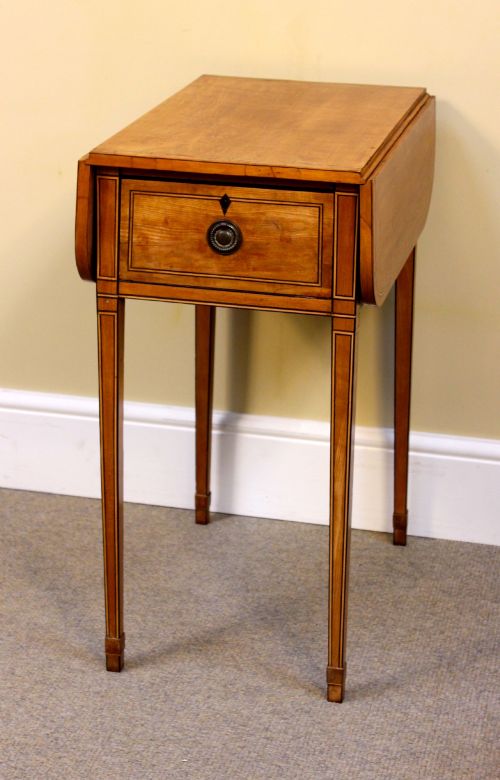
A georgian tapered leg table appears across side tables, card tables, and Pembroke tables from the Georgian and Regency periods. These forms rely on straight, narrow supports that draw the eye down to simple feet, distinguishing them from heavier cabriole designs.
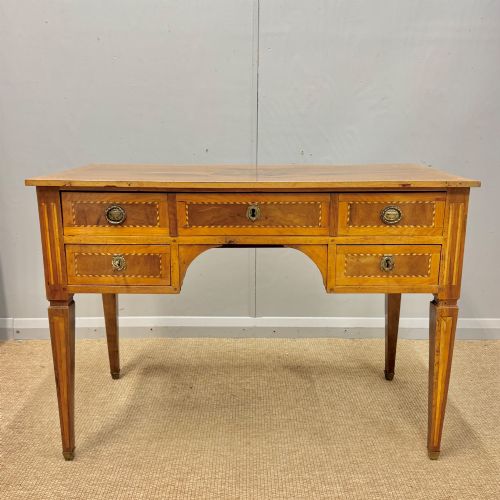
Mahogany predominates amongst these pieces, often highlighted with boxwood, satinwood, or ebony inlay. Sideboards, writing desks, and console tables also adopt this linear leg geometry.
The selection ranges from 18th century examples to later revivals from the Edwardian era and the 1920s. Buyers will frequently encounter Pembroke tables with drop flaps alongside console tables and dressing tables.
Materials and construction methods
Cabinet makers utilised solid mahogany and figured veneers for the main surfaces, supported by secondary timbers like oak and pine for drawers and frames. Timber selection dictated the visual weight, with Honduras mahogany prized for its grain.
Decoration relied on precision woodworking techniques rather than heavy carving, incorporating satinwood, boxwood, and ebony inlay alongside delicate cross-banding in partridge wood or purpleheart.
Drop flaps, folding card table tops, and sliding drawers required tight joinery, while brass handles and lion mask details provided functional metallic accents.
Georgian Tapered Leg Table Retail Price Guide 2026
Typical asking prices for georgian tapered leg table among the pieces listed under this phrase on Sellingantiques today, from the lower quarter to the upper quarter. They describe what is for sale here now, not the wider market.
Listings span the Georgian period, the 19th century, and Edwardian revivals, utilising mahogany, satinwood, boxwood, and brass.
Factors determining quality
The choice of timber grain defines the visual success of the surface, particularly where figured mahogany or elaborate satinwood inlay is employed. Superior pieces display thoughtful book-matching and crisp contrast in the inlaid borders.
Proportion and the subtlety of the taper dictate the elegance of the frame, separating refined workshop production from utilitarian output. The integration of functional elements, such as working drawers and smooth drop-leaf hinges, indicates higher standards of construction.
Bruce & Burns of Edinburgh
The Georgian Tapered Leg Table Glossary
- Pembroke table
- A small table with hinged flaps on either side that can be raised or lowered. These versatile pieces frequently feature a single drawer and tapered legs.
- Demi lune
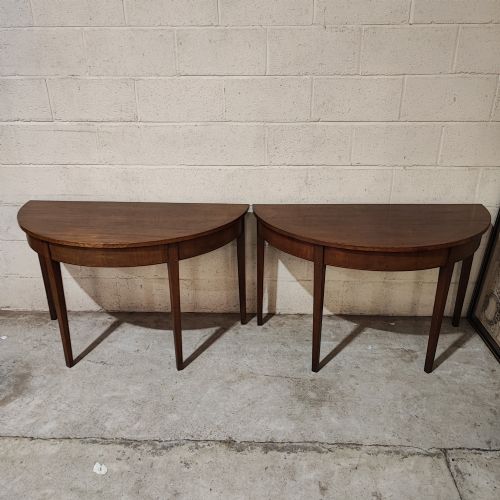
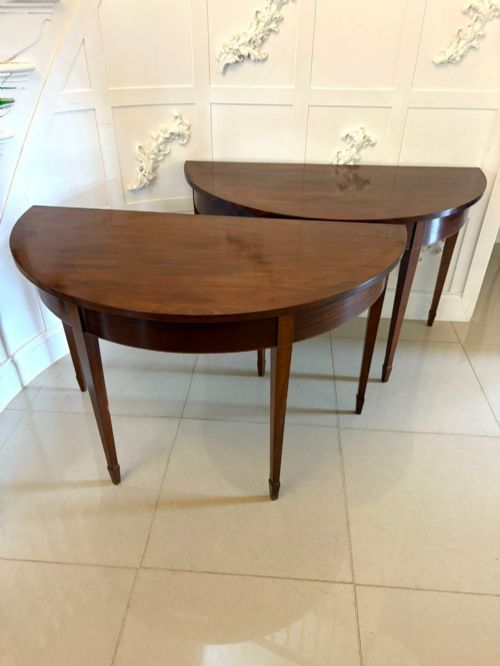
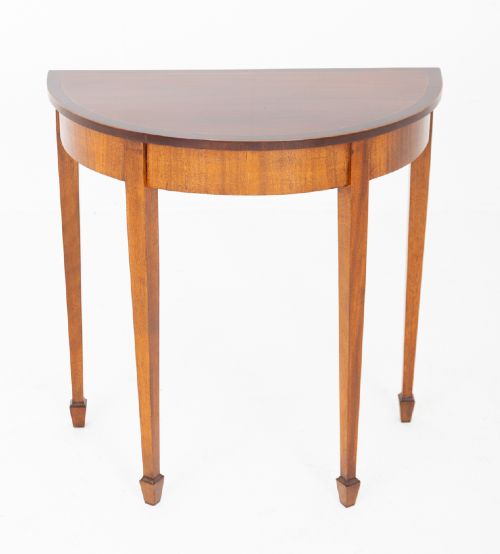
- A half-moon shape commonly found in console tables and card tables designed to sit flush against a wall. This form allows furniture to occupy less floor space while providing a finished surface.
- Inlay
- A technique where pieces of contrasting timber such as boxwood, satinwood, or ebony are inserted into depressions in the base wood to form decorative patterns.
- Cross-banding
- A border strip of veneer laid around the edges of a tabletop with the grain running perpendicular to the central panel. This frames the primary timber and adds visual depth.
- Console table
- A table fixed against a wall, frequently built as a pair during the Georgian period. They often display decorative console brackets or straight tapered legs.
Georgian Tapered Leg Table: Frequently Asked Questions
What is a georgian tapered leg table used for?
These pieces served multiple domestic functions, operating as tea tables, card tables, writing desks, or side tables in principal rooms. Their modest footprints allowed them to stand against walls or sit centrally when flaps were raised.
Today, they adapt easily to modern interiors as compact desks, hallway consoles, or occasional tables that hold lamps and decorative objects without crowding a space.
How do I distinguish 18th century from later revivals?
Original 18th century pieces exhibit authentic timber oxidation, hand-cut joinery marks inside drawer linings, and structural wear consistent with age. Secondary woods like oak or pine will show dry, aged surfaces.
Later Edwardian or 1920s revivals often utilise more uniform machine-sawn timber and modern adhesives or fixings hidden within the frame construction.
Which woods are most common?
Mahogany remains the dominant timber across these listings, appearing as solid boards or figured veneers on tabletops and drawer fronts. Cabinet makers frequently combined it with lighter contrasting woods.
Boxwood, satinwood, and ebony appear regularly as stringing and inlay details, while amboyna and partridge wood surface on specific cross-banded decorative examples.
Where should I place a console table?
Demi lune and rectangular console tables are designed to stand directly against a wall, making them suited for hallways, dining rooms, or living spaces. Their shallow depth prevents obstruction in narrow thoroughfares.
Pairing console tables allows for symmetrical placement beneath mirrors or artwork, a traditional arrangement that suits both period and contemporary rooms.