

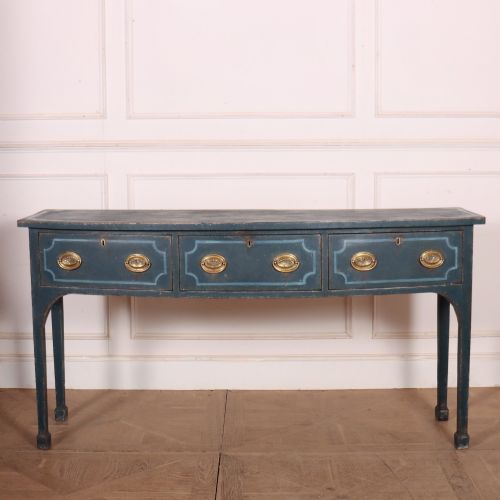
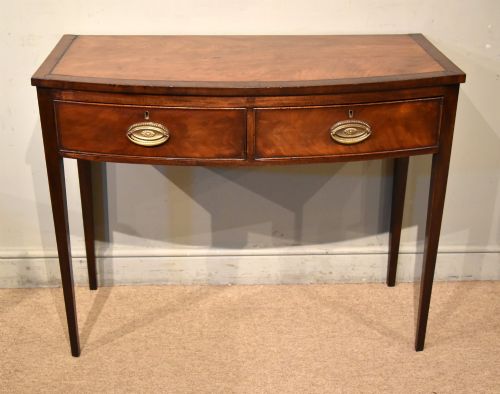
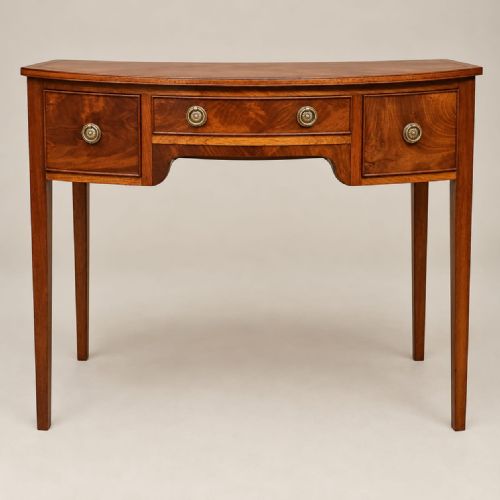

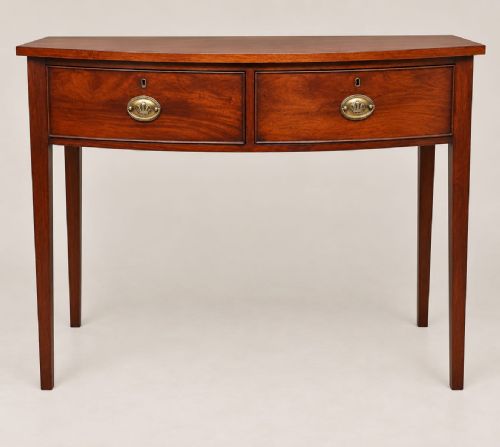
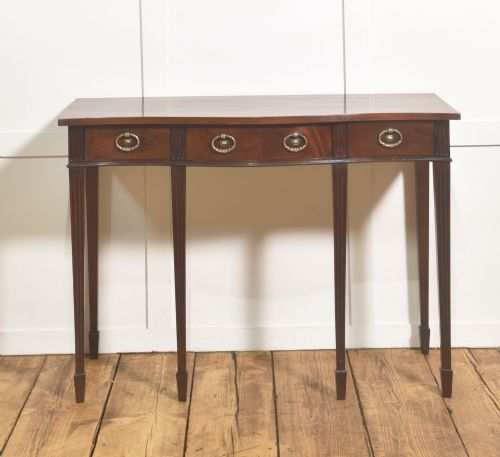
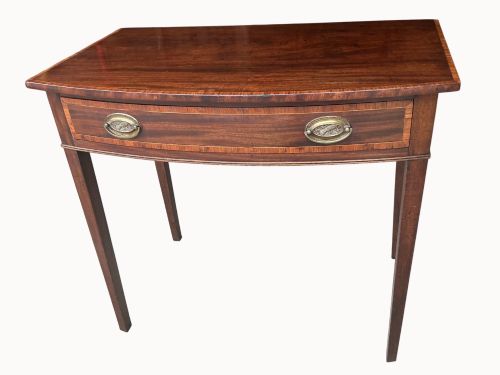
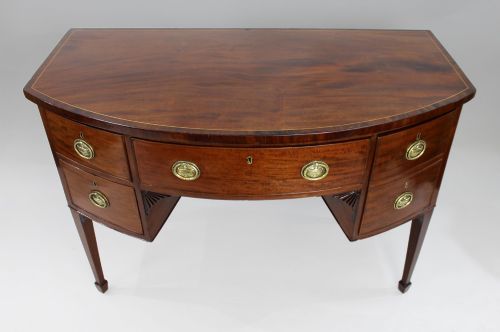
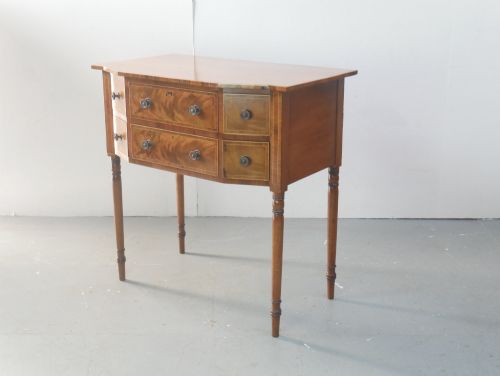

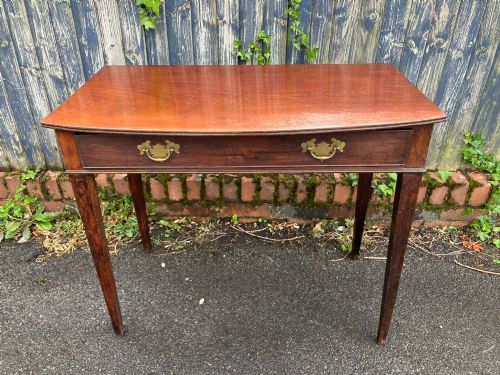

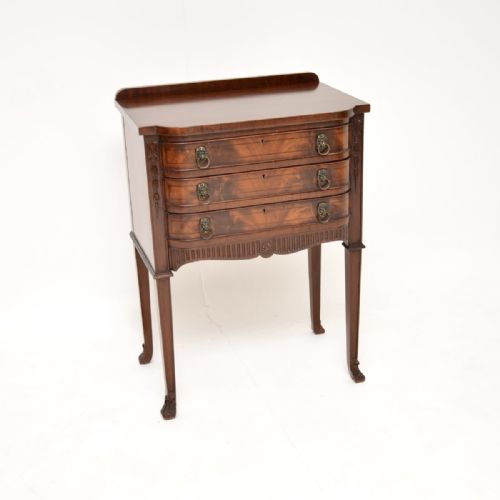
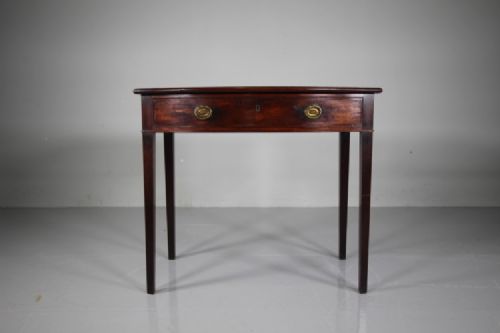


Bowfront Console Table
These bowfront console tables bring curved mahogany form and period presence straight to a hallway or drawing room.
Bowfront Console Table
A bowfront console table presents a distinctive curved front that softens the linear proportions of a room. These pieces appear in Georgian, Regency, and Victorian iterations alongside later twentieth century revivals.
Makers designed these forms to function primarily as side tables, serving surfaces, or kneehole arrangements. The listings show forms spanning the late eighteenth century through to nineteen thirty.
Buyers encounter examples fashioned in mahogany predominantly, while walnut occasionally appears within the revival pieces. The curved silhouette remains the defining characteristic across all listed console and side tables.
How they were made
Cabinet makers utilised solid and veneered mahogany to construct the curved carcass of each bowfront console table. Selected pieces incorporate brass hardware and subtle inlay work to define the edges.
Joiners curved the timber through specialised construction methods to achieve the signature front projection without compromising structural integrity. Drawer divisions and kneehole compartments required precise woodworking techniques.
Bowfront Console Table Retail Price Guide 2026
Typical asking prices for bowfront console table among the pieces listed under this phrase on Sellingantiques today, from the lower quarter to the upper quarter. They describe what is for sale here now, not the wider market.
Mahogany is the dominant timber across these records, accompanied by occasional brass fixtures and walnut.
What varies in quality
The sophistication of the timber grain and the precision of the curved front determine the standing of an individual table. Finer examples display carefully matched mahogany veneers and crisp structural lines rather than plain surfaces.
Period construction methods and authentic brass fittings elevate eighteenth and nineteenth century specimens above later revival pieces. The execution of drawers and internal framing distinguishes workshops of higher ability.
The Bowfront Console Table Glossary
- Bowfront
- A convex curved furniture front that projects outward in an arc. This shape was particularly popular during the Georgian and Regency periods.
- Console table
- A side table designed to stand against a wall, occasionally secured with brackets. These tables provide surface space in hallways and principal rooms.
- Kneehole
- A recessed space beneath the central drawers of a table designed for a seated person. This arrangement appears on specific side table variations.
- Mahogany
- A durable tropical hardwood with a rich reddish brown tone. It served as the primary material for high quality furniture across the eighteenth and nineteenth centuries.
Bowfront Console Table: Frequently Asked Questions
Where do you place a bowfront console table?
These tables suit hallways, entryways, and reception rooms where a shallow curved profile preserves floor space. Their finished backs and polished tops allow them to sit flush against a wall.
In living spaces, they function effectively beneath mirrors or art pieces. The curved front softens the geometry of narrow corridors.
How do I distinguish Georgian from later styles?
Authentic Georgian pieces exhibit period construction techniques, hand cut dovetails, and genuine timber patina developed over centuries. Earlier items from the eighteenth century show specific structural signatures.
Nineteen thirty revival pieces emulate these historic silhouettes using older stylistic vocabularies. Examining the interior timber and secondary woods clarifies the true age.
What is the difference between side and console tables?
Console tables traditionally stood against walls, sometimes supported by brackets or architectural legs. Side tables represent a broader category of smaller occasional tables placed beside seating or along walls.
In practice, makers and dealers often use these terms interchangeably for bowfront forms. Both serve identical display and surface functions in period interiors.
Can I use a kneehole table for writing?
The central recess allows a person to sit comfortably at the table for brief writing tasks. However, these pieces were built primarily as side or serving furniture rather than dedicated desks.
Drawer depth is often shallow to accommodate the apron and curve of the facade. They function best as decorative display surfaces with occasional utility.