





French Rococo Coffee Table
A French rococo coffee table brings flamboyant curves, intricate marquetry and polished marble into a drawing room with undeniable presence.
French Rococo Coffee Table
A French rococo coffee table combines the sweeping, asymmetric lines of eighteenth-century design with the practical proportions needed for a modern interior. These pieces frequently manifest as low occasional tables, adapted centre tables or converted window seats suited for resting books and glasses.
The versions most commonly met on this page date from the nineteenth and early twentieth centuries, drawing heavily on Louis XV revival and rococo revival aesthetics. Makers utilised forms featuring cabriole legs, serpentine edges and scrolling mounts to recreate the opulent atmosphere of a French chateau.
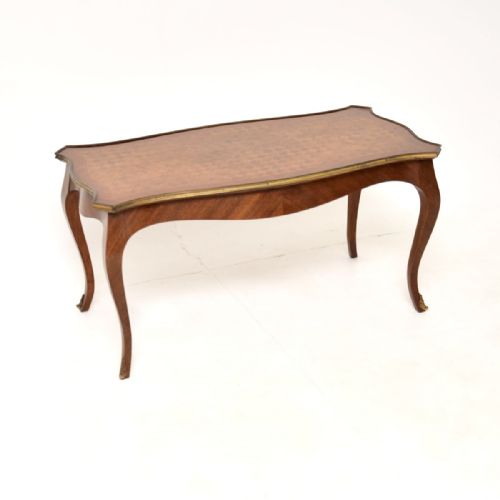
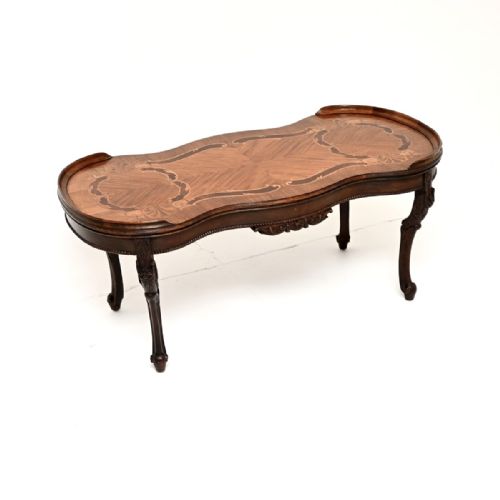
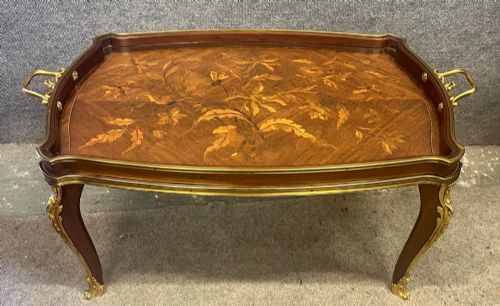
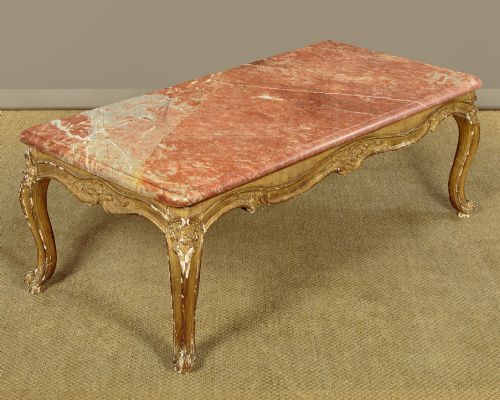
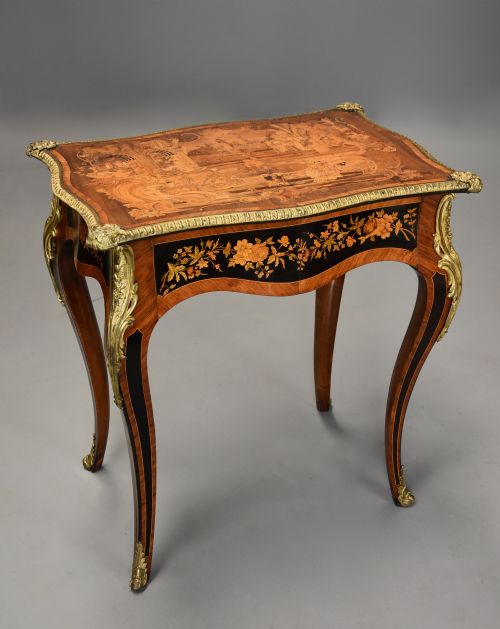
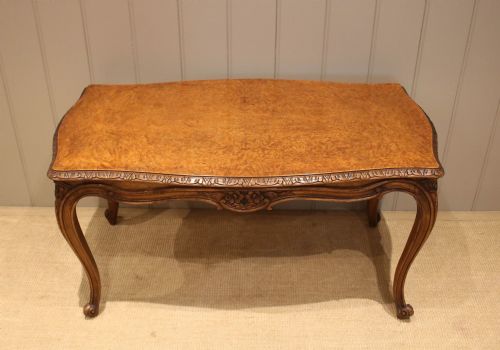
Surfaces vary considerably in their decoration, ranging from simple polished burr walnut to elaborate floral marquetry and parquetry patterns. Tray top designs and inset marble slabs provide both functional durability and visual contrast against warm timber frames.
Markers of distinction
Quality rests primarily on the crispness of the carving and the precision of the veneer work, where tight floral marquetry and aligned parquetry demonstrate superior hand skills. Heavier cast ormolu mounts with deep chasing and detailed finishing separate exceptional pieces from simpler, mass-produced alternatives.
The choice of secondary woods and the integrity of the structural joinery dictate how well a table withstands daily use over generations. Tables retaining their original marble tops, fire-gilt mounts and unblemished polish command greater respect among collectors.
French Rococo Coffee Table Retail Price Guide 2026
Typical asking prices for french rococo coffee table among the pieces listed under this phrase on Sellingantiques today, from the lower quarter to the upper quarter. They describe what is for sale here now, not the wider market.
Some window seats spent a past life acting as magazine holders before finding a new calling as low coffee tables.
Zwiener
The French Rococo Coffee Table Glossary
- Marquetry
- A decorative technique where small pieces of veneer are assembled into pictorial or geometric patterns on a wooden surface. This method allows cabinetmakers to create complex floral designs across table tops.
- Ormolu
- Gilt bronze ornamentation applied to furniture for decorative effect during the eighteenth and nineteenth centuries. The alloy is cast, chased and finished with gold to provide a bright metallic contrast against dark woods.
- Cabriole leg
- A furniture leg featuring a double curve, typically arching outward at the knee and tapering inward toward the foot. This shape mimics animal legs and defines much of the rococo revival style.
- Parquetry
- Geometric wood inlay forming repetitive patterns such as cubes or chequers across a panel. It showcases the natural variation of contrasting timber grains.
- Giltwood
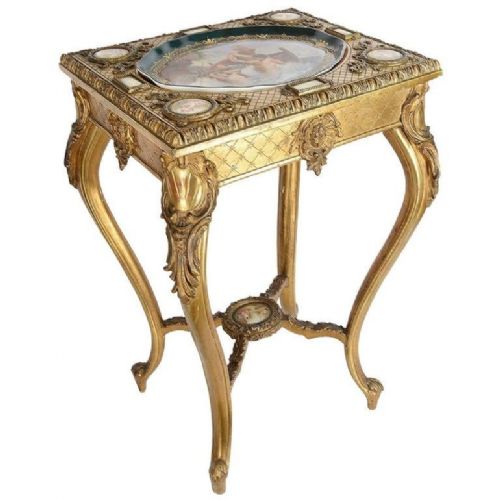
- Timber carved and coated with gold leaf or metallic paint to simulate solid gold. It appears frequently on the frames of tables designed for formal salons.
French Rococo Coffee Table: Frequently Asked Questions
Are these tables actually from the eighteenth century?
Most pieces found here originate from the nineteenth and early twentieth centuries, created during revivals of the Louis XV style.
Craftsmen of this later era deliberately copied earlier aesthetics, utilising traditional techniques to produce decorative occasional furniture.
How do I care for a marble top?
Marble surfaces require gentle cleaning with warm water and a soft cloth to avoid scratching the polished stone. Acidic liquids like wine or citrus should be wiped away immediately to prevent staining the porous material.
Using coasters and mats helps preserve the finish against everyday wear.
Can these low tables be used daily?
These tables function well in modern reception rooms for holding books, decorative items and drinks. Their sturdy timber frames and inset stone or wood tops accommodate normal household use.
Care should be taken with slender cabriole legs when moving them across thick carpets.
What is the difference between an occasional table and a centre table?
Centre tables were traditionally built to stand free in the middle of a room, featuring finished decoration on all four sides. Occasional tables are generally smaller and lighter, designed to be moved easily to a seating area.
Both forms served social functions in period drawing rooms.