


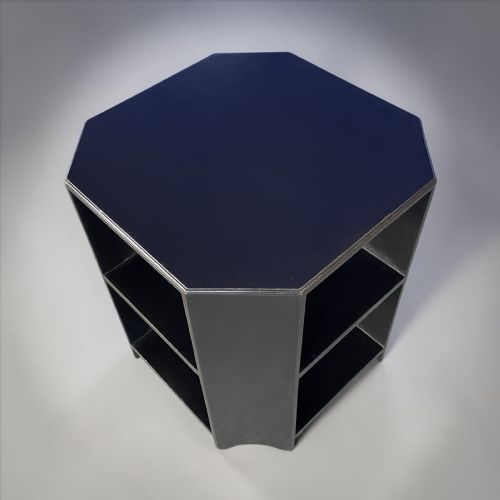


1920s Coffee Table
A 1920s coffee table brings low-profile proportions and rich cabinet woods to a room, offering practical surface space with period character.
1920s Coffee Table
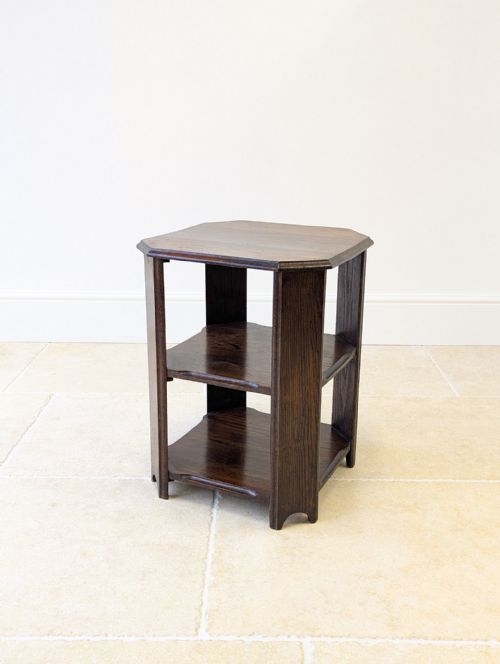
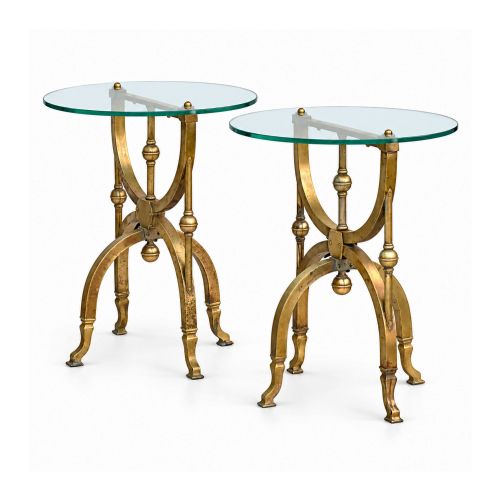
A 1920s coffee table typically spans low-slung occasional forms, nests of tables, and repurposed trunks from the early decades of the twentieth century. The selection includes dedicated low tables alongside side tables, centre tables, and occasional pieces adapted to modern living.
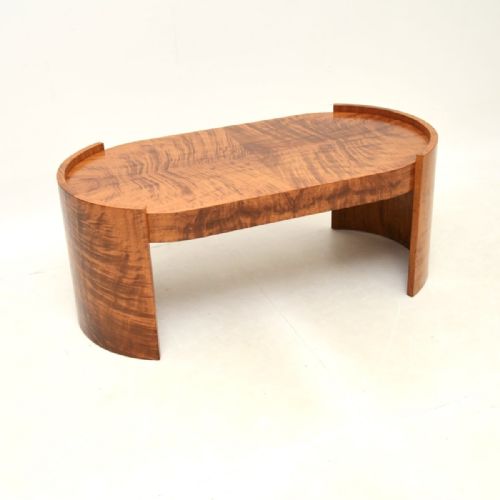
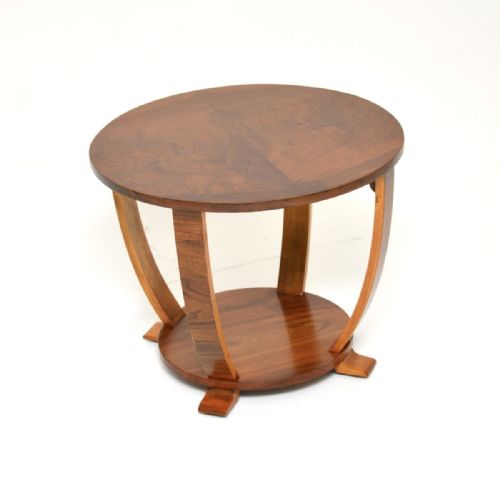
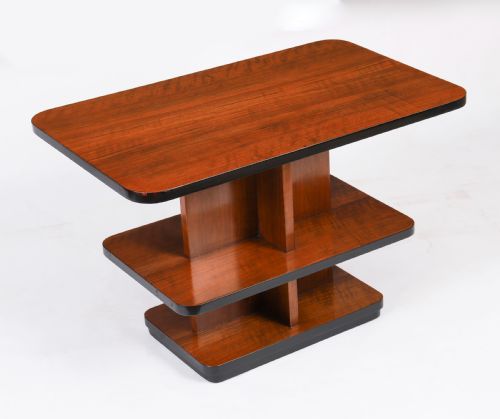
Art Deco styling dominates the physical evidence, often expressed through geometric forms and stepped tiers. Alongside these, revival aesthetics such as Queen Anne, Jacobean, and Louis XV appear frequently, offering curved cabriole legs or turned supports.
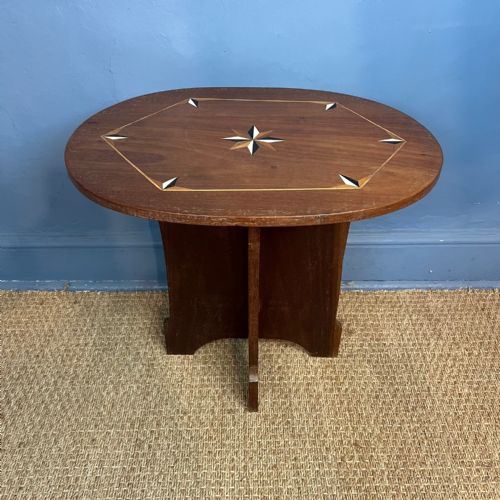
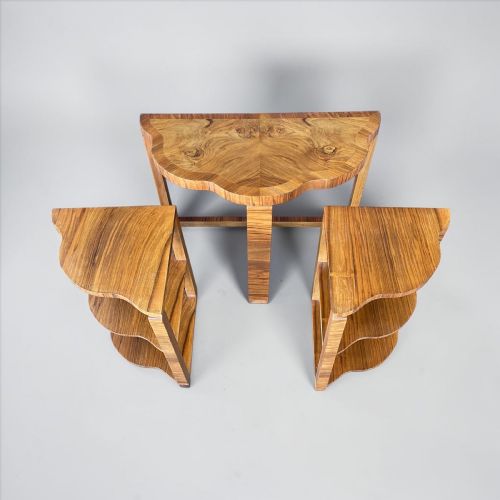
Burr walnut and figured walnut provide the most common timber vocabulary, matched by oak, mahogany, rosewood, and ebonised wood. Oriental lacquered surfaces and travel trunks with original brass hardware add variety to the forms.
How they were made
Cabinet makers utilised solid timbers and sophisticated veneers, laying burr walnut, kingwood, and birds eye maple over stable secondary woods. Marquetry work and lacquered finishes required skilled hand application to achieve the decorative top surfaces.
Metal components such as original brass locks, hinges, and corner brackets were integrated into travel trunks and specific occasional tables. Ebonised wood treatments and French polishing sealed the timbers, protecting the grain while producing a deep lustre.
1920s Coffee Table Retail Price Guide 2026
Typical asking prices for 1920s coffee table among the pieces listed under this phrase on Sellingantiques today, from the lower quarter to the upper quarter. They describe what is for sale here now, not the wider market.
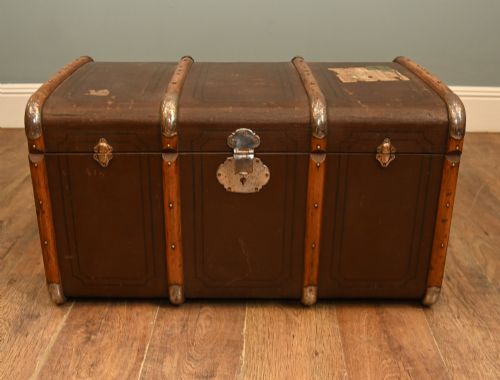
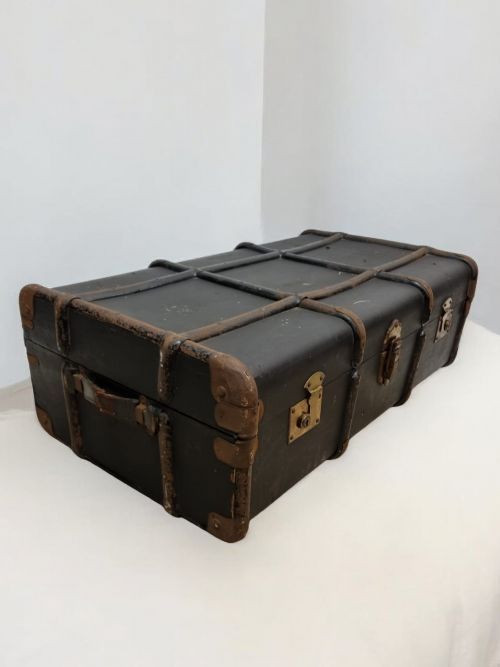
Steamer trunk tables keep their original travel scars, ready to hold morning coffee instead of ocean liner tickets.
What varies in quality
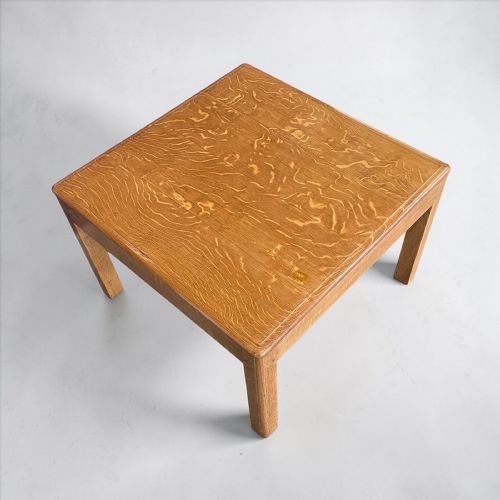
The choice of timber veneer dictates much of the visual standard, with densely figured burr walnut and matched rosewood sitting at the upper end of the scale. Plain solid oak and utility variations represent simpler domestic production.
Construction methods distinguish standard factory output from signed studio pieces. Integrated nesting sets, intricate marquetry, and original hardware demonstrate superior workmanship compared to straightforward rectangular tables.
Betty Joel·Majorelle·Aux Etats Unis of Paris
The 1920s Coffee Table Glossary
- Burr Walnut
- A figured wood grain derived from the wart-like growths on walnut trees. It provides highly decorative, swirling patterns across table tops.
- Art Deco
- A design style spanning the 1920s and 1930s characterised by geometric symmetry, stylised motifs, and streamlined forms.
- Ebonised Wood
- Timber treated with a dark stain or finish to imitate ebony. This technique creates a stark, black surface popular in period cabinet making.
- Nest of Tables
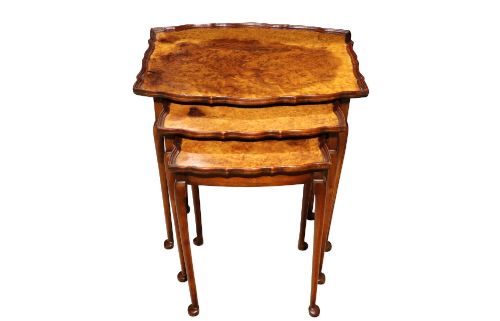
- A set of graduated tables designed to fit neatly beneath one another. They offer flexible surface space that stores compactly.
- Occasional Table
- A small, movable table intended for specific, temporary uses rather than permanent placement. These often serve as lamp or side tables.
1920s Coffee Table: Frequently Asked Questions
What defines a 1920s coffee table?
A 1920s coffee table is defined by low-slung proportions and period materials like burr walnut, oak, and brass hardware. Many examples emerge from the Art Deco movement or borrow revival styles such as Queen Anne and Louis XV.
These surfaces include dedicated low tables, nesting sets, side tables, and occasional pieces. Their construction reflects the transition from traditional cabinet making towards more streamlined domestic furniture.
How were these tables used originally?
These pieces served multiple functions in early twentieth-century interiors, acting as surfaces for lamps, books, and tea service. Nesting tables provided expandable space for entertaining guests without cluttering the room.
Larger centre tables occupied prominent positions in reception rooms, while travel trunks and luggage pieces were repurposed for domestic storage. Their low height accommodated the changing seating styles of the interwar period.
How do I identify Art Deco pieces?
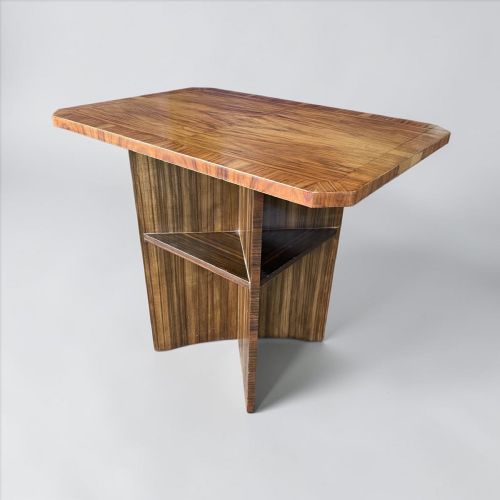
Art Deco pieces display geometric lines, stepped tiers, and contrasting exotic veneers such as birds eye maple and rosewood. These designs move away from heavy Victorian ornamentation towards cleaner, modern silhouettes.
Makers often employed ebonised wood or lacquered finishes to accentuate the modern aesthetic. The focus rests on symmetry and the natural grain patterns of the timber.
Are travel trunks used as tables?
Travel trunks and storage chests from the period frequently function as low coffee tables in contemporary settings. These items retain original brass hardware, latches, and wooden slats from transatlantic journeys.
Their robust construction and internal storage compartments make them practical alternatives to standard wooden tables. They introduce industrial character and travel history into a domestic space.