



French Marquetry Coffee Table
A french marquetry coffee table brings together intricate wood veneers and fluid revival curves to anchor a period room.
French Marquetry Coffee Table
A french marquetry coffee table is a low surface built for entertaining, taking its form from nineteenth-century centre tables and occasional tables adapted for modern rooms. You will frequently encounter nineteenth century examples alongside pieces from the early decades of the twentieth century.
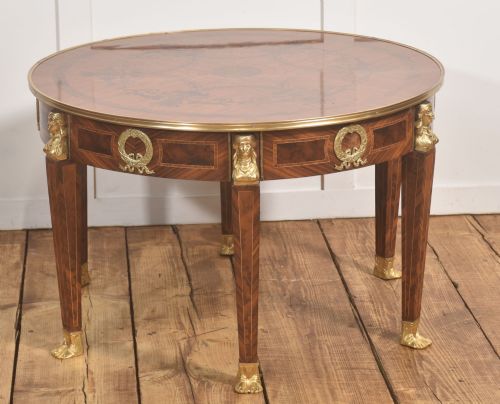
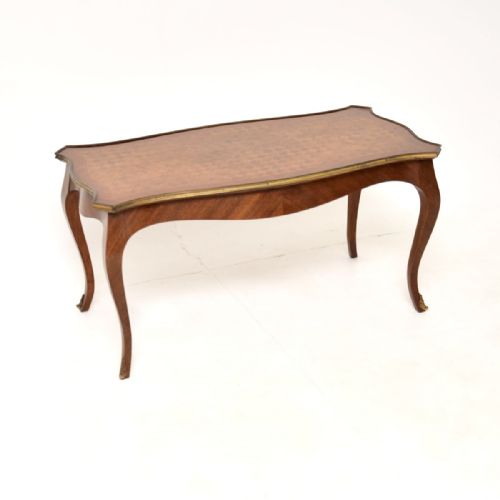
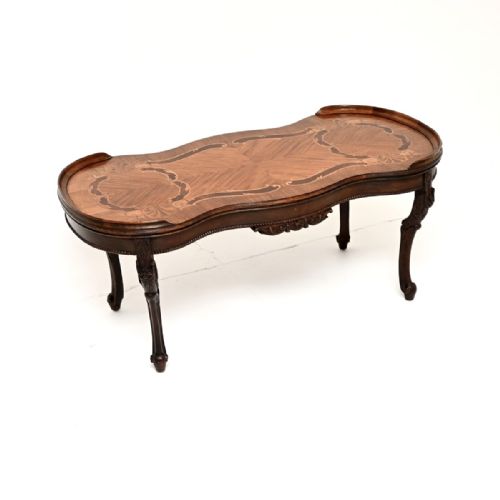
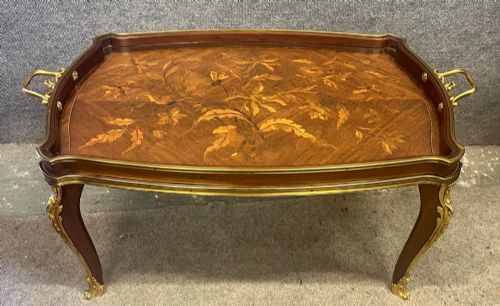
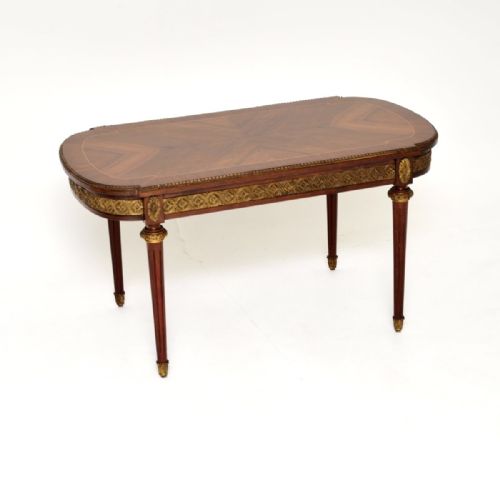
The selection ranges from round and square coffee tables to nested sets and galleried tray tops. Many pieces adhere to Louis XV and Louis XVI revival aesthetics, showing serpentine lines or restrained neoclassical geometry.
Makers adapted earlier salon furniture formats to suit lower seating arrangements. These surfaces serve as functional coffee tables while retaining the decorative timber work intended for formal drawing rooms.
How they were made
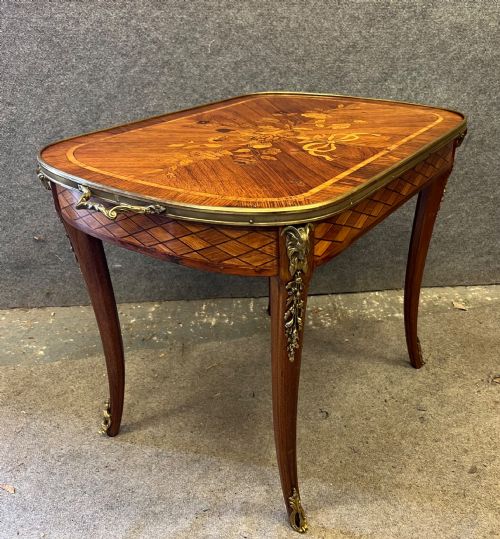
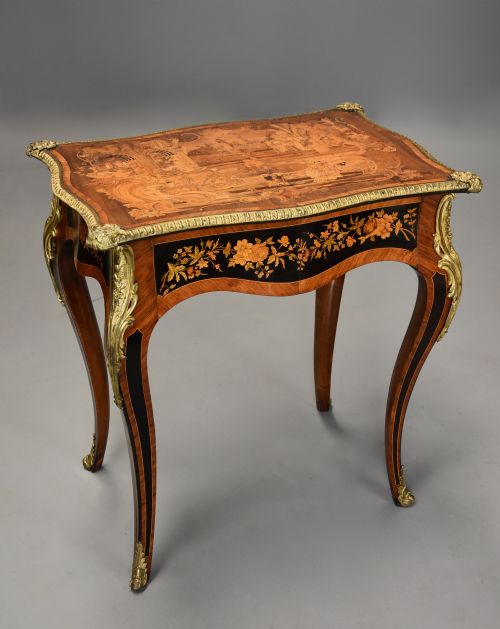
Carpenters laid contrasting wood veneers onto solid carcases to create elaborate floral and geometric pictorial scenes. Walnut, kingwood, rosewood, fruitwood, and boxwood provided the tonal range needed for shading petals and stems.
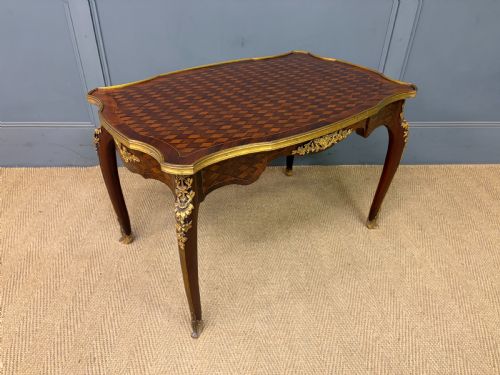
Gilders and metalworkers mounted cast ormolu and brass around table rims, aprons, and legs to accentuate the contours of the wood. These mounts protected vulnerable corners and added structural definition to revival forms.
French Marquetry Coffee Table Retail Price Guide 2026
Typical asking prices for french marquetry coffee table among the pieces listed under this phrase on Sellingantiques today, from the lower quarter to the upper quarter. They describe what is for sale here now, not the wider market.
Listings feature walnut, kingwood, rosewood, and fruitwood veneers alongside ormolu mounts across multiple revival periods.
What varies in quality
The precision of the veneer cutting and the variety of timbers determine the visual depth of the top. Finer examples combine numerous natural woods to achieve tonal graduation without relying on surface stains.
The execution of the ormolu mounts separates standard production from superior work. Crisp, chased bronze details indicate a higher standard of workshop craftsmanship than plain, cast brass replacements.
Emile Galle·Zwiener
The French Marquetry Coffee Table Glossary
- Marquetry
- A technique where pieces of different coloured wood veneer are fitted together to form decorative pictures on a furniture surface. This meticulous craft defines the top surface of these tables.
- Parquetry
- Geometric wood inlay arranged in repeating patterns such as cubes, diamonds, or chequers. It often appears on the surfaces alongside floral marquetry.
- Ormolu
- Gilt bronze mounts applied to the edges, legs, and aprons of furniture. These decorative metal additions protect the wood and highlight the revival style.
- Kingwood
- A dense, richly grained tropical timber used extensively for fine veneer work. Its dark purple-brown colouring provides strong contrast against lighter fruitwoods.
- Galleried
- A raised metal or wooden rim running around the edge of a tabletop. This feature prevents items from sliding off tray top designs.
French Marquetry Coffee Table: Frequently Asked Questions
Are these original period tables?
The selection includes pieces dating from the mid-nineteenth century through the early twentieth century. Many reflect revival movements that looked back to eighteenth-century court furniture.
Craftsmen built these tables using traditional techniques and timbers like walnut, kingwood, and rosewood. Each piece bears the marks of its specific manufacturing era.
How do I clean the wood?
Dust the surface regularly with a soft, dry cloth to prevent dirt accumulation in the veneer joints. Avoid using modern aerosol polishes that leave chemical buildups on older finishes.
Apply a traditional beeswax occasionally to nourish the timber and maintain its natural lustre. Keep the table away from direct heat sources to prevent the veneer from drying out.
What is the difference between marquetry and parquetry?
Marquetry involves cutting and assembling wood veneers into pictorial scenes, such as floral sprays or landscapes. Artisans select various timbers to create natural colour shading within the design.
Parquetry uses geometric shapes arranged in repeating patterns like cubes or herringbone. Both techniques often appear together on the same tabletop.
How do I identify Louis XV style?
Louis XV style furniture is characterised by asymmetrical curves, cabriole legs, and organic scrollwork. This aesthetic emerged from eighteenth-century rococo design and saw revivals in the nineteenth and twentieth centuries.
Tables from this design tradition often feature serpentine edges and floral marquetry motifs. Ormolu mounts are frequently shaped to follow the flowing contours of the aprons and legs.