
French Style Occasional Table
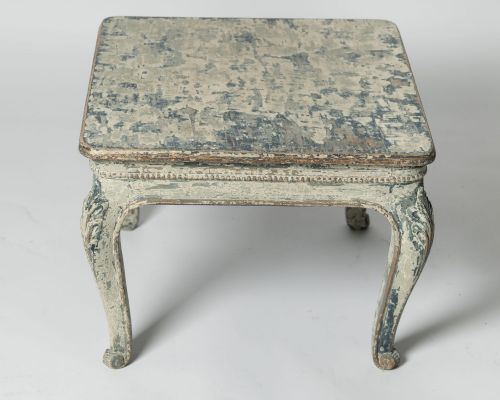
These pieces are french style occasional table examples, bringing decorative elegance and useful surfaces to a room.
French Style Occasional Table
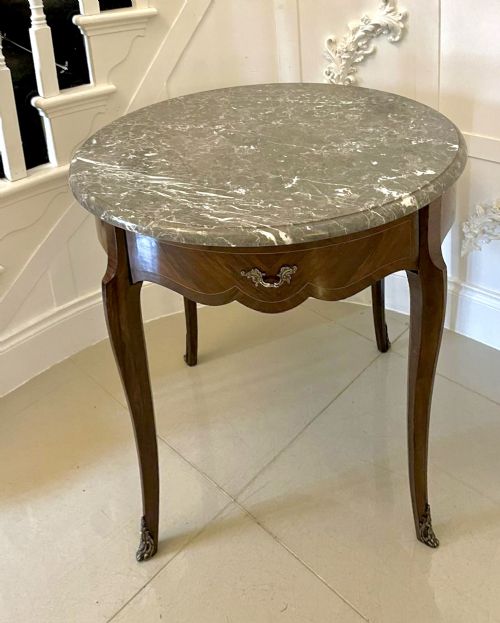
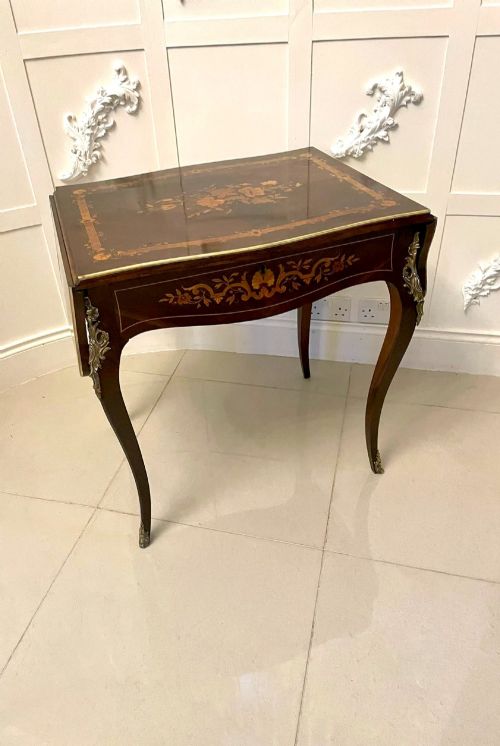
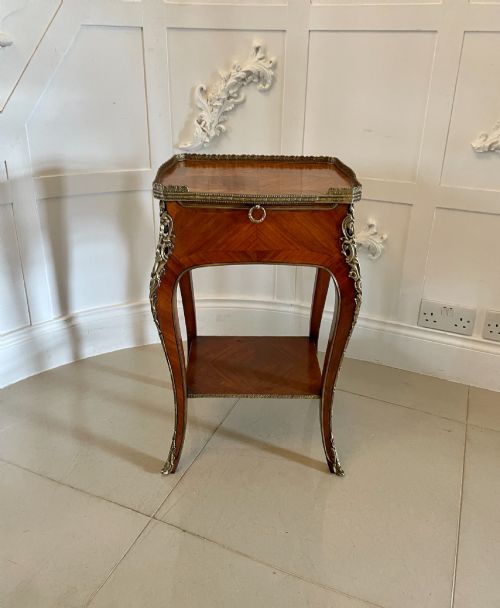
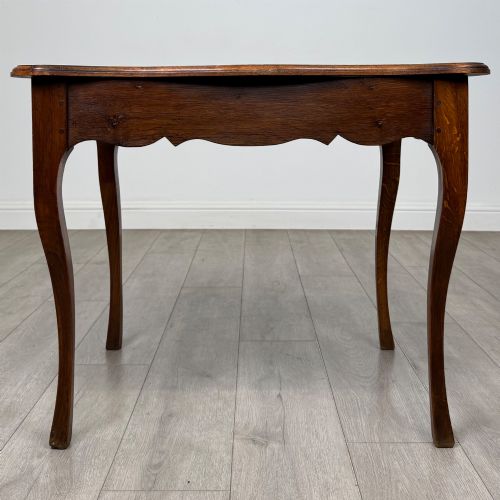
A french style occasional table brings ornamental woodwork and detailed metal mounts into domestic spaces. These pieces function as centre tables, etageres, writing tables, and bedside stands within nineteenth and early twentieth century rooms.
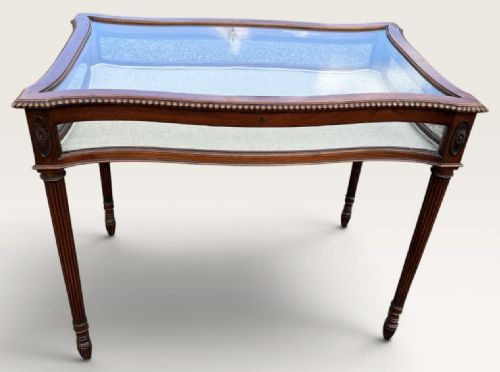
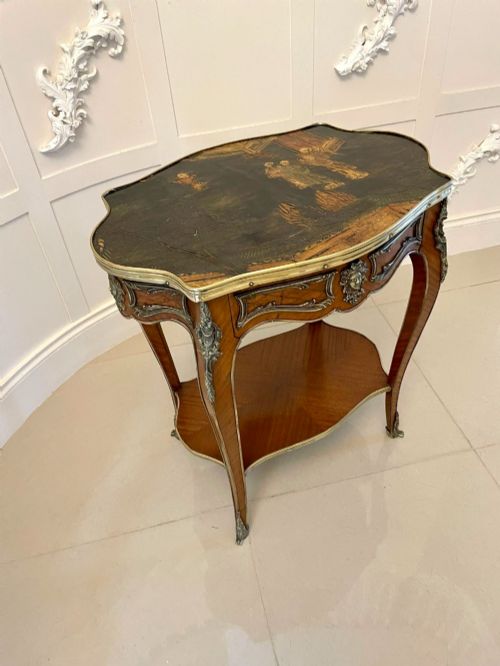
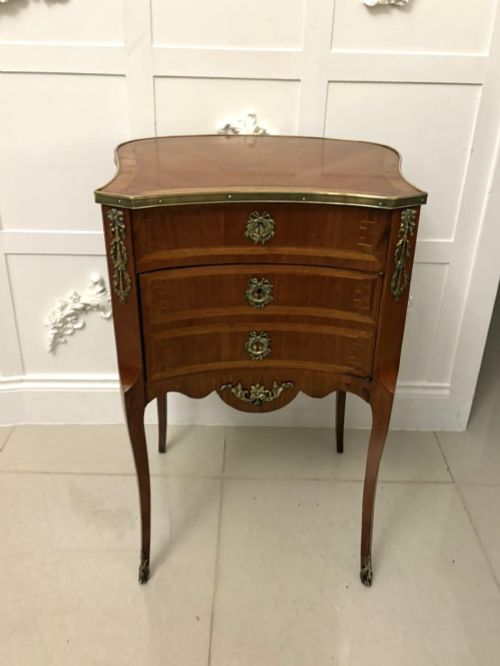
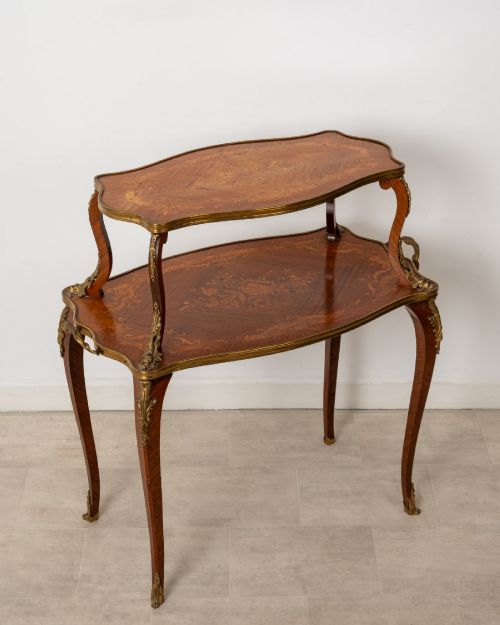
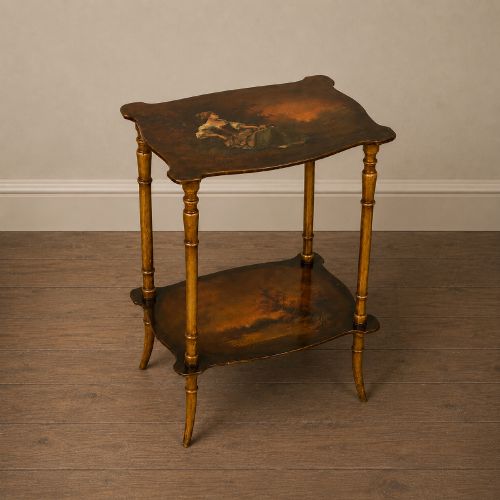
The versions most commonly met on this page date from the Victorian and Edwardian eras, spanning revival styles such as Louis XV, Louis XVI, and French Empire. Makers utilised forms like the circular gueridon, serpentine bijouterie tables, and tiered display shelves.
Makers constructed these tables to serve multiple domestic roles, from holding lamps and tea services to displaying small collections. Their origins trace to French workshops and British cabinetmakers influenced by continental aesthetics.
Materials and construction methods
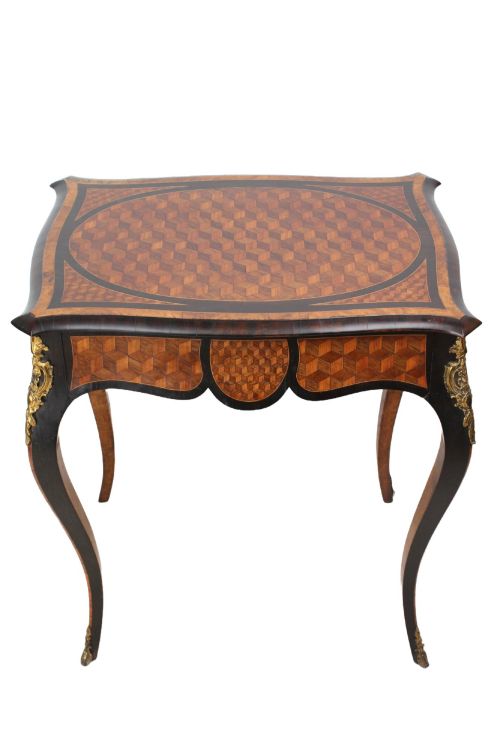
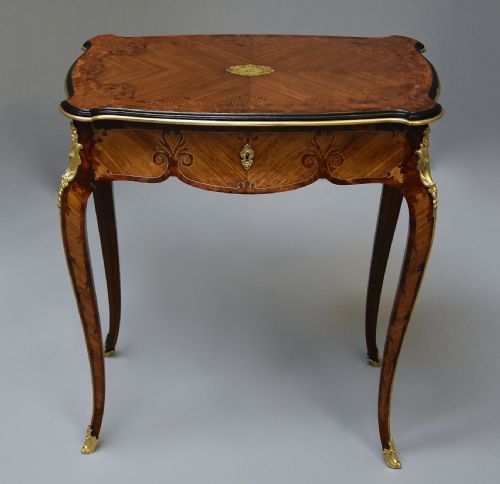
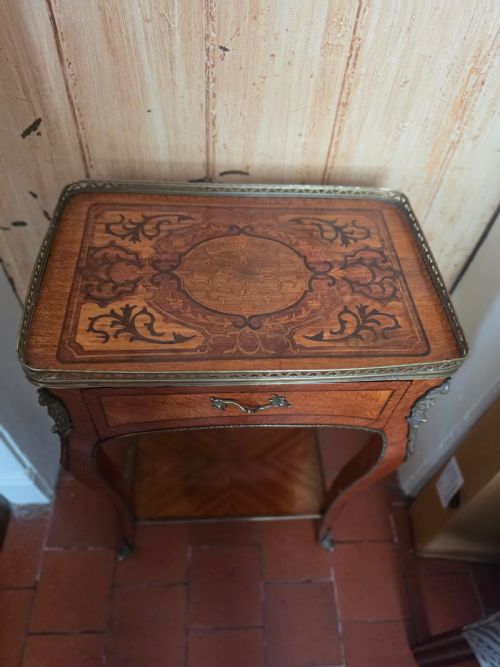
Craftsmen built these tables using foundational timbers like mahogany, walnut, and oak, often applying elaborate veneers of kingwood, rosewood, and tulipwood. Marquetry and parquetry patterns created geometric or floral designs across the wooden surfaces.
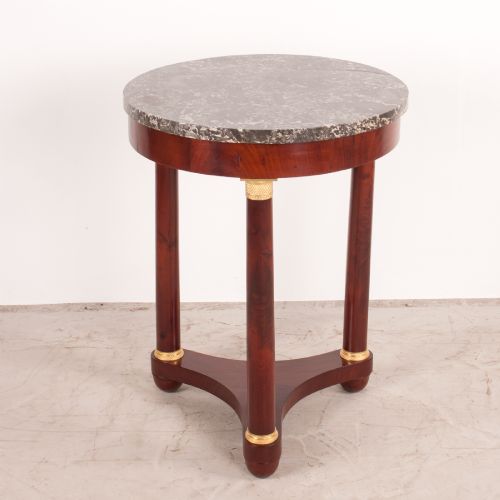
Ormolu and cast brass mounts defined the structural ornamentation, outlining table edges and embellishing cabriole legs. Marble inserts provided durable tops for centre and lamp tables, while intricate mechanisms allowed certain writing and occasional tables to adjust.
French Style Occasional Table Retail Price Guide 2026
Typical asking prices for french style occasional table among the pieces listed under this phrase on Sellingantiques today, from the lower quarter to the upper quarter. They describe what is for sale here now, not the wider market.
The documented object types include etageres, gueridons, bijouterie tables, and writing desks reflecting Louis XV and Empire revivals.
Distinctions in craftsmanship
The division between standard production and exceptional work rests on the precision of the marquetry inlay and the weight of the metal mounts. Finer examples display hand-chiselled ormolu rather than cast components with softer definition.
Cabinetmakers demonstrated superior skill in the fluidity of serpentine shapes and the integration of sophisticated mechanisms within the timber frames. Selection of highly figured woods and balanced veneer matching further separate master workshops from commercial output.
JAS Shoolbred·Tehan·L Martin of Paris·Edwards and Roberts·A Hugnet Paris·Gabriel Viardot
The French Style Occasional Table Glossary
- Ormolu
- Gilded bronze mounts applied to furniture for decorative effect. This technique was widely utilised during the nineteenth century on revival pieces.
- Marquetry
- Decorative veneer patterns arranged in pictorial or floral designs on wooden surfaces. Craftsmen cut contrasting timbers to form intricate table tops.
- Gueridon
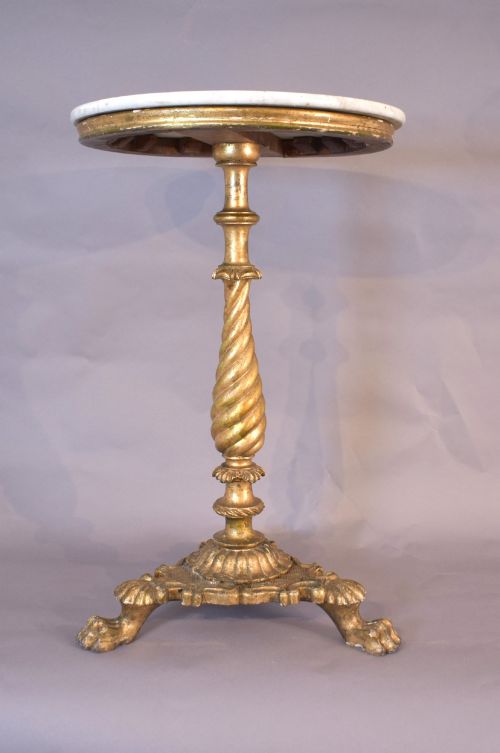
- A small circular table supported by a central pillar or tripod base. These tables frequently feature marble tops and brass galleries.
- Etagere
- A set of open shelves for displaying small objects or serving tea. These tiered tables appear in various revival styles across the nineteenth century.
- Parquetry
- Geometric wood inlay patterns forming mosaic-like designs on tabletops. This technique showcases the precise alignment of different timber grains.
French Style Occasional Table: Frequently Asked Questions
What is a french style occasional table used for?
These tables served various domestic functions throughout nineteenth and twentieth century interiors. Owners placed them in drawing rooms to hold lamps, display decorative objects, or support tea services.
Specific forms like writing tables and etageres provided dedicated surfaces for correspondence and storage. Their freestanding nature allowed them to move easily around rooms as needed.
How do you date a french style occasional table?
Dating relies on examining the timber construction, veneer choices, and metal mount technology. Pieces from the mid nineteenth century often feature rich kingwood veneers and heavy ormolu mounts reflecting Louis XV revivals.
Later examples from around nineteen hundred incorporate diverse woods like oak and satinwood alongside specific maker stamps. Comparing stylistic details against documented workshop periods helps narrow the decade of production.
How do you distinguish Louis XV and Louis XVI styles?
Louis XV style pieces are characterised by flowing asymmetrical lines, serpentine shapes, and prominent cabriole legs. The ornamentation draws heavily on rococo scrolls and floral marquetry.
Louis XVI style shifts toward classical symmetry, featuring straight fluted legs, rectangular forms, and restrained geometric mounts. This later revival reflects a return to neoclassical proportions and straight architectural lines.
How do you care for a marble top table?
Marble surfaces require gentle cleaning with mild soap and warm water to protect the polished stone from acidic damage. Avoid placing unprotected items that might scratch or stain the porous material.
Maintain the surrounding wooden frame with appropriate furniture wax, keeping the table away from direct heat sources. This prevents the timber and veneers from drying out or cracking.