
Art Deco Walnut Side Table
When you search for an art deco walnut side table, you are looking for a compact surface that combines geometric clarity with rich timber grain from the interwar decades.
Art Deco Walnut Side Table
An art deco walnut side table is a low or mid-height occasional surface designed to sit beside chairs or against walls in domestic interiors. These forms appear predominantly from the 1920s, 1930s, and 1940s, originating from English, French, and Italian workshops.
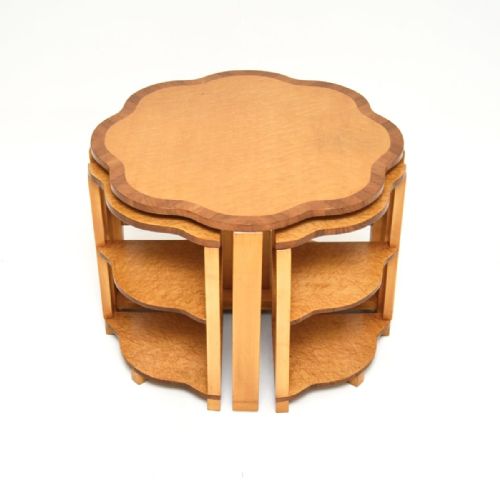
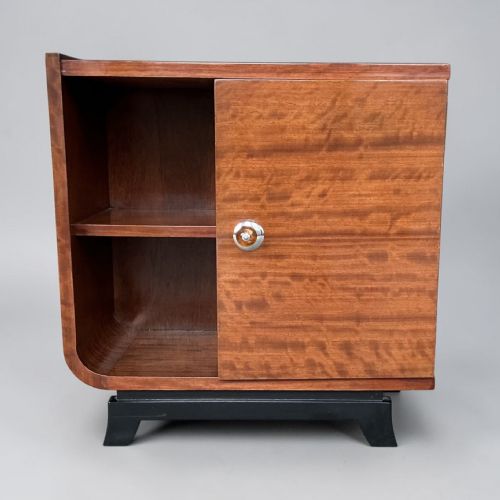
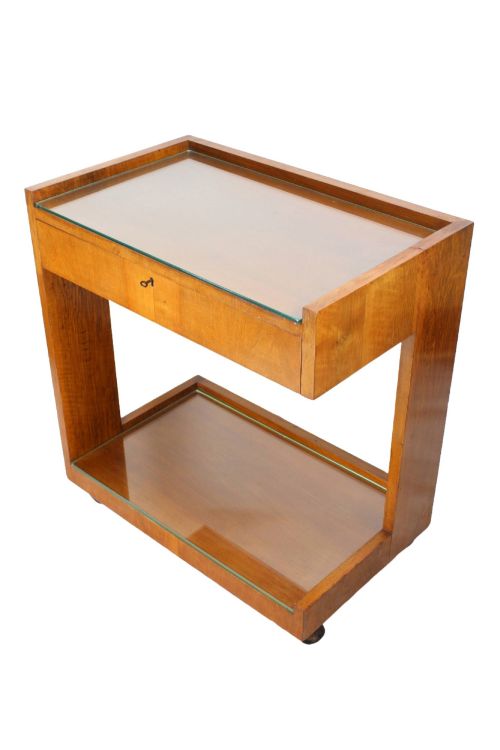
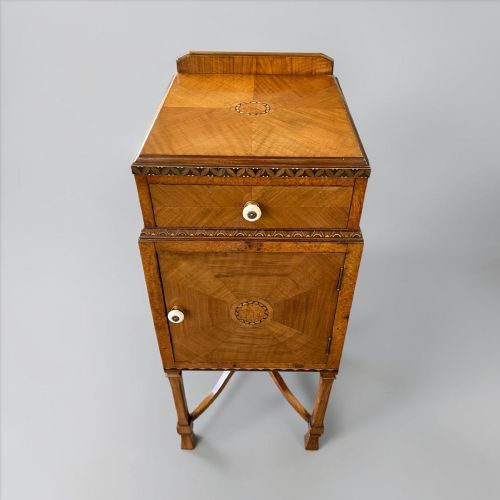
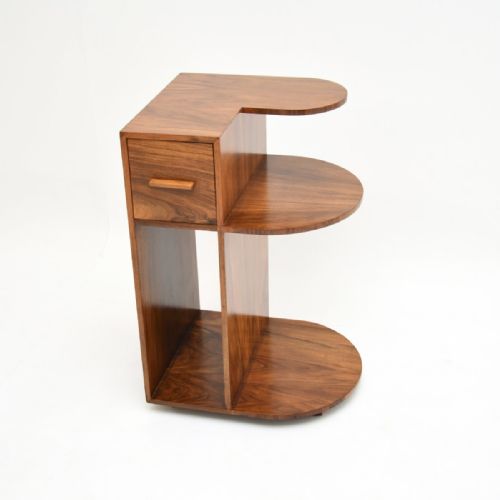
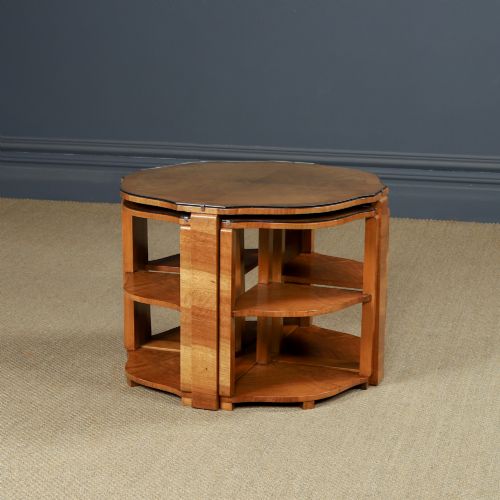
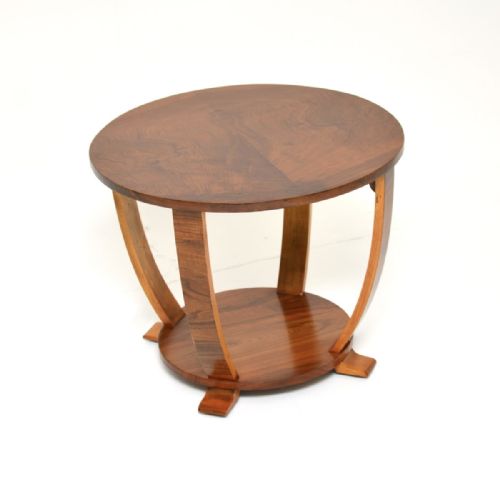
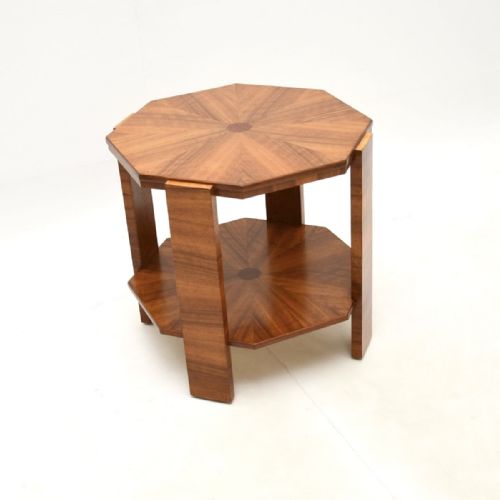
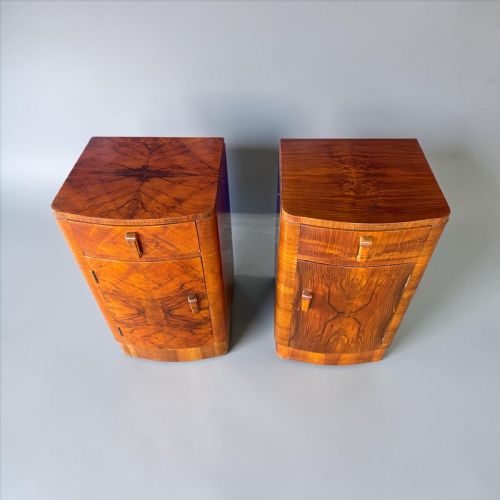
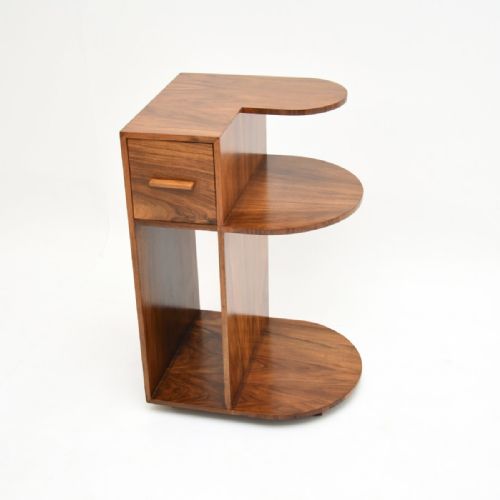
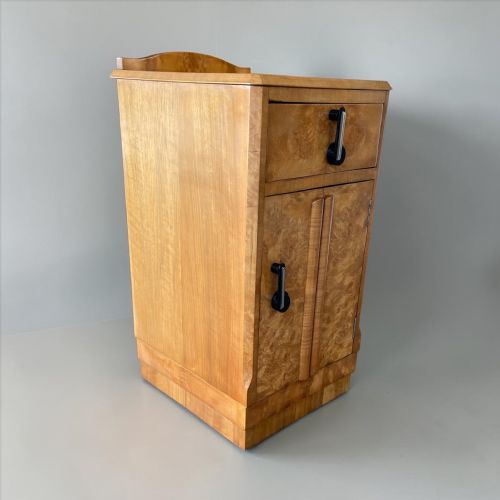
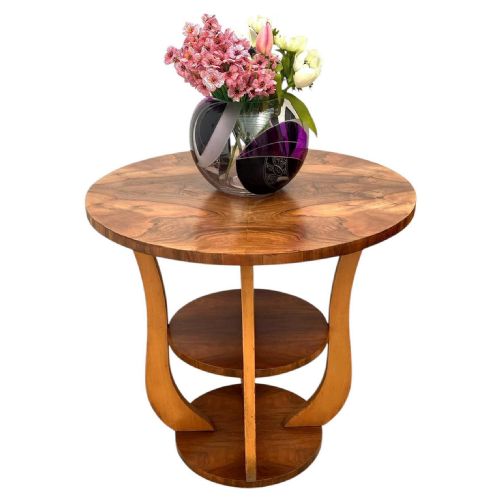
The most common formats on this page include simple square or round occasional tables, two-tier coffee tables, and matching bedside cabinets. Pieces often incorporate clever multi-tier designs or nesting capabilities to maximise utility in smaller rooms.
Makers utilised both solid timber and intricate veneers to shape functional surfaces that defined the modern household of the period. Buyers select these tables to introduce period character and warm brown tones into contemporary living spaces.
Materials and construction
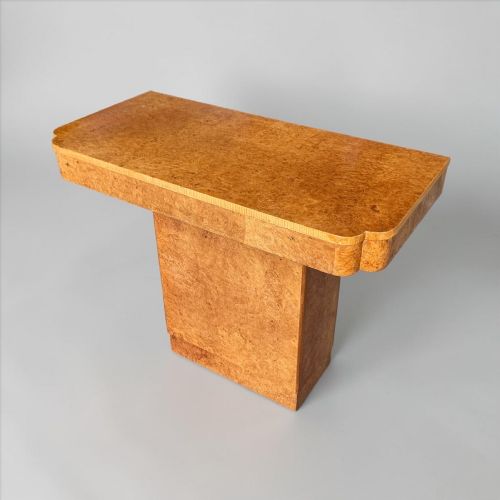
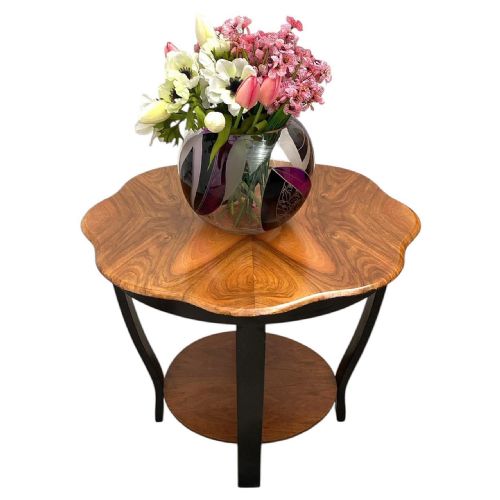
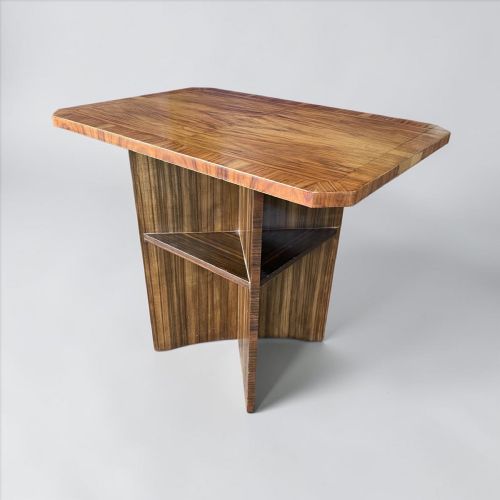
Cabinetmakers relied heavily on walnut timber, selecting figured walnut, burr walnut, and straight-grained walnut veneer over sturdy secondary woods. The complex grain patterns of burr sections were arranged symmetrically across table tops to create striking visual movement.
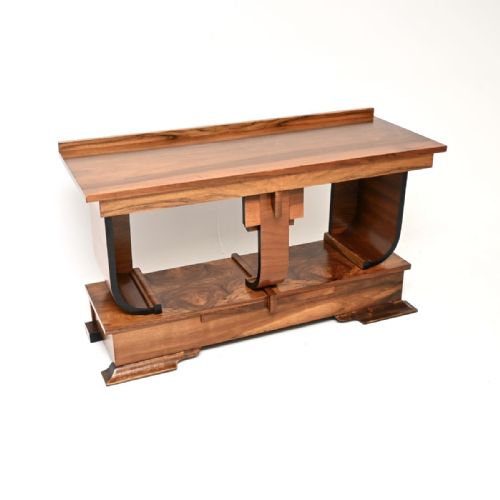
Many examples integrate contrasting materials such as brass, chrome, and ebonised wood to accentuate geometric edges and tiers. Construction techniques combined traditional joinery with advanced veneering methods popular during the 1920s and 1930s.
Listings feature items dated across three distinct decades: 1920, 1930, and 1940.
Quality factors
The standard of an art deco walnut side table rests primarily on the selection and matching of the veneer. Superior items display book-matched grain patterns that flow seamlessly across the surface, whereas lesser examples show random or mismatched joins.
Structural finesse also separates the range, observed in the crispness of tiered supports, the integration of chrome or brass fittings, and the stability of multi-tier trolleys. Pieces produced by documented firms generally demonstrate tighter tolerances in their assembly.
Walter Carter Harrods·Hille·Harry and Lou Epstein·C W Burns
The Art Deco Walnut Side Table Glossary
- Burr walnut
- A growth deformity on a walnut tree that produces swirling, highly decorative grain patterns when sliced into veneer. This material was prized by cabinetmakers for creating dramatic table tops.
- Veneer
- A thin layer of superior wood glued to a base panel to provide an ornate decorative surface without warping. It defines the patterned look of most tables from this era.
- Occasional table
- A small, movable piece designed for temporary use rather than heavy daily service. These versatile surfaces include lamp tables, wine tables, and coffee stands.
- Two-tier
- A table featuring an additional lower shelf supported by uprights or columns. This layout provides extra storage space while maintaining a compact footprint.
Art Deco Walnut Side Table: Frequently Asked Questions
How do I date an art deco walnut side table?
Dating relies on stylistic markers such as stepped tiers, rounded waterfall edges, and the presence of chrome or brass trim typical of the 1920s and 1930s. Construction methods and secondary woods also help confirm the manufacturing decade.
Most surviving pieces date from the interwar period, though exact years often depend on documented maker marks or regional design traits.
Are these tables suitable for everyday use?
These pieces function well for holding lamps, books, or drinks in modern reception rooms. Their sturdy wood frames are built to handle normal daily living requirements.
Care should be taken to protect veneer surfaces from excessive moisture and direct heat to preserve the polished finish.
What is the difference between an occasional table and a side table?
An occasional table generally refers to a light, movable piece meant to be placed where needed in a room. A side table often has a more defined stationary role beside a sofa or bed.
In practice, makers and sellers frequently interchange these terms based on the size and proportions of the item.
How should I care for walnut veneer?
Maintenance involves dusting with a soft cloth and avoiding silicone-based polishes that can build up over time. Keeping the timber away from strong sunlight prevents the walnut tones from fading.
Applying a quality wax occasionally helps nourish the wood and maintain its subtle sheen.