
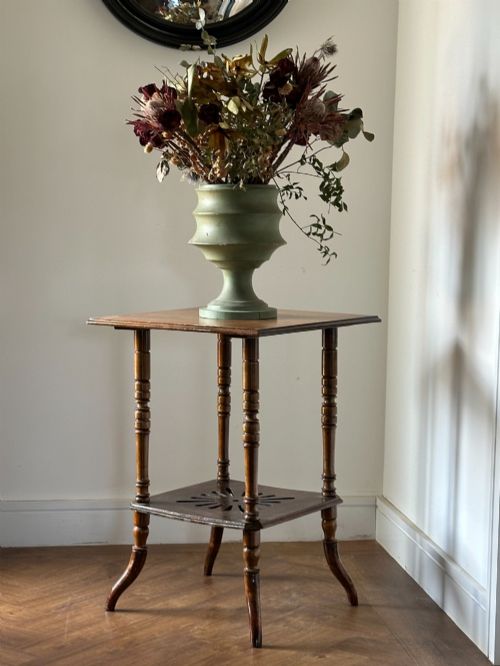
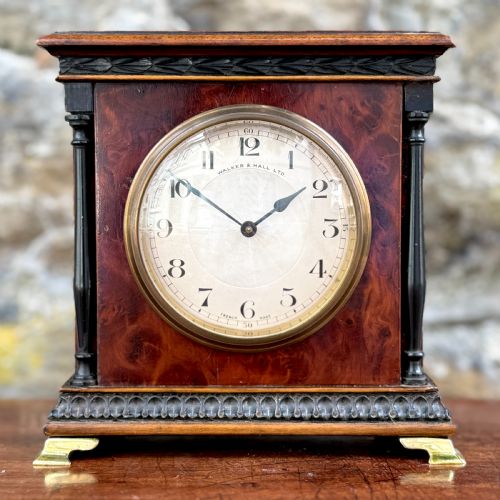
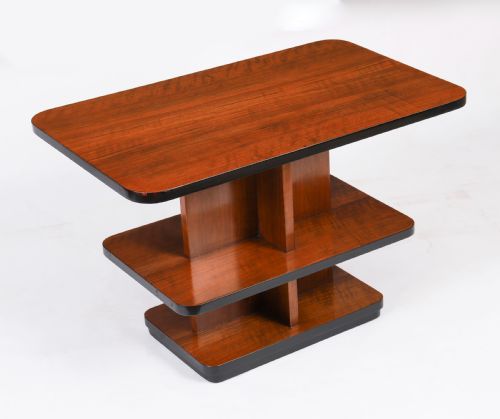
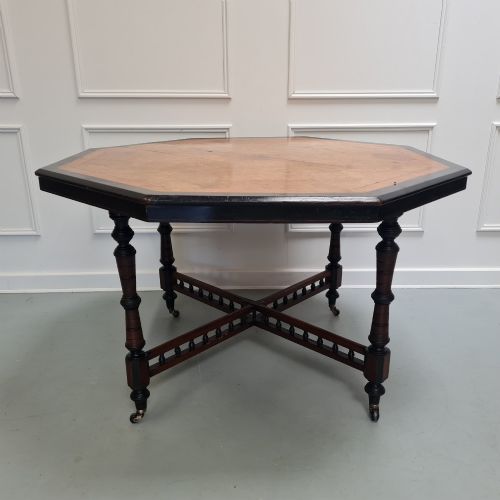
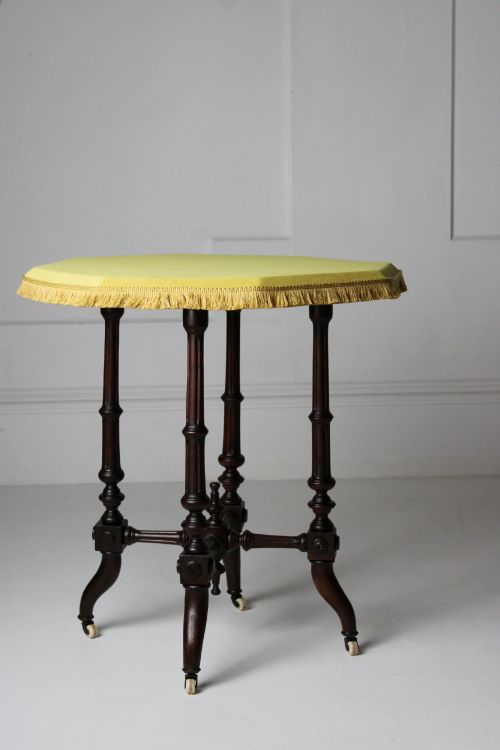
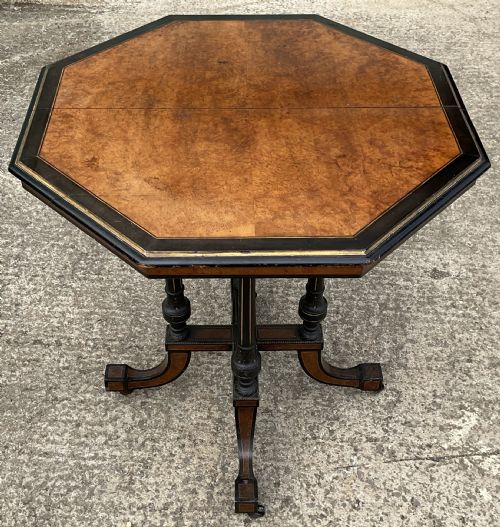

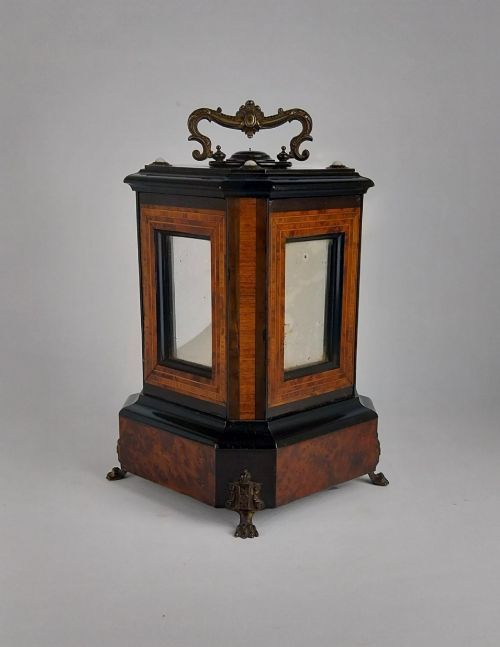
Ebonised and Walnut Table
When you search for an ebonised and walnut table, you find pieces that combine dark contrasting timber with warm figured grain, primarily from the Victorian and Aesthetic Movement periods.
Ebonised and Walnut Table
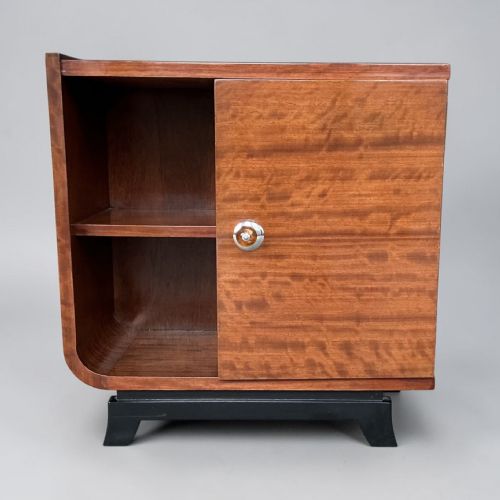
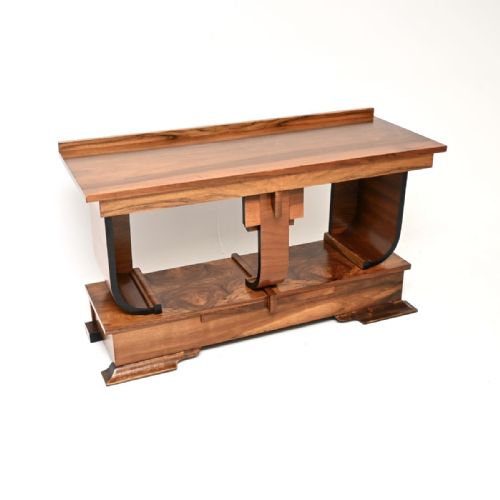
An ebonised and walnut table is typically encountered as a centre table, occasional table, or card table dating from the nineteenth century. These forms reflect the Victorian and Aesthetic Movement taste for contrasting dark surfaces and rich wood grain.
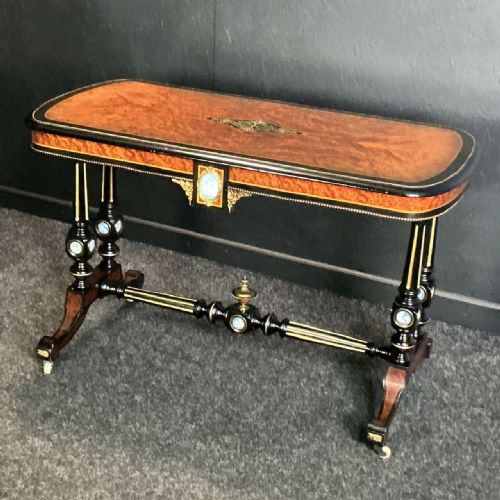
Makers utilised the contrast between deep black ebonised timber and the warm, figured grain of walnut or burr walnut to highlight geometric and architectural silhouettes. Such furniture served domestic drawing rooms and libraries as functional surface pieces.
The selection ranges from compact octagonal occasional tables to larger freestanding centre tables and games tables. Pieces from this category frequently incorporate marquetry inlay or parcel gilt details alongside the primary dual-timber construction.
How they were made
Cabinet makers constructed the foundational carcass using timbers such as walnut, applying ebonised finishes to turned legs, mouldings, or specific structural panels. Burr walnut veneers provided highly figured surfaces for table tops and friezes.
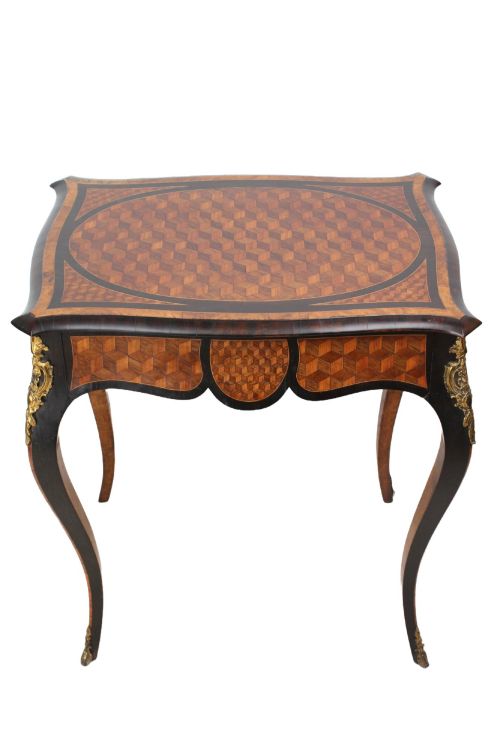
Surface decoration often included marquetry and parquetry inlay using contrasting woods, alongside brass or ormolu mounts on French-influenced examples. Ebonising involved staining and polishing secondary hardwoods to simulate ebony.
Listings feature nineteenth-century periods, including Victorian, Aesthetic Movement, and French Napoleon III styles.
What varies in quality
Quality rests in the selection of the burr walnut veneer and the precision of the marquetry inlay. Superior examples display balanced grain patterns across the top and crisp execution of the ebonised mouldings.
Construction methods determine durability, visible in the stability of the central pedestal or leg joints and the retention of original brass hardware. Finer pieces demonstrate careful attention to secondary timbers and restrained decorative mounts.
JAS Shoolbred·Edward And Roberts·Walker And Hall·Gillows·S And H Jewell·Holland And Sons·Gordon Russell
The Ebonised and Walnut Table Glossary
- Ebonised
- Timber treated with stain and polish to resemble solid ebony. This dark finish provides sharp contrast against lighter walnut veneers.
- Burr Walnut
- Wood harvested from the warted growths of walnut trees, yielding intricate, swirling grain patterns. Cabinet makers prized this material for decorative table tops.
- Marquetry
- The art of applying thin slices of wood veneer to a structure to form pictorial or geometric designs. Artisans combined various timbers to create elaborate surface patterns.
- Aesthetic Movement
- A nineteenth-century design style emphasising visual beauty over narrative content, often drawing inspiration from Japanese art. Furniture from this movement frequently pairs ebonised framing with walnut surfaces.
Ebonised and Walnut Table: Frequently Asked Questions
Where did people use these tables?
These tables stood in nineteenth-century drawing rooms, parlours, and libraries as central decorative or functional surfaces. Homeowners placed them in the middle of rooms or against walls for display and social activities.
Card tables and games tables accommodated evening entertainment, while smaller occasional versions held books, lamps, or small decorative objects.
How do I distinguish Aesthetic Movement examples?
Aesthetic Movement tables usually feature geometric lines, ebonised structures, and contrasting burr walnut panels. They often show Japanese-inspired design elements or simplified architectural forms.
Dates cluster around the 1870s and 1880s, sometimes reflecting designs by figures such as E.W. Godwin.
How do I care for walnut and ebonised surfaces?
Keep these pieces away from direct sunlight and steady heat sources to protect the wood and veneer. Dust gently with a dry, soft cloth and avoid chemical polishes.
Maintain stable indoor humidity levels to prevent the walnut from drying and the ebonised finish from cracking.
What is the difference between a centre table and an occasional table?
Centre tables are traditionally larger, freestanding pieces designed to sit in the middle of a room with finished detail on all sides. Occasional tables are smaller, more portable pieces built for specific, intermittent use.
Both forms utilise the combination of ebonised framing and walnut tops, but their scale dictates their placement in a room.