




Ebonised Leg Side Desk
These ebonised leg side desk pieces and related writing tables combine dark timber finishes with period craftsmanship, offering both functional workspaces and striking historical character.
Ebonised Leg Side Desk
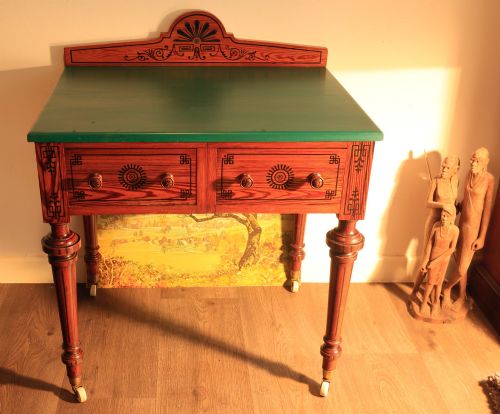
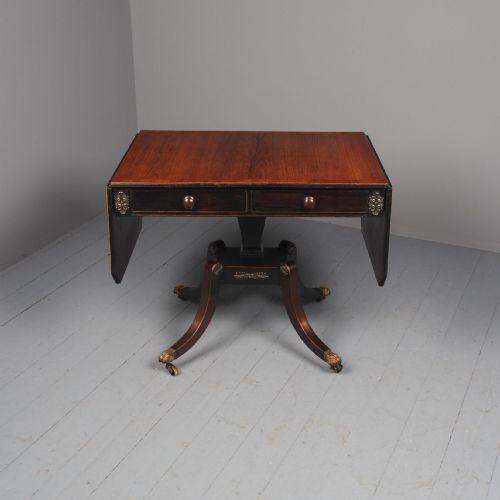
An ebonised leg side desk brings together compact writing surfaces and dark-finished supports, drawing on periods from the Regency era through to the late Victorian years. Buyers searching this phrase meet writing desks, side tables, and centre tables that incorporate ebonised wood alongside mahogany, rosewood, and walnut.
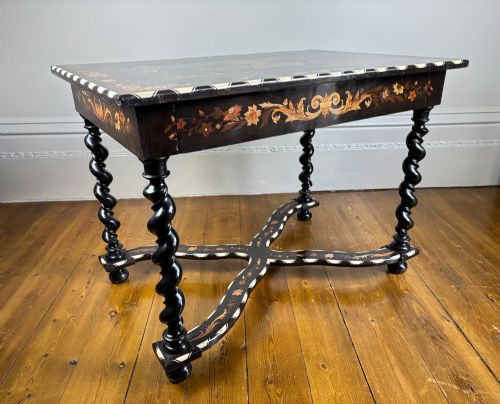
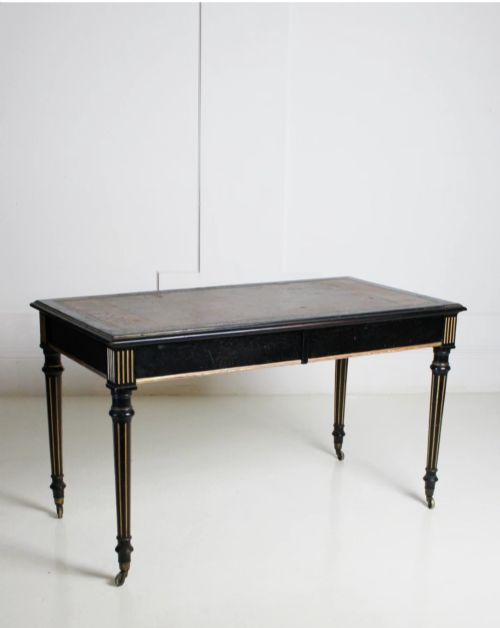
The selection spans various regional interpretations including Dutch marquetry, French Napoleon III brass inlay, and Spanish baroque revival forms. Pieces range from straightforward side tables adapted for writing to elaborate freestanding centre tables with bone inlay and intricate veneering.
How they were made
Cabinet makers utilised dense hardwoods such as mahogany and rosewood, applying ebonisation treatments to simulate expensive ebony. Surfaces received contrasting decorative elements including brass inlay, marquetry veneers, and bone inlay.
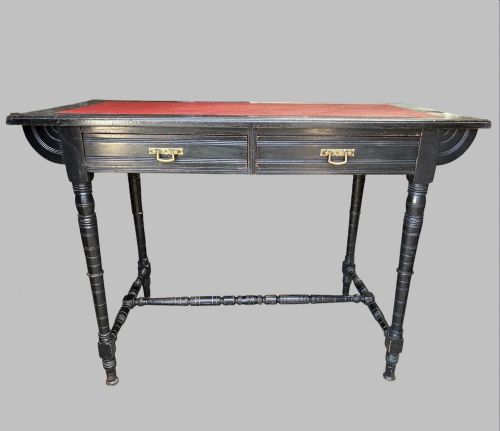
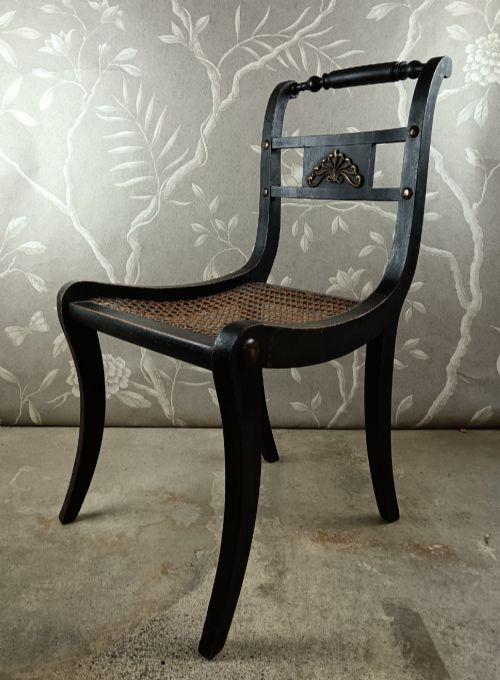
Structural elements frequently incorporated turned or sabre legs, sometimes paired with original cane seats or fitted leather writing surfaces. Ormolu mounts and gilded details appear on select French and revival examples from the nineteenth century.
Current listings feature pieces spanning the Regency, Victorian, and Aesthetic Movement periods, incorporating ebonised wood, brass, and marquetry veneers.
What varies in quality
The distinction between standard and superior pieces rests on the precision of the marquetry and the crispness of the ebonised finish. Finer examples display meticulous brass inlay and well-preserved secondary timbers like satinwood or burr walnut.
The Ebonised Leg Side Desk Glossary
- Ebonised wood
- Timber treated with a dark stain or finish to imitate ebony. This technique was widely utilised during the nineteenth century for furniture requiring a uniform black appearance.
- Marquetry
- Decorative veneer work arranged in pictorial or geometric patterns. Craftsmen applied thin slices of various woods to create contrasting surface designs.
- Sabre leg
- A concave curved furniture leg that tapers toward the foot. This form appears frequently on Regency chairs and tables.
- Parquetry
- Geometric wood veneer patterns arranged in repetitive motifs. It provides durable and ornamental surfaces on tabletop centres.
Ebonised Leg Side Desk: Frequently Asked Questions
How do I use an ebonised desk today?
These pieces serve well as compact writing desks, laptop stations, or accent tables in a study or living area. Their finished backs often allow them to stand freestanding in the middle of a room.
Protect the ebonised finish and any leather inserts from direct moisture and heat. Regular dusting with a soft cloth maintains the polished dark surface without chemical buildup.
What periods do these desks come from?
The pieces span the Regency period, the Victorian era, and later revival styles up to the early twentieth century. Design details such as sabre legs or heavy marquetry help indicate the specific era of manufacture.
Regional influences also define the timeline, from French Napoleon III brass-inlaid pieces to Dutch and Spanish revival examples from the nineteenth century.
How do I identify ebonised wood?
Ebonisation involves staining or painting light-coloured timber to achieve a deep black finish that mimics solid ebony. Close inspection around corners or wear points may reveal the underlying grain of woods like mahogany or fruitwood.
Unlike painted surfaces, proper ebonisation penetrates the timber pores while retaining the natural texture of the wood beneath.
Are these tables suitable for daily writing?
Many of these historical tables were built specifically as writing desks or centre tables with durable surfaces. Leather inserts and sturdy timber construction provide a practical foundation for everyday use.
Care should be taken with antique mechanisms in older drawers and delicate marquetry veneers when placing heavy items on the writing surface.