








Black Lacquered Coffee Table
A black lacquered coffee table brings deep gloss and hand-drawn detail into a room, offering a functional surface rooted in centuries of Asian and European finishing traditions.
Black Lacquered Coffee Table
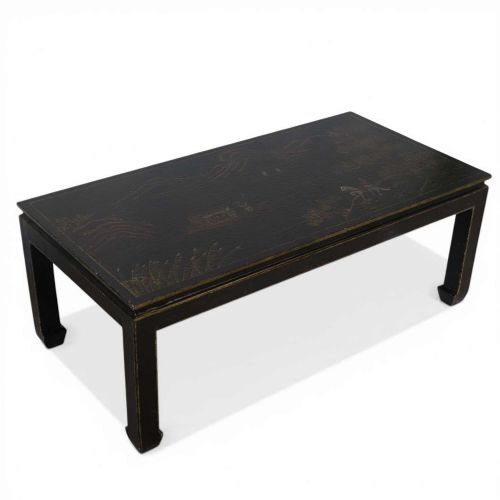
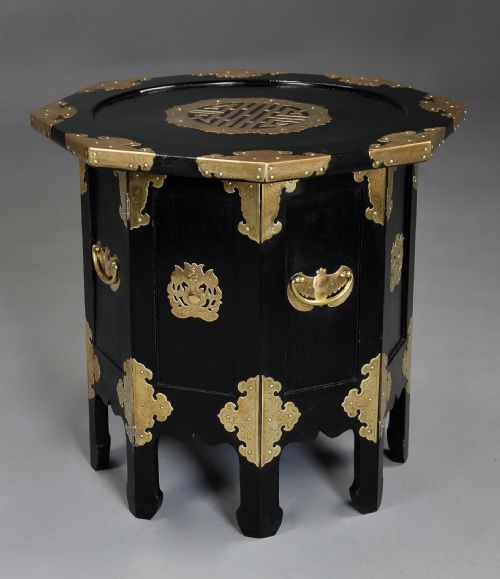
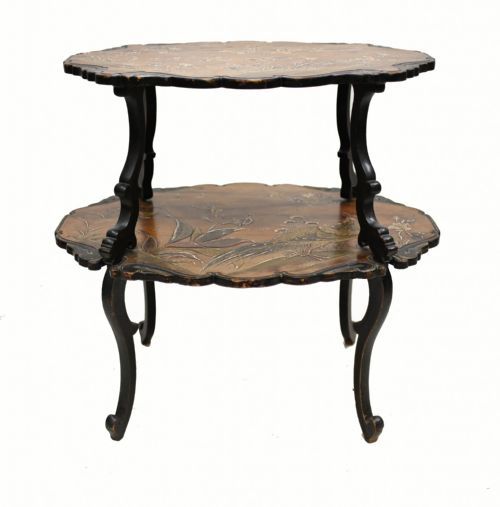
A black lacquered coffee table sits low to the floor, serving as a stable centrepiece while introducing reflective dark surfaces to a seating arrangement. The pieces found here span Edwardian Chinoiserie, traditional Chinese forms, Burmese colonial designs, and French Louis XV styles adapted for low daily use.
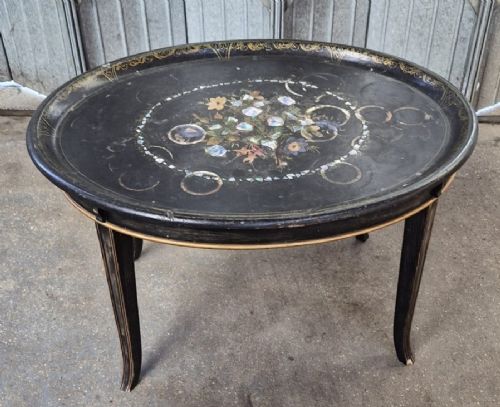
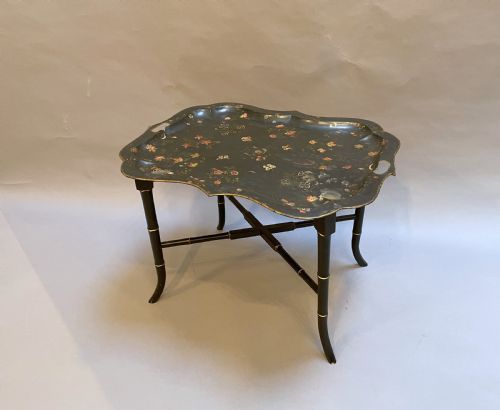
Most examples originate from the early twentieth century or the Victorian and Edwardian eras, often converting older tray tops or occasional tables into low coffee tables. Forms range from simple low wooden platforms to tray-top tables on stands and pie-crust tea tables lowered for modern living.
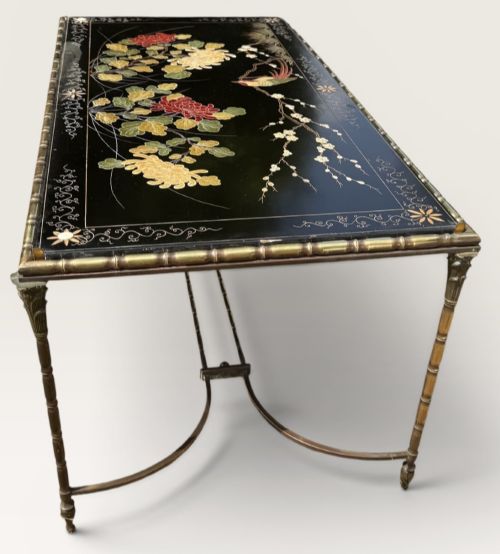
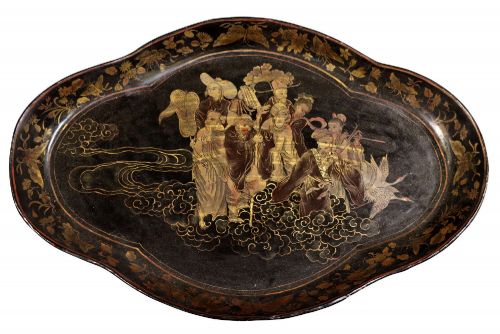
The aesthetic leans heavily on Chinoiserie decoration, pairing black grounds with gold pigment, mineral colours, and inlaid glass or mother-of-pearl. These tables function equally well in restrained minimalist interiors and layered traditional rooms.
Materials and Construction
Makers built these tables using timber bases, utilising ebonised hardwoods, traditional woods, and occasionally papier-mâché for lighter tray sections. Iron stands and timber frames provide the structural support beneath the finished top.
The distinctive black finish relies on layers of lacquer and pigment, built up and polished to create a deep sheen. Artisans applied gold and mineral pigments by hand to render figures, landscapes, and floral motifs across the surface.
Black Lacquered Coffee Table Retail Price Guide 2026
Typical asking prices for black lacquered coffee table among the pieces listed under this phrase on Sellingantiques today, from the lower quarter to the upper quarter. They describe what is for sale here now, not the wider market.
Qualities That Separate the Range
The depth and resilience of the lacquer finish distinguish standard commercial pieces from finer workshop productions. Superior surfaces display multiple hand-rubbed coats that catch the light evenly without clouding the underlying decoration.
The refinement of the painted or gilded detail dictates the visual success of the piece. Delicate, expressive brushwork on Chinoiserie scenes requires skilled draughtsmanship, whereas hurried execution yields flat, repetitive patterns that lack depth.
The Black Lacquered Coffee Table Glossary
- Chinoiserie
- European decorative style reflecting Chinese artistic influences, popular in furniture design during the Victorian and Edwardian periods. It relies on motifs of landscapes, pagodas, and figures rendered in gold on dark grounds.
- Ebonised
- Timber treated with stain, dye, or paint to imitate expensive ebony wood. This treatment gives the base material a dense, uniform black appearance.
- Lacquer
- A durable resin finish applied in thin coats and polished to a hard sheen. Historically derived from tree saps or synthetic varnishes, it forms a protective and decorative layer.
- Pie Crust
- A carved or moulded raised edge on a table top, shaped with scalloped indentations resembling pastry work. This detail appears frequently on tea tables adapted for coffee table heights.
- Tray Top
- A removable or fixed table top featuring raised edges designed to contain items. Many early examples repurpose serving trays mounted onto dedicated stands.
Black Lacquered Coffee Table: Frequently Asked Questions
What is a black lacquered coffee table?
A low wooden table finished with dark lacquer, often decorated with gold or mineral pigment in Asian or European revival styles.
These pieces range from early twentieth century Chinoiserie designs to Victorian adaptations and French-influenced occasional tables.
How do I care for lacquer furniture?
Protect the surface from heat and moisture by using coasters and mats beneath cups and glasses. Dust gently with a soft, dry cloth rather than harsh chemical polishes.
Maintaining stable indoor humidity prevents the underlying timber from shifting and protects the delicate finish from cracking.
Are these tables sturdy enough for daily use?
Most examples utilise solid timber frames and durable lacquer finishes designed for functional placement in sitting rooms. Tray-top versions on folding or fixed stands require attention to the stability of the joinery.
While robust, they reward mindful placement away from heavy impacts and direct sunlight.
How can I tell Edwardian Chinoiserie from Victorian pieces?
Edwardian examples tend to feature lighter proportions and brighter gilt detailing on black grounds, reflecting the taste of the early 1900s. Victorian pieces often incorporate heavier ebonised timber, inlaid glass, or deeper carved elements.
Examining the construction methods and secondary woods underneath helps clarify the manufacturing era.
Can I use a converted tea table as a coffee table?
Many tables from the nineteenth and early twentieth centuries were adapted to lower heights for modern seating layouts. These conversions provide practical surface areas while retaining their original decorative tops.
Checking the proportions ensures the height aligns comfortably with surrounding sofas and armchairs.