



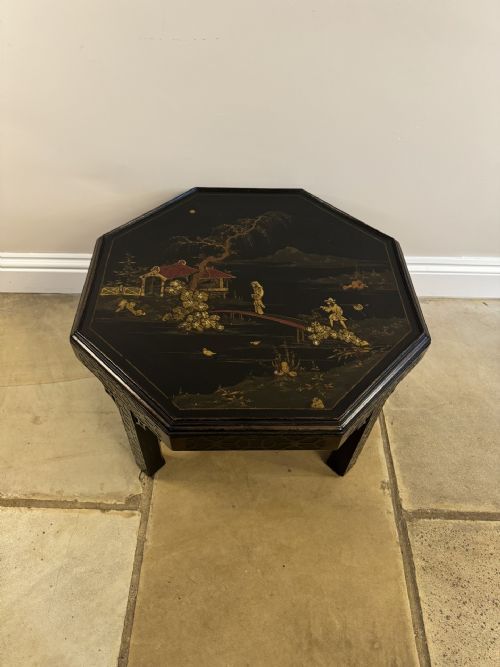


Chinoiserie Cocktail Table
A chinoiserie cocktail table brings deep black lacquer, gilt scenes, and low proportions to a room, offering both a functional surface and a striking focal point.
Chinoiserie Cocktail Table
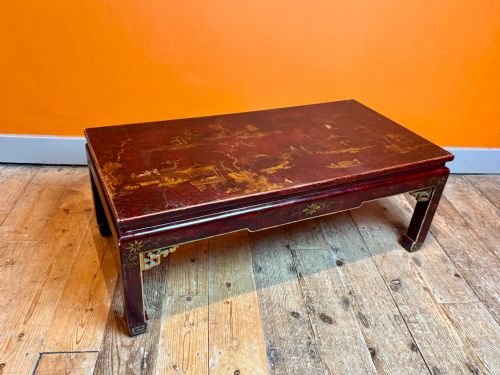
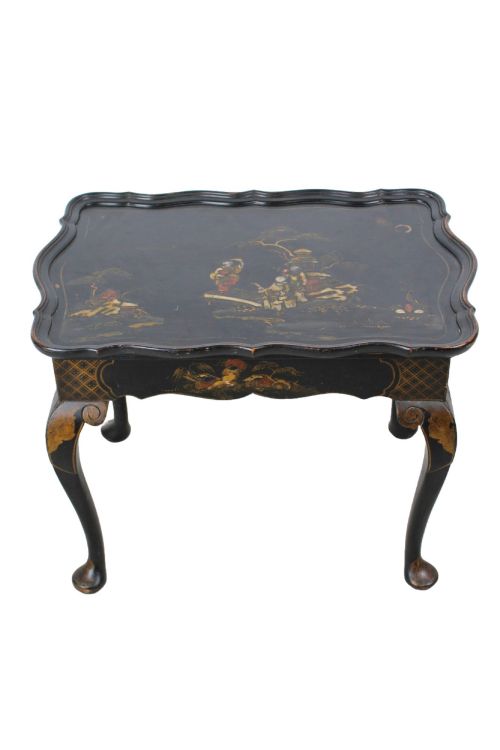
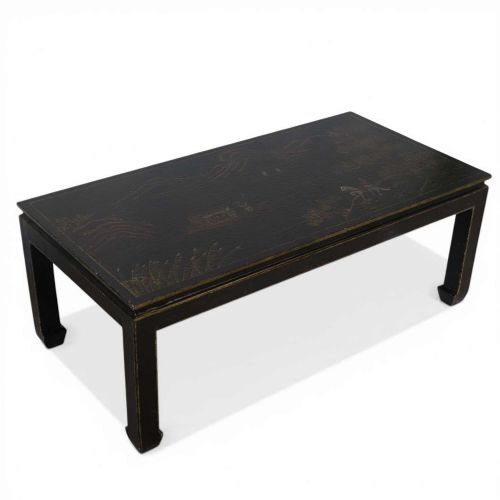
A chinoiserie cocktail table combines low proportions with hand-decorated orientalist motifs, designed to sit comfortably before seating while drawing the eye with painted surfaces. When you search for a chinoiserie cocktail table, you encounter pieces that function as coffee tables, occasional tables, and low tables, taking forms such as circular tops, rectangular shapes, and removable tray tops.
The examples gathered here span from the nineteenth century through the Edwardian era and the nineteen-thirties, reflecting stylistic revivals that reinterpreted traditional Chinese designs for British and European interiors. You find Edwardian iterations alongside Regency style interpretations, mid-century French pieces, and ebonised low tables.
Makers and workshops of the early twentieth century often utilised black and gilt lacquer finishes, raised relief detail, and decorative painted scenes to create these low surfaces. These tables suit rooms where a dark, reflective surface with pictorial detail provides a strong contrast to upholstered seating.
Materials and Construction
Construction relies primarily on wood as a foundation, shaped into low coffee tables, occasional tables, and tray tops. Wood provides the stable substrate necessary for the application of subsequent decorative finishes.
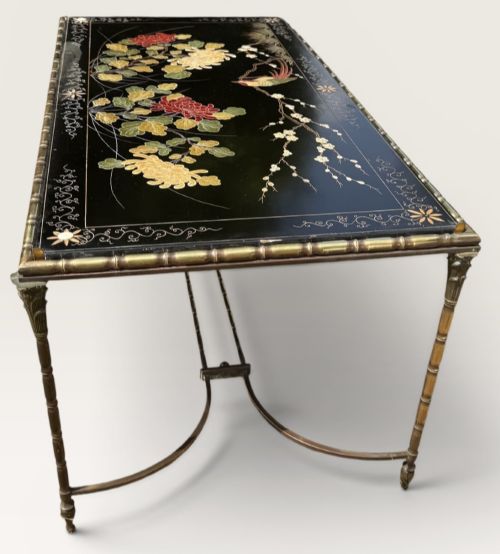
Surfaces are finished with lacquer, paint, and gilt paint to achieve the characteristic black and metallic sheen. Artisans applied layers of lacquer and decorative painted scenes, sometimes incorporating raised relief detail and applied soapstone elements to give texture and depth to the pictorial panels.
Chinoiserie Cocktail Table Retail Price Guide 2026
Typical asking prices for chinoiserie cocktail table among the pieces listed under this phrase on Sellingantiques today, from the lower quarter to the upper quarter. They describe what is for sale here now, not the wider market.
Materials recorded across these tables include wood, lacquer, gilt, brass, and soapstone.
Assessing Quality and Execution
Quality rests in the depth of the lacquer finish and the hand execution of the painted scenes. Tables featuring crisp gilt work, subtle tonal variation in the painted motifs, and detailed raised relief represent superior craftsmanship compared to plain or mechanically printed surfaces.
The integration of the hardware and the stability of the low frame further distinguish individual pieces. Tray top variants show distinction in the crispness of the edge mouldings and how securely the tray sits upon its base.
Maison Bagues
The Chinoiserie Cocktail Table Glossary
- Chinoiserie
- European interpretation and imitation of Chinese and East Asian artistic traditions, popular in furniture decoration. This style employs motifs such as pavilions, figures, and landscapes rendered in gold upon dark grounds.
- Japanning
- A European form of finishing that mimics East Asian lacquerware by applying heat-dried varnishes and paints. It typically results in a glossy black surface adorned with raised gilt decoration.
- Tray top
- A furniture form featuring a removable or fixed upper surface with raised edges, originally designed for serving. In coffee tables, this form sits upon a low stand.
- Ebonised
- Wood treated to resemble ebony through staining, painting, or chemical processing. This dark finish provides a high-contrast background for gilt painting.
- Relief
- Sculptural technique where figures or ornamentation project from the flat background. On these tables, relief work adds tactile dimension to painted scenes.
Chinoiserie Cocktail Table: Frequently Asked Questions
What is a chinoiserie cocktail table?
A chinoiserie cocktail table is a low surface decorated with European interpretations of Chinese art, typically featuring black lacquer and gilt painted scenes.
These tables serve as central coffee or occasional surfaces in a room, combining practical utility with decorative pictorial detail.
How were these tables used originally?
They functioned as low tables for serving refreshments or displaying decorative objects within formal or casual entertaining spaces.
Tray top variants allowed the upper section to be lifted and used independently for serving drinks.
How do I date an antique table?
Dating relies on examining the construction methods of the wooden frame, the composition of the lacquer, and the stylistic traits of the painted motifs.
Edwardian and early twentieth-century examples display construction techniques and decorative revivals distinct from nineteenth-century originals.
How do I care for a lacquered surface?
Lacquered and painted wood requires gentle cleaning with a soft, dry cloth to prevent scratching the delicate gilt and varnish layers.
Keep these tables away from direct sunlight and excessive moisture to protect the finish from fading or lifting.