





Black Lacquered Low Table
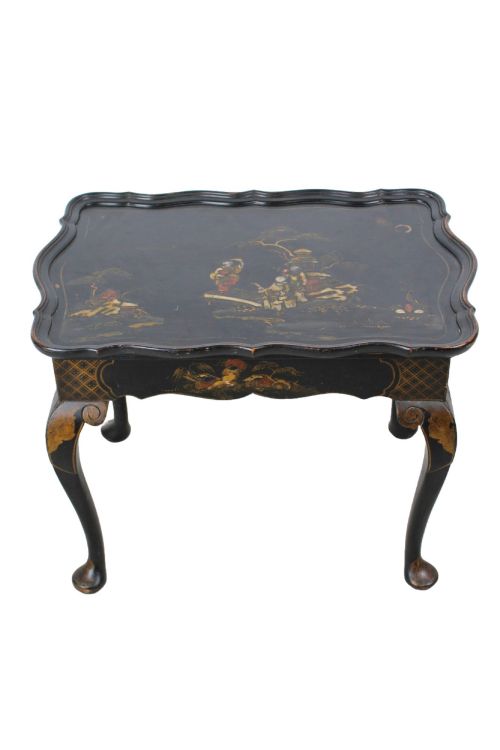
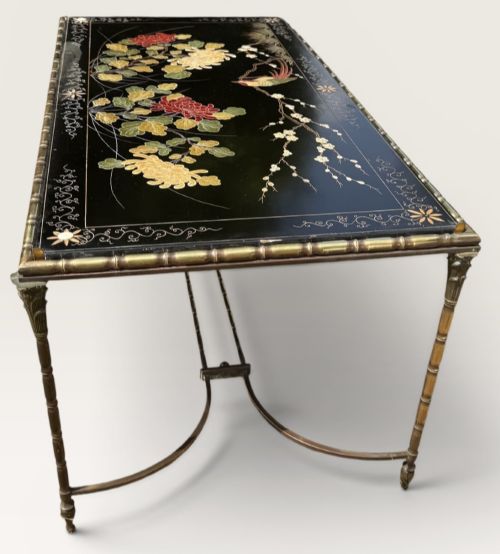
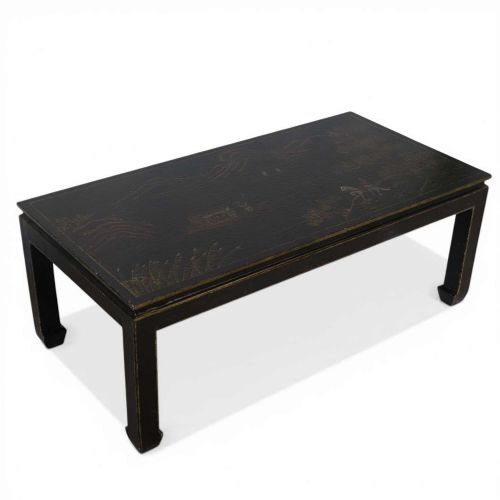
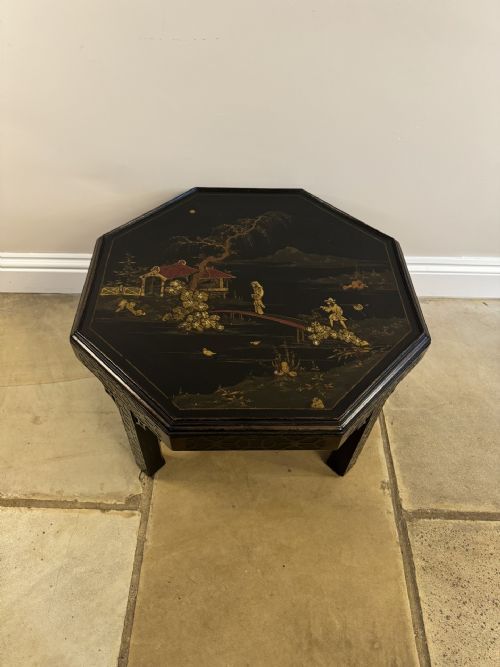
A black lacquered low table brings rich hand-painted detail and a deep glossy surface to a sitting room.
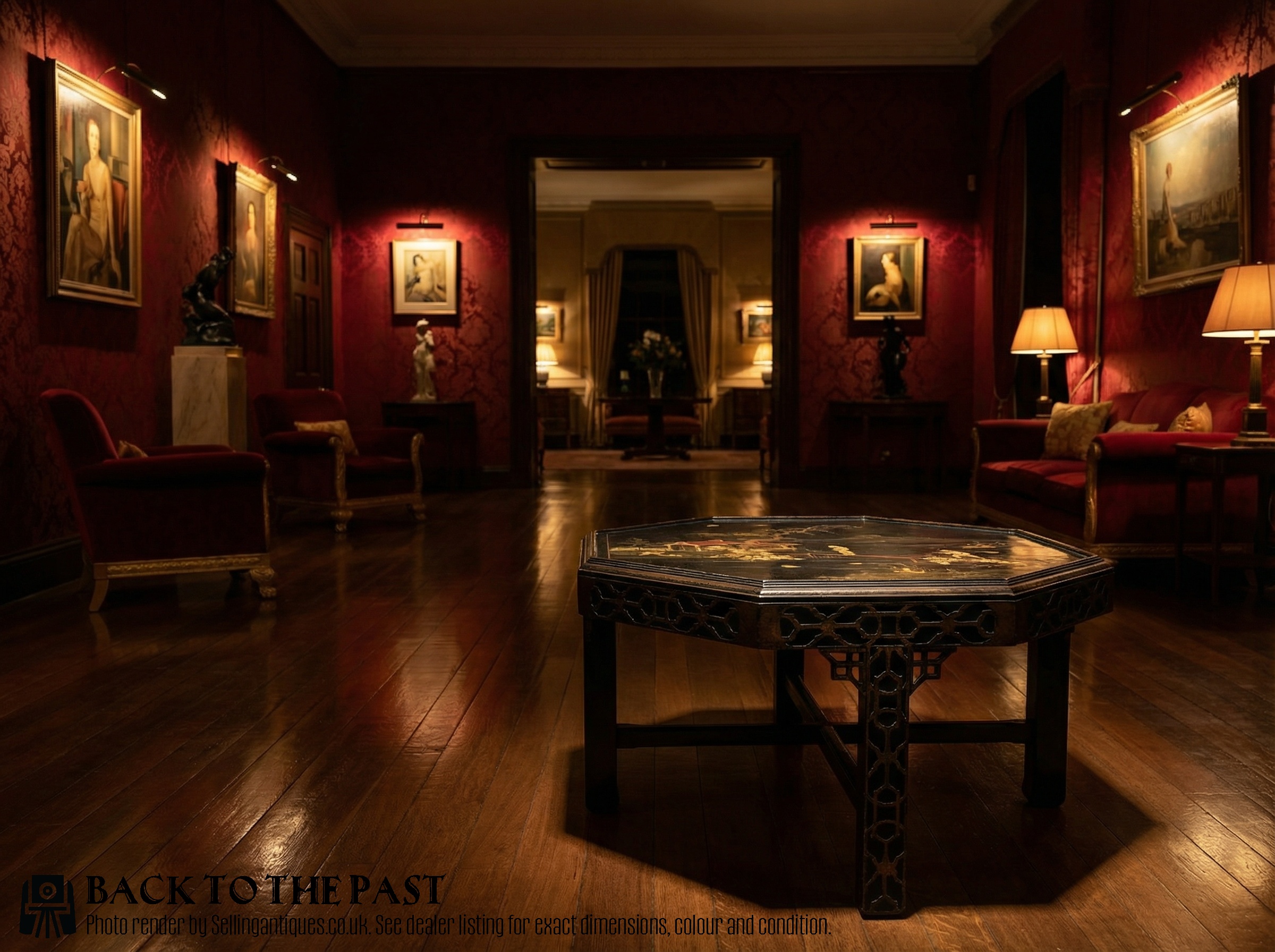
Black Lacquered Low Table
A black lacquered low table combines surface sheen with low proportions suited to modern seating arrangements. These pieces function primarily as coffee tables and occasional tables within domestic spaces.
The selection on this page spans several eras, including the Edwardian period, the nineteenth century, and the early twentieth century. Common forms range from circular designs and tray tables to adapted chests.
Stylistic influences lean heavily towards Chinoiserie, alongside Regency style, Art Deco, and Louis XV style pieces. Buyers meet both English interpretations and traditional Chinese forms.
How they were made
Constructed principally from wood, these tables rely on layers of lacquer applied to create a smooth, durable finish. Papier-mache also appears in specific foundational forms.
Surface decoration frequently incorporates gilt paint and raised relief details to depict traditional scenes and motifs. Brass elements occasionally accent the structural framework or serve as hardware.
Black Lacquered Low Table Retail Price Guide 2026
Typical asking prices for black lacquered low table among the pieces listed under this phrase on Sellingantiques today, from the lower quarter to the upper quarter. They describe what is for sale here now, not the wider market.
Some tables double as giant tea trays, proving our ancestors knew the absolute value of breakfast in bed.
What varies in quality
The depth and uniformity of the lacquer finish establish the primary baseline for a piece's craftsmanship. Smoother, more resilient surfaces reflect higher standards of original production.
Artistic execution in the painted scenes and raised relief work separates standard decorative output from finer examples. Hand-rendered detail demands greater skill than simpler stencil or print applications.
Maison Bagues
The Black Lacquered Low Table Glossary
- Chinoiserie
- European interpretation and imitation of Chinese artistic traditions and motifs. This style heavily influences the decoration found on many black lacquered low tables.
- Japanned
- European-made lacquerwork that imitates Asian lacquer techniques. Artisans built up layers of varnish on a wooden base before decorating the surface.
- Papier-mache
- A composite material made from paper pulp or reinforced paper sheets mixed with glue. Craftsmen moulded this substance to form smooth table tops and trays before lacquering.
- Tray table
- A removable tray resting upon a folding or fixed wooden stand. These pieces serve flexible functions in domestic interiors.
Black Lacquered Low Table: Frequently Asked Questions
Are these tables sturdy enough for daily use?
These tables are built from solid wood or structured bases designed to handle everyday living. Their lacquer finishes provide a protective layer against normal domestic wear.
Careful placement away from direct heat sources helps preserve the wooden structure and decorative surface over time.
How do I clean a lacquered surface?
Dusting with a soft, dry microfibre cloth removes everyday particles without scratching the gloss finish. Avoid abrasive cleaning products or excess moisture.
Applying a specialist furniture wax occasionally helps maintain the lustre of the lacquer without dulling the decorative scenes.
What is the difference between Chinoiserie and traditional Chinese pieces?
Chinoiserie describes European decorative arts created in a Chinese taste, often featuring fanciful landscapes and figures. These items date primarily from the Edwardian and early twentieth-century periods.
Traditional Chinese pieces originate from distinct cultural workshops and follow indigenous aesthetic principles regarding form and symbolism.
How do I identify an Edwardian piece?
Edwardian examples often feature light wood construction finished with dark japanning and delicate gilt Chinoiserie motifs. They frequently take the form of tray tops or circular occasional tables.
Construction methods and hardware typical of the early twentieth century help confirm the manufacturing era of these specific tables.