



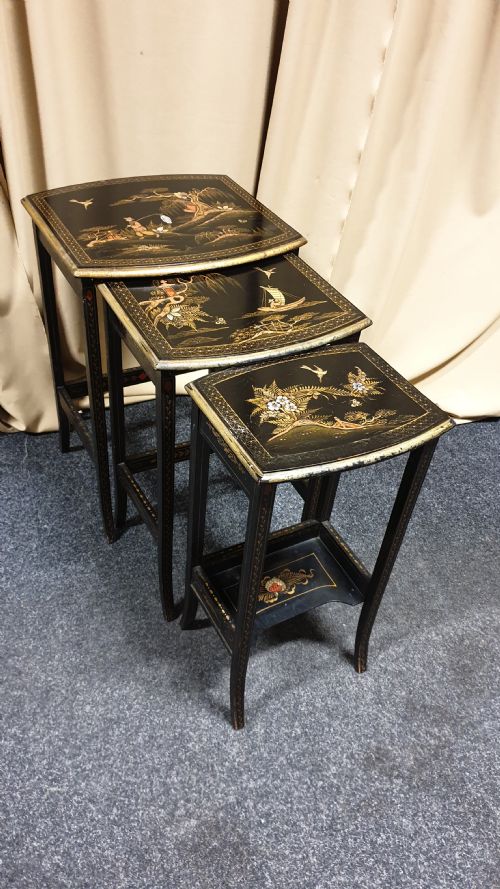


Chinese Lacquer Coffee Table
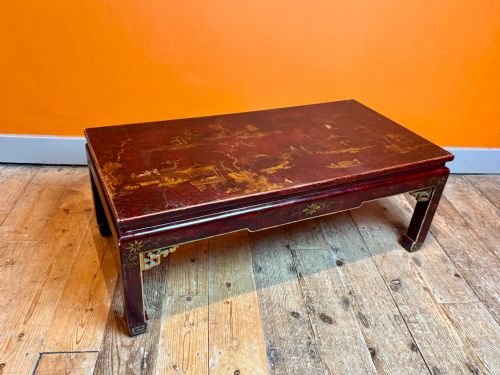
A chinese lacquer coffee table brings low, dark timber surfaces and gilt or carved relief panels straight into a sitting room.
Chinese Lacquer Coffee Table
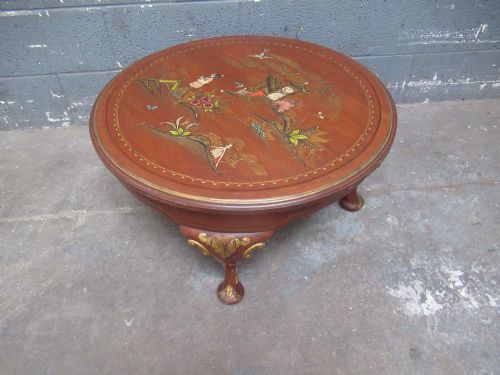
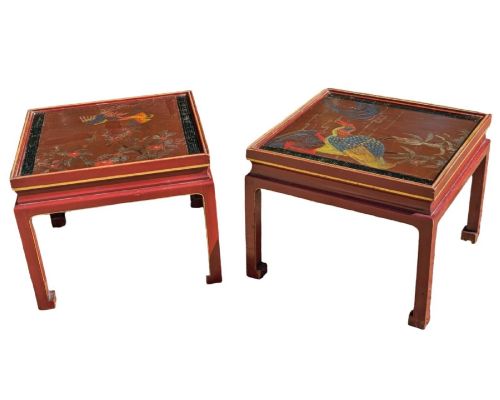
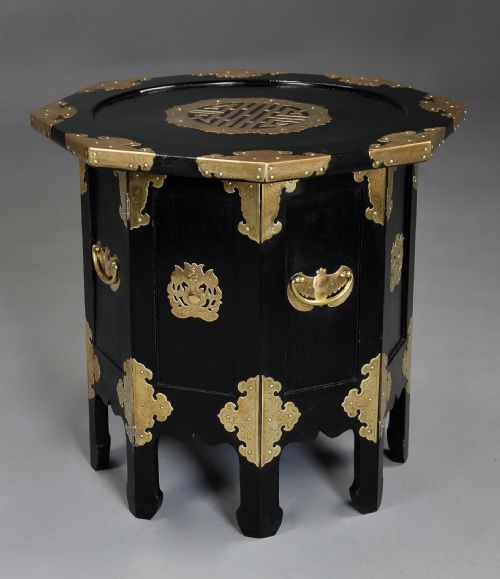
A chinese lacquer coffee table spans low tables, nests of four tables, and modified temple drums or trunks adapted for modern rooms. These surfaces appear in black lacquer, red lacquer, and ebonised wood bearing Chinoiserie and Qing Dynasty decorative schemes.
The materials recorded in the evidence range from solid timber and elm to pig skin chests and soapstone relief panels. Tables date from the eighteenth century through the nineteenth century and into the early twentieth century, including Edwardian interpretations.
The most common formats on this page are low rectangular and circular coffee tables carrying gilt paint or carved stone details. Buyers find both traditional Chinese forms and British Edwardian responses to oriental design.
How they were made
Wood serves as the foundational core for these pieces, utilising elm, ebonised timber, and general wood construction beneath the surface finishes. Layers of lacquer build up to create a hard, smooth ground for subsequent decoration.
Gilt paint, parcel-gilt, and carved soapstone provide the raised relief details seen across panels and tabletops. Artisans applied traditional lacquer techniques alongside carving methods to produce contrasting textures against the dark or red backgrounds.
Chinese Lacquer Coffee Table Retail Price Guide 2026
Typical asking prices for chinese lacquer coffee table among the pieces listed under this phrase on Sellingantiques today, from the lower quarter to the upper quarter. They describe what is for sale here now, not the wider market.
Listings feature periods spanning from the eighteenth century to the early twentieth century, utilising lacquer, wood, gilt paint, and soapstone.
What varies in quality
The depth and preservation of the lacquer surface dictate much of the distinction between examples. Pieces retaining crisp gilt paint and intact carved soapstone relief show superior handling compared to worn or heavily restored finishes.
The integration of panels, such as eighteenth-century sections incorporated into later frames, affects the coherence of the construction. Finer execution appears in the precision of the joinery and the detail within the carved or painted motifs.
The Chinese Lacquer Coffee Table Glossary
- Lacquer
- A durable resin finish applied in multiple layers to wood surfaces. It provides a smooth, protective coating that accepts pigments and metallic decoration.
- Chinoiserie
- European decorative style reflecting Chinese artistic motifs. This aesthetic appears frequently in British furniture made during the Edwardian period.
- Ebonised
- Wood stained or painted black to resemble ebony. This treatment creates a dark, uniform ground popular in nineteenth and early twentieth-century pieces.
- Soapstone
- A soft metamorphic rock carved into low relief panels. Artisans mounted these stones onto tabletops to introduce pictorial depth and texture.
- Kang table
- A low traditional Chinese platform table designed for use on heated sleeping platforms. These forms translate directly into low coffee tables in Western interiors.
Chinese Lacquer Coffee Table: Frequently Asked Questions
How do I style a chinese lacquer coffee table?
Keep surrounding decor simple to let the dark lacquer and gilt details stand alone as a focal point.
Pair the low profile with upholstered seating of a contrasting texture to balance the visual weight.
Are these tables sturdy enough for daily use?
Most pieces utilise solid timber frames and durable lacquer finishes designed for functional surfaces.
Use coasters to protect the lacquer from moisture and heat over time.
What is the difference between red and black lacquer?
Red lacquer finishes often draw on temple drum aesthetics or imperial red colourways found in eighteenth and nineteenth-century pieces.
Black lacquer and ebonised variants provide a more sombre, reflective surface that highlights gilt paint.
How do I date an older lacquer table?
Examine the timber construction underneath and the wear patterns within the lacquer layers.
Stylistic markers like Edwardian Chinoiserie differ from earlier nineteenth-century Qing Dynasty forms.