


Giltwood Low Table
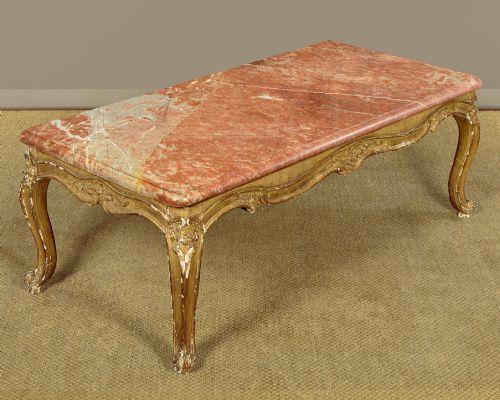
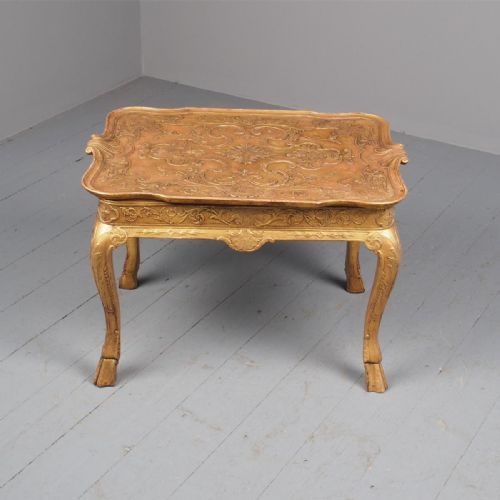
These giltwood low table examples bring carved gold leaf and stone surfaces into domestic spaces, offering surface area with distinct historical presence.
Giltwood Low Table
A giltwood low table brings carved gilded woodwork into domestic reception spaces, functioning primarily as coffee tables and occasional tables. Buyers seeking this phrase encounter low furniture formats adapted from historical forms.
The pieces on this page span several distinct periods including the nineteenth century, nineteen-twentieth century, and Georgian eras. Forms range from French Louis revival styles to Italian baroque and William IV pieces.
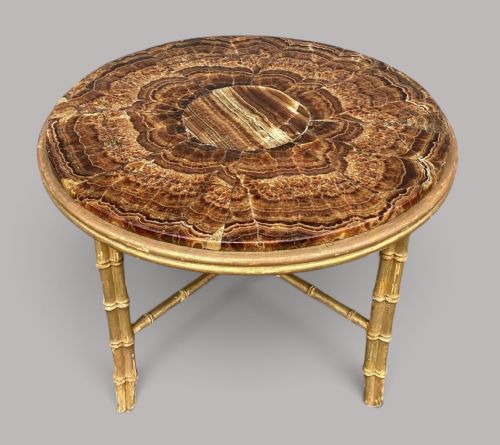
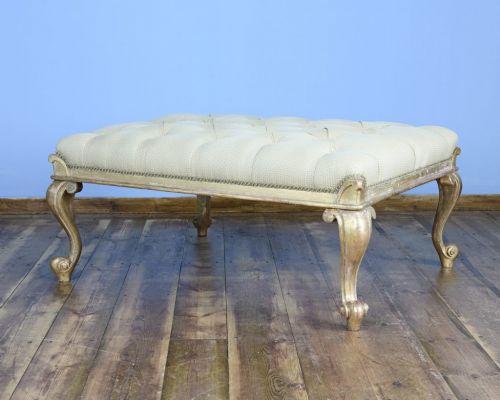
Origins include French, Italian, and Middle Eastern workshops, manifesting as low coffee tables, pedestals, footstools, and low stools. Marble and onyx top variations appear frequently alongside glass and tapestry textiles.
Materials and construction
Makers utilised carved wood foundations, applying gesso layers to prepare surfaces before finishing with gold leaf. This traditional gilding technique provides the characteristic metallic sheen seen on the timber frames.
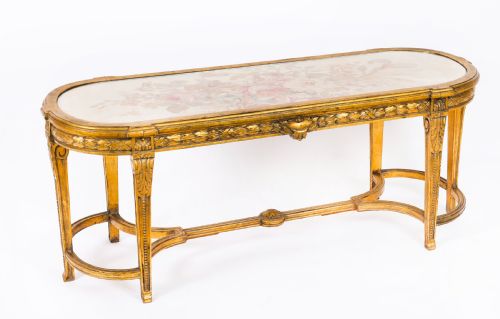
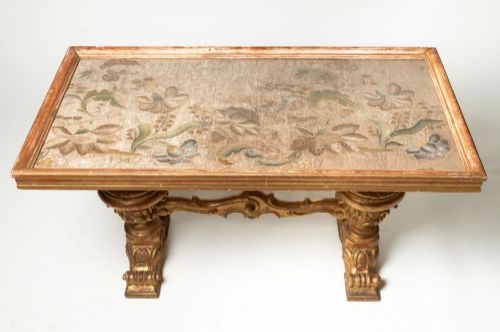
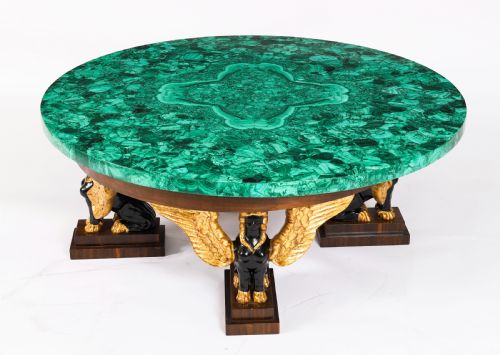
Insets of marble, onyx, glass, and tapestry textiles form the table surfaces, resting within the carved wooden structures. Structural combinations also incorporate walnut, patinated ebonised timber, and malachite.
Stylistic ornamentation draws on French Chateau, Louis XVI, Louis XV, Italian Baroque, and Empire revival vocabularies. Carving depth and surface preparation dictate the visual texture of each frame.
Several items started life as grand footstools before finding new purpose as coffee tables.
Distinctions in quality
The refinement of the carved ornamentation on the wooden frame separates standard interpretations from superior examples. Crisp relief work in the gesso and gold leaf reflects skilled hand tool execution rather than mechanical moulding.
The selection and fit of inset materials such as marble, onyx, or malachite dictate the upper tier of execution. Dense, richly veined stone tops integrated flush into the timber surround demonstrate superior construction.
The Giltwood Low Table Glossary
- Giltwood
- Timber that has been coated with gold leaf over a prepared gesso base. This finish yields a luminous metallic surface that ages with distinctive patination.
- Gesso
- A plaster mixture applied to wood frames to create a smooth, absorbent foundation for gilding. It allows carvers to achieve sharp detail before the gold leaf is laid.
- Louis XVI Style
- A neoclassical aesthetic characterised by straight tapered legs, symmetrical geometry, and classical architectural motifs. It emerged during the late eighteenth century and saw numerous revivals.
- Marble
- A metamorphic rock prized for its decorative veining and cool tactile surface. It frequently serves as the inset top material on low tables.
- Aubusson
- A traditional tapestry weave associated with French textile production. Such fabrics occasionally inset table tops or cover low stools.
Giltwood Low Table: Frequently Asked Questions
What is a giltwood low table?
A giltwood low table is a short-format piece of furniture featuring a carved wooden frame finished with gold leaf. These surfaces serve as coffee tables or occasional tables in reception rooms.
They combine historical revival styles with low heights suited to modern seating arrangements. Stone, glass, or textile insets frequently complete the top surface.
How do I identify periods?
Period identification relies upon stylistic vocabulary, construction methods, and materials recorded in the piece descriptions. Nineteenth-century examples often display exuberant revival carving, while Georgian pieces show different proportions.
Revival styles reference earlier epochs such as Louis XVI or Italian Baroque, reinterpreting historical ornament for later domestic interiors. Comparing carving depth and framing geometry aids period placement.
How were these tables used?
These tables functioned primarily as central or occasional furniture within formal domestic interiors. Their low profile accommodated resting small objects, textiles, or decorative items.
Over time, many historical footstools, pedestals, and low forms have been adapted into coffee tables. Their decorative surfaces were designed to catch ambient light in reception spaces.
How do I live with one?
Living with a giltwood low table involves positioning it away from direct moisture and handling the gilded surface with care. Regular dusting with a soft cloth preserves the gold leaf finish.
Stone tops require simple surface wiping, while wooden frames benefit from stable indoor humidity. The piece anchors a room's seating arrangement while offering a functional display surface.