
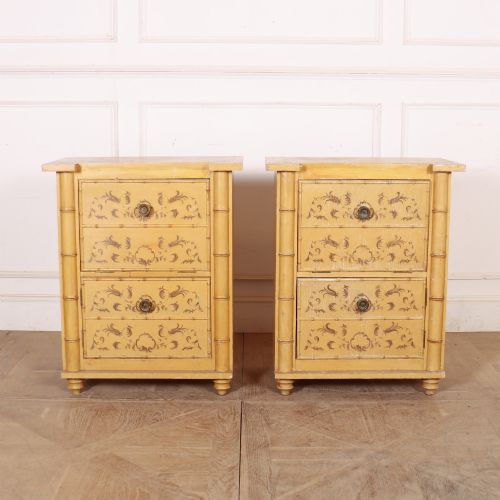


Chinoiserie Bamboo Table
A chinoiserie bamboo table brings together whimsical eastern motifs and structural bamboo or painted faux bamboo, offering a striking focal point for any room.
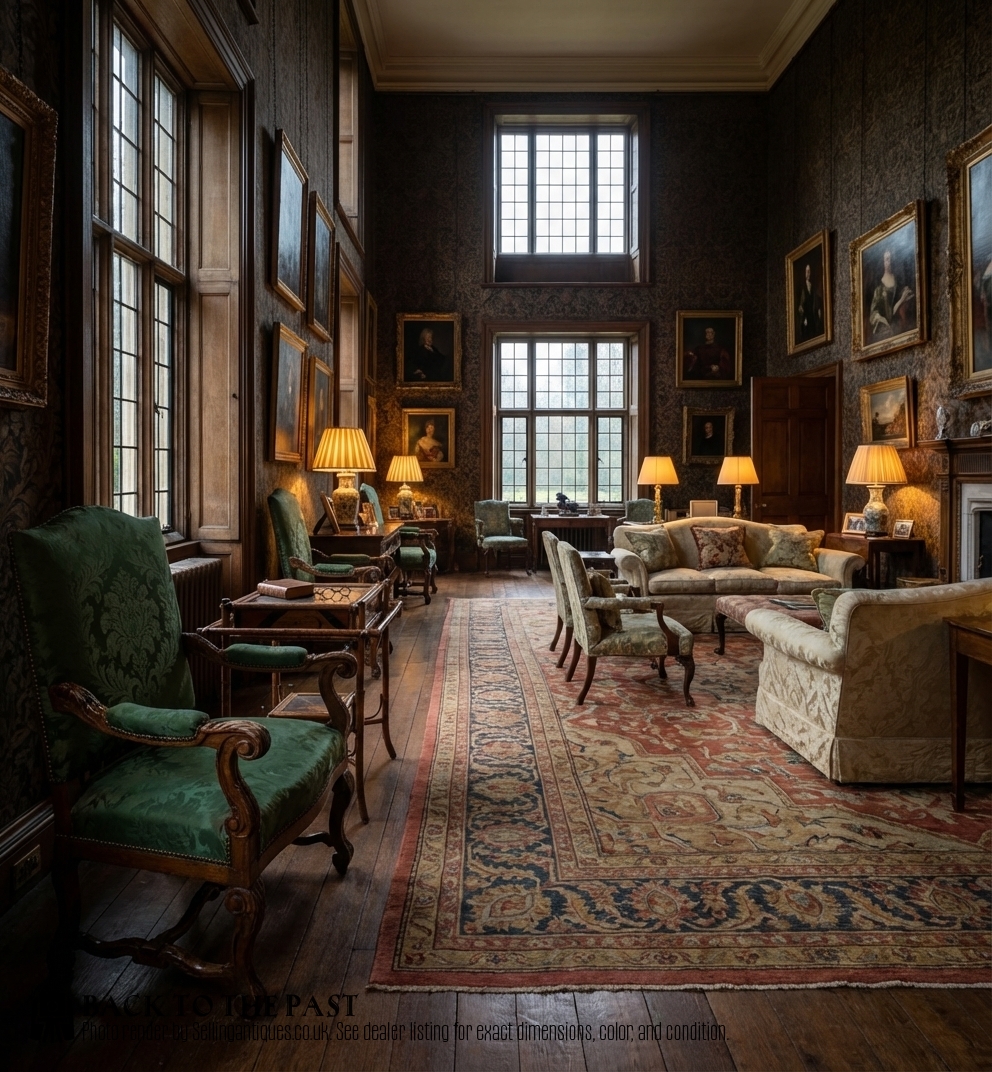
Chinoiserie Bamboo Table
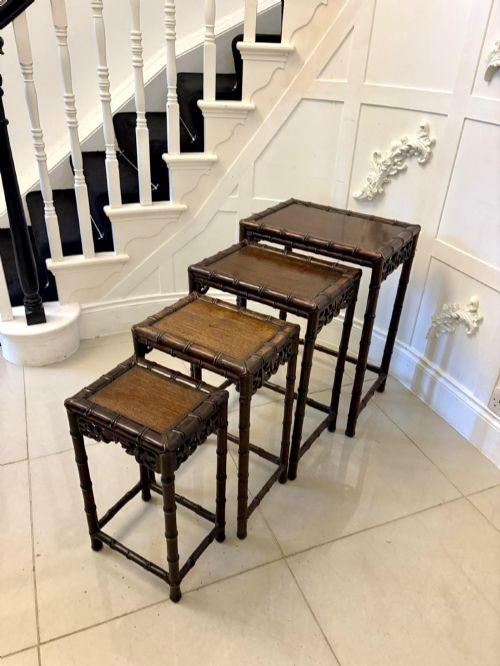
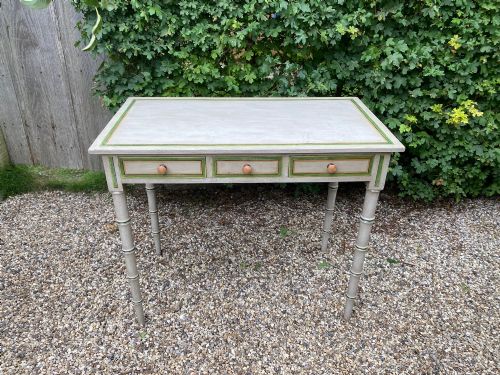
A chinoiserie bamboo table encompasses an array of practical household forms, from nests of tables and tray tables to side tables, coffee tables, and writing desks. Buyers searching for a chinoiserie bamboo table will find examples ranging from the Regency period through the Victorian era and into the early twentieth century.
The majority of pieces encountered here date from the nineteenth century, including Victorian interpretations and Aesthetic Movement designs. Forms vary from simple two-tier side tables to folding frames, half-moon console tables, and sewing tables fitted with lacquered panels.
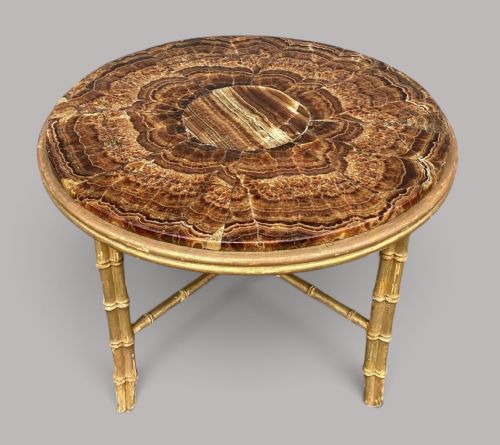
Origins span English workshops and French ateliers, showcasing both genuine bamboo structures and cleverly turned hardwood designed to imitate bamboo canes. These tables served diverse domestic functions, acting as portable serving surfaces, occasional stands, and compact writing desks.
Materials and Construction
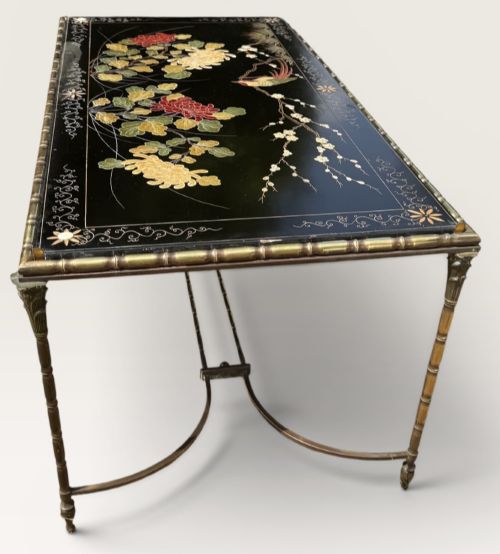
Maker construction relies heavily on natural bamboo, tiger bamboo, and painted hardwood fashioned into faux bamboo profiles alongside brass and gilt-brass mounts. Surfaces receive intricate decoration through lacquer, hand-painted floral motifs, gold leaf, and occasionally papier-mâché panels depicting eastern scenes.
Joinery combines traditional framing techniques with specialised bindings for natural bamboo or precise turning for faux bamboo timbers in beech and other hardwoods. Lacquered tops integrate multi-layered finishes, sealing painted scenes beneath protective coats while incorporating mother-of-pearl or metallic pigments.
Several tables feature clever built-in magazine racks alongside tiger bamboo frames.
Assessing Craftsmanship and Condition
Quality rests primarily on the crispness of the hand-painted chinoiserie decoration and the preservation of original lacquer surfaces and ochre paint. Tables featuring detailed figurative scenes or intact gold leaf demonstrate superior workshop execution compared to simpler monochrome or heavily restored equivalents.
Structural integrity distinguishes finer examples, particularly where joints meet on natural bamboo or turned faux bamboo frames. Original components, such as matching nests, authentic papier-mâché trays, and unblemished brass or gilt-brass fittings, elevate the standing of a piece.
Maison Bagues
The Chinoiserie Bamboo Table Glossary
- Chinoiserie
- European decorative style reflecting Chinese artistic influences, characterised by whimsical landscapes, figures, and pavilions.
- Faux bamboo
- Wood, typically hardwood, turned and carved to imitate the natural nodes and tapering profile of real bamboo canes.
- Papier-mâché
- Composite material made from paper pulp or layers of paper bound with glue, moulded and lacquered to form sturdy table trays.
- Tiger bamboo
- Natural bamboo variety displaying distinctive mottled or dark striations resembling tiger stripes across the surface.
- Aesthetic Movement
- Late nineteenth-century design current promoting art for art's sake, often incorporating Japanese and Chinese motifs into domestic furnishings.
Chinoiserie Bamboo Table: Frequently Asked Questions
What is a chinoiserie bamboo table?
A chinoiserie bamboo table is a domestic piece of furniture combining structural bamboo or turned faux bamboo with hand-painted eastern decoration, lacquer, or papier-mâché panels.
These tables were produced across the nineteenth and early twentieth centuries in various forms, including nests, side tables, and tray stands.
How do I tell real bamboo from faux bamboo?
Real bamboo exhibits natural organic irregularities, hollow cane structures, and distinct nodes that vary across each stalk.
Faux bamboo is carved or turned from solid hardwood, offering heavier weight and uniform durability while mimicking the visual appearance of cane.
How were tray tables used historically?
Tray tables typically featured a removable papier-mâché or lacquered tray resting upon a folding or fixed bamboo stand.
They served as portable surfaces for serving drinks or holding decorative objects in nineteenth-century reception rooms.
How do I care for a lacquered table surface?
Lacquered surfaces require gentle dusting with a soft, dry cloth and protection from direct sunlight and excessive moisture.
Avoid chemical polishes or abrasive cleaners, which can damage the delicate hand-painted motifs and protective clear finishes.