
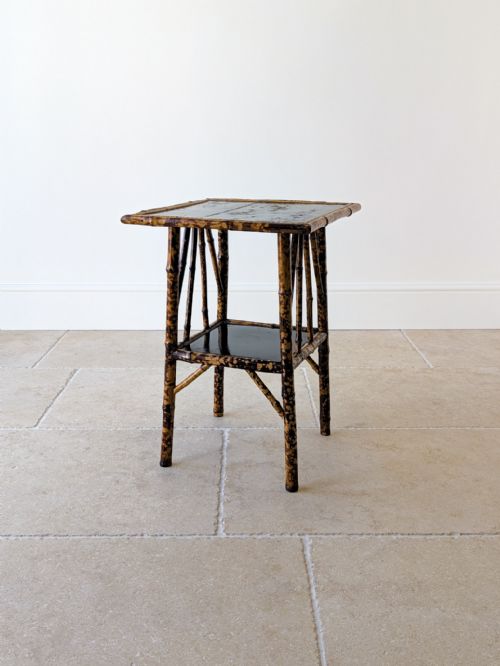
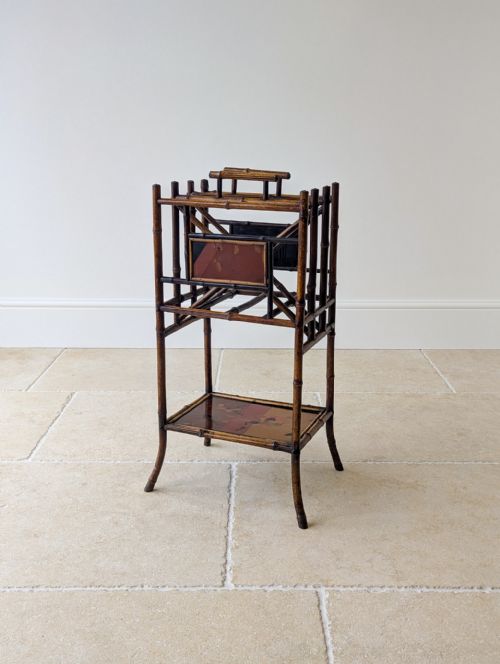
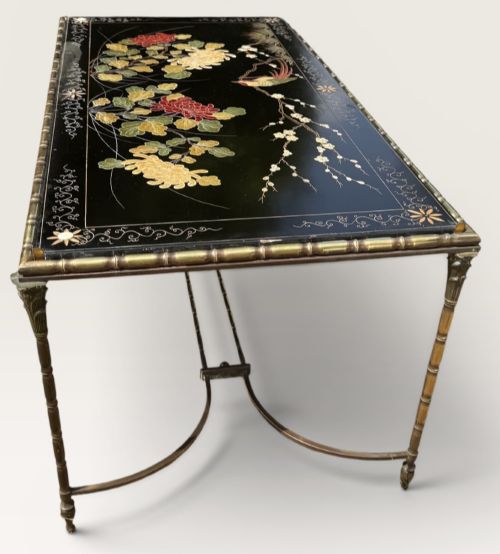
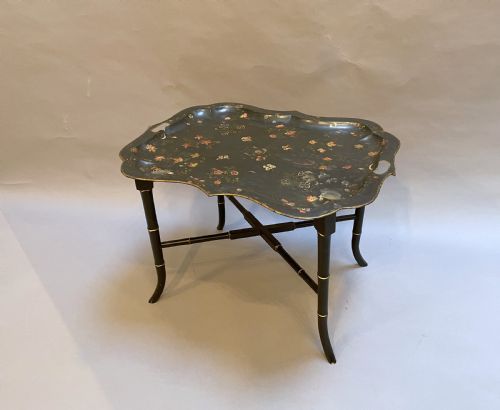


Bamboo Lacquer Side Table
These bamboo lacquer side table examples combine Eastern-inspired motifs with nineteenth-century forms to create functional, decorative surfaces for the home.
Bamboo Lacquer Side Table
A bamboo lacquer side table brings together lightweight natural cane frameworks and decorated surfaces, originating mostly from the Victorian era and the Aesthetic Movement. When you search for this phrase, you encounter occasional tables, two-tier designs, and tray tables featuring orientalist motifs.
The versions most common on this page date from the late nineteenth century, spanning the 1870s to the 1900s, alongside later twentieth-century interpretations. These pieces function as versatile surface furniture, often incorporating lower shelves or panels for display.
Makers utilised bamboo stems for structural uprights and legs, pairing them with lacquered wood, papier-mâché, or decorated panels. The resulting forms range from simple single-surface stands to complex multi-tiered occasional tables.
What varies in quality
The standard of a bamboo lacquer side table depends heavily on the execution of the surface decoration and the integrity of the cane framework. Finer examples display intricate hand-painted Chinoiserie scenes with gold leaf detailing, whereas simpler items feature basic japanned finishes.
Structural rigidity distinguishes better pieces, as cane can warp or loosen over decades of use. The quality of the lacquer panel insert, whether wood or papier-mâché, determines the overall refinement of the table.
Several tables double as practical service trays, allowing the top to lift off so you can carry tea without leaving the furniture behind.
Maison Bagues
The Bamboo Lacquer Side Table Glossary
- Chinoiserie
- European decorative art depicting Chinese motifs and scenes. This style heavily influenced nineteenth-century furniture decoration.
- Japanned
- European imitation of East Asian lacquerwork using dark varnish and raised metallic details. It provides a durable glossy finish.
- Papier-mâché
- A composite material made from paper pulp or layers of paper bound with glue. It forms smooth, stable surfaces for painted trays and tabletops.
- Aesthetic Movement
- A late nineteenth-century design current promoting art for art's sake. It popularised the integration of bamboo and oriental motifs in British interiors.
- Canterbury
- A low multi-partitioned stand originally designed for sheet music or books. Some examples double as magazine racks and side tables.
Bamboo Lacquer Side Table: Frequently Asked Questions
How do I clean a lacquer top?
Dust gently with a soft, dry microfibre cloth to protect the delicate surface layers.
Avoid using water, chemical sprays, or abrasive cleaners, which can damage the antique finish.
Are these tables sturdy enough for daily use?
Most pieces suit light placement duties such as holding drinks, books, or small lamps.
Avoid overloading lower tiers or placing them in damp environments that might weaken the bamboo.
What is tiger bamboo?
Tiger bamboo refers to canes featuring natural mottled or speckled patterns resembling animal markings.
Victorian makers prized this variety for its decorative appearance on occasional furniture.
How do I date a bamboo table?
Examine the construction methods, joining techniques, and surface materials used in the panels.
Victorian pieces frequently display distinct Aesthetic Movement or Chinoiserie painting styles characteristic of the late nineteenth century.