



Italian Giltwood Table
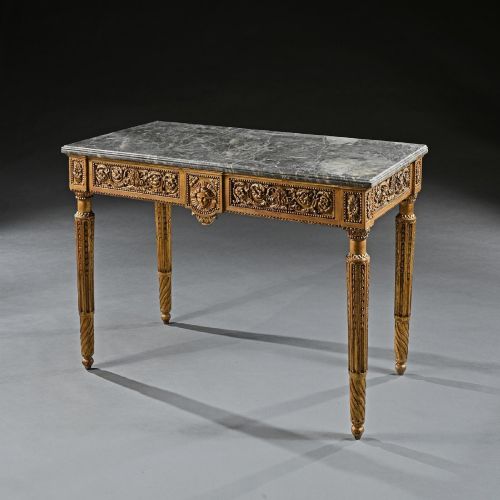
An italian giltwood table brings theatrical weight and historic craftsmanship into a room through carved timber, gesso, and gold leaf.
Italian Giltwood Table
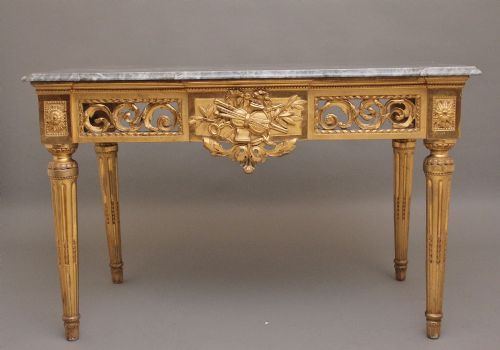
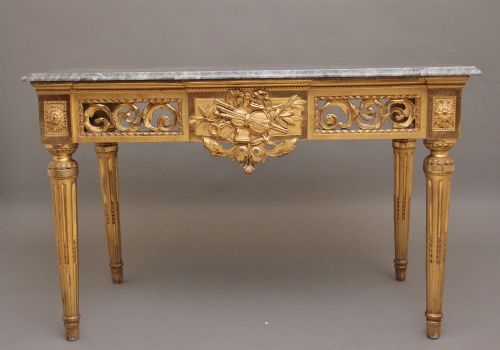
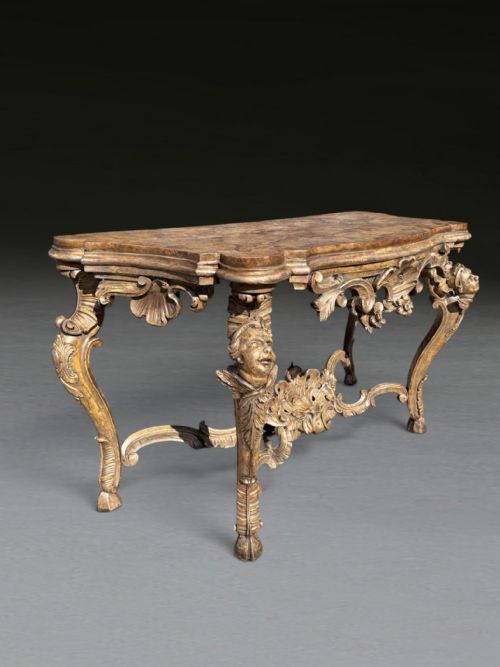
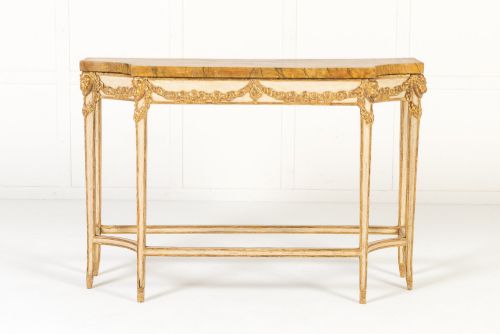
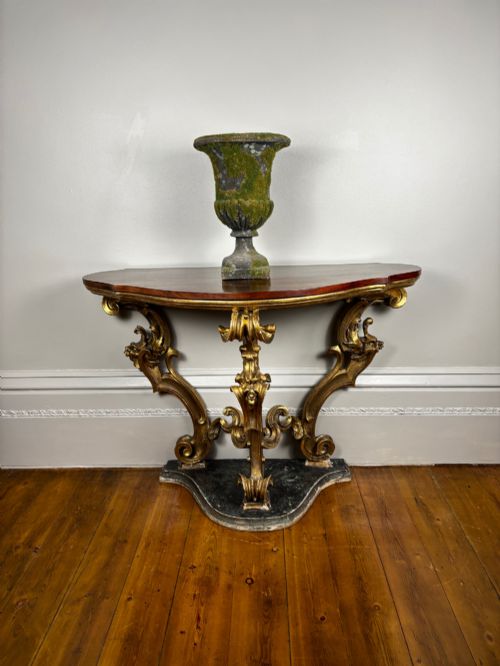
When you search for an italian giltwood table, you encounter grand console pieces and smaller accent forms spanning centuries of design. Console tables dominate the selection, frequently paired with heavy marble slabs and intricate carved supports.
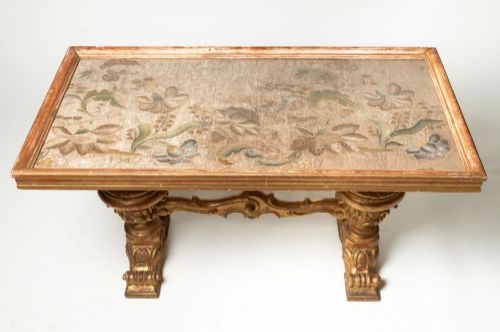
The material vocabulary ranges from 17th century lime wood to 19th century revival pieces, reflecting shifts in regional tastes across Venice and Florence. Forms extend beyond consoles to include centre tables, occasional coffee tables, and carved lighting bases.
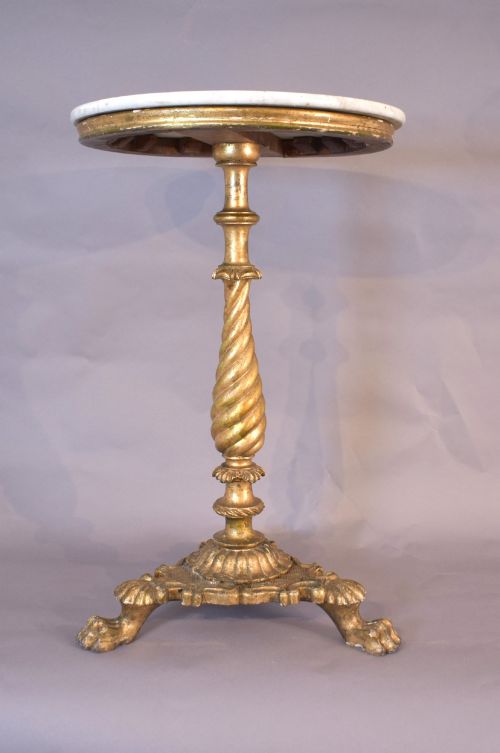
Earlier examples display the restrained grace of the 18th century, while later Victorian and revival works embrace bolder figural motifs like dolphins, putti, and lion paws. Every piece carries the sculptural ambition characteristic of Italian workshops.
How They Were Made
Carvers shaped native timbers such as lime and pine into elaborate frameworks before applying layers of gesso to smooth the surface for gilding. Artisans laid thin sheets of gold leaf over the prepared ground, burnishing portions to achieve contrasting matte and reflective finishes.
Many surfaces integrate polychrome paint alongside the gilding, introducing subtle colour variations to the carved foliage and figural details. Marble tops, often in breccia or other figured stones, were cut and polished to rest precisely upon the wooden bases.
Listings feature marble-topped console tables spanning the 17th, 18th, and 19th centuries alongside carved wooden table lamps.
What Varies in Quality
Depth of carving separates standard production from exceptional artistry, visible in the undercut relief of acanthus leaves and the naturalism of sculptural figures. The crispness of the gesso layer beneath the gold leaf dictates how sharply the underlying details read.
The integrity of the original surface finish distinguishes untouched historic pieces from those subjected to later interventions. Quality also rests in the selection and weight of the fitted marble top relative to the proportions of the carved base.
The Italian Giltwood Table Glossary
- Giltwood
- Timber coated with gold leaf applied over a prepared gesso ground. This technique creates a luminous metallic surface that catches interior light.
- Gesso
- A plaster mixture applied to carved wood to create a smooth surface for gilding. It allows craftsmen to achieve sharp sculptural details before applying gold leaf.
- Console Table
- A wall-mounted or freestanding table designed to stand against a vertical surface. These often feature heavy marble tops and elaborate front legs.
- Breccia Marble
- A composite stone made of broken rock fragments embedded in a fine-grained matrix. It appears frequently on the tops of 18th and 19th century console tables.
- Burnishing
- The process of polishing gold leaf with a smooth agate stone to create a high shine. This technique highlights raised portions of carved ornamentation.
Italian Giltwood Table: Frequently Asked Questions
Where should an italian giltwood table go?
Console variants suit entrance halls or living spaces where they anchor wall mirrors and artworks. Their finished backs and carved profiles allow them to stand against prominent walls.
Smaller centre or side tables fit comfortably beside seating areas or within reception rooms. Their reflective surfaces brighten darker corners of an interior.
How do I clean giltwood safely?
Dust surfaces gently using a dry, soft-bristled brush or an untreated microfiber cloth. Avoid applying moisture, pressure, or chemical cleaners directly to the gold leaf.
Water and modern solvents strip away historic gilding and soften the underlying gesso. Professional restoration remains necessary if structural damage occurs.
Are these tables sturdy enough for daily use?
Most antique consoles rely partly on wall fixings for total stability because of their heavy marble tops. Freestanding centre tables handle normal weight but require careful placement away from high traffic.
Moving these pieces demands lifting rather than dragging to protect delicate foot carvings and leg joints. Proper placement preserves both the timber frame and the stone top.
How do I distinguish 18th century work from later revivals?
Earlier pieces exhibit hand-carved tool marks and organic wear patterns consistent with age. Timbers used in these works show traditional seasoning and dry joint construction.
Revival pieces from the 19th century often feature heavier proportions and machine-assisted joinery. Stylistic indicators like revival tags help date the execution more precisely.