

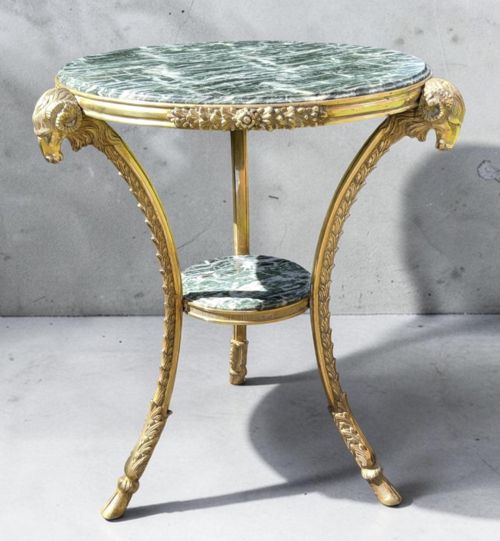


Green Marble Side Table
Green marble side tables bring polished stone surfaces and carved wooden or gilt frames into a room, offering a durable and decorative surface.
Green Marble Side Table
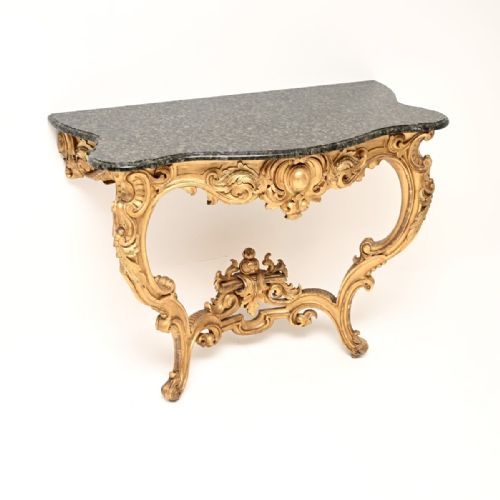
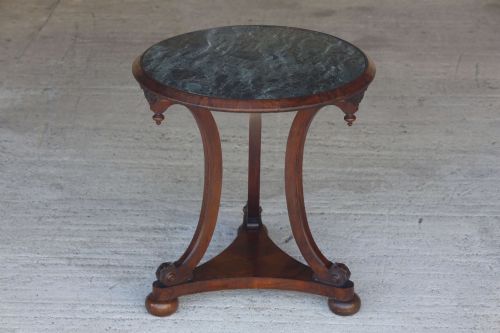
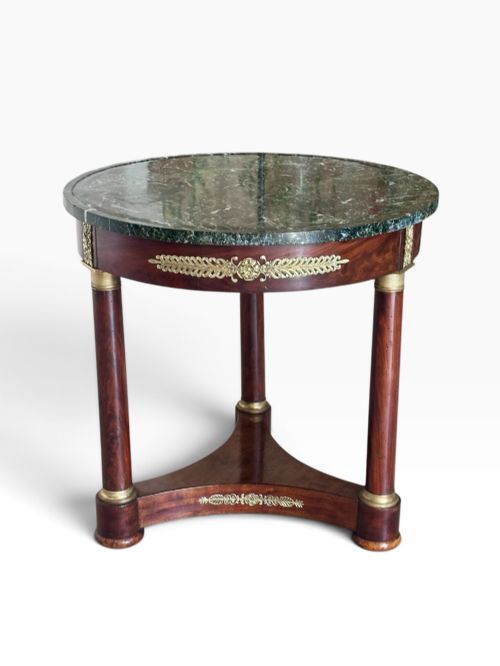
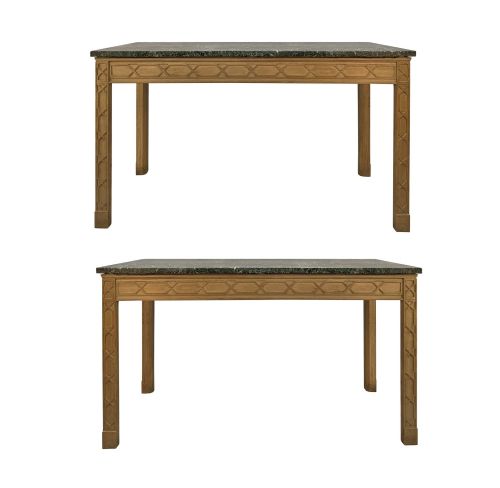
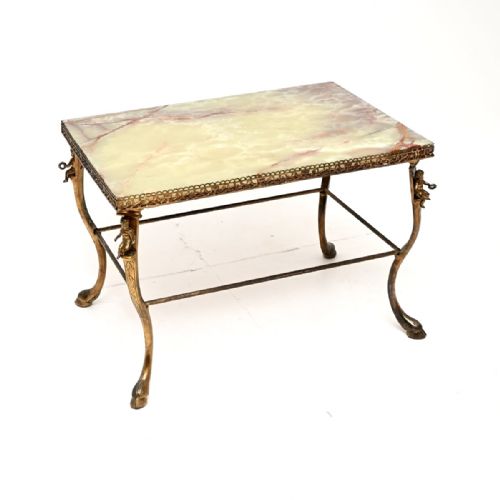
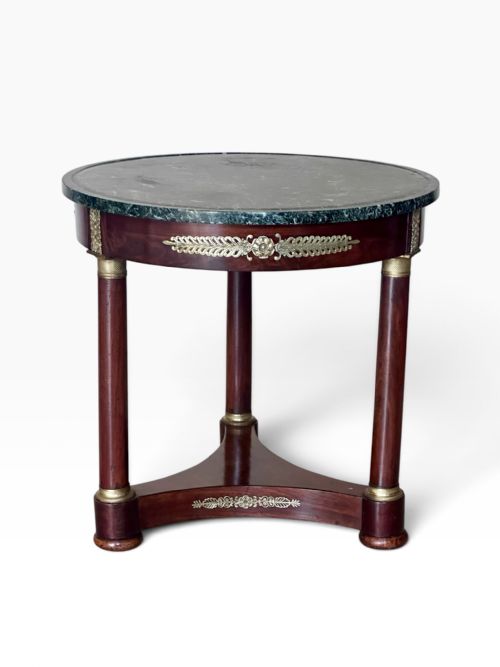
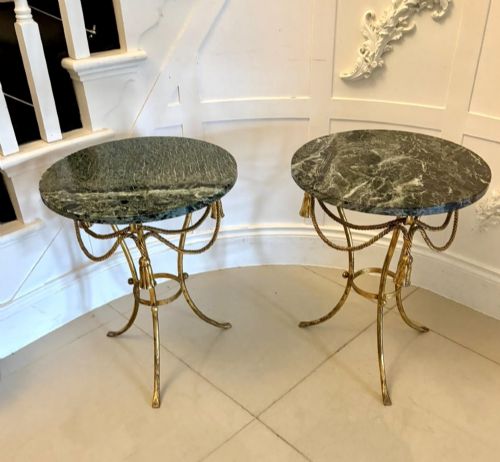
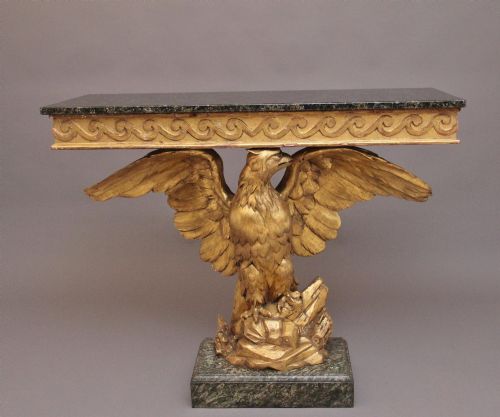
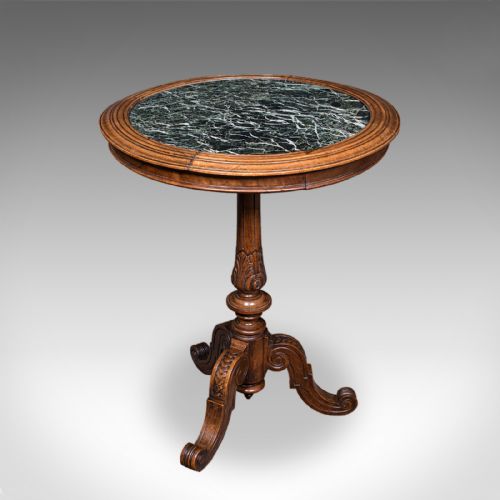
A green marble side table combines a polished stone top with a supportive wooden or metal base, appearing in forms such as console tables, gueridons, and occasional tables. These pieces draw on French Empire, Neoclassical, and Italian design traditions spanning from the eighteenth century through to the early twentieth century.
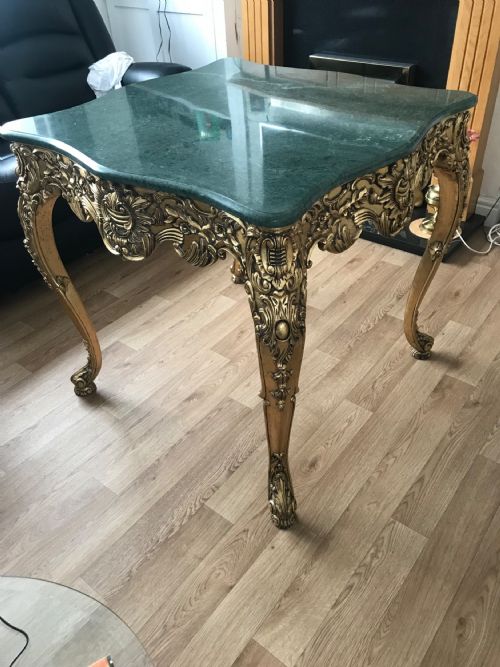
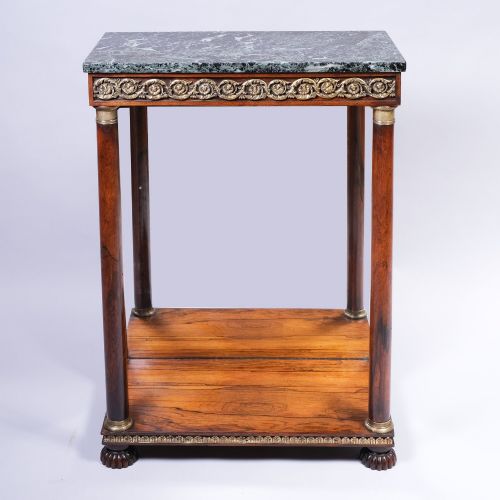
The version most commonly met on this page is the console or occasional table featuring a distinct green or jade marble top supported by giltwood, painted wood, or brass frameworks. Makers from various European centres utilised these materials to create functional furniture for domestic interiors.
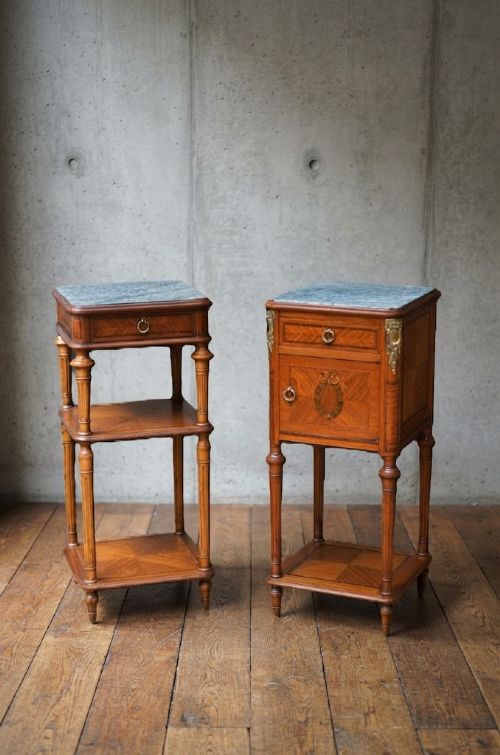
Examples range from compact bedside cabinets and cafe tables to grand console tables placed against walls, reflecting the diverse domestic roles these stone-topped surfaces fulfilled in past centuries.
Materials and construction techniques
Makers constructed the bases of these tables using timbers such as mahogany, walnut, satinwood, and oak, alongside carved gesso and giltwood. Ormolu, brass, and cast iron frequently appeared as structural mounts, decorative hardware, or framing elements.
The stone tops rely on precise cutting and polishing techniques to reveal the natural grain and deep green colouration of the marble. Craftsmen secured these heavy stone slabs to wooden aprons or metal frames using traditional joinery and mechanical fixings.
Green Marble Side Table Retail Price Guide 2026
Typical asking prices for green marble side table among the pieces listed under this phrase on Sellingantiques today, from the lower quarter to the upper quarter. They describe what is for sale here now, not the wider market.
Listings for a green marble side table span the 18th, 19th, and early 20th centuries, featuring marble, giltwood, brass, and mahogany.
Design depth and material selection
The quality of a green marble side table rests upon the crispness of the carving on the wooden or gilt frame and the visual depth of the stone. Superior pieces display finely rendered details such as rams heads, lion masks, or intricate parcel-gilt motifs rather than cast repetitions.
Heavier, solid marble or specimen marble tops paired with robust secondary timbers indicate a higher grade of manufacture. The harmony between the proportions of the stone slab and the supporting base dictates the overall success of the piece.
The Green Marble Side Table Glossary
- Gueridon
- A small French table, typically round, supported by a central pillar or multiple legs. These versatile tables frequently feature marble tops and decorative brass mounts.
- Console table
- A table designed to be fixed against a wall, often supported by scroll legs or brackets. They commonly display ornate giltwood or painted woodwork beneath marble surfaces.
- Ormolu
- Gilded bronze or brass applied as decorative mounts on furniture. It provides metallic contrast against dark timbers and polished stone.
- Serpentine
- A curved line of furniture design that undulates outward and inward. This shape requires advanced carpentry skills when fitted with a matching marble top.
- Specimen marble
- Marble composed of various coloured fragments inlaid in a geometric or pictorial arrangement. It appears on decorative tabletops from Italian workshops.
Green Marble Side Table: Frequently Asked Questions
How do I clean a green marble top?
Clean the surface using a soft damp cloth with mild soap, avoiding acidic substances like lemon or vinegar that etch stone.
Dry the marble thoroughly to maintain the polished finish and prevent water spots.
Are these tables sturdy enough for daily use?
Most examples utilise robust timber frames or cast metal bases designed to support heavy stone slabs.
Care should be taken with placement to ensure the weight of the marble remains balanced across the legs.
How can I tell the period of the base?
Examine the joinery methods, tool marks, and wood species visible underneath or inside the construction.
Stylistic cues such as neoclassical proportions or French Empire mounts also indicate the era of manufacture.
Where should I place a console table?
Console tables suit entrance halls, living rooms, or dining spaces where they sit flat against a wall.
Their shallow depth allows them to function as display surfaces without obstructing walkways.