
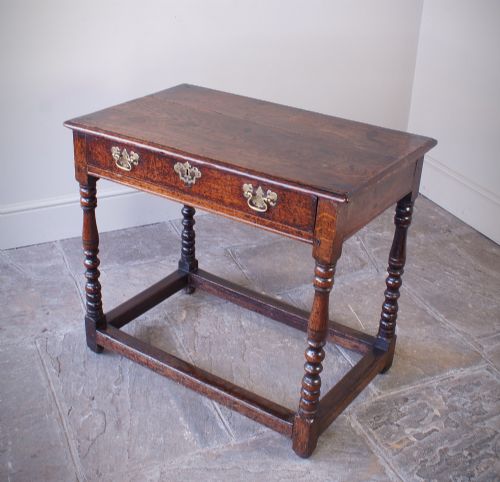
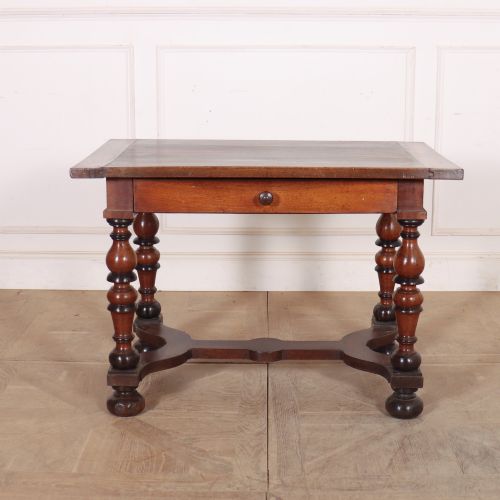


Stretcher Base Side Table
A stretcher base side table anchors a room with solid timbers and horizontal bracing, offering utility alongside centuries of joinery skill.
Stretcher Base Side Table
When you search for a stretcher base side table, you encounter practical surfaces supported by intersecting lower stretchers designed to add rigidity. The evidence shows these tables emerging primarily from the seventeenth and eighteenth centuries, alongside later Edwardian and nineteenth-century interpretations.
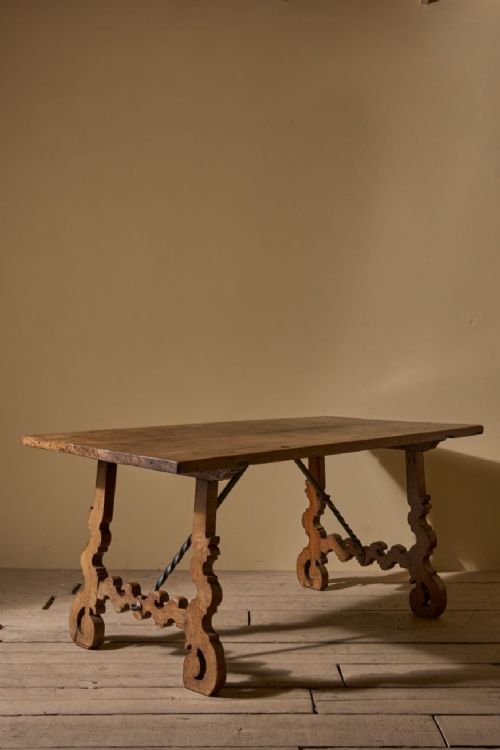
The forms span side tables, console tables, writing desks, and occasional tables. You are most likely to meet oak and fruitwood examples reflecting English country, French provincial, and Spanish baroque styles.
How they were made
Cabinetmakers utilised solid timbers such as oak, walnut, cherrywood, fruitwood, and mahogany for the construction of these tables. Structural integrity relied heavily on mortise and tenon joints secured by lower wooden stretchers.
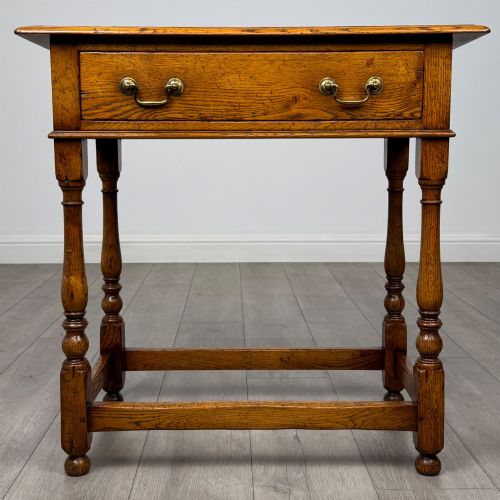
Secondary materials like brass hardware appeared on drawers, whilst wrought iron elements sometimes reinforced the structural framing of continental pieces.
Stretcher Base Side Table Retail Price Guide 2026
Typical asking prices for stretcher base side table among the pieces listed under this phrase on Sellingantiques today, from the lower quarter to the upper quarter. They describe what is for sale here now, not the wider market.
Object forms recorded in the inventory include lamp tables, writing desks, console tables, and tavern tables.
What varies in quality
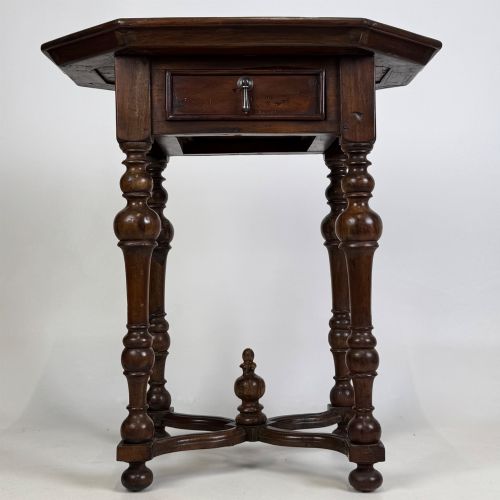
The distinction between tiers rests upon the selection of timber and the complexity of the turned legs and stretcher configuration. Heavier gauge hardwoods and superior patination separate robust early examples from lighter later iterations.
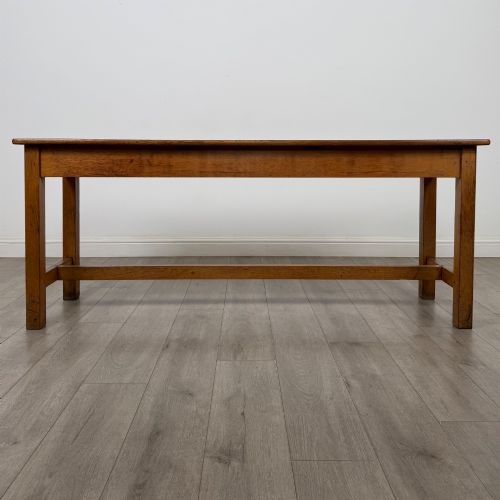
Hand-carved detailing and integrated drawers demonstrate higher workshop proficiency compared to simpler, plain-legged counterparts.
The Stretcher Base Side Table Glossary
- Stretcher
- A horizontal timber connecting the legs of a table to provide structural stability. These cross-braces sit near the floor and often display intricate turning.
- Side table
- A small functional table designed to stand against a wall or beside seating. They frequently incorporate a single drawer beneath the top surface.
- Fruitwood
- Timber harvested from fruit-bearing trees such as pear or cherry. Cabinetmakers valued it for its fine grain and warm tone.
- William and Mary style
- An aesthetic period marked by Dutch influences, geometric paneling, and trumpet-turned legs. Tables from this tradition emphasise vertical presence and strong linear stretchers.
Stretcher Base Side Table: Frequently Asked Questions
How do I date an oak stretcher table?
Dating relies upon examining the tooling marks, timber shrinkage, and the method of joint construction visible beneath the top. Pegged mortise joints typically indicate earlier periods.
Changes in turning styles on the legs and stretchers also help distinguish seventeenth-century joinery from Edwardian revivals.
Where should I place a side table?
These tables function effectively in hallways, living rooms, or behind sofas where the lower stretchers add visual weight near the floor. Their modest surface area suits lamps, books, or decorative objects.
Keep them away from direct heat sources to prevent the solid timbers from splitting.
Are all stretcher tables antique?
The listings include pieces spanning from the seventeenth century through to the Edwardian era and early twentieth century. Revivals of earlier styles are common in later decades.
Checking the wood species and construction wear clarifies whether a piece is seventeenth-century or a later interpretation.
How do I care for antique fruitwood?
Fruitwood surfaces respond best to occasional applications of traditional beeswax rather than modern liquid polishes. Regular dusting with a soft cloth preserves the natural finish.
Avoid placing damp items directly onto unsealed antique timber surfaces.