

Rustic Kitchen Island
A rustic kitchen island brings heavy timber and practical working surfaces into the heart of the home, offering both utility and character.
What a rustic kitchen island is
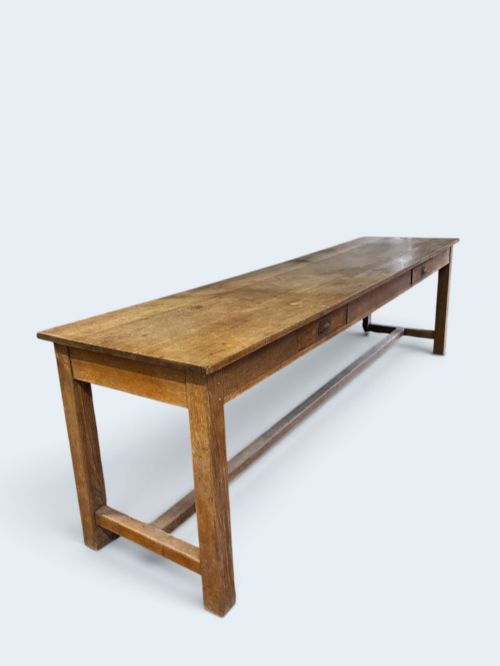
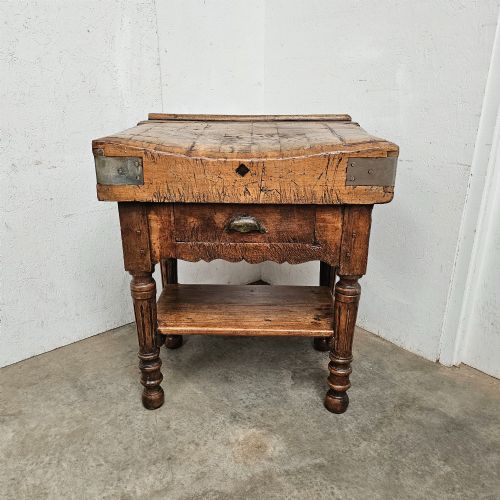
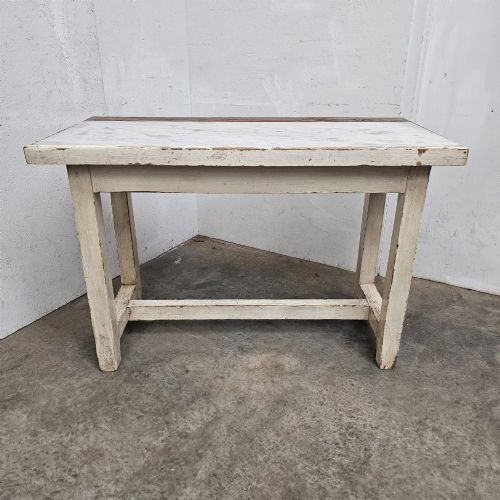
When you search for a rustic kitchen island, you encounter heavy wooden prep tables, butchers blocks, and harvest serving tables built for utility. These pieces originate from various eras, including the Victorian period, the nineteenth century, and around nineteen-twenty.
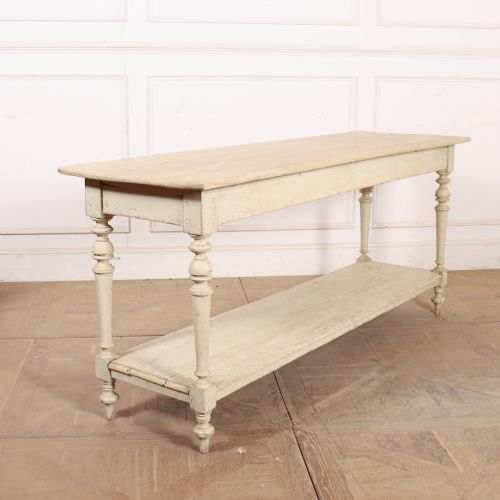
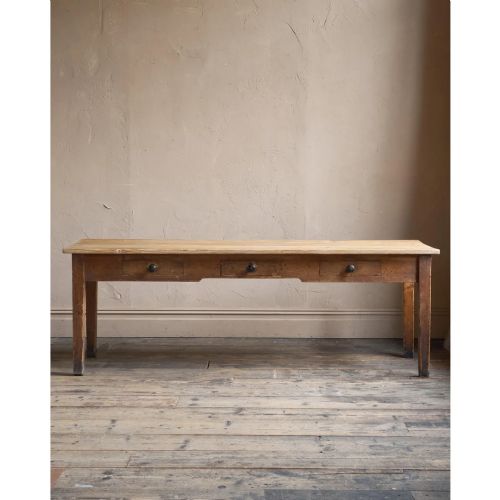
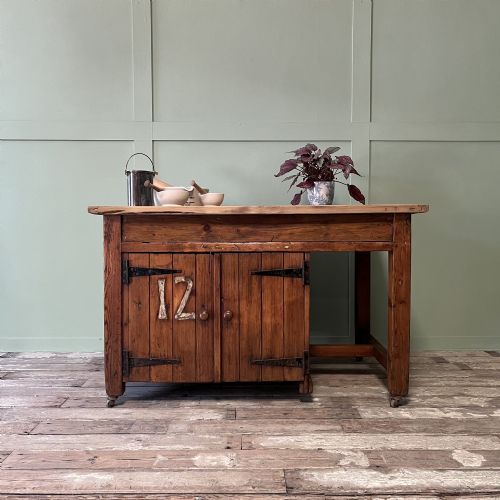
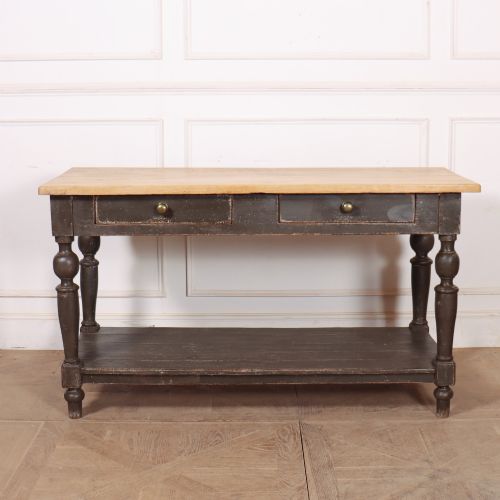
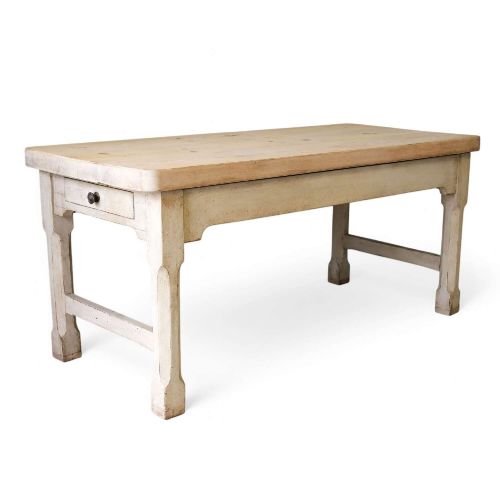
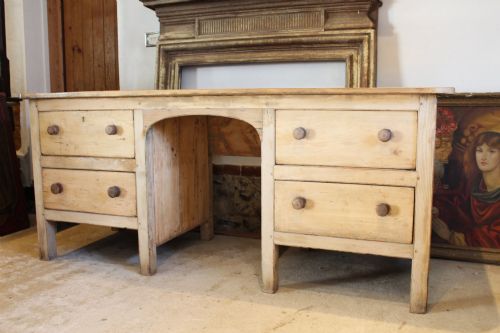
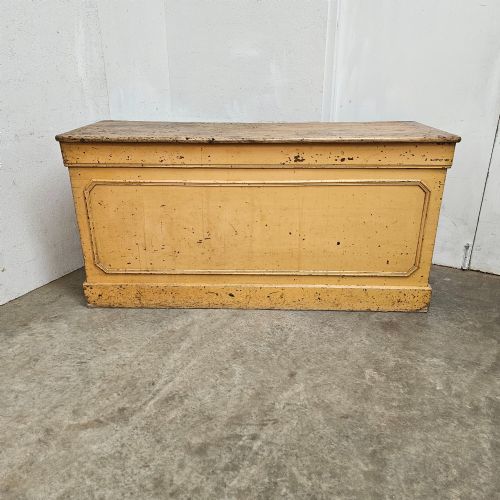
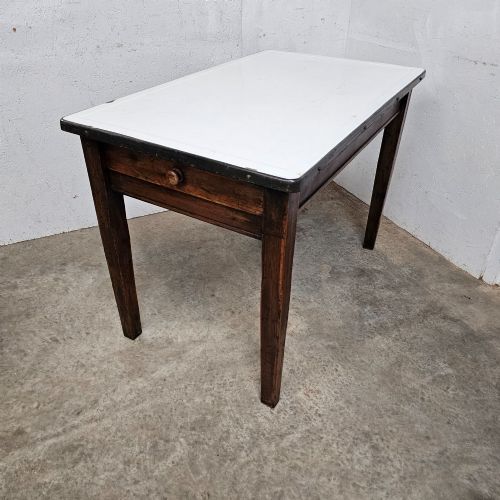
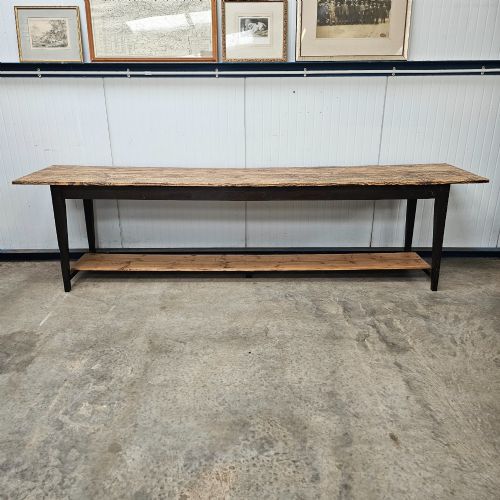
The versions most frequently met on this page include large pine scullery tables with drawers, French painted drapers tables, and traditional butchers blocks on stands. Their forms reflect domestic workspaces rather than formal dining rooms.
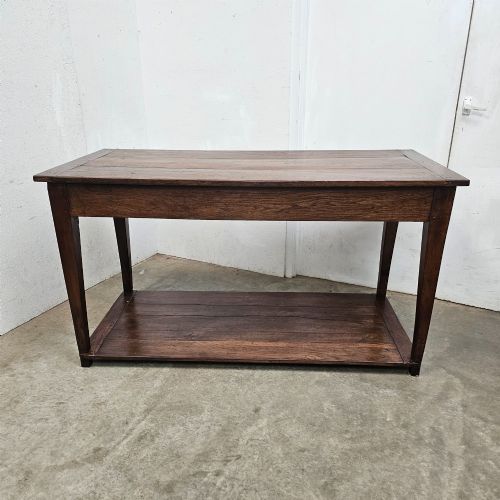
Origins span British and French country traditions, incorporating painted wood, fruitwood, oak, and general hardwood construction. Each piece serves as a functional centrepiece for food preparation and storage.
How they were made
Construction relies on solid timbers such as pine, oak, fruitwood, and mixed hardwoods selected for durability under heavy use. Joinery techniques are straightforward and robust, designed to withstand daily cutting, kneading, and chopping.
Surfaces often feature thick end-grain blocks or wide plank tops, sometimes supported by iron elements. Painted wood finishes, seen on Victorian and French examples, utilise traditional lead or oil-based paints that wear down over time.
Retail Price Guide 2026
Typical UK retail prices for rustic kitchen island, calculated from the Sellingantiques database of over a million retail prices indexed since 2003. This retail price guide relies exclusively on Sellingantiques data; no external sources or auction records are used, so the figures do not describe the wider market.
Listings feature pieces built from pine, oak, fruitwood, and painted wood, dating from the Victorian era up to nineteen-twenty.
What varies in quality
Quality separates pieces by the integrity of their original construction and the depth of their working patina. Thicker timber tops and substantial bases indicate superior strength and longevity.
The character of the surface finish dictates visual appeal, where genuine age from heavy use surpasses modern attempts at distressing. Original paint finishes and retained working drawers add notable depth to a piece.
The Rustic Kitchen Island Glossary
- Butchers block
- A thick wooden work surface designed specifically for chopping meat and heavy food preparation. These usually sit on dedicated stands or sturdy frames.
- Drapers table
- A long, narrow table traditionally utilised in textile shops for folding cloth, featuring deep proportions ideal for modern kitchen workspace. They often include useful storage drawers beneath the top.
- Harvest table
- A long wooden table historically used by farm workers for communal meals during harvest seasons. Their generous proportions suit large prep areas.
- Scullery table
- A utilitarian table built for washing up and food preparation in the service rooms of large houses. They utilise sturdy pine or hardwood to endure constant moisture and labour.
- Patina
- The surface sheen and texture developed through decades of cleaning, touching, and use. It represents the natural history of the timber.
Frequently Asked Questions
What is a rustic kitchen island used for?
These pieces provide a solid, dedicated surface for food preparation, chopping, and general kitchen tasks. They also offer extra storage through drawers and open lower shelves.
Historically, they served as heavy workbenches in sculleries, shops, and farmhouses before finding a second life in modern domestic kitchens.
How do I care for a wooden island top?
Maintain the timber by regularly oiling the surface to prevent it from drying out and cracking. Avoid using harsh chemical cleaners that strip the natural oils.
Scratches and stains are part of the working life of these tables and can be gently sanded if necessary. Keep the surface clean and dry after food preparation.
How do I tell Victorian tables apart from later pieces?
Victorian tables often exhibit denser hardwoods, hand-cut joinery details, and distinct signs of heavy historical wear. Paint finishes on these older pieces tend to show complex layers and natural crazing.
Later nineteenth century and nineteen-twenty examples may feature simpler construction methods while retaining similar utilitarian forms. Examining the underside and drawer construction reveals the age of the joinery.
Can I use a drapers table for cooking prep?
Drapers tables make excellent prep surfaces due to their long, narrow proportions and sturdy timber tops. Their original function for folding cloth translates well to modern kitchen tasks.
Ensure the working height matches your needs, as antique tables occasionally vary from standard modern measurements. Protect vulnerable antique finishes with appropriate cutting boards if necessary.