



Industrial Kitchen Island
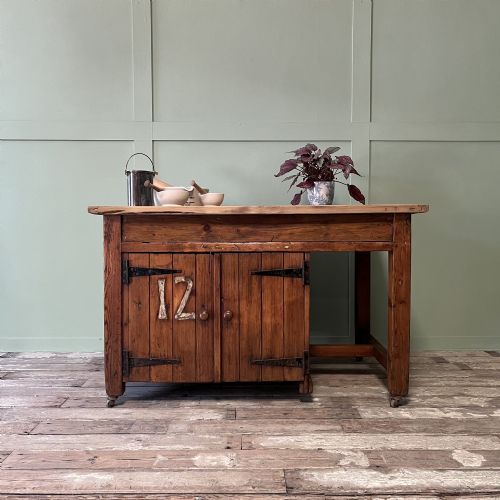
An industrial kitchen island provides a sturdy, practical focal point for food preparation, drawing on heavy-duty workbenches, butchers' blocks, and mill tables.
Industrial Kitchen Island
An industrial kitchen island brings heavy-duty utility and utilitarian design straight into a modern domestic setting. When searching for an industrial kitchen island, buyers encounter repurposed workbenches, butchers' blocks, and mill tables sourced from French, Hungarian, and English origins.
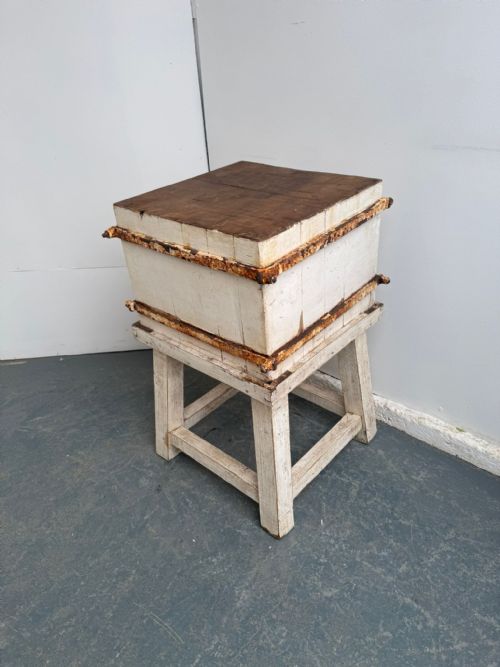
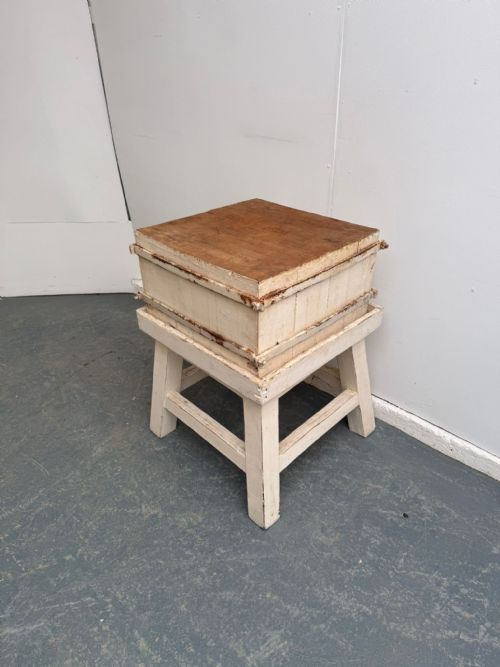
The versions most commonly met on this page include nineteenth-century pine and beech workbenches complete with vices, alongside painted Victorian butchers' blocks on stands. These functional objects transition easily into domestic cookery spaces, offering vast wooden surfaces and robust frames built for hard labour.
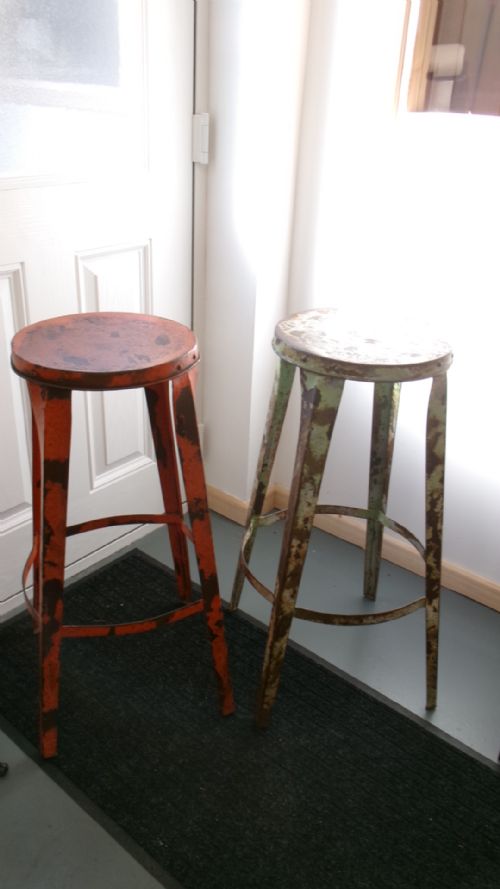
The selection ranges from early twentieth-century bakers' prep tables to substantial country house workbenches spanning multiple feet in length. Alongside these central tables, supplementary pieces such as metal riveted bar stools and ceiling lights appear to complete the room.
How they were made
Construction relies heavily on dense timbers such as beech, oak, and pine, paired with structural iron, steel, and brass fittings. Carpenters and artisans joined thick wooden tops to solid frames using traditional joinery, often integrating metal vices, bronze mounts, and iron brackets for added stability.
Surfaces bear the authentic marks of daily trade use, occasionally retaining original white paint, scrubbed wood finishes, or protective glass tops added during later restoration. Riveted metal components and chrome galleries on lighting elements demonstrate the utilitarian manufacturing techniques of the nineteenth and early twentieth centuries.
Many surviving French workbenches still retain traces of flour, paint, and sawdust embedded deep within the grain from decades of honest toil.
What varies in quality
The distinction between tiers rests upon the integrity of the original timber and the survival of authentic working mechanisms such as wooden vices and iron screws. Pieces that retain their original maker markings or factory provenance hold greater historical weight than unmarked general utility tables.
Proportion and scale dictate desirability, with substantial length and balanced proportions commanding attention. The degree of honest wear on a chopping surface distinguishes an honest survivor from a heavily altered or recently assembled hybrid.
Trussant & Cie·Hennes France
The Industrial Kitchen Island Glossary
- Butchers Block
- A thick wooden chopping table designed for meat preparation. These blocks feature deep-grained end-grain or plank tops supported by heavy stands.
- Workbench
- A sturdy table utilised by artisans and craftspeople for manual labour. They often incorporate integrated wooden vices and tool wells.
- Prep Table
- A utilitarian surface used in bakeries and kitchens for food assembly. These tables prioritise clean timber surfaces and straightforward four-legged frames.
- Pendant Light
- A hanging ceiling fixture suspended by a cord, chain, or metal rod. Industrial examples frequently utilise glass shades paired with metal galleries.
Industrial Kitchen Island: Frequently Asked Questions
Can I use an old workbench as a kitchen island?
An antique workbench makes an exceptional kitchen island due to its generous proportions and robust timber construction. Many examples feature built-in vices and lower shelves that provide practical storage for pots and pans.
Working height is an important consideration when selecting a workbench for kitchen use. Some nineteenth-century pieces may require minor adjustments to sit comfortably with standard modern kitchen stools.
How do I clean an old butchers block?
Maintenance of a vintage butchers block involves scraping away dried debris and wiping the surface with mild soap and warm water. Regular treatment with food-safe mineral oil prevents the thick hardwood from drying out or splitting.
Avoid harsh chemical cleaners or submerging the wood in water, as this damages the historical patina and degrades the traditional joinery.
Are industrial islands suitable for modern kitchens?
These robust tables introduce character and tactile warmth into contemporary cooking spaces by contrasting sleek modern appliances with aged wood and metal. Their generous surface areas offer ample room for food preparation and casual dining.
Careful measurement of your kitchen layout ensures adequate clearance around the island for movement and opening cabinet doors.
How do I date a nineteenth-century work table?
Dating relies upon examining construction methods, tool marks, and timber species used in the frame and top. Hand-cut joints, wrought iron hardware, and distinct wear patterns point towards specific nineteenth-century periods.
Stamped maker marks or labels provide the most direct evidence of origin and production era.