



Rustic Country Kitchen Island
A rustic country kitchen island anchors a domestic space with utilitarian timber and hard-wearing surfaces built for daily preparation.
Rustic Country Kitchen Island
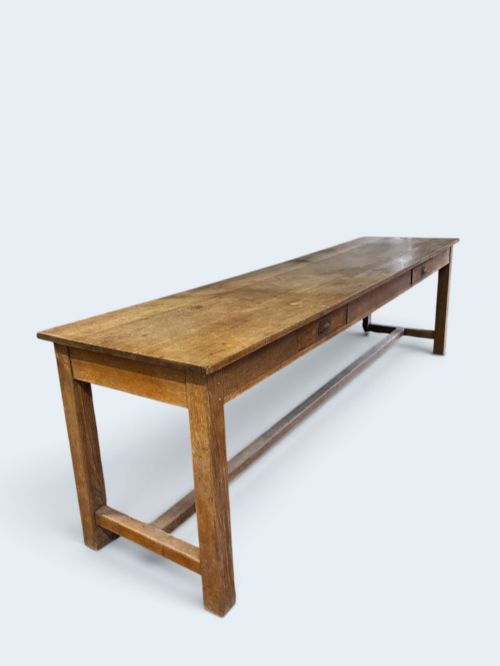
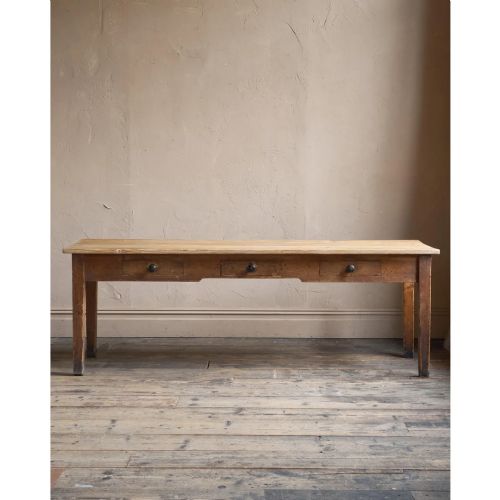
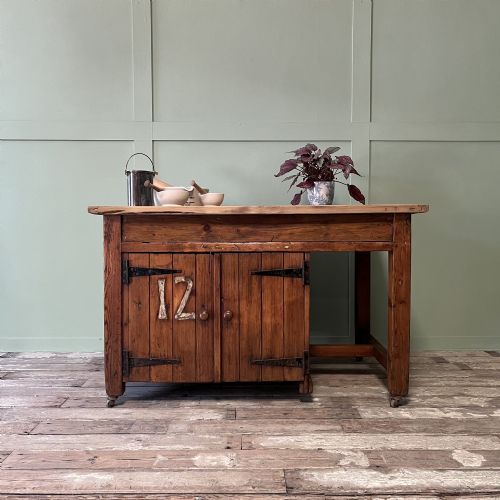
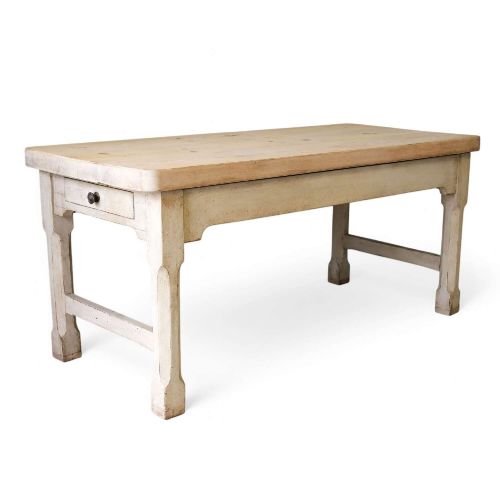
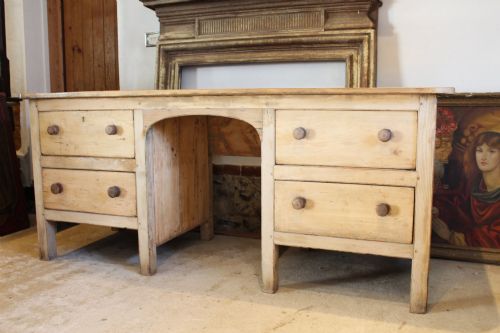
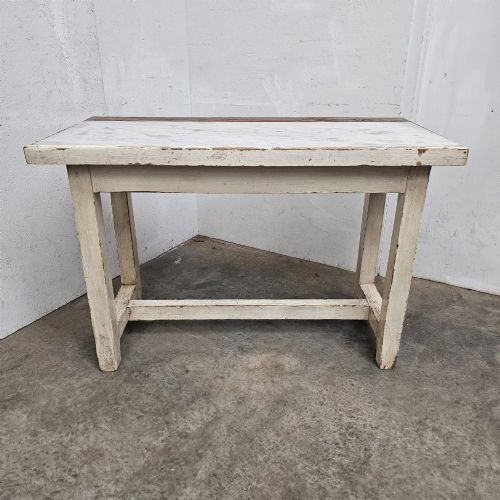
A rustic country kitchen island covers a diverse group of heavy wooden prep tables, butchers blocks, and workbenches originating from nineteenth-century farmhouses, sculleries, and workshops. Buyers searching for a rustic country kitchen island typically encounter sturdy pine and oak examples featuring drawers, lower pot shelves, or thick chopping surfaces.
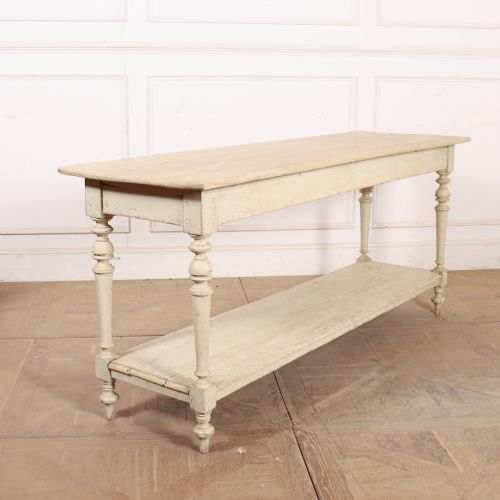
The selection ranges from French drapers tables and Swedish prep benches to English scullery tables and industrial butchers blocks. Many pieces display functional additions such as vices, bread slides, or tiered storage designed for active domestic labour.
Origins span British, French, and Scandinavian country houses, bringing distinct regional timber choices and paint finishes into modern culinary spaces. These domestic workhorses prioritise utilitarian function over ornamental design, showing decades of honest wear on their tops.
Materials and construction
Makers relied on durable native hardwoods like oak, elm, sycamore, beech, and dense pine to withstand constant chopping, kneading, and scrubbing. Tops often consist of thick, multi-board planks jointed securely to handle heavy loads, sometimes paired with contrasting fruitwood or marble inserts for pastry work.
Frames utilise robust mortise and tenon joinery to prevent swaying during heavy kitchen tasks, occasionally braced with iron hardware or brass fittings. Surfaces reveal the marks of hand-planing and daily use rather than machine perfection, showing how joiners prioritized structural integrity above all else.
Several heavy workbenches still retain their original wooden vices, ready to clamp your morning toast firmly in place.
Assessing quality and character
Quality rests in the integrity of the original timber and the depth of natural patina accumulated through generations of honest utility. Untouched surfaces bearing original paint, authentic tool marks, and uncompromised structural frames stand apart from later modifications or heavily sanded replacements.
Proportions and timber selection dictate the finer examples, particularly those retaining original drawers, pot-shelves, or heavy working vices. Pieces that maintain their structural stability without excessive timber loss command greater respect among collectors of utilitarian antiques.
The Rustic Country Kitchen Island Glossary
- Drapers table
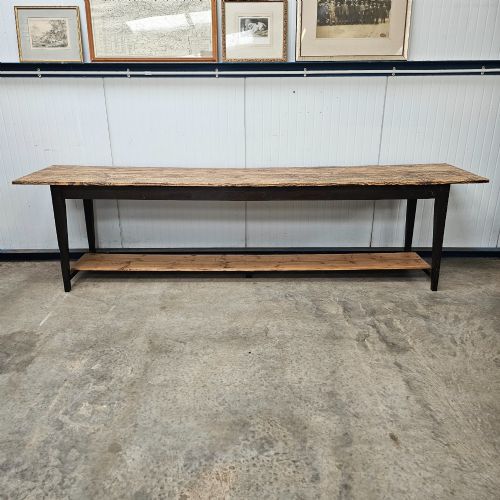
- A long, narrow utilitarian table originally used for folding textiles, featuring shallow drawers and a lower shelf that suit modern kitchen storage. These tables offer generous length combined with a shallow depth ideal for narrow spaces.
- Butchers block
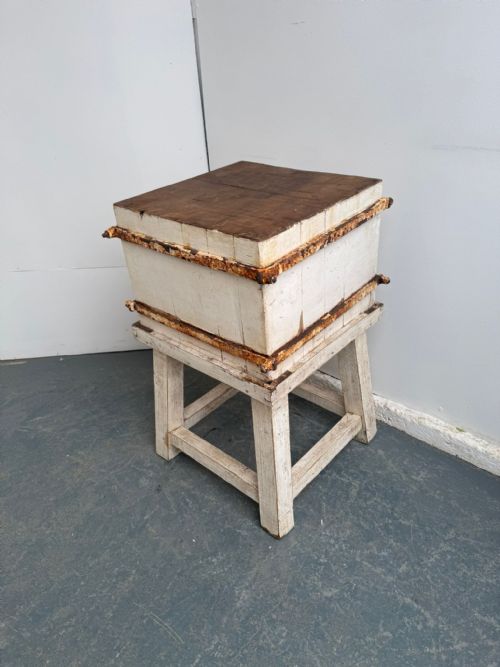
- A thick, solid timber block designed to absorb the heavy impact of cleavers and chopping tools. They are constructed from end-grain or heavy face-grain timber mounted on sturdy wooden or iron stands.
- Scullery table
- A heavy-use wooden table built for washing, food preparation, and kitchen chores in large country houses. They frequently feature scrubbed softwood tops resistant to water and frequent cleaning.
- Bread slide
- A pull-out wooden shelf integrated into furniture to cool loaves or provide extra temporary surface area during baking. This clever mechanism slides smoothly beneath the main working top when not in use.
- Refectory table
- A long, narrow dining table traditionally used for communal meals in monastic or large country settings. Their sturdy stretcher-base construction provides exceptional legroom and stability.
Rustic Country Kitchen Island: Frequently Asked Questions
How were these islands used historically?
Historically, these tables served as the central hub for all culinary tasks, including kneading bread, butchering meat, and preparing vegetables. Workshops and sculleries relied on their robust construction for daily labour before fitted kitchens existed.
Many feature specialised elements like bread slides for cooling dough, lower shelves for storing heavy pots, or built-in vices for artisan work. Their durability reflects an era when kitchen furniture had to withstand continuous heavy use.
How do I care for an antique wooden top?
Care for an antique wooden top by cleaning it gently with mild soap and water, avoiding harsh chemical sprays that strip the natural oils. Regular treatment with food-safe mineral oil or beeswax preserves the timber and prevents drying.
Embrace the existing marks, stains, and knife cuts as part of the piece's historical narrative rather than trying to sand them away. Using trivets and cutting boards protects the vulnerable historical surface from fresh moisture rings and deep gouges.
How can I tell the period of a table?
Determining the period involves examining the tool marks, timber characteristics, and construction methods used in the frame and drawers. Hand-sawn boards, pegged joints, and forged iron or brass hardware often point toward nineteenth-century or earlier craftsmanship.
Regional styles also provide clues, such as the characteristic painted finishes found on Scandinavian pieces or the dense fruitwood tops favoured in French workshops. Comparing the wear patterns against the structural joinery helps confirm the era of origin.