

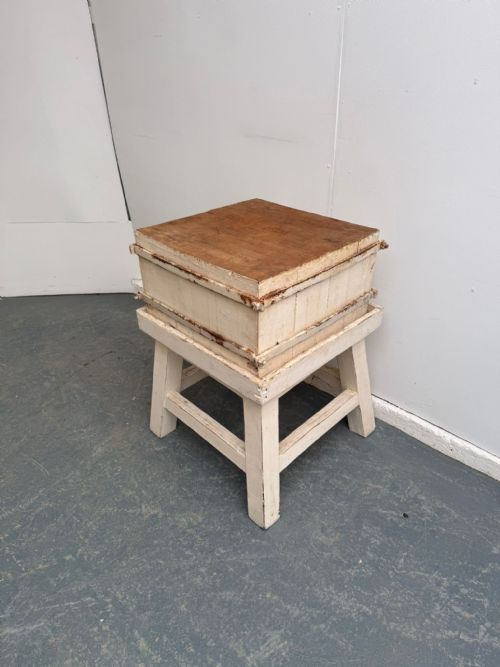


Vintage Timber Chopping Block
These vintage timber chopping blocks are hardworking kitchen islands shaped by decades of heavy domestic or commercial preparation.
Vintage Timber Chopping Block
A vintage timber chopping block serves as a substantial centrepiece for food preparation, originating from domestic kitchens, French provinces, and Hungarian workspaces. When exploring this selection, buyers encounter robust forms primarily categorised as butchers blocks, kitchen islands, and side tables.
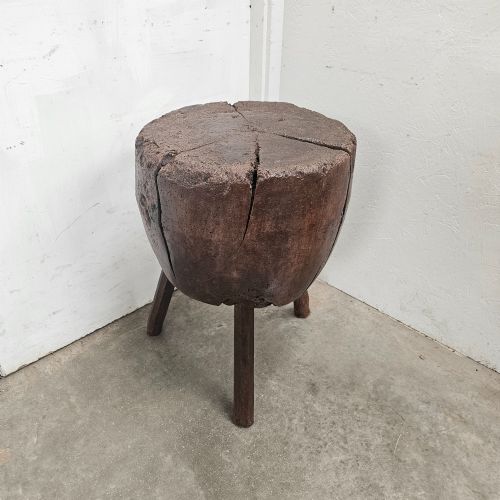
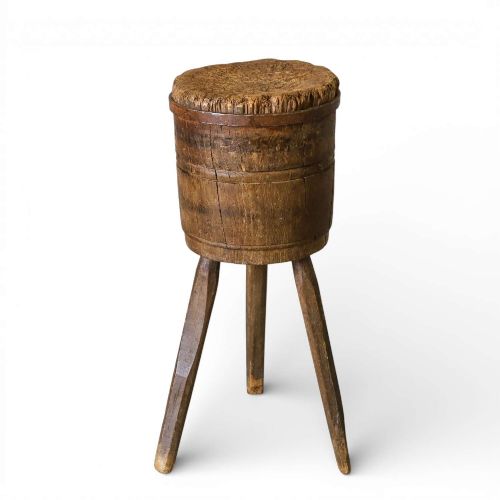
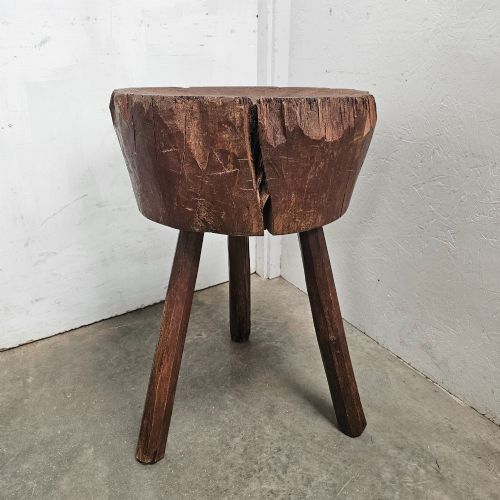
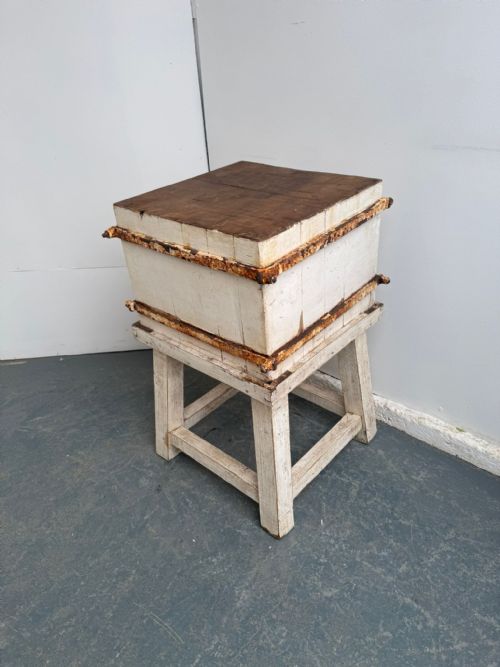
The prevailing examples span the nineteenth century through to the 1930s, displaying heavy utilitarian roots. Pieces range from French game blocks and charcuterie chopping blocks to painted Victorian workshop tables and heavy tree trunk sections.
Makers and origins vary from anonymous French provincial workshops to specific installations like the Hennes France pieces fitted with bronzed mounts. Their primary function remains steadfastly practical, though their sculptural weight now suits domestic kitchen islands.
How they were made
Construction relies heavily on dense hardwoods such as oak, beech, elm, and general hardwood timber, sometimes combined with softwood or iron elements. Heavy sections are joined to withstand immense downward force from cleavers and heavy knives.
Surface treatments range from natural scrubbed timber showing deep patination from heavy use to painted white finishes typical of Hungarian variants. Some later iterations incorporate functional additions such as glass tops and metal or bronzed mounts.
What varies in quality
Quality rests primarily in the density and integrity of the timber used for the top, where thick sections of beech, oak, or elm demonstrate superior endurance. The depth of the working surface and the tightness of the original joins separate heavy-duty commercial blocks from lighter domestic side tables.
Originality of surface finish dictates much of the character, distinguishing untouched scrubbed timber and genuine historic paint from later alterations. The presence of structural metal mounts, such as bronzed fittings, adds another dimension of build quality to specific regional pieces.
Hennes France
The Vintage Timber Chopping Block Glossary
- Game block
- A heavy timber chopping block specifically designated for dressing game, often formed from a solid tree trunk section. These blocks feature immense depth to absorb heavy blows from butchers and gamekeepers.
- Charcuterie chopping block
- A specialised surface traditionally utilised in French preparation of cured meats and pork products. These items frequently combine oak and elm to provide a stable, durable workspace.
- Butchers block
- A utilitarian table built with a thick end-grain or face-grain timber top designed for heavy butchery. They form the core of industrial and provincial kitchen workspace history.
- French Provincial
- A style reflecting rural French craftsmanship, prioritising sturdy utility and simple lines over ornate decoration. Pieces from this tradition utilise local hardwoods like beech and elm.
- Victorian Industrial
- An aesthetic arising from the nineteenth-century manufacturing era, combining robust timber forms with functional iron or metal components. These pieces were built purely for heavy commercial endurance.
Vintage Timber Chopping Block: Frequently Asked Questions
How were these blocks used originally?
These blocks served as the primary heavy-duty workstations for butchers, gamekeepers, and French provincial cooks. They absorbed the daily impact of cleavers, heavy knives, and bone-sawing during food preparation.
Over decades of commercial or domestic service, the timber tops accumulated deep indentations and stains that reflect their intensive working history.
How do I clean and oil a vintage block?
Maintenance requires gentle scraping or sanding to remove debris followed by treatment with food-safe mineral oil or beeswax. Avoid soaking the timber in water to prevent splitting.
Regular oiling preserves the rich grain of oak, beech, and elm while maintaining a hygienic surface for modern kitchen use.
Can I use these blocks for actual food preparation?
Most surviving blocks retain dense timber construction suitable for food preparation after proper cleaning and conditioning. Their thick wooden tops provide a stable, hygienic surface for chopping and slicing.
Some delicate or glass-topped variants function better as display islands or side tables rather than heavy-duty chopping stations.
How do I tell nineteenth century blocks apart from 1930s pieces?
Nineteenth-century examples frequently feature heavy tree trunk sections, hand-hewn joinery, and primitive French or Victorian industrial traits. Pieces from the 1930s often show more uniform milling and occasional factory modifications.
Tool marks, timber shrinkage patterns, and hardware styles help determine the approximate age of each piece.