
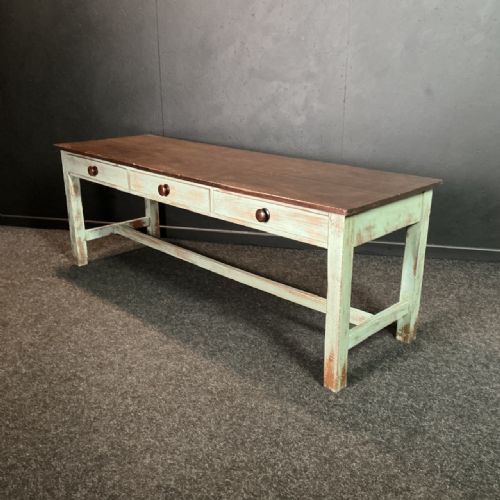
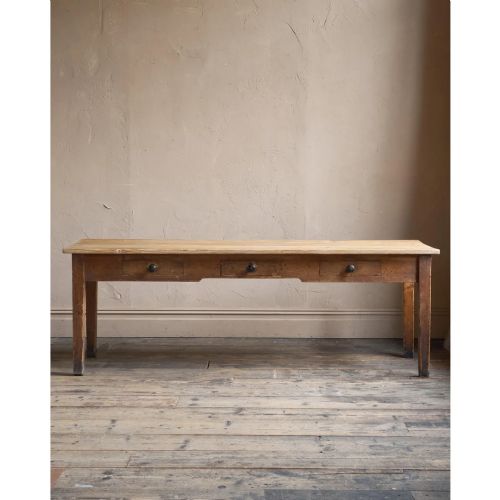
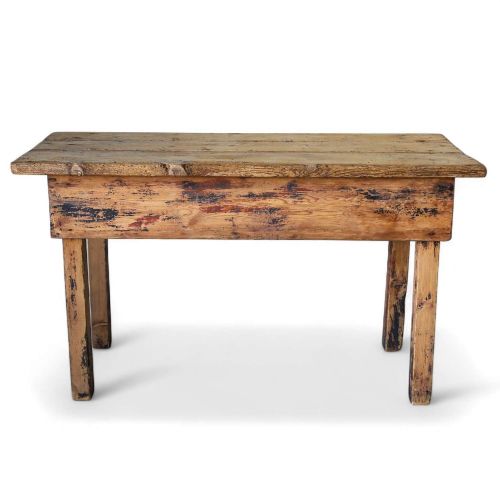
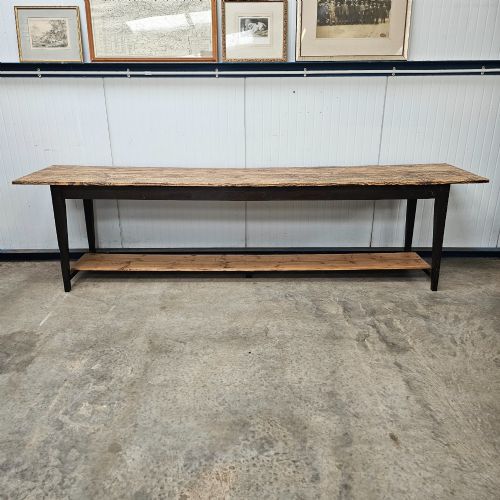


Antique Pine Workbench
An antique pine workbench brings honest utility and decades of character into a modern room, offering a sturdy surface shaped by real work.
Antique Pine Workbench
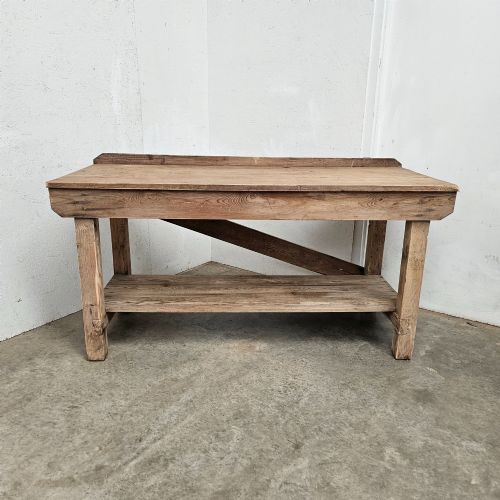
When you search for an antique pine workbench, you are looking at utilitarian tables built for trades, sculleries, and workshops during the nineteenth and early twentieth centuries. These pieces were designed purely for daily toil, which explains their robust proportions and honest construction.
The versions you are most likely to meet on this page span the nineteenth century up to the 1930s, originating from English, French, Scandinavian, and Scottish workshops. They appear in various forms, from dedicated workbenches and cobblers benches to scullery tables, trestle tables, and kitchen preparation surfaces.
Many of these tables show regional traits, such as the heavier painted finishes found on Scandinavian pieces or the clean lines of early twentieth-century English examples. Their primary appeal lies in this working heritage, which separates them from formal dining furniture.
How they were made
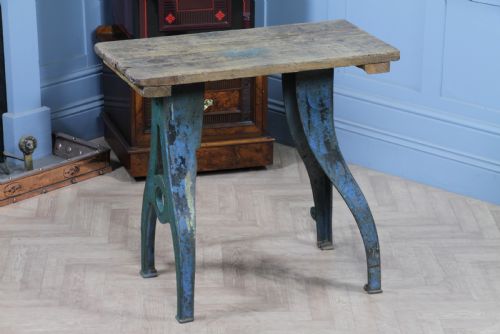
Makers built these tables using solid pine and timber, frequently pairing heavy pine tops with oak or incorporating cast iron and iron brackets for added rigidity. These resilient materials were chosen to withstand intense daily use in industrial, agricultural, and domestic settings.
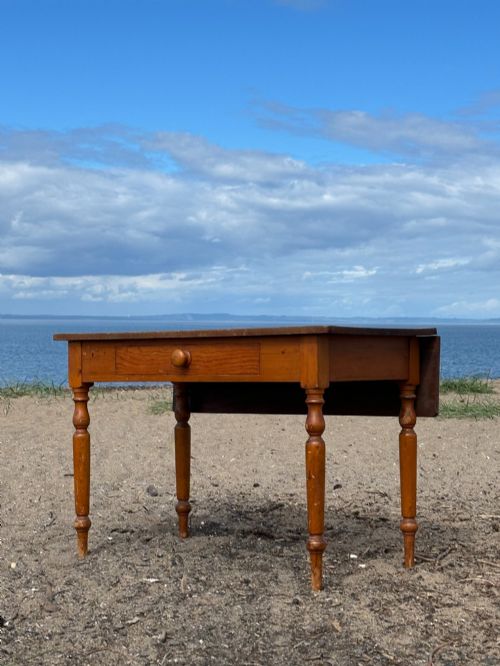
Surface treatments range from scrubbed natural wood to original painted finishes, often developed through decades of exposure to oils, paint, and daily wear. Construction methods rely on straightforward joinery, trestle supports, and occasionally two-tier shelving or integrated drawers to maximise utility.
Antique Pine Workbench Retail Price Guide 2026
Typical asking prices for pine workbench among the pieces listed under this phrase on Sellingantiques today, from the lower quarter to the upper quarter. They describe what is for sale here now, not the wider market.
Listings feature pieces spanning the 1850s to the 1930s, constructed from pine, oak, iron, and painted wood.
What varies in quality
The distinction between standard examples and the finest pieces rests in the integrity of the original structure and the depth of surface patina. Tables that retain their original painted finish or deep, scrubbed grain show a visual richness that later restorations cannot replicate.
Proportion and construction weight also define the hierarchy, with heavy, solid timber frames and substantial tops commanding greater presence. The best examples balance their utilitarian origins with balanced proportions that suit contemporary domestic spaces.
The Antique Pine Workbench Glossary
- Scrubbed top
- A wooden surface washed repeatedly with water and coarse brushes, removing soft grain to leave a pale, tactile finish. This treatment was common on kitchen and scullery tables.
- Trestle table
- A board resting on two or more supports, known as trestles, allowing for maximum legroom and simple dismantling. They appear frequently in French and English workshops.
- Cobblers bench
- A low, specialised seat incorporating small compartments for tools and leatherworking equipment. These pieces offer compact surfaces with distinct organizational wells.
- Drapers table
- A long, wide table historically used for measuring and cutting textiles in mercery shops. They often feature multiple drawers or lower shelves for storage.
- Patina
- The surface sheen and colour acquired through years of use, polishing, and ageing. A desirable patina reflects the genuine working history of the timber.
Antique Pine Workbench: Frequently Asked Questions
Can I use an antique pine workbench in a kitchen?
These tables adapt naturally to kitchen environments, serving as prep stations, islands, or dining surfaces. Their original working life means they already possess a durable resistance to daily use.
To live with one comfortably, simply treat the surface with appropriate oils or waxes to protect the aged pine from moisture while preserving the historical character.
How do I date an antique pine workbench?
Dating relies on examining construction marks, timber selection, and ironwork details. Nineteenth-century examples often feature hand-cut joints and heavier framing, while pieces from the 1900s to 1930s sometimes incorporate cast iron or simpler industrial elements.
Comparing the style of drawers, leg turnings, and the type of fixings used will also help narrow down the decade of manufacture.
What is the difference between a workbench and a prep table?
Workbenches generally feature heavier timber tops, integrated vices, or tool wells intended for heavy manual trades. Prep tables tend to have flat, clean boards designed for food preparation or domestic tasks.
Both share a rugged aesthetic, but their original functions dictate minor variations in surface wear and structural additions.
How should I clean a painted pine base?
Painted surfaces require gentle cleaning with a soft cloth and mild soap to avoid disturbing the original pigment. Avoid harsh chemical solvents that might strip away the historic layers of paint and the associated patina.
Preserving the accumulated marks of wear maintains the visual authenticity that defines these pieces.