
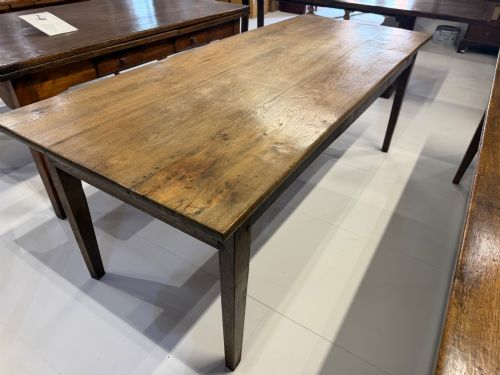
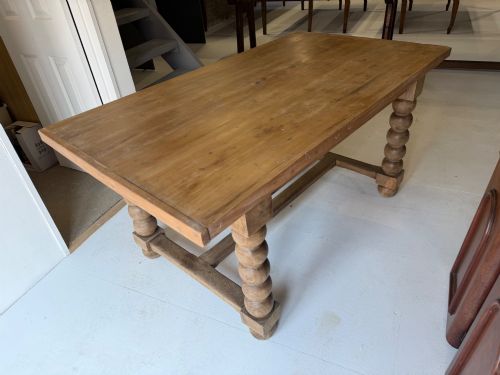
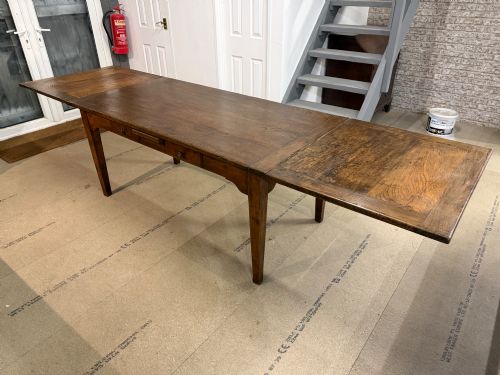
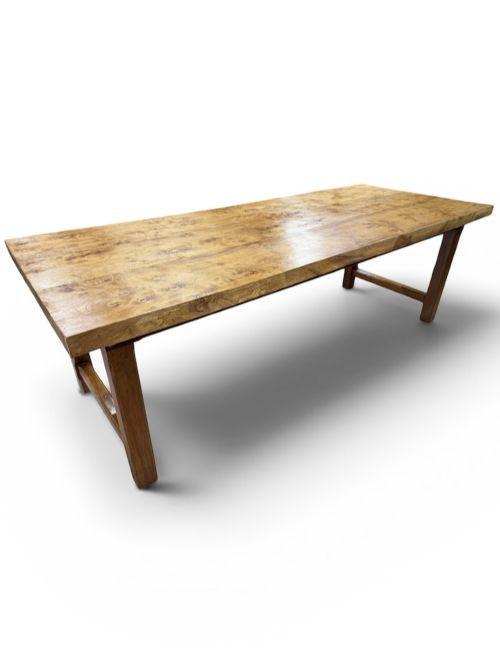
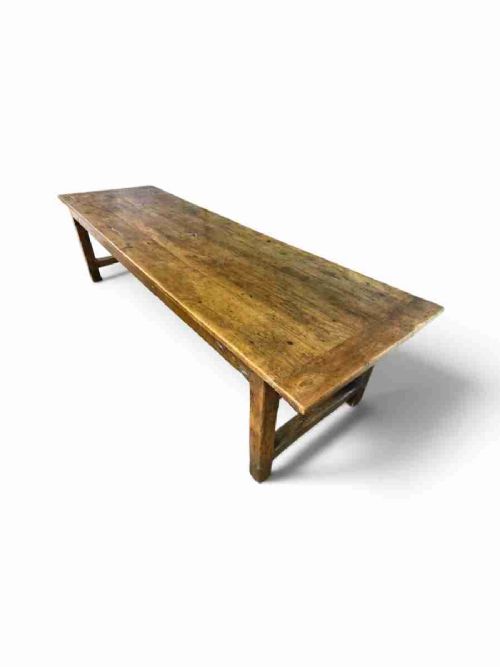
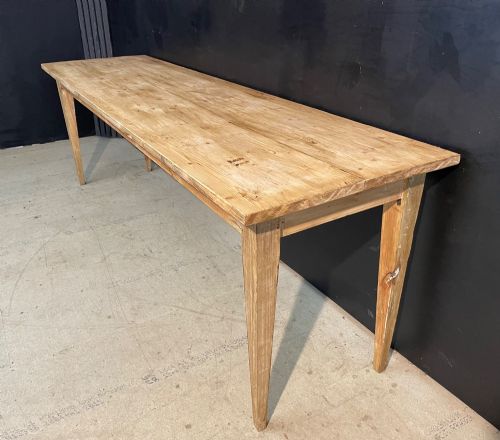
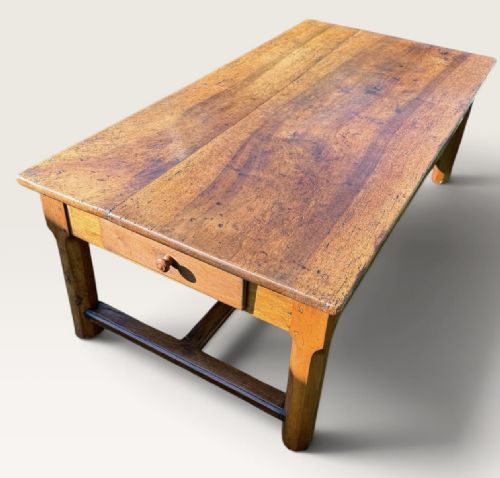
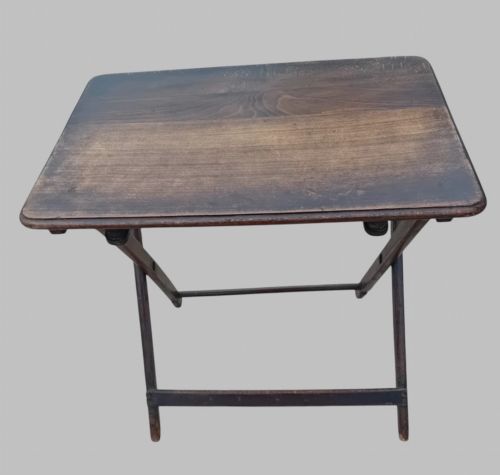
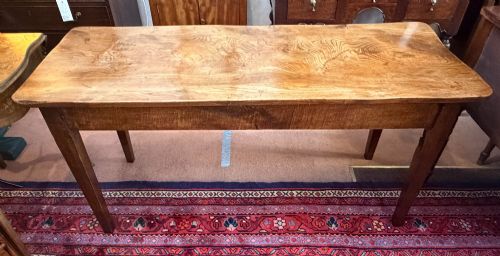
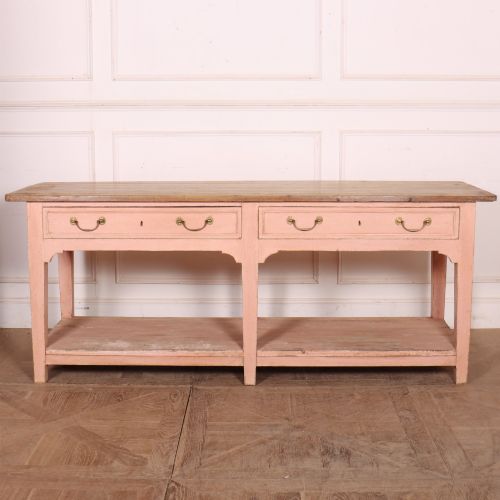
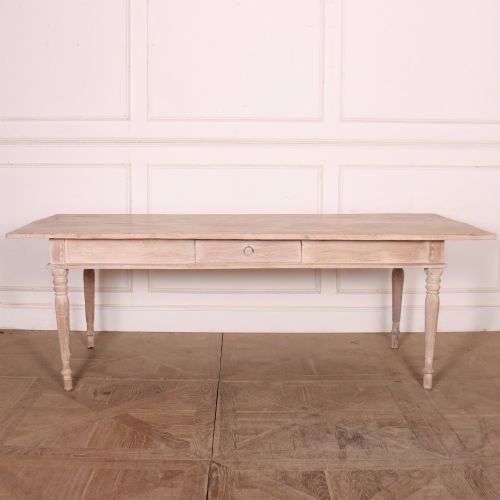
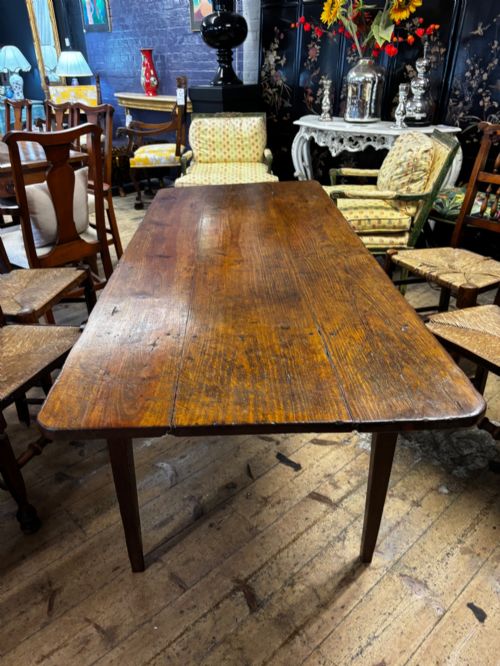
Rustic Wooden Table
A rustic wooden table brings genuine everyday history into a room, offering practical warmth and solid character through honest timber.
Rustic Wooden Table
A rustic wooden table embodies practical utility, shaped by decades of honest domestic or workshop use across various regional traditions. When exploring this selection, buyers frequently encounter sturdy dining surfaces, compact coffee tables, and versatile side pieces originating from the Georgian era through to the early twentieth century.
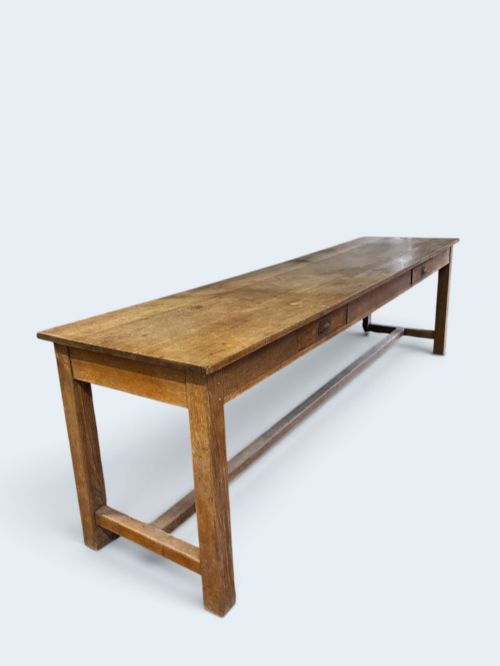
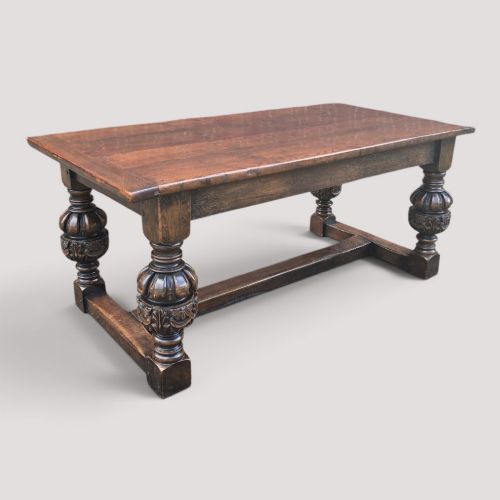
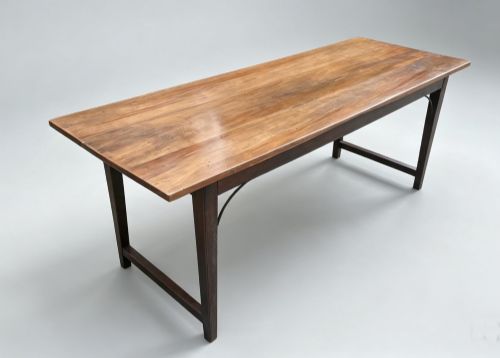
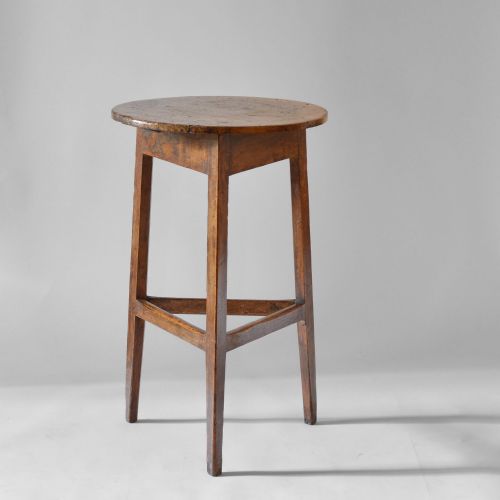
The assortment spans traditional farmhouse formats, refectory designs with trestle ends, and smaller tripod cricket tables suited to occasional spaces. Elm, pine, fruitwood, and oak provide the primary structural forms, often reflecting specific periods such as the Victorian age or the Edwardian decade.
French and English country influences dominate the available inventory, presenting unpretentious surfaces that prioritise function. Buyers select these tables to anchor contemporary interiors with historical texture and unvarnished natural charm.
Materials and construction methods
Construction relies heavily on robust domestic hardwoods and softwoods such as oak, beech, elm, and pine, selected for their structural resilience. Carpenters utilised traditional joinery techniques to build tables capable of enduring heavy daily labour in kitchens and dining rooms.
Surface finishes range from scrubbed natural timber to original scumble paint and traces of historic painted decoration. Metal fastenings and brass details appear occasionally, though primary assembly depends upon pegged mortise and tenon joints.
Rustic Wooden Table Retail Price Guide 2026
Typical asking prices for rustic wooden table among the pieces listed under this phrase on Sellingantiques today, from the lower quarter to the upper quarter. They describe what is for sale here now, not the wider market.
Several tables survive with stubborn traces of old paint and flour dust, whispering tales of past pastry chefs.
Assessing quality and character
Quality rests upon the integrity of the timber and the honesty of the surface wear accumulated through active use. Tables retaining original paint, untouched patination, and sound structural joinery stand apart from pieces compromised by unsympathetic restoration.
Proportion and timber selection dictate the distinction between standard utilitarian items and finer vernacular examples. Grain configuration, species rarity such as satin birch or fruitwood, and balanced proportions define the upper tier of the range.
The Rustic Wooden Table Glossary
- Cricket table
- A small, lightweight occasional table traditionally built with three legs for stability on uneven floors. These pieces often feature a circular top above a triangular frame.
- Dresser base
- A low storage unit featuring drawers or cupboards beneath a flat surface, often serving double duty as a side or serving table. These practical pieces originate from traditional farmhouse kitchens.
- Scumble paint
- A decorative glazing technique applied to imitate finer wood grains or create mottled surface patterns. This finish appears on period pieces to lend simple pine or hardwood an aged aesthetic.
- Trestle ends
- Support structures comprising vertical posts fixed to horizontal feet, commonly found on heavy refectory tables. This design allows maximum legroom along the length of the surface.
Rustic Wooden Table: Frequently Asked Questions
How do I date a rustic wooden table?
Dating relies on identifying timber species, construction methods, and hardware signatures visible across the piece. Hand-sawn boards and pegged joinery generally point towards earlier Georgian or nineteenth-century origins.
Later Edwardian and early twentieth-century examples often exhibit machine assistance and standardised fixings. Comparing leg styles, such as tapered supports versus bobbin turnings, further clarifies the period of manufacture.
What rooms suit a refectory table?
Refectory tables suit spacious kitchens, open-plan dining areas, and large living rooms requiring a substantial focal point. Their narrow profile accommodates generous seating along the flanks.
Pairing these long surfaces with matching benches or diverse chairs creates a balanced, grounded arrangement. Their historic utility translates naturally into modern gathering spaces.
How do I care for antique pine?
Antique pine requires gentle cleaning with a damp cloth followed by thorough drying to protect the soft timber grain. Avoid harsh chemical cleaners that strip natural patination and historical wax finishes.
Applying a traditional beeswax polish periodically nourishes the wood and maintains a soft lustre. Keeping the table away from direct heat sources prevents timber splitting and warping.
What is a cricket table used for?
A cricket table functions as a versatile occasional surface for lamps, books, or plants in compact areas. Its three-legged tripod design provides stable placement on uneven historic flooring.
Historically deployed near firesides or in corners, these small pieces introduce organic timber warmth without overwhelming a room. Their portability makes them easy to relocate as living arrangements shift.