
Vintage Dining Table
A vintage dining table anchors the room with character, bringing period timber, draw leaves, and pedestal bases into daily domestic life.
Vintage Dining Table
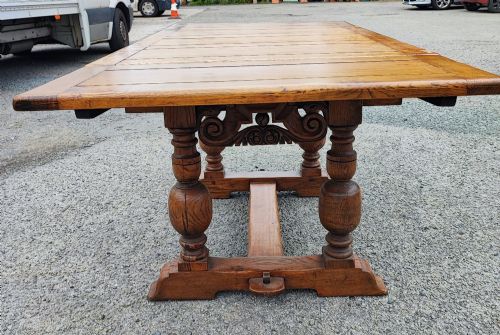
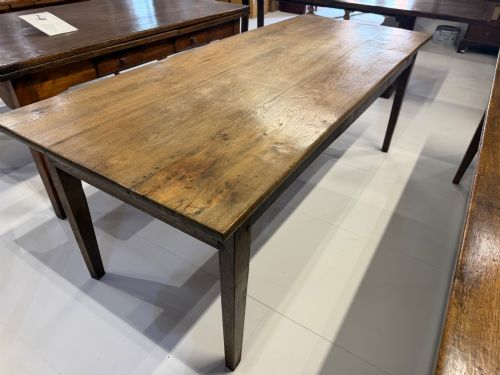
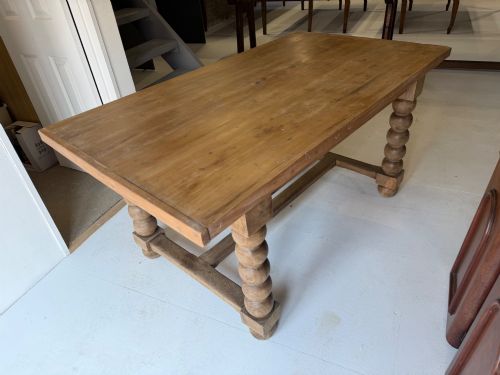
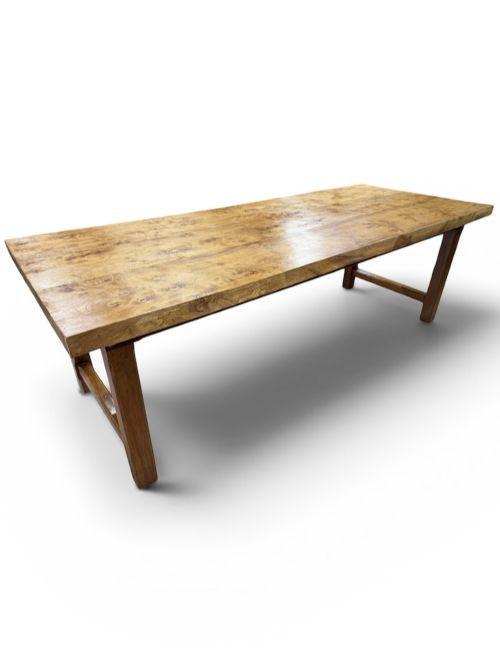
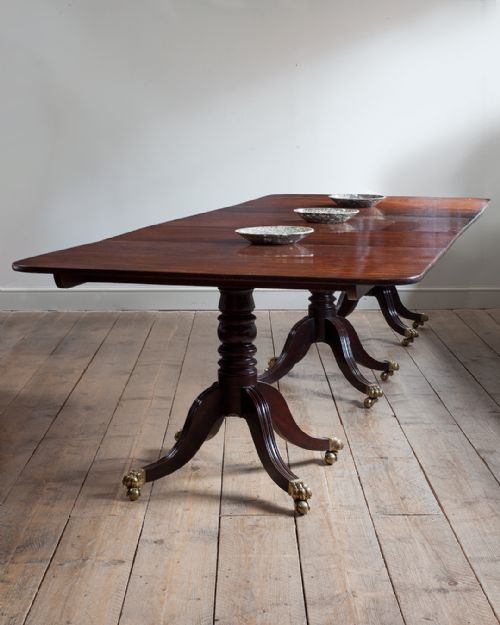
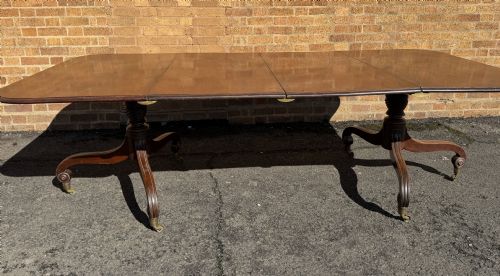
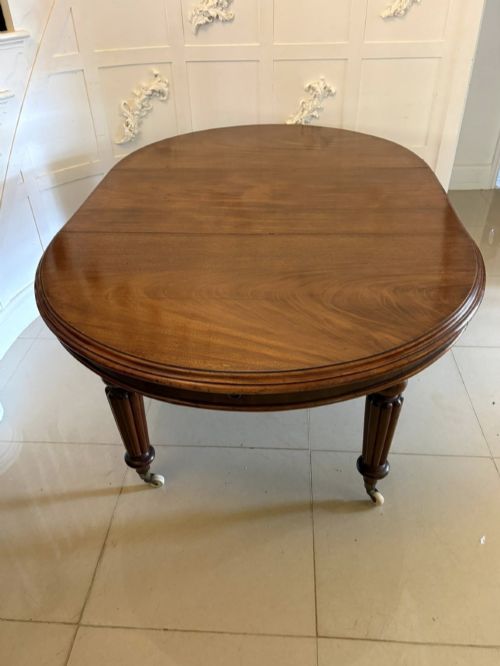
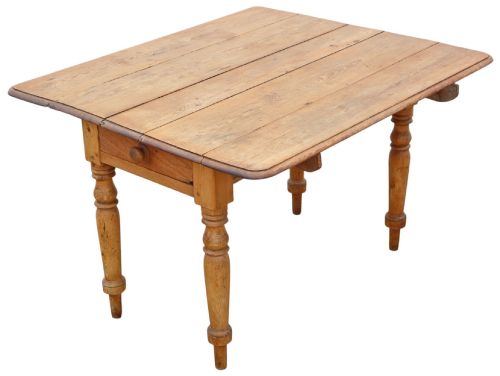
A vintage dining table search reveals pieces spanning the nineteenth and twentieth centuries, encompassing Victorian mahogany extending formats, Edwardian oak refectory designs, and rustic farmhouse tables. Buyers find functional surfaces suited for daily meals, ranging from compact folding drop-leaf pine versions to grand triple-pedestal Regency tables.
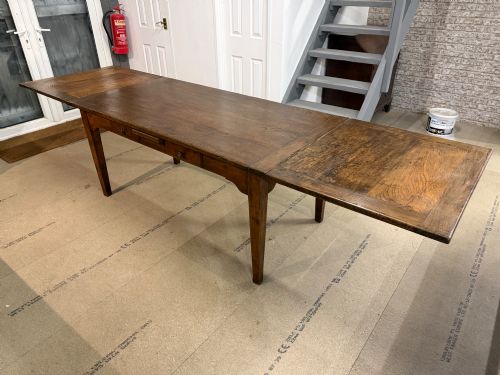
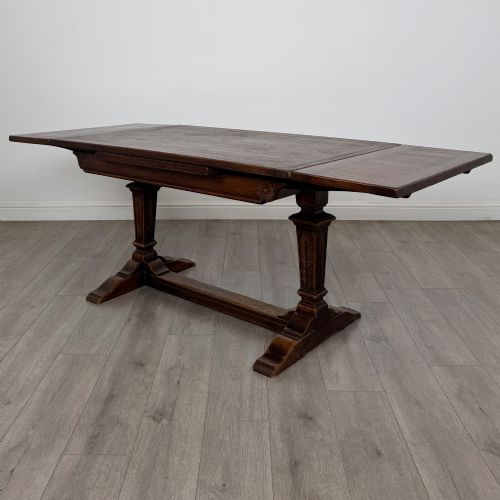
The selections on this page concentrate heavily on sturdy oak and rich mahogany timbers, styled through various revival movements alongside functional farmhouse constructions. Tables frequently incorporate extending mechanisms, draw leaves, or wind-out systems designed to alter the footprint for gatherings.
Origins stretch across English workshops and continental French farmhouses, reflecting domestic dining habits of the past two centuries. Forms vary from simple trestle benches and refectory boards to polished pillar-supported dining sets.
How They Were Made
Construction relies primarily on hardwoods such as oak, mahogany, walnut, and pine, chosen for structural endurance and grain pattern. Cabinet makers utilised traditional joinery, including mortise and tenon joints for refectory tables and intricate pedestals for mahogany dining formats.
Extending tables incorporated mechanical ingenuity, utilising brass winding mechanisms, castors, and draw leaves that allowed heavy timber tops to glide apart smoothly. Surfaces received hand-applied finishes, French polish, or scrubbed treatments depending on whether the table served formal dining rooms or utilitarian kitchens.
Listings feature oak and mahogany predominantly, alongside pine, walnut, and rosewood across Victorian, Edwardian, and nineteenth-century periods.
What Varies in Quality
Quality rests in the selection of timber, evidenced by figured mahogany veneers, deep-grained oak boards, and the integrity of underlying secondary woods. Superior examples maintain original extending mechanisms, smooth-running brass wind-out screws, and stable pedestal bases without excessive timber movement.
Hand-carved details, balanced proportions, and the retention of manufacturer marks or original patination separate utilitarian workshop pieces from exceptional creations. Construction solidity, particularly in the joints of refectory trestles and drop-leaf hinges, dictates how well a table withstands active daily service.
Maurice Adams
The Vintage Dining Table Glossary
- Refectory table
- A long, narrow dining table traditionally used in monastic refectories, characterised by sturdy legs connected by longitudinal stretchers.
- Wind-out table
- An extending dining table operated by inserting a small metal crank handle into a mechanism that separates the leaves to insert extra panels.
- Draw leaf table
- A table with pull-out leaves stored beneath the main top, which slide outward to extend the surface area instantly.
- Pedestal table
- A table supported by one or more central pillars, often resting on a tripod or triform base rather than four corner legs.
- Pembroke table
- A small, versatile table with hinged flaps on two opposite sides that drop down when not in use.
- Scrub top
- A plain wooden tabletop left unfinished or repeatedly scrubbed clean, commonly found on nineteenth-century pine kitchen and farmhouse tables.
Vintage Dining Table: Frequently Asked Questions
How do wind-out extending tables work?
Wind-out tables use an internal metal screw mechanism operated by a detachable handle. Turning the crank pulls the table halves apart evenly to accommodate additional leaves.
This system ensures the top remains balanced and stable when fully extended for larger gatherings.
What is the difference between a refectory and a farmhouse table?
Refectory tables typically feature long, narrow proportions with structural stretchers connecting the legs, reflecting communal dining origins. Farmhouse tables emphasise utilitarian construction, sometimes utilising pine scrub tops and drawers for daily kitchen storage.
Both styles offer robust timber surfaces suited to heavy domestic use.
How do I care for a polished mahogany surface?
Polished mahogany requires protection from direct heat, moisture, and strong sunlight to prevent the finish from fading or crazing. Regular dusting with a soft cloth maintains the natural lustre of the wood.
Applying a traditional beeswax polish periodically nourishes the grain without building up heavy residue.
Can I use a antique dining table every day?
Antique dining tables were built for functional domestic service and handle daily meals comfortably when treated with reasonable care. Using heat mats and coasters protects the historic timber and polished finishes from accidental damage.
Robust oak and mahogany examples easily anchor active modern dining spaces.