
Victorian Pine Prep Table
A victorian pine prep table brings honest utility to a room, offering sturdy work space born from domestic and rural kitchens.
Victorian Pine Prep Table
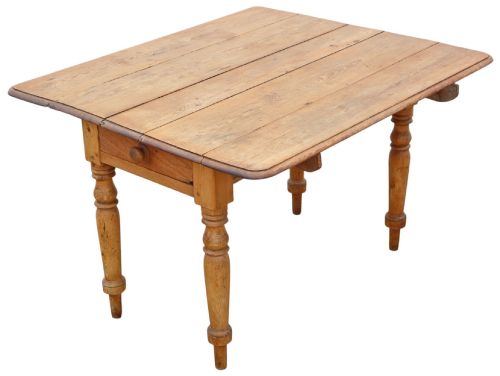
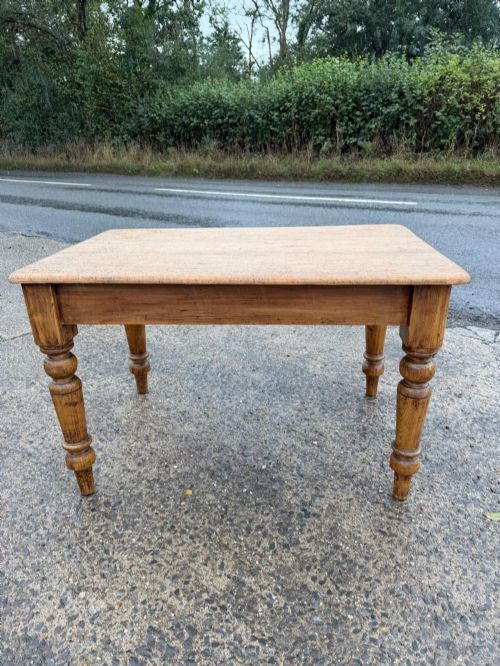
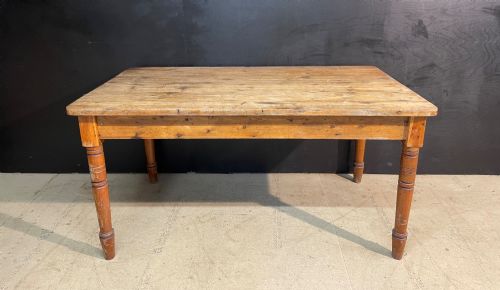
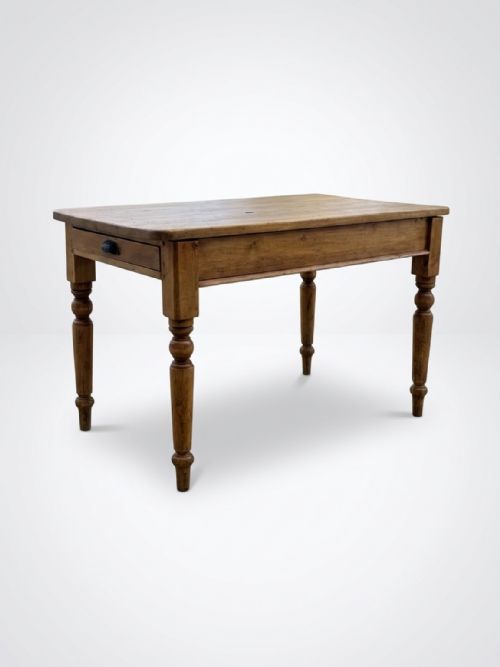
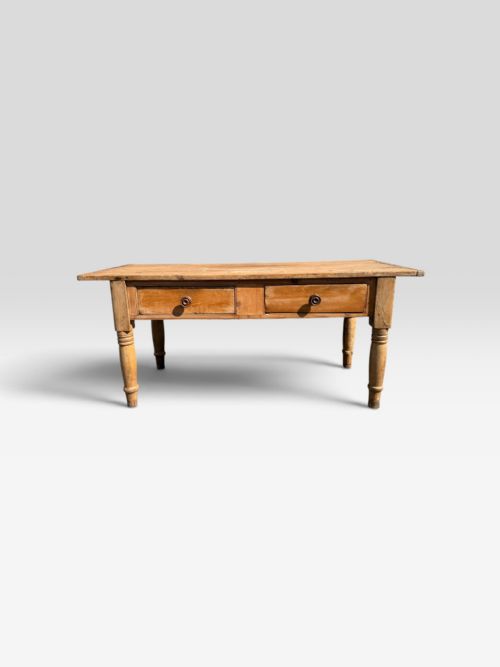
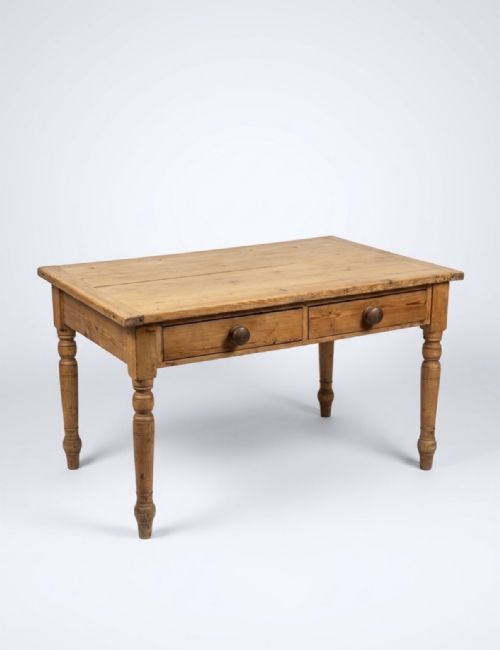
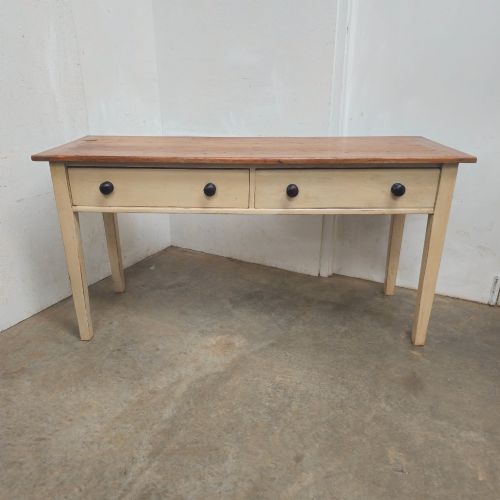
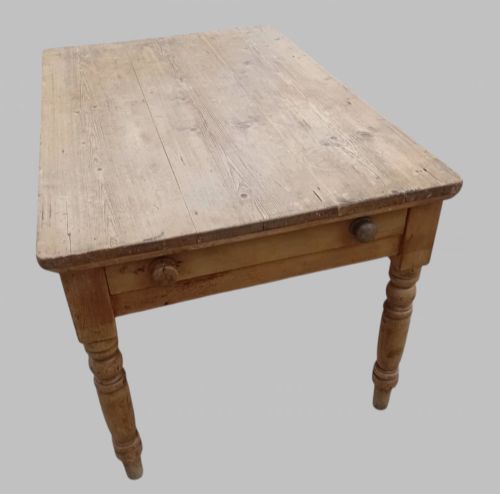
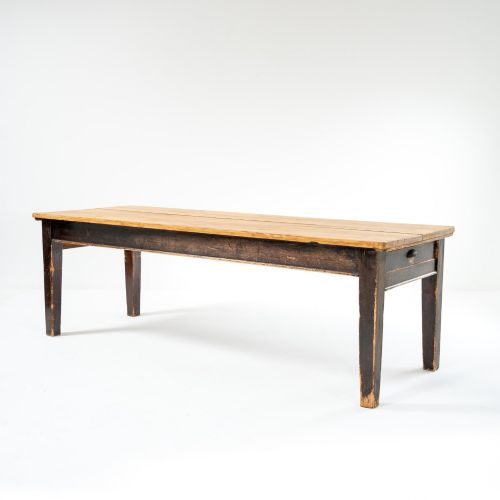
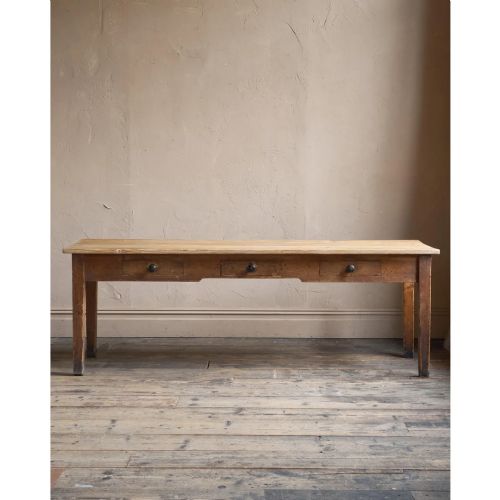
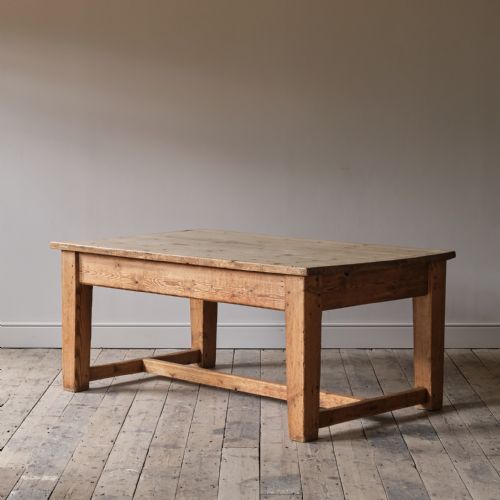
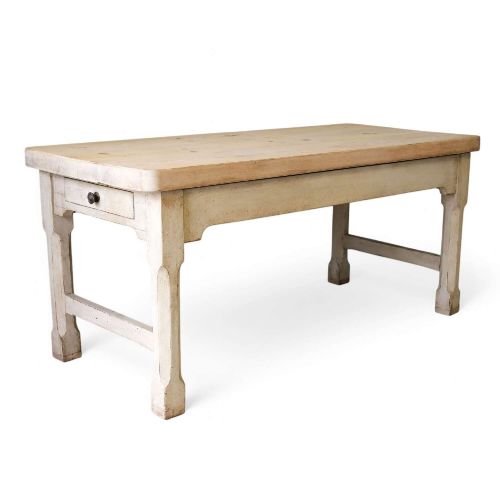
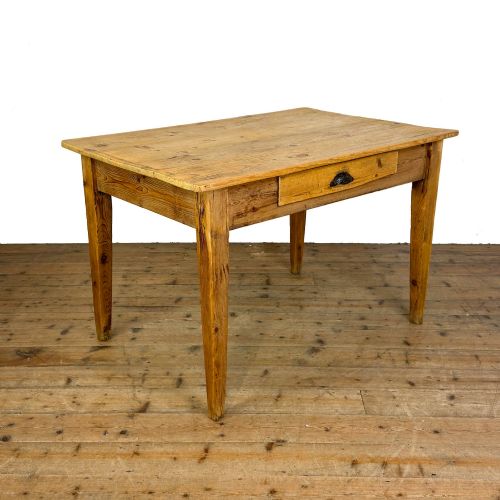
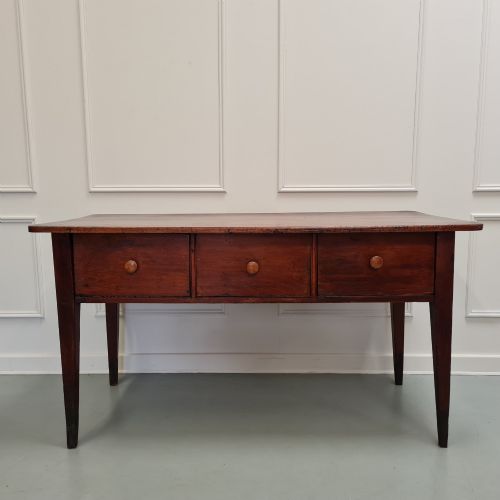
A victorian pine prep table is a utilitarian surface designed for heavy kitchen work, food preparation and scullery tasks. The examples seen on this page span the nineteenth century and into the early twentieth century, taking forms such as farmhouse tables, dairy tables, harvest tables and serving tables.
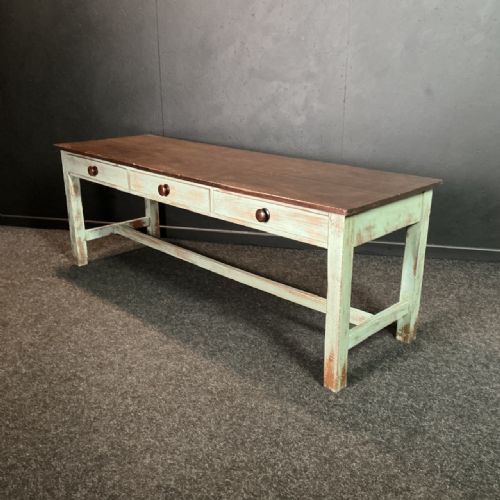
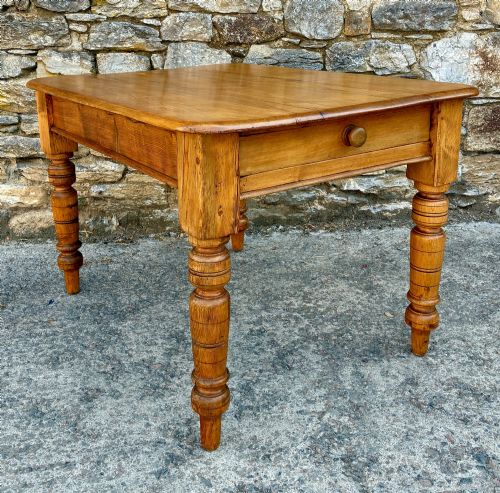
Most pieces show simple rectangular tops supported by sturdy legs, frequently incorporating one or more drawers in the front frieze for storage of utensils. Regional variations include Welsh and Scottish origins alongside English country pieces, reflecting the practical needs of rural domestic life.
How They Were Made
Makers constructed these pieces using softwood timber, predominantly pine and pitch pine, occasionally combining them with fruitwood or metal and ceramic elements. Tops were either scrubbed clean for hygiene or finished with paint, while legs and frames frequently received protective coats of paint.
Construction methods prioritised strength and daily utility over delicate ornamentation, utilising solid timber planks joined simply and effectively. Drawers often featured basic hand-cut joints designed to withstand repeated pulling and heavy daily use in busy working environments.
Victorian Pine Prep Table Retail Price Guide 2026
Typical asking prices for victorian pine prep table among the pieces listed under this phrase on Sellingantiques today, from the lower quarter to the upper quarter. They describe what is for sale here now, not the wider market.
Several tables retain traces of old flour, butter and kitchen grease embedded deep within the grain from centuries of honest work.
What Varies in Quality
The distinction between standard utility items and finer examples rests largely on the choice of timber and the retention of original surface treatments. Superior pieces utilise dense pitch pine or incorporate secondary woods like fruitwood, displaying careful timber selection rather than purely expedient building.
Evidence of original paint finishes or a well-scrubbed historical top elevates a piece above standard stripped examples. Proportions, structural integrity and the presence of working drawers or folding drop-leaf mechanisms further separate basic worktables from exceptional specimens.
The Victorian Pine Prep Table Glossary
- Scrub top
- A bare wooden tabletop designed to be scrubbed daily with water and stone to maintain cleanliness. This treatment leaves the grain raised and pale.
- Frieze
- The horizontal band running directly beneath the tabletop. This is the structural member that houses drawers in many kitchen tables.
- Pitch pine
- A dense, resinous variety of pine timber prized for its durability and darker, more figured grain pattern. It appears frequently in heavier working furniture.
- Dairy table
- A specialised functional table used in butter and cheese making. These surfaces often featured scrubbed tops to handle frequent washing.
- Harvest table
- An elongated dining or work table traditionally used during seasonal farm gatherings. These examples provide exceptional length for communal seating.
Victorian Pine Prep Table: Frequently Asked Questions
What is a prep table?
A prep table is a heavy-duty working surface designed for food preparation, baking and kitchen tasks in domestic or rural settings.
Unlike formal dining tables, these pieces prioritise robust construction, thick wooden tops and practical storage drawers over decorative refinement.
How were these tables used?
These tables served as the central workspace for kneading bread, chopping vegetables, preparing dairy products and managing scullery chores.
Their sturdy surfaces handled daily domestic labour before modern fitted kitchens integrated counters into domestic architecture.
How do I live with pine?
Living with pine requires accepting that the wood records the marks of daily use, developing a rich patina over decades.
Maintenance involves simple cleaning and avoiding excessive moisture, allowing the natural grain and historical surface wear to show character.
How to tell periods apart?
Differentiating periods relies on observing construction details, timber selection, leg profiles and the presence of original paint versus stripped surfaces.
Earlier nineteenth-century examples often display denser timber and simpler hand-joined framing compared to later mass-produced or transitional pieces.