

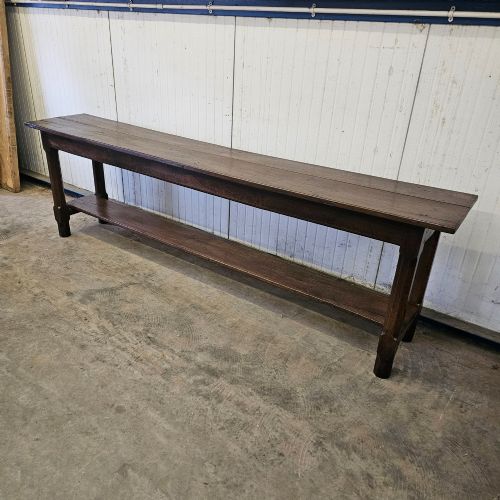
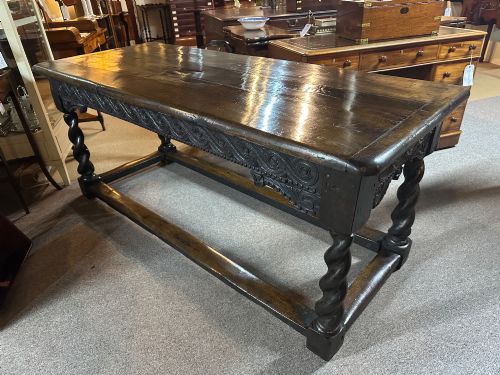
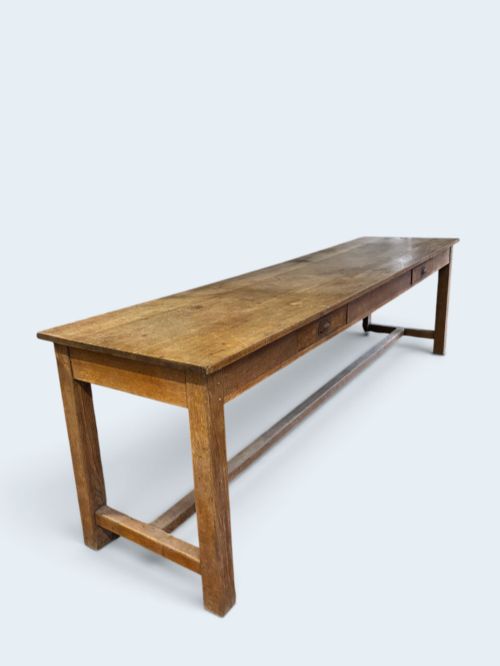



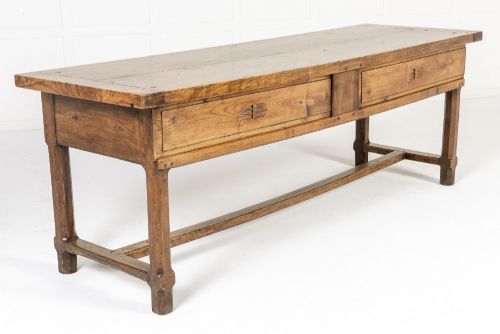


Long Oak Console Table
A long oak console table brings substantial timber and practical length to a hallway or reception room.
Long Oak Console Table
A long oak console table provides a narrow, extended surface drawn from varied historic forms including serving tables, drapers tables, refectory tables and workbenches. These pieces emerge across the eighteenth, nineteenth and early twentieth centuries, spanning Victorian, Edwardian and Arts and Crafts periods alongside French provincial and rustic farmhouse styles.
The version most commonly met on this page is a long, narrow timber table shaped by utilitarian origins, from French drapers tables to English serving tables and ships tables. They appear in solid oak, bleached oak, and occasionally combined with pine, iron, cast iron or brass fittings.
Buyers select these extended pieces to anchor large empty walls in hallways, dining spaces and living rooms where standard furniture lacks presence. Their proportions offer generous surface length without encroaching too far into the floor space of a room.
What varies in quality
Quality rests in the integrity of the timber selection and the honesty of the construction, distinguishing purpose-built institutional or commercial tables from lighter domestic furniture. Solid oak surfaces that retain depth of grain and patination show superior material character.
The refinement of the underframe - whether a Gothic revival stretcher, heavy trestle supports, or cast iron reinforcement - determines the visual weight and stability of the piece. Proportion and length relative to the narrow depth dictate how successfully the table sits in a modern interior.
Long Oak Console Table Retail Price Guide 2026
Typical asking prices for long oak console table among the pieces listed under this phrase on Sellingantiques today, from the lower quarter to the upper quarter. They describe what is for sale here now, not the wider market.
Materials across the inventory include solid oak, bleached oak, cast iron, brass, pine and poplar.
The Long Oak Console Table Glossary
- Console table
- A table designed to stand against a wall, typically narrow in depth and elongated in length. These pieces often served utilitarian functions in grand houses before entering domestic living spaces.
- Drapers table
- A long, narrow table historically used in textile shops for folding cloth, characterised by generous length and often lower shelving. They provide exceptional surface area for modern hallway and serving use.
- Refectory table
- An extremely long dining or serving table traditionally found in monastic dining halls. In later centuries, the form was adapted into domestic country house interiors.
- Bleached oak
- Oak timber treated to lighten its natural dark tone, exposing the grain with a pale, Scandinavian-influenced finish. This treatment is frequently seen on French provincial examples.
- Gothic underframe
- A framework beneath a table incorporating pointed arch motifs and architectural tracery derived from Gothic revival design. This style appears on nineteenth and early twentieth-century examples.
Long Oak Console Table: Frequently Asked Questions
Where should I place a long oak console table?
These pieces suit long hallways, wide landings, or behind large sofas where narrow proportions are essential. Their length anchors empty wall spaces without blocking circulation.
In dining rooms or kitchens, they function effectively as serving tables or sideboard alternatives for displaying objects and hosting guests.
How do I care for a historic oak surface?
Maintain the timber by dusting regularly with a dry cloth and avoiding harsh chemical polishes that damage the historic finish. Natural beeswax applied sparingly helps nourish dry oak.
Keep tables away from direct heat sources and dramatic humidity changes to prevent timber movement or splitting in solid boards.
Are these tables suitable for everyday dining?
Many of these pieces originate as refectory, drapers or serving tables built for heavy daily use. Their sturdy oak construction handles regular domestic activity comfortably.
Check the height from the floor to the underside of the rails to ensure adequate knee clearance if chairs are to be placed underneath.
How do I distinguish French and English country styles?
French country and provincial examples frequently feature bleached oak finishes, lighter timber tones, and elegant trestle or stretcher frames. They often originate from commercial workshops or textile settings.
English country house and Victorian pieces tend to display darker, heavier solid oak construction, sometimes featuring iron brackets, drawers, or Gothic revival underframes.