
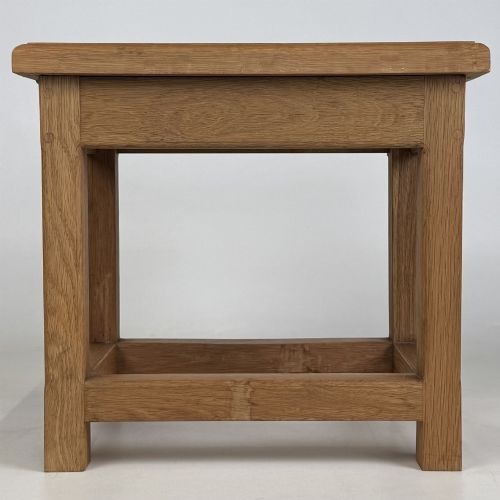


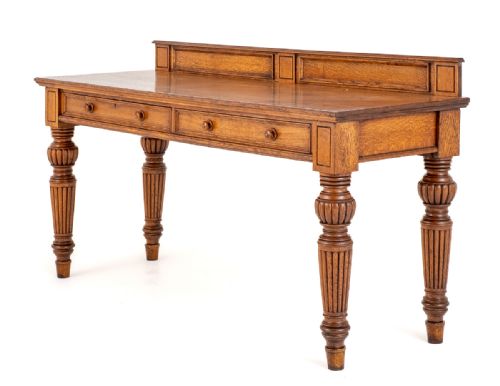
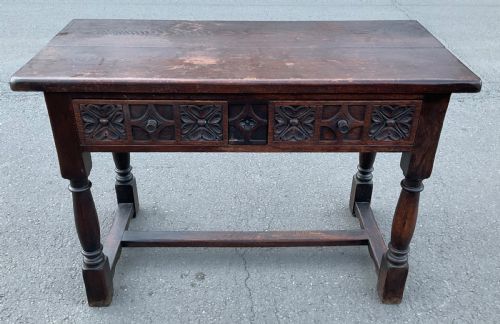
Heavy Oak Side Table
These heavy oak side table pieces bring solid timber and carved presence into a room, offering a sturdy surface built to last.
Heavy Oak Side Table
A heavy oak side table represents the robust end of domestic and institutional furniture, drawing on centuries of sturdy timber construction. When you search for a heavy oak side table, you encounter pieces spanning from the seventeenth century through to the early twentieth century.
Makers and craftsmen of these periods utilised dense hardwoods to create substantial surfaces for halls, dining rooms, and studies. Each piece demonstrates the enduring utility of oak in domestic architecture.
Materials and construction
The primary material across these pieces is solid oak, occasionally supplemented by walnut or reinforced with cast iron and metal elements. Joinery relies on traditional methods designed to support heavy weights and withstand daily use over generations.
Carving plays a significant role in the decoration of these tables, aligning with Jacobean Revival, Gothic Revival, Flemish Baroque, and Renaissance Revival styles. Artisans shaped the dense timber by hand, applying deep relief work to legs, aprons, and surfaces.
Listings on this site feature pieces spanning from the 17th century through the Victorian and Edwardian eras up to 1920.
Judging quality and craftsmanship
Quality in these pieces rests upon the depth and crispness of the carved ornamentation, alongside the integrity of the timber. Tables that retain their original heavy proportions without excessive structural alteration command greater respect from collectors.
The integration of secondary materials, such as cast iron frames in industrial or ships tables, distinguishes utilitarian robustness from purely decorative revival furniture. Surface patination accumulated over decades of use also defines the visual standing of a piece.
The Heavy Oak Side Table Glossary
- Oak
- A durable hardwood native to temperate regions, prized for its strength and distinct grain pattern. It forms the structural foundation for the majority of these tables.
- Jacobean Revival
- A nineteenth-century style reviving the heavy, rectilinear furniture designs of the early seventeenth century. It frequently incorporates turned legs and geometric panel moulding.
- Gothic Revival
- An architectural and decorative style drawing inspiration from medieval forms, featuring pointed arches and heavy carved tracery. Pieces in this style display dramatic vertical lines.
- Flemish Baroque
- A flamboyant design style characterised by rich, scrolling ornamentation and high-relief carving. It brings a sense of movement to rigid wooden furniture.
- Patina
- The surface sheen and colour developed by timber over long periods of handling and exposure to light. A natural patina indicates age and regular use.
Heavy Oak Side Table: Frequently Asked Questions
What periods do these heavy oak side table pieces come from?
The pieces span multiple eras, ranging from authentic seventeenth-century examples to Victorian, Edwardian, and early twentieth-century revivals. Each period brings distinct carving styles and structural proportions to the furniture.
Buyers will find that nineteenth-century interpretations often look back to earlier medieval or baroque aesthetics while maintaining nineteenth-century workshop standards.
How were these tables used originally?
These sturdy tables served functional roles in large halls, dining spaces, ships, and writing rooms where a heavy, unmoving surface was required. Serving tables and writing desks handled heavy domestic labour and administrative tasks.
Their robust construction ensured they could support heavy objects, from serving dishes to substantial ledgers and books, without wobbling.
How do I care for a heavy oak surface?
Maintenance involves keeping the timber away from direct heat sources and sudden humidity changes to prevent splitting. Regular dusting with a dry cloth helps preserve the natural wax finish and accumulated patina.
Avoid harsh chemical cleaners, as they strip the historical oils from the wood and dull the carved details over time.
How can I distinguish a revival piece from an older one?
Distinguishing revival pieces involves examining the tool marks, timber shrinkage, and joinery methods used in the construction. Nineteenth-century revivalists often utilised machine-sawn backing or different secondary woods alongside oak.
Comparing the style of the carving to documented historical periods helps clarify whether a piece is seventeenth-century or a later nineteenth-century revival.