
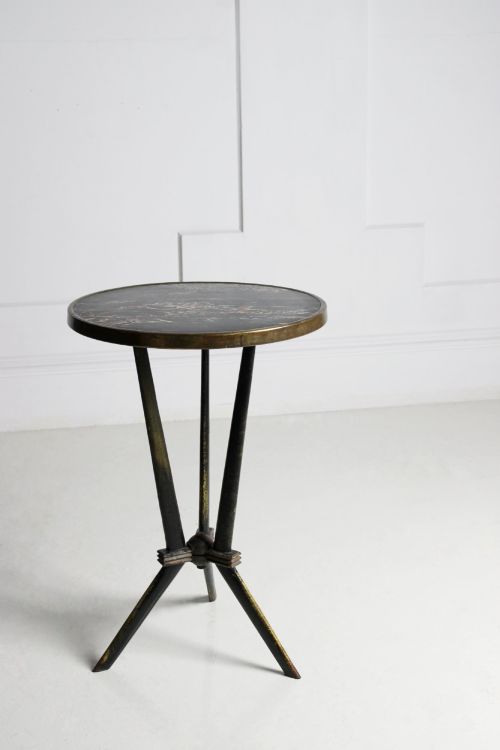
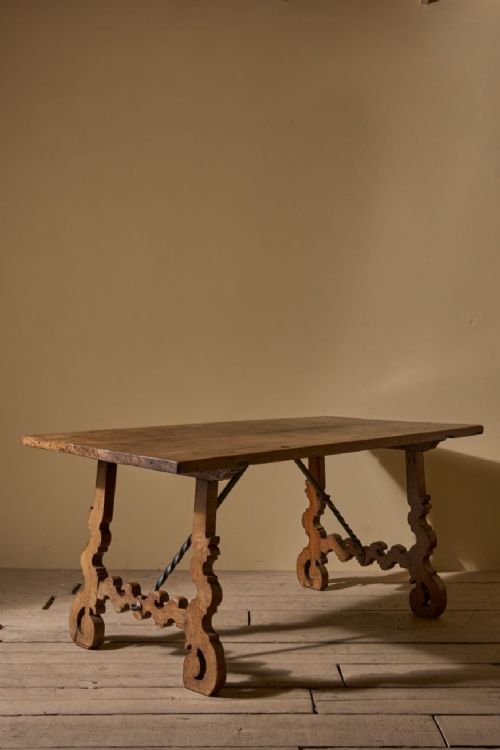
Antique Iron Base Table
An antique iron base table brings industrial strength and handsome timber tops into modern rooms.
Antique Iron Base Table
An antique iron base table combines heavy metal framing with wooden or stone surfaces designed for practical utility. These pieces originate from periods such as the Victorian era, the Edwardian years, and the early twentieth century, spanning functional forms like pub tables, bistro tables, and work tables.
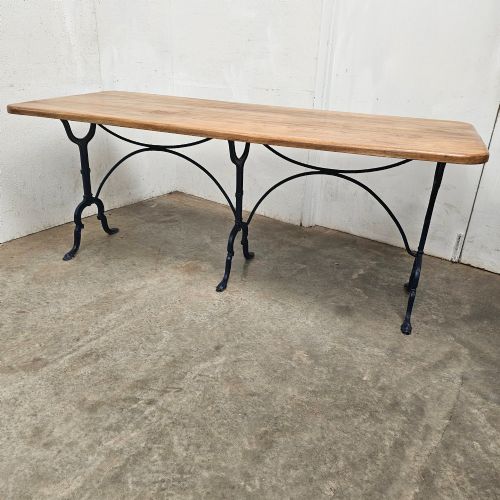
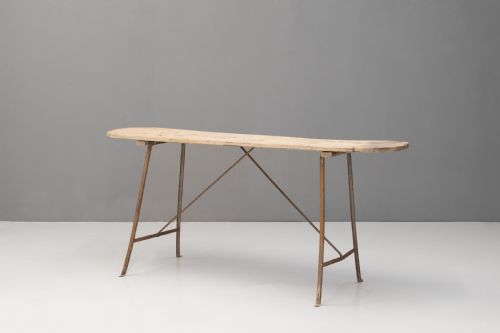
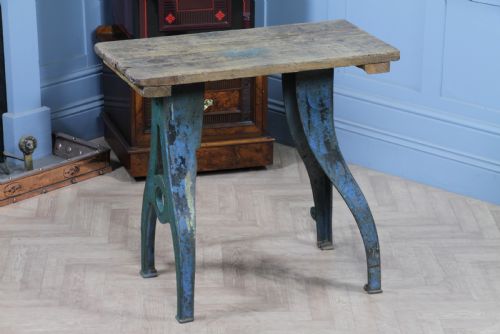
The version most commonly encountered on this page pairs a sturdy cast iron or wrought iron support with a timber top such as oak, elm, or pine. Such tables served commercial, domestic, and industrial roles, ranging from garden seating to pub interiors and workshop tasks.
Makers utilised resilient metals to build supports that withstood heavy daily use while pairing them with mahogany, oak, or marble tops. The resulting furniture balances utilitarian engineering with domestic charm, offering sturdy surfaces suited to modern dining, coffee, and side table placements.
Materials and Construction Methods
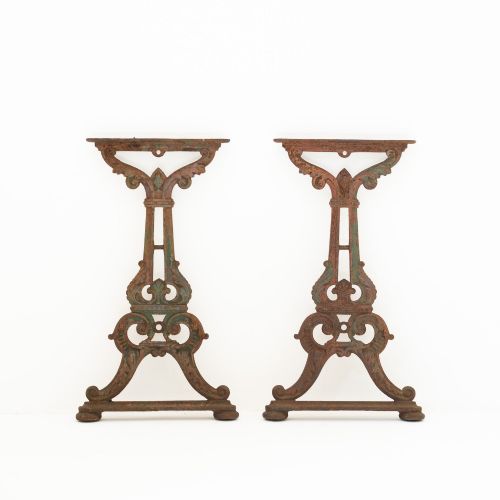
Foundries cast iron into ornate scrollwork, tripod configurations, and industrial pedestals to create stable underframes. Wrought iron was shaped by hand for specific architectural and decorative framing, yielding durable structures that supported heavy wooden or marble surfaces.
Tops were fashioned from dense timbers like oak, elm, pine, and mahogany, often secured directly to the metal bases with heavy screws or bolts. Some commercial designs incorporated adjustable mechanisms or combined brass components with iron framing for specific functional tasks.
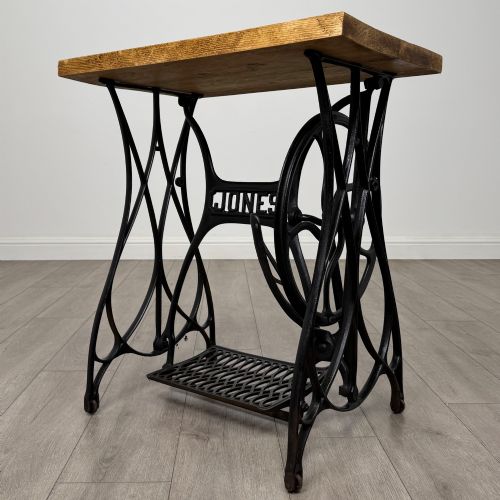
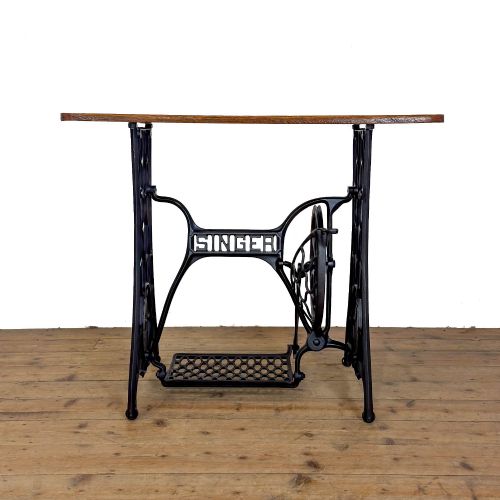
Some industrious Victorian sewing machine bases found a second life supporting morning coffee cups and evening gin.
Distinctions in Quality and Make
Quality rests upon the crispness of the iron casting and the integrity of the original top. Tables featuring detailed scrollwork, maker attribution, or untouched factory patination sit higher in the range than plain, utilitarian replacements.
The relationship between the base and the top dictates overall cohesion. Pieces retaining their original timber surfaces, whether polished mahogany or scrubbed pine, command greater interest than later marriages of mismatched components.
Carters of London·Singer Sewing Machine·Lacroix·Lalique·Schneider·Daum
The Antique Iron Base Table Glossary
- Cast iron
- A strong, hard alloy of iron and carbon poured into moulds to create intricate bases. It provides the heavy foundation characteristic of Victorian pub and garden tables.
- Wrought iron
- Iron that is heated and hammered into shape by hand, resulting in fibrous structures and fluid lines. This material frequently appears in decorative Art Deco and provincial frames.
- Bistro table
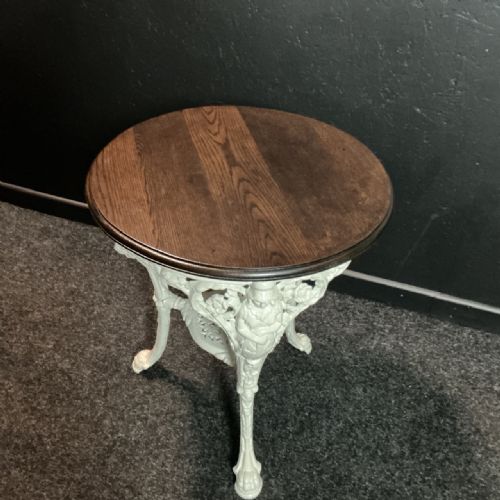
- A small café or dining table built for commercial hospitality settings. These typically feature a central iron pedestal supporting a round wooden or marble top.
- Trestle
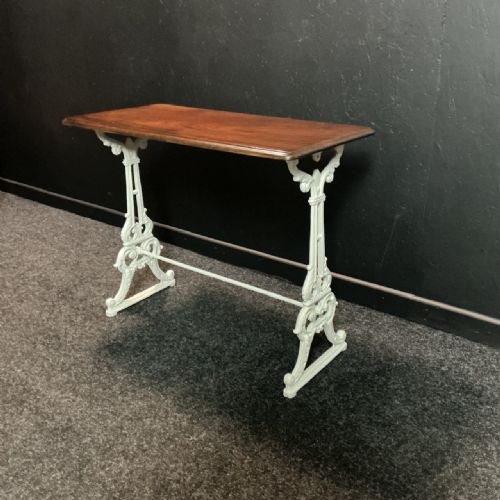
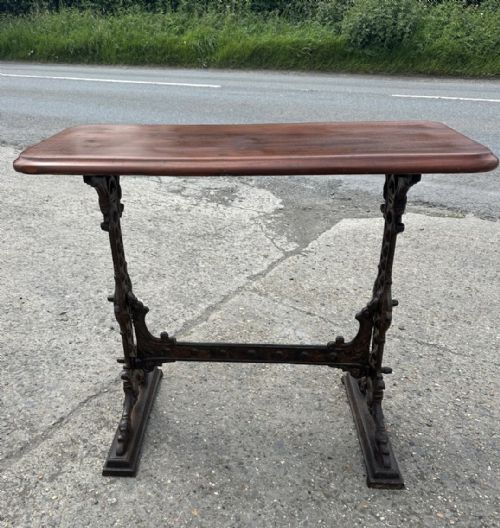
- A structural support consisting of a horizontal beam balanced on two paired legs. This framework underpins long work tables and industrial dining surfaces.
Antique Iron Base Table: Frequently Asked Questions
Where were antique iron base tables originally used?
These tables served various commercial and domestic functions across pubs, gardens, factories, and domestic kitchens. Robust metal framing allowed them to endure heavy daily demands in public spaces.
Pubs utilised heavy cast iron pedestals for stability, whilst workshops employed trestle designs for heavy labour. Over time, these commercial forms transitioned naturally into domestic dining and occasional use.
How do I care for the iron and wood surfaces?
Maintain cast and wrought iron components by keeping them dry and applying occasional protective wax. This preserves the dark patination without altering the historic surface.
Timber and marble tops require gentle cleaning appropriate to their specific material. Avoid excess moisture on exposed oak, pine, or elm surfaces to protect the grain.
Are these tables suitable for everyday dining?
Sturdy metal underframes and solid timber tops make these pieces exceptionally resilient for daily use. Their robust engineering accommodates frequent seating and regular household activity.
Dining and bistro variants offer practical heights and stable footprints. Checking dimensions ensures adequate legroom beneath the heavy iron framing.
How do I distinguish Victorian pieces from later designs?
Victorian examples often display specific foundry markings, ornate scrollwork, and traditional joinery methods within the wooden tops. The weight and texture of the cast iron frequently reflect nineteenth-century production techniques.
Later Edwardian and early twentieth-century pieces introduce simpler industrial lines or art deco styling. Comparing the casting quality and the wear on the timber helps indicate the period of manufacture.