



Oak and Cast Iron Table
An oak and cast iron table brings industrial strength and timber warmth together, offering a sturdy surface built for daily graft and domestic life.
Oak and Cast Iron Table
When you search for an oak and cast iron table, you are looking at robust utility furniture that bridges the gap between domestic warmth and heavy workshop construction. These pieces combine the rich grain of timber with the sculptural heft of metal framing, built to endure generations of hard use.
You are most likely to meet 19th century and Victorian examples on this page, alongside Edwardian and early 20th century pieces. Forms range from side tables and console tables to bistro tables, occasional tables, workbenches, dining tables, and adjustable tables.
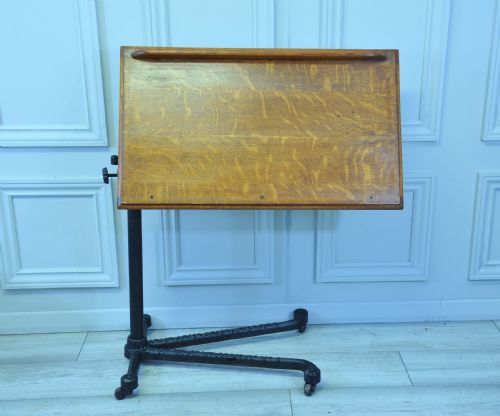
Origins span British and French traditions, capturing both domestic comforts and industrial utility. Whether you find a French country bistro piece or a London-made adjustable design, each item displays the practical engineering of its period.
Materials and construction
Construction relies upon heavy cast iron bases paired with solid wood tops, utilising timber and metal in equal measure. The metal elements provide rigid structural support, often featuring intricate casting or functional mechanisms like vices and height adjustment screws.
The wooden surfaces utilise solid oak planks, frequently showing the natural markings and golden tones of the grain. Carpenters and metalworkers joined these materials to withstand workshop demands, sewing machine operations, and busy dining spaces.
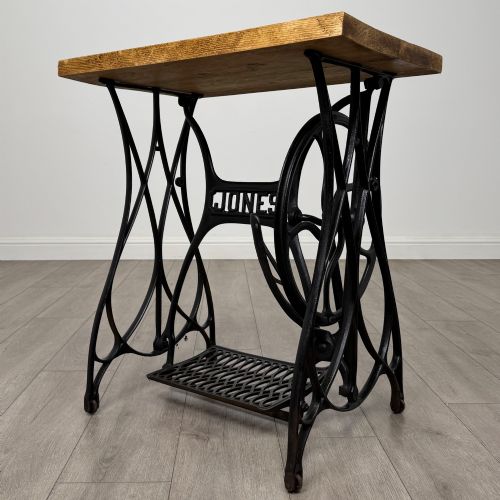
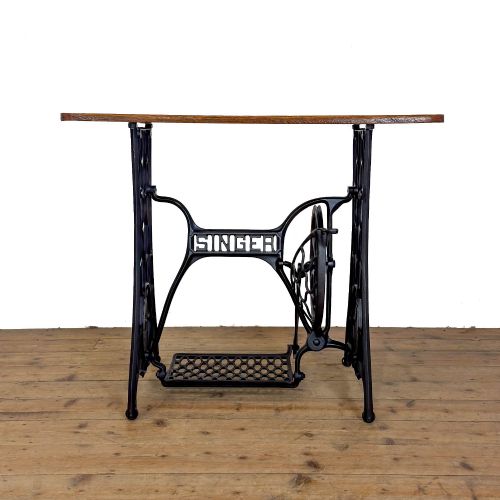
Some tables double as sewing machine stands and workbenches, proving that nineteenth-century mechanics knew how to multitask.
Assessing quality and character
Quality rests in the harmony of the proportions and the originality of the components. A superior piece maintains its factory mechanisms in working order, whether it is a functional wooden vice or an iron adjustment screw.
The distinction between ordinary and exceptional lies in the depth of patina on the timber and the crispness of the iron foundry work. Makers such as London manufacturers added specialised engineering that elevates utility objects into considered design statements.
Singer Sewing Machine·Carters Of London
The Oak and Cast Iron Table Glossary
- Cast iron
- A strong, hard iron-carbon alloy poured into moulds to create heavy, rigid furniture bases and decorative machine frames. It provides the weighted foundation for industrial and domestic tables.
- Oak
- A dense, durable hardwood prized for its prominent grain pattern and resistance to wear. It forms the solid wooden tops seen across these utility and dining tables.
- Patina
- The surface sheen and colour developed through years of handling, polishing, and natural ageing. It indicates genuine period use and care.
- Bistro table
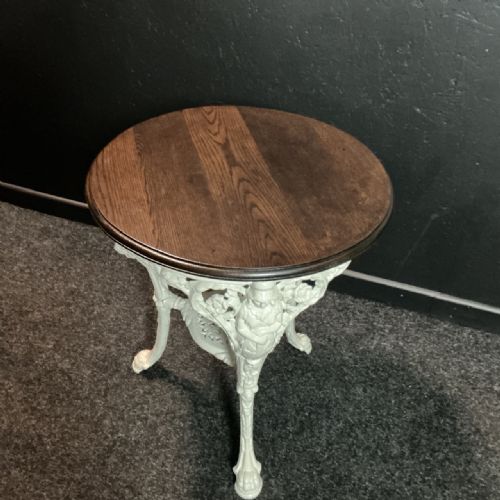
- A small café or tavern table typically featuring a heavy central iron base and a compact wooden top. These were designed for social spaces and commercial hospitality.
- Workbench
- A heavy-duty carpenter or artisan table often equipped with integrated vices and thick timber planks. They showcase the utilitarian roots of industrial furniture.
Oak and Cast Iron Table: Frequently Asked Questions
What is an oak and cast iron table?
An oak and cast iron table is a piece of utility or domestic furniture that marries a heavy metal base with a solid wooden top. These items originate primarily from the nineteenth and early twentieth centuries.
They were built to serve specific functional purposes in homes, workshops, and commercial establishments, blending industrial strength with natural timber warmth.
How were these tables used originally?
These tables served diverse roles ranging from heavy workshop tasks and sewing machine operations to serving drinks or dining. Their sturdy construction made them ideal for environments requiring reliable, durable work surfaces.
Over time, many utility designs transitioned from industrial spaces into domestic settings as practical household furnishings.
How do I live with an industrial table?
Living with these tables involves embracing their robust character and practical utility within a modern interior. Their solid construction makes them resilient additions to kitchens, living rooms, and studies.
Regular maintenance simply requires caring for the solid oak top while preserving the aged finish of the cast iron base.
How do I tell periods apart?
Distinguishing periods relies on observing manufacturing techniques, maker details, and stylistic cues from the nineteenth and twentieth centuries. Victorian and nineteenth century examples often display heavier ornamentation or straightforward utilitarian casting.
Edwardian and later pieces from the 1910s and 1920s frequently incorporate adjustable mechanisms, patent markings, or refined proportions suited to changing domestic habits.