


Victorian Maritime Furniture
Victorian maritime furniture comprises robust campaign chests, ship washstands and teak furnishings built for travel across the nineteenth century.
Victorian Maritime Furniture
Victorian maritime furniture covers practical furnishings constructed during the nineteenth century for life at sea and military travel. When searching for Victorian maritime furniture, buyers encounter versatile objects designed to pack down, withstand harsh conditions and maximise restricted cabin space.
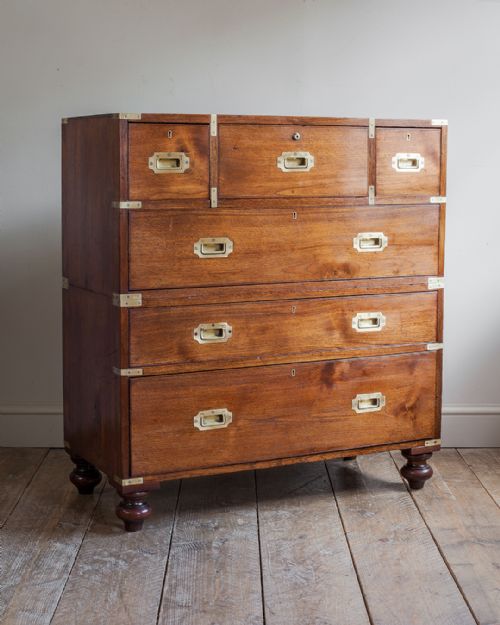
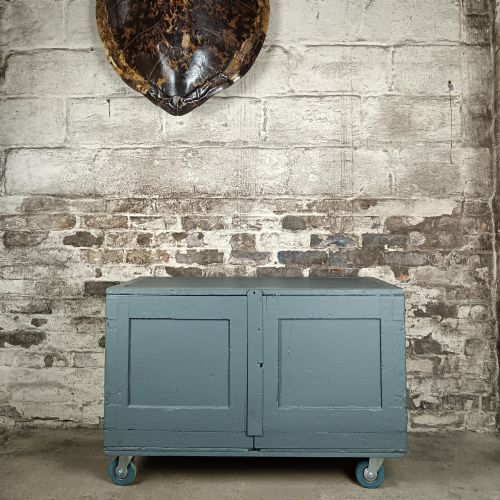
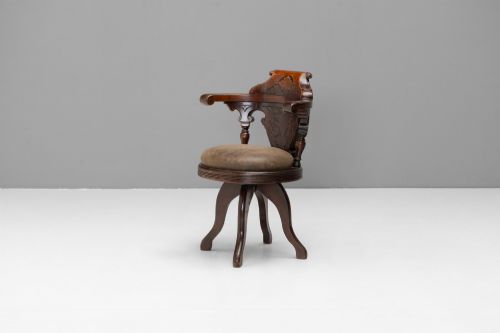
The pieces on this page span the nineteenth century, including specific dates such as 1870, 1880 and 1900 alongside general Victorian and campaign classifications. Common forms include teak merchants trunks, camphor wood chests, campaign cabinets, ship washstands, ships chairs and tiered shelves.
Camphor wood and teak dominate the selection, often bound in brass and fitted with iron hardware for reinforcement during transit. Buyers frequently find chests and trunks built in sections, alongside specialised items like combined washstand tables and ship tables in oak and cast iron.
Materials and construction methods
Makers utilised dense, oil-rich timbers such as teak and camphor wood to resist moisture and insect damage in marine environments. Mahogany and pine also appear across the selection, providing sturdy internal framing and secondary surfaces.
Construction relied on heavy brass binding, recessed brass handles and iron fittings to protect corners and allow units to be securely stacked. Joints needed to withstand constant motion at sea, resulting in tight framing and modular designs intended for easy dismantling.
One recorded naval cabinet retains a direct link to Captain James John Stopford RN.
Assessing quality in maritime pieces
Quality rests primarily on the integrity of the timber selection and the precision of the brass or iron hardware. Superior examples display carefully fitted joints, original recessed handles, and timber chosen for consistent grain and durability.
Provenance and complexity elevate certain items, such as cabinets with documented naval associations or multifunctional pieces combining washstands and tables. Poorer quality often shows in replacement hardware, mismatched timbers, or crude secondary repairs made long after initial manufacture.
Captain James John Stopford RN
The Victorian Maritime Furniture Glossary
- Campaign chest
- A modular chest of drawers built in two or more sections with recessed brass handles for transport during military or naval travel. These were designed to be easily packed and carried on ships.
- Camphor wood
- An aromatic timber prized for its resistance to insects and dampness, commonly used for nineteenth-century sea chests and travel trunks. Its distinct scent helped protect stored garments during long voyages.
- Brass bound
- Furniture edged or reinforced with brass straps and corners to protect against heavy impacts during transit. This technique also added structural rigidity to travel trunks.
- Whatnot
- An open set of tiered shelves designed for displaying small objects or holding cabin requisites. These space-saving units were easily secured against shipboard motion.
Victorian Maritime Furniture: Frequently Asked Questions
What is Victorian maritime furniture?
Victorian maritime furniture includes portable chests, washstands, chairs and tables built during the nineteenth century for use on ships and military campaigns.
These pieces were constructed to be durable, modular and space-efficient, utilising dense hardwoods and protective metal fittings.
Why use camphor wood for trunks?
Camphor wood naturally repels insects and resists moisture, making it the ideal timber for protecting uniforms and personal effects on long sea voyages.
Its distinct fragrance and durability ensured that clothing survived damp marine conditions without rotting.
How do campaign chests work?
Campaign chests are built in separate stacked sections with removable feet and flush brass handles so officers could pack and transport them easily.
Corner brackets and iron straps reinforced the structure against the rough handling of military transit.
How do I date these pieces?
Dating relies on stylistic clues, construction techniques, and materials associated with the nineteenth century, alongside specific dates recorded on brass plaques or registry marks.
Earlier pieces often feature simpler brass work, while late nineteenth-century examples incorporate cast iron and more complex mechanical combinations.