




Victorian Industrial Table
These pieces combine heavy metal engineering with domestic timber, bringing a robust utilitarian aesthetic directly into modern interiors when you seek a victorian industrial table.
Victorian Industrial Table
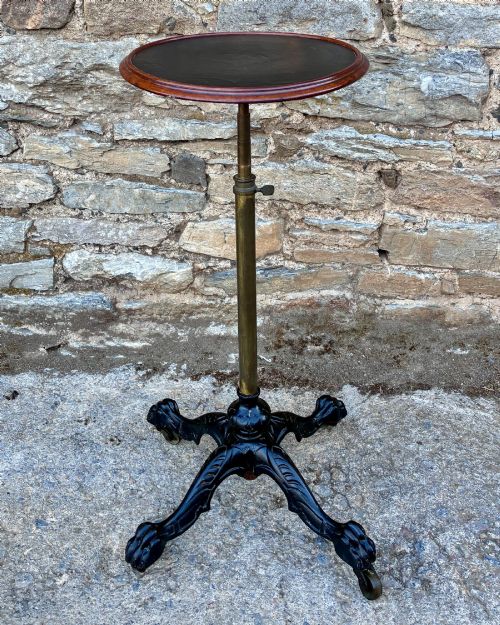
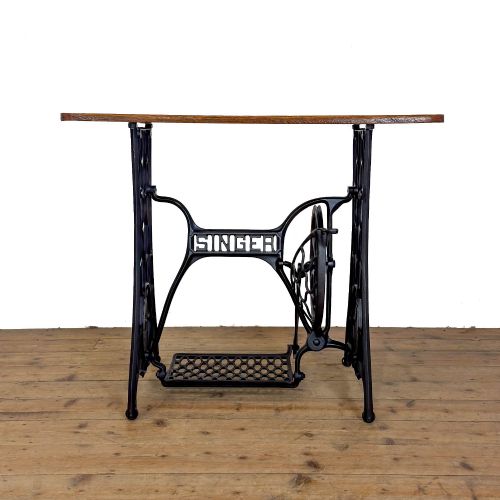
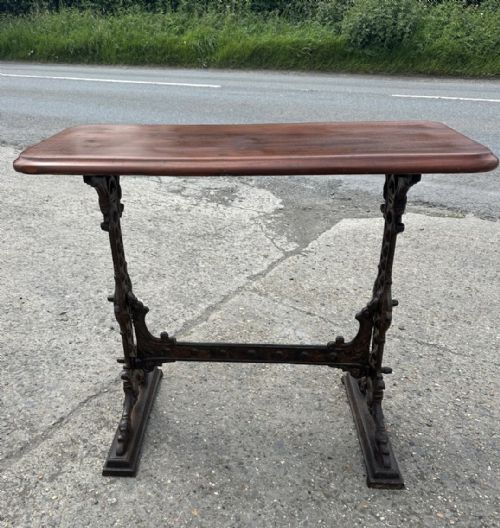
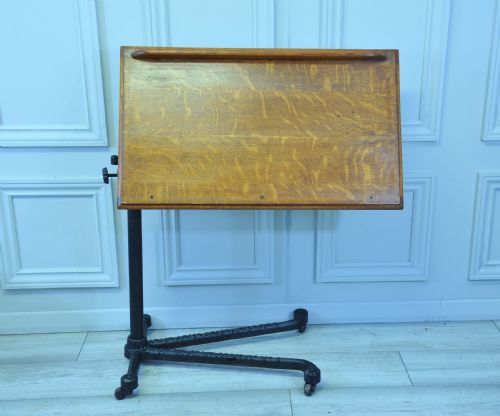
A victorian industrial table typically pairs a sturdy metal support with a durable wooden surface, reflecting the utilitarian needs of nineteenth-century workshops, mills, and public houses. Buyers examining this selection will frequently encounter pub tables featuring cast iron bases alongside robust pine or mahogany tops.
The inventory extends across various functional forms, including occasional tables, console tables, garden pieces, and large workshop benches originally designed for heavy trades. These items bridge the gap between commercial utility and domestic comfort, offering substantial construction suited to daily use.
How They Were Made
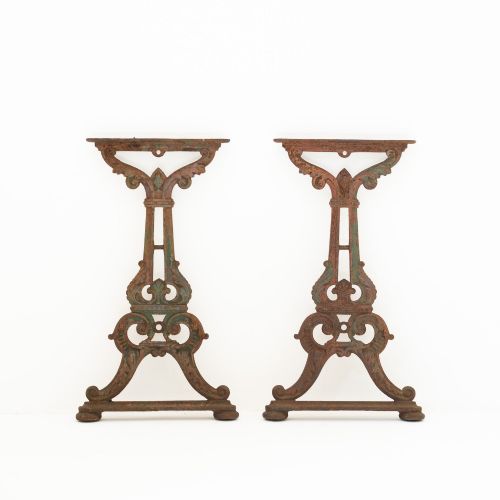
Makers utilised cast iron for structural bases, moulding intricate patterns, machine parts, or sturdy tripod supports that could bear heavy loads without flexing. This metalwork was frequently combined with thick timber tops such as pine, oak, or mahogany, secured to withstand rigorous daily labour in factories and taverns.
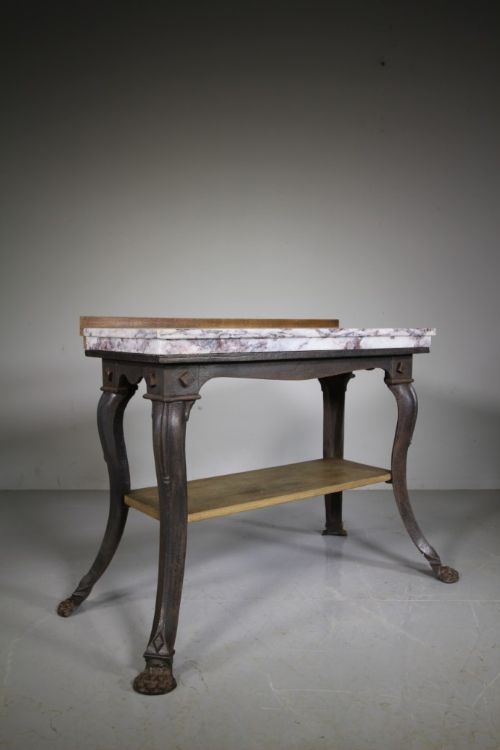
Additional materials like marble, brass, and glass appear on specific pieces, adding refined surfaces to otherwise utilitarian frames. Joinery and metal casting techniques from the period prioritized longevity, resulting in heavy, stable furniture designed for permanent placement.
Listings feature cast iron, wood, brass, iron, marble, pine, glass, and oak across Victorian and Edwardian periods.
What Varies In Quality
The distinction between standard utility items and finer examples often rests on the integrity of the original pairing between base and top. Pieces retaining their factory-matched components demonstrate superior historical coherence compared to later assemblies.
Casting crispness on the iron supports and the degree of patination on the timber surfaces also dictate the standing of a piece. Finer examples display well-defined foundry marks and untouched timber wear that evidence their period working life.
Carters Of London·Burgess Brothers Of Weaverham·Andre Guilmet·Armstrong Of Manchester
The Victorian Industrial Table Glossary
- Cast Iron
- An iron-carbon alloy poured into moulds to create heavy, rigid structural components. This material forms the primary support structure for most nineteenth-century workshop and pub tables.
- Britannia
- A specific style of heavy cast iron pub table base featuring classical or figural motifs. It provides exceptional stability and remains a defining characteristic of Victorian hospitality furniture.
- Patina
- The surface sheen and colour developed through years of handling, use, and polishing. It serves as a visual indicator of age and authentic period wear on timber and metal.
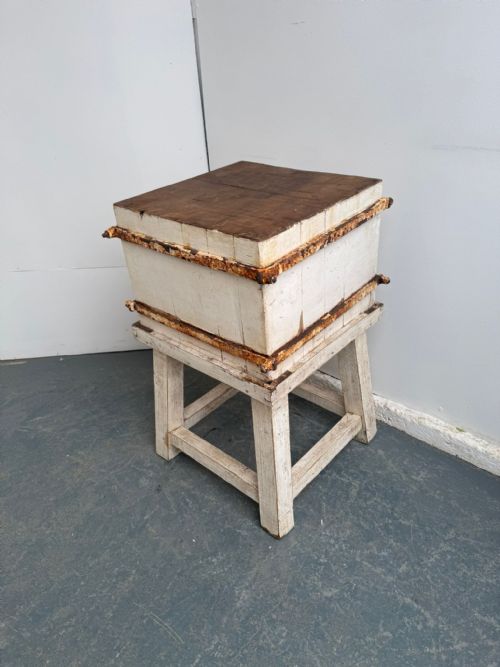
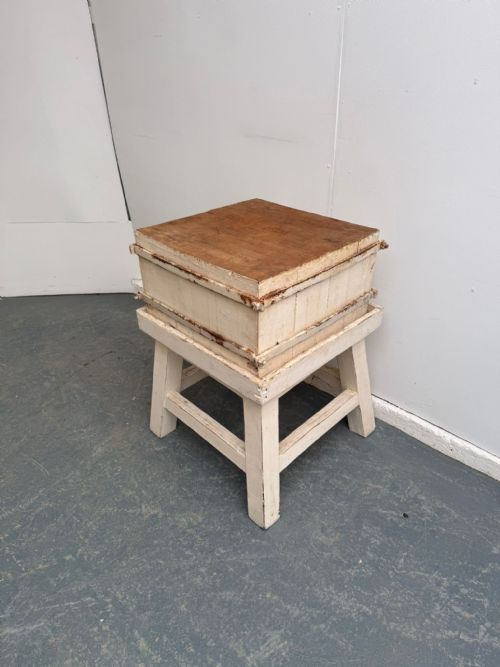
- Butchers Block
- A thick, heavy wooden table top constructed from end-grain timber designed for food preparation. These blocks were built to absorb heavy impact in commercial kitchens.
Victorian Industrial Table: Frequently Asked Questions
How do I care for a pine and iron table?
Maintain the timber top with natural waxes to protect the grain while preserving the dry, historic texture of the wood.
Keep the cast iron base clean and dry to prevent surface oxidation, avoiding harsh chemical cleaners that strip the original dark finish.
Were these tables used in factories?
Many large tables originated in mills, silversmiths' workshops, and factories as sturdy workbenches designed for heavy industrial tasks.
Their solid pine tops and iron frames provided a reliable surface for manual labour before transitioning into domestic dining and kitchen environments.
How can I tell if the top is original?
Examine the underside of the table for consistent screw placement, fastening marks, and wear patterns that align with the age of the base.
Original factory and pub tables usually exhibit matching levels of patination and wear across both the wooden surface and the iron support.