
Extending Kitchen Table
When choosing an extending kitchen table, you select a practical surface built from solid timber to accommodate changing numbers of guests.
Extending Kitchen Table
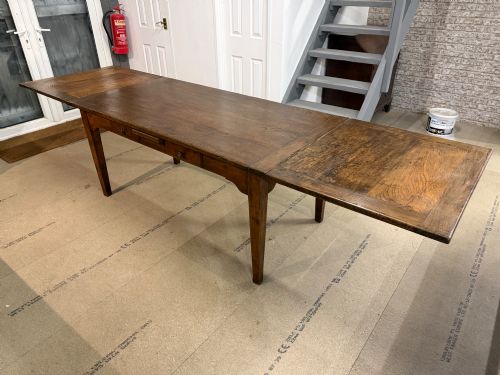
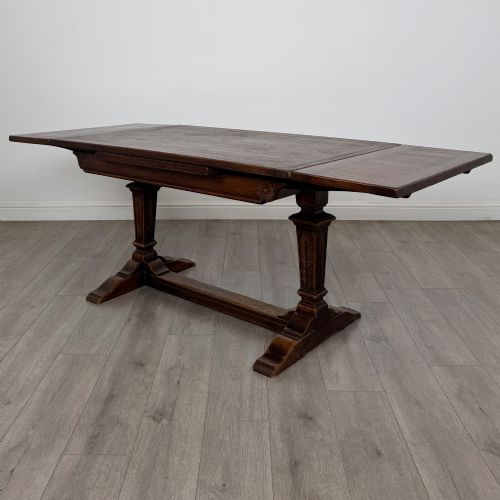
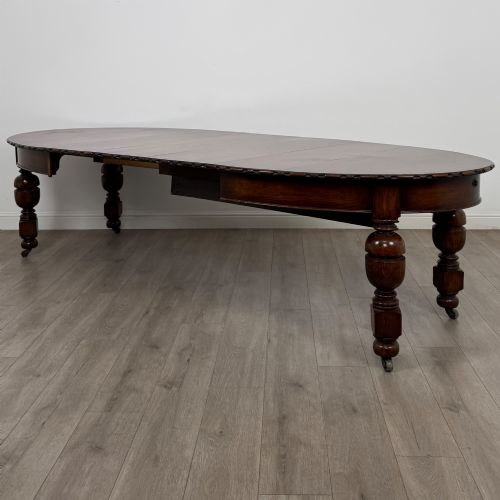
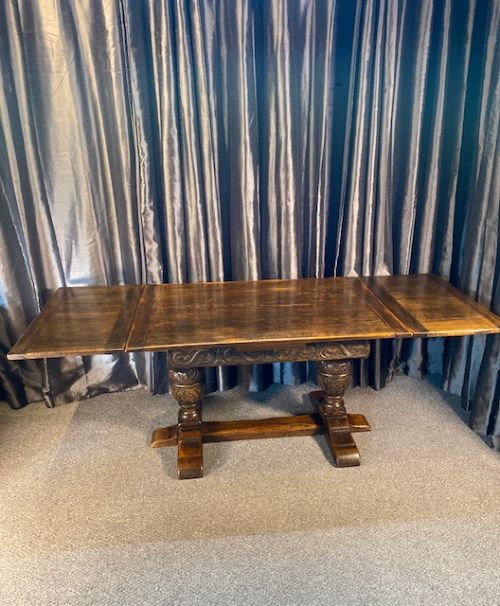
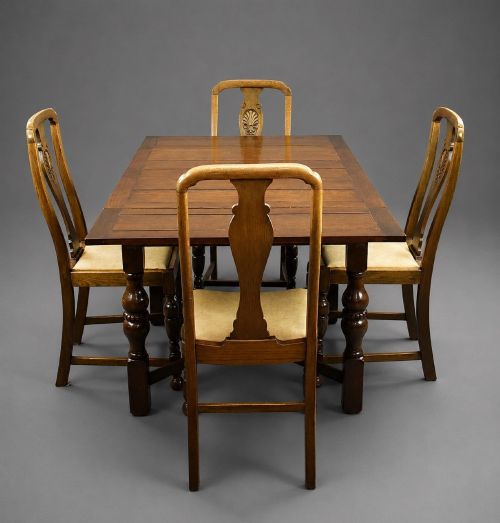
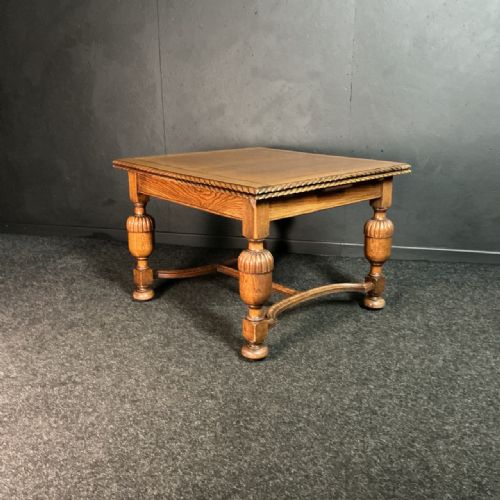
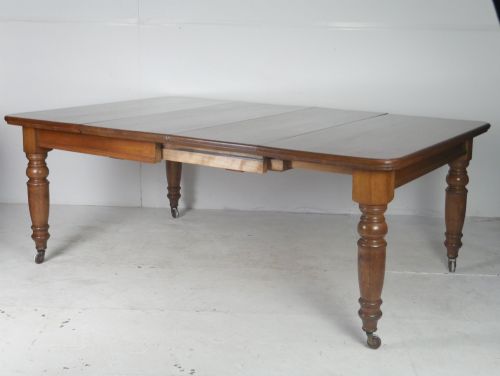
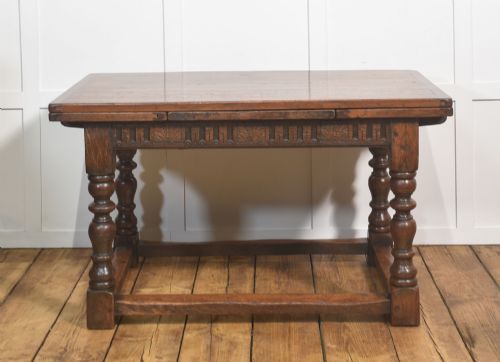
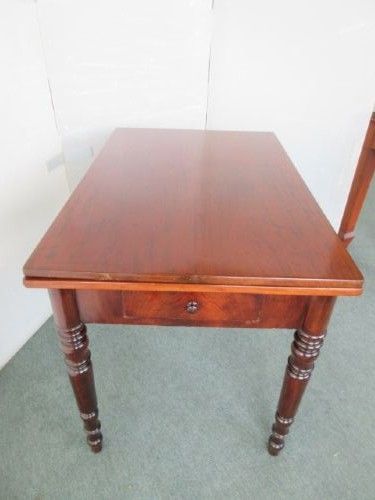
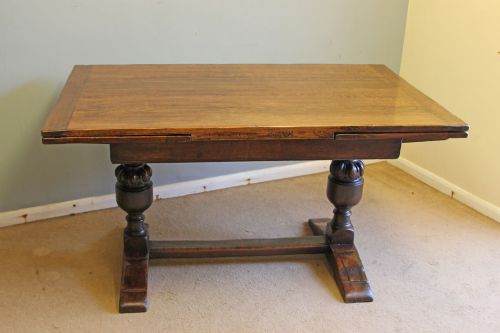
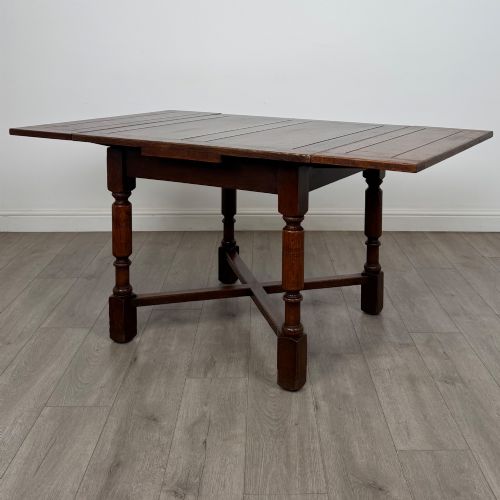
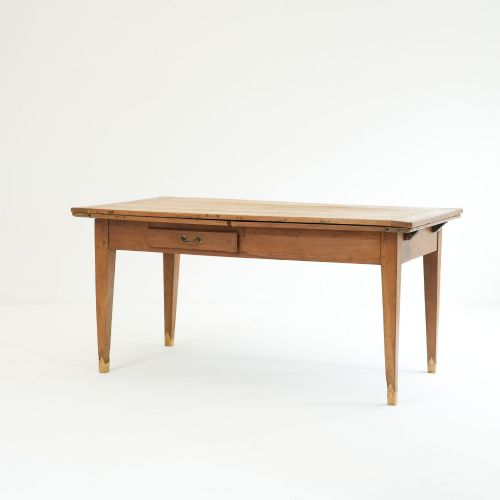
An extending kitchen table provides a robust dining surface designed to expand in length through mechanisms such as draw leaves, wind-out screws, or drop sides. These pieces bridge the gap between everyday domestic utility and larger gatherings by altering their footprint when extra space is required.
The versions most commonly found here date from the Victorian and Edwardian eras through to the early decades of the twentieth century. They draw heavily on farmhouse, refectory, and Arts and Crafts traditions, reflecting utilitarian origins in English and French country houses.
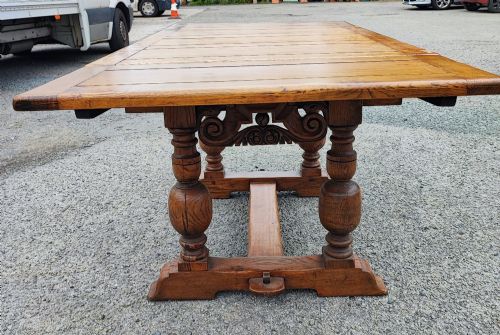
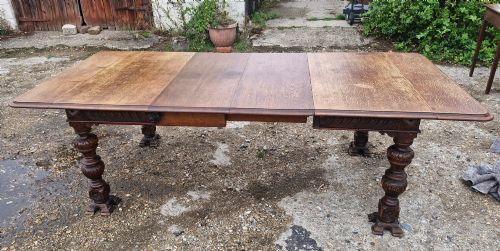
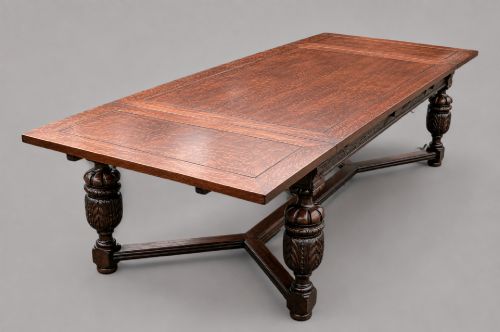
Makers utilised sturdy domestic and continental timbers to construct frames that withstand daily family life. The surviving examples display practical engineering, from concealed pull-out leaves to heavy central pedestals and turned legs.
How they were made
Makers relied primarily on oak, pine, fruitwood, and mahogany for the structural frames and table tops. Oak and pine provide the heavy load-bearing capacity needed for daily use, while fruitwoods and mahogany offer finer grain patterns for surfaces.
Construction techniques centre on mechanical extension systems like draw leaves that slide beneath the main top, or internal metal screw mechanisms operated with a crank handle. Joinery relies on traditional methods including mortise and tenon joints to secure the legs and aprons under constant movement.
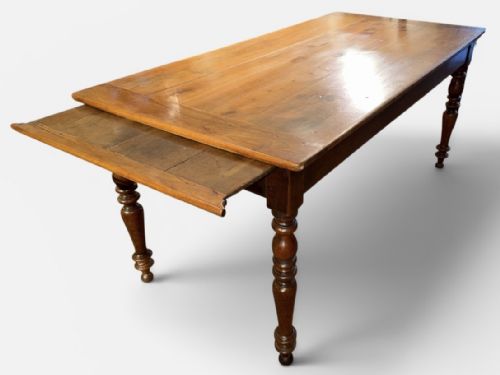
Several tables retain bread slides originally designed for cooling loaves before baking days moved out of the main kitchen.
What varies in quality
Quality rests upon the selection of timber and the precision of the extension mechanism. Heavy, quarter-sawn oak or well-figured fruitwood indicates superior raw materials compared to plain utilitarian pine.
The smoothness of the extension action separates standard utilitarian builds from finer workshop production. Tables that slide level without binding, alongside sturdy underframes that do not wobble when fully expanded, demonstrate careful construction by skilled cabinet makers.
Maple and Co·Joseph Fitter·E Gomme
The Extending Kitchen Table Glossary
- Draw leaf
- A table design featuring two supplementary leaves stored beneath the main surface that pull out from each end to lengthen the table.
- Wind-out mechanism
- A mechanical system utilising an internal metal screw turned by a handle to pull the table halves apart so a central leaf can be inserted.
- Refectory table
- A long, narrow dining table traditionally built with substantial wooden legs and a central stretcher running the length of the base.
- Parquetry
- Geometric wood mosaic work used to decorate table tops with patterned veneer arrangements.
- Bread slide
- A pull-out wooden board integrated beneath the table top originally used for cooling bread or expanding workspace.
Extending Kitchen Table: Frequently Asked Questions
How do draw leaf tables work?
Draw leaf tables operate by sliding hidden extension leaves out from beneath the main centre top. When pulled, the main surface rises slightly and settles flush with the new leaves.
This simple mechanical action allows a single person to lengthen the surface quickly without storing separate boards elsewhere.
Where were these tables used originally?
These tables served primarily in large country house kitchens, rectories, and farmhouses where daily family dining merged with food preparation. Their robust construction handled heavy domestic labour alongside regular meals.
Over time, many migrated from working kitchens into formal dining rooms as interior layouts evolved.
How do I care for a wood top?
Maintain timber surfaces by wiping them clean with a damp cloth and avoiding harsh chemical cleaning agents. Regular waxing helps nourish the grain and protects against everyday moisture.
Keep wooden tables away from direct heat sources and sudden temperature shifts to prevent timber splitting.
How do I identify the period?
Period identification relies on examining timber selection, leg turnings, and the metal components of the extension mechanism. Victorian and Edwardian examples often feature heavy turned legs or wind-out brass screws stamped with maker names.
Earlier nineteenth-century pieces display hand-cut joinery and thicker fruitwood or oak tops shaped by traditional hand tools.