



19th Century Draw Leaf
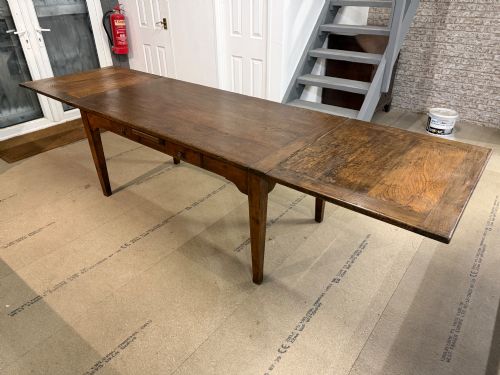
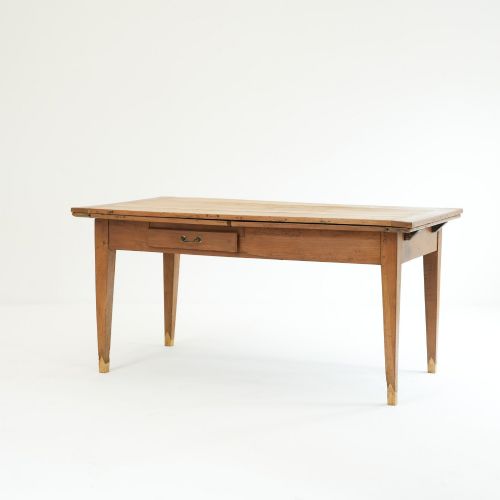
These 19th century draw leaf tables offer expandable dining space with concealed leaves that slide out from beneath the main top, providing a practical solution for large gatherings.
19th Century Draw Leaf
A 19th century draw leaf table is a dining surface designed to extend easily by pulling out secondary leaves hidden at either end. These tables accommodate flexible seating arrangements in both formal dining rooms and rustic farmhouse settings.
The selections span English and French provincial traditions, utilising timbers such as oak, fruitwood, cherry, walnut, and mahogany. Many examples feature carved bases, marquetry, or parquetry decoration, alongside simpler refectory styles.
Buyers encounter double extending variants alongside single leaf formats, reflecting the diverse domestic requirements of the period. The mechanism allows the main top to lift slightly as the leaves pull out into place.
How they were made
Cabinetmakers constructed these tables using dense hardwoods like oak, walnut, and cherry, paired with fruitwoods for provincial pieces. Joints relied on traditional mortise and tenon construction to withstand the mechanical strain of the pull-out mechanism.
The extension system utilises internal runners and bearers concealed beneath the primary surface, allowing the end leaves to slide smoothly. Surfaces received hand-applied finishes such as wax or polish to protect the timber grain.
19th Century Draw Leaf Retail Price Guide 2026
Typical asking prices for 19th century draw leaf among the pieces listed under this phrase on Sellingantiques today, from the lower quarter to the upper quarter. They describe what is for sale here now, not the wider market.
What varies in quality
Quality rests in the precision of the sliding mechanism and the tightness of the joints when the leaves are fully extended. Superior pieces maintain a level surface across all sections without sagging at the ends.
The choice of timber and the presence of decorative carving, marquetry, or parquetry distinguish high-status workshop production from simpler provincial utility furniture.
Gillows
The 19th Century Draw Leaf Glossary
- Draw leaf
- A table equipped with two sliding leaves stored underneath the main top that pull out to increase surface length. This system keeps the primary surface undivided when closed.
- Refectory table
- A long, narrow dining table traditionally used in communal halls and later adapted for domestic dining rooms. These examples often feature substantial legs connected by floor stretchers.
- Marquetry
- Decorative veneer work forming pictorial or geometric patterns using various coloured woods. Craftsmen applied these patterns to the table top to display skilled craftsmanship.
- Parquetry
- A geometric mosaic of wood pieces used for decorative floors and table tops. It differs from marquetry by strictly utilising angular, repeating patterns.
- Fruitwood
- Timber sourced from fruit-bearing trees such as cherry, pear, or apple, frequently utilised in French provincial cabinetmaking. This wood ages to a warm tone with a fine grain.
19th Century Draw Leaf: Frequently Asked Questions
What woods were used for these tables?
Cabinetmakers utilised sturdy native and continental timbers depending on the origin of the piece. Oak and mahogany appear frequently in formal English dining tables.
French provincial examples often showcase fruitwood, cherry, or walnut, selected for their rich grain and suitability for everyday kitchen and dining use.
How do I style a draw leaf table today?
These tables anchor a dining room by pairing historical character with everyday utility. Keep the leaves closed for daily family meals and extend them when hosting guests.
Complement the timber tones with mismatched wooden chairs or contemporary seating to create a balanced, collected interior.
Are these tables suitable for daily use?
Solid hardwood construction makes these tables exceptionally sturdy for regular dining and family gatherings. The extending mechanisms are built for practical, long-term operation.
Routine care with beeswax preserves the timber finish against daily wear while maintaining the natural lustre of the wood.