

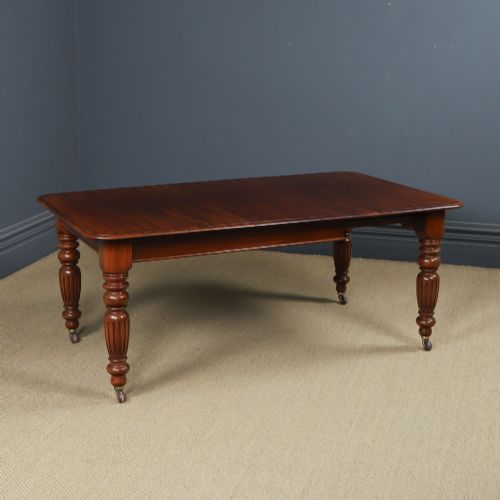
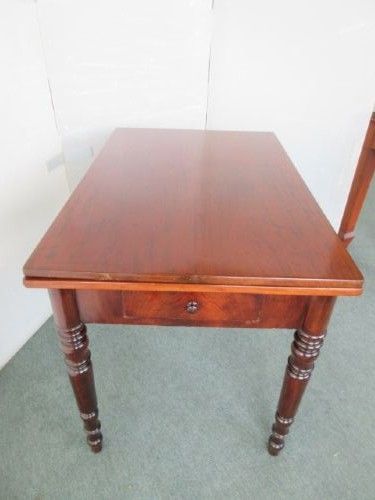
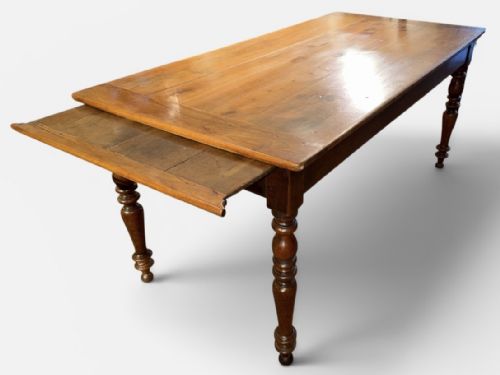
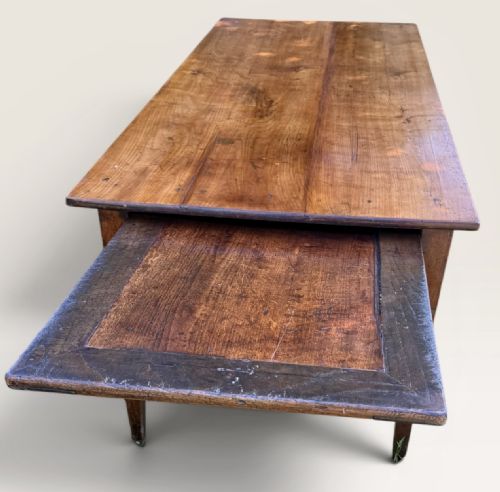
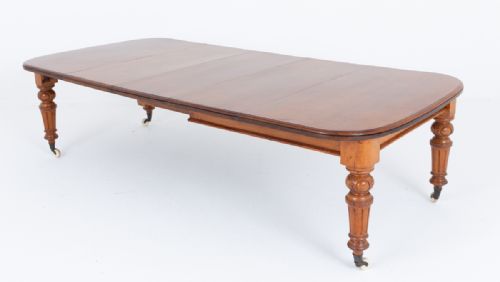
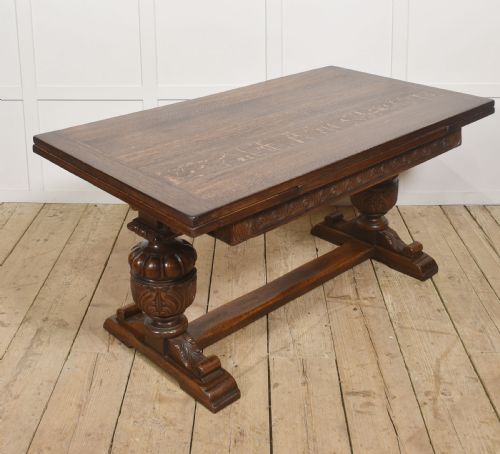
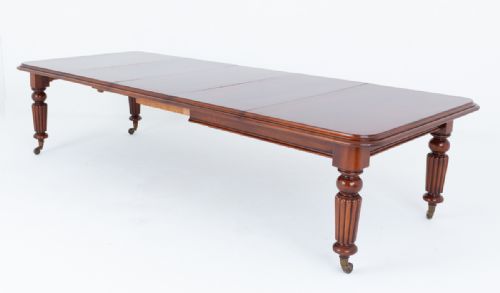


Pull Out Dining Table
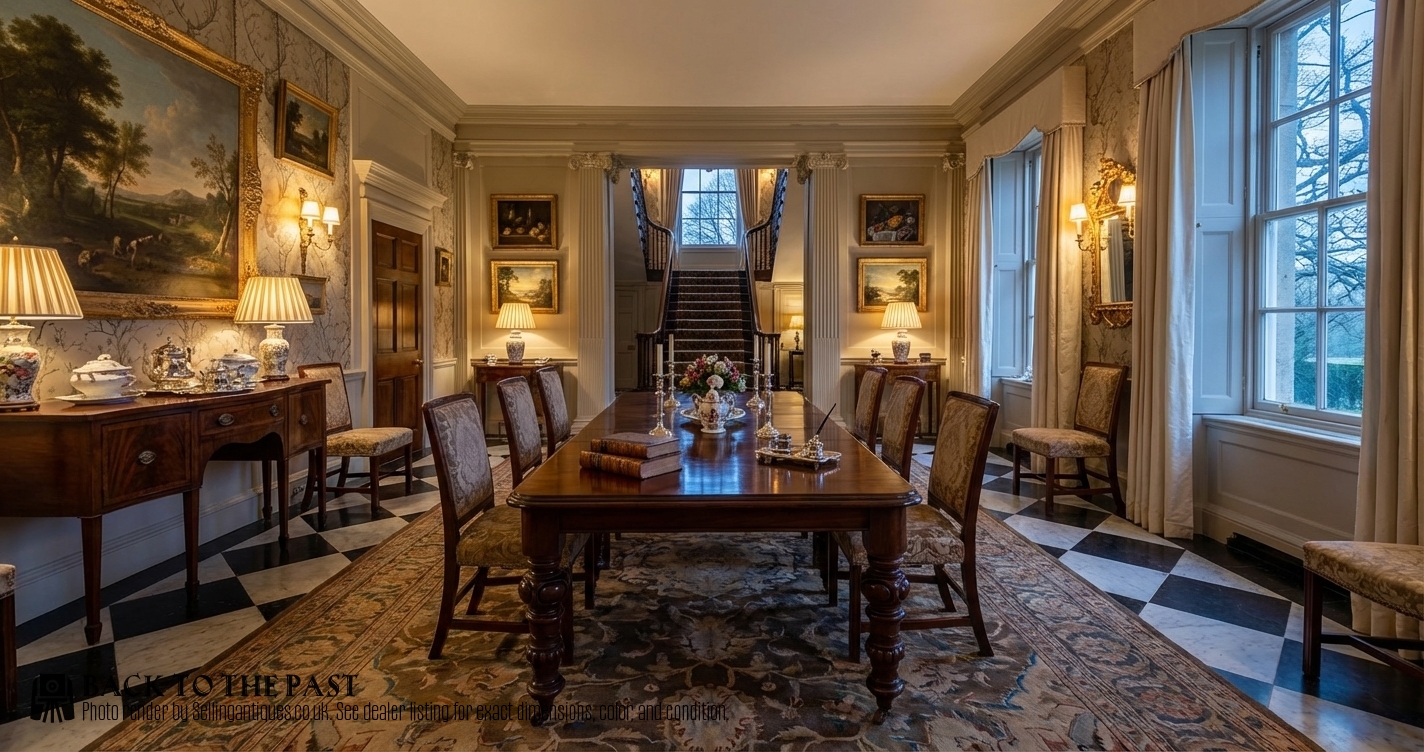
A pull out dining table offers adaptable room for guests, combining period timber work with clever mechanical leaves.
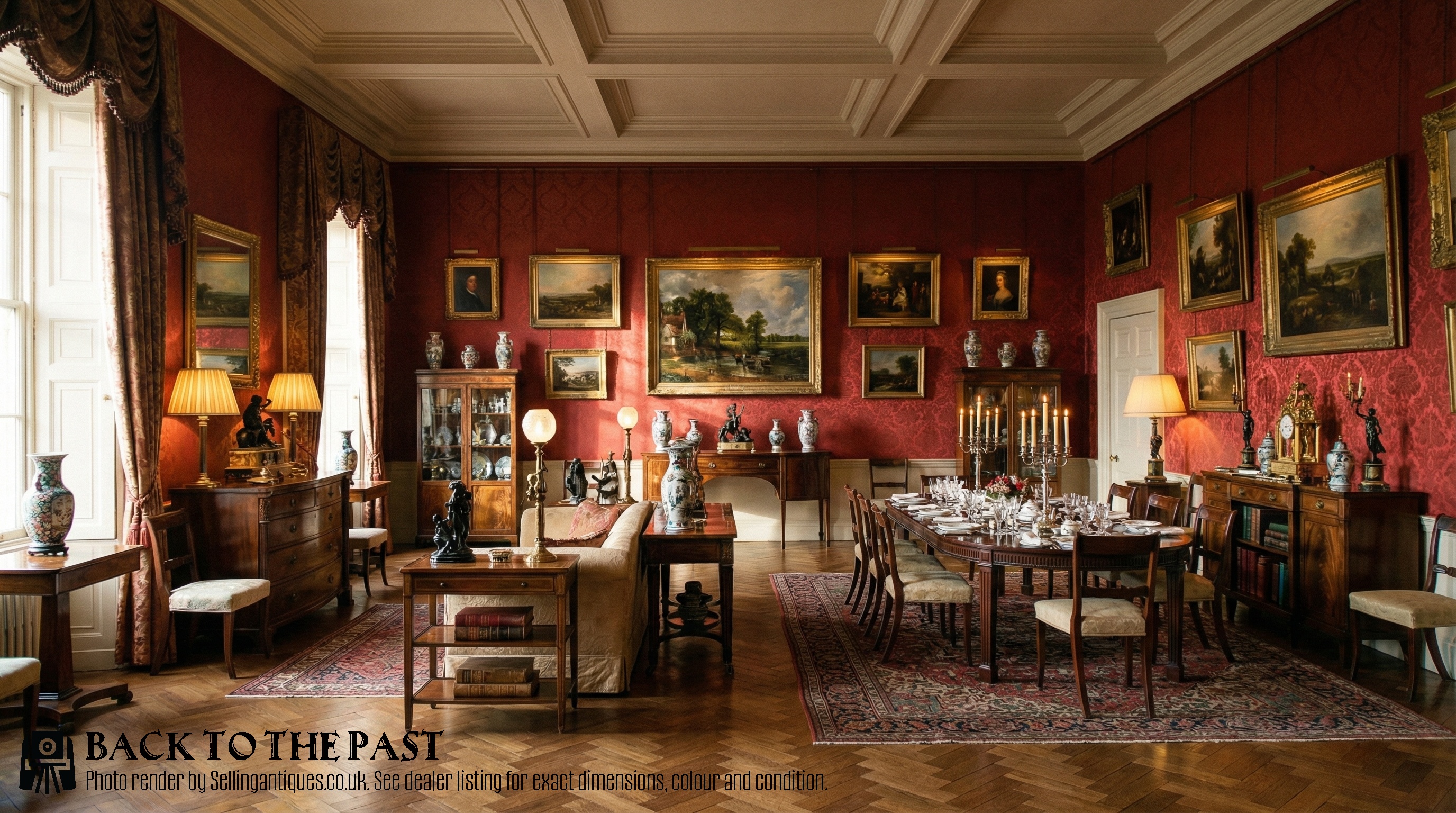
Pull Out Dining Tables
A pull out dining table provides a practical surface for meals that expands to seat larger parties when needed. When you search this phrase, you meet dining tables designed to extend smoothly through internal mechanisms or sliding leaves.
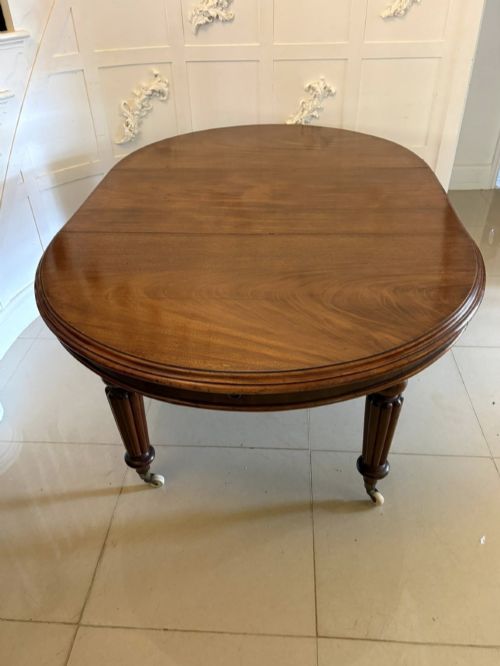
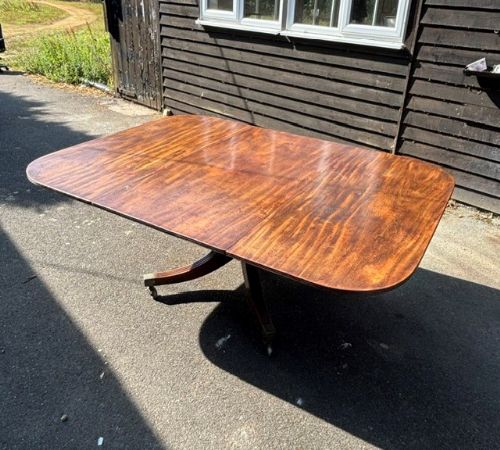
The majority of pieces on this page date from the nineteenth century, including Victorian and William IV examples. Alongside these sit George III and Regency pieces built from rich timbers.
Most examples appear in mahogany, whilst oak and walnut feature occasionally. Buyers encounter forms ranging from smaller six seater tables to large examples seating twelve or fourteen people.
Judging Quality
Quality rests upon the precision of the extending mechanism and how smoothly the leaves integrate with the main top. Superior tables retain their original leaves and close tightly without sagging along the centre.
The choice of timber grain and the crispness of carved details on the legs or pedestals separate workshop standards. Maker attribution, such as work by Gillows or Thomas Butler, elevates a piece significantly.
Retail Price Guide 2026
Typical UK retail prices for pull out dining table, calculated from the Sellingantiques database of over a million retail prices indexed since 2003. This retail price guide relies exclusively on Sellingantiques data; no external sources or auction records are used, so the figures do not describe the wider market.
Listings feature mahogany and oak timbers spanning the eighteenth, nineteenth, and early twentieth centuries.
Thomas Butler·Gillows·Cope & Collinson
The Pull Out Dining Table Glossary
- Pull-out action
- A mechanical system allowing the table frame to expand so extra leaves drop or slide into place. This clever engineering enables a compact table to accommodate larger dinner parties.
- Leaf
- A removable section of timber inserted into the table top to increase its overall length. Original leaves match the grain and colour of the main boards.
- Quadrapartite base
- A four-way pedestal support resting on central feet, often found on nineteenth century pedestal tables. This design provides stability when the table extends to full length.
- Draw leaf
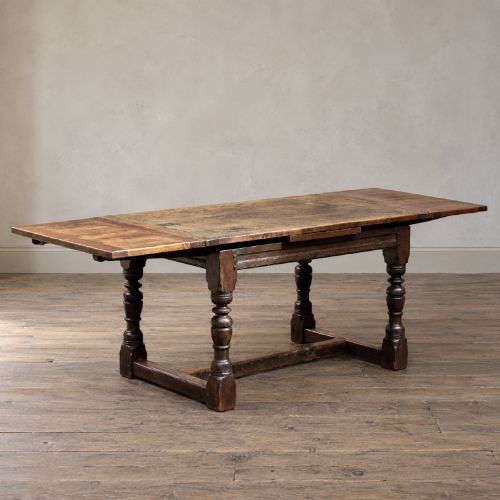
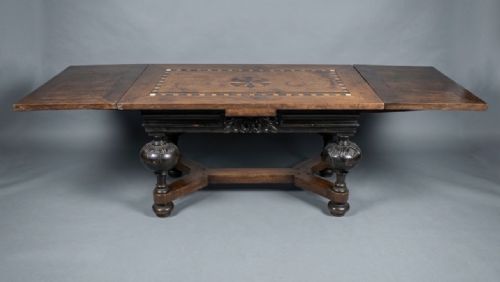
- A table design where extension leaves are stored underneath the main top and pulled out from each end. It offers quick expansion without requiring separate loose leaves stored elsewhere.
Frequently Asked Questions
How do pull out dining tables work?
These tables utilise internal runners or draw mechanisms that allow the main sections to pull apart. Extra leaves are then inserted into the central gap to lengthen the surface.
Once extended, locking catches or brass clips secure the top boards together to create a stable table for dining.
How many people do these tables seat?
Capacities vary depending on the presence of extra leaves and the base length of the table. Smaller versions seat six people comfortably.
Larger Georgian and Victorian examples extend to accommodate ten, twelve, or fourteen guests using multiple original leaves.
Where should I place an extending table?
Position the table centrally in a dining room with enough clearance around the perimeter to pull the top apart. Ensure you allow extra floor space for chairs when the leaves are fully inserted.
Keep the timber away from direct heat sources and strong sunlight to protect the polish and prevent the wood from drying out.
How do I care for a mahogany table?
Dust the surface regularly with a soft, dry cloth and apply occasional beeswax to nourish the timber polish. Avoid placing hot dishes or wet glasses directly onto the wood.
Use felt mats or table pads to protect the finish during meals and maintain the colour of the mahogany.