
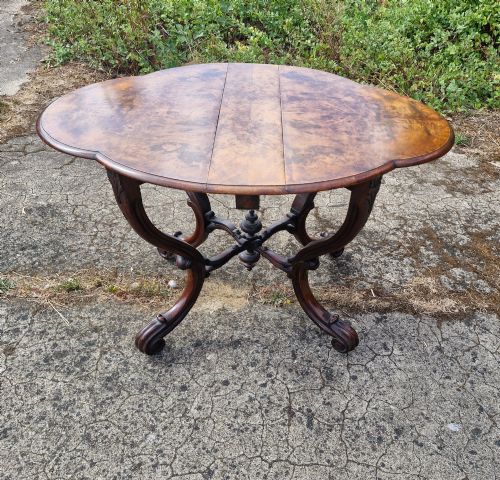
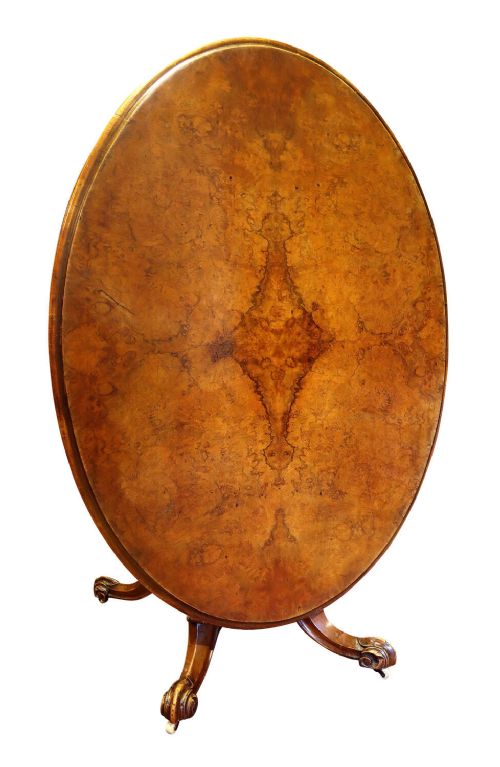
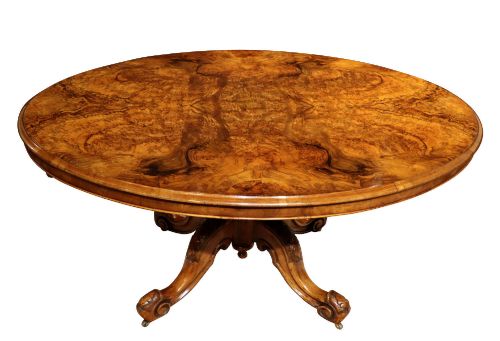
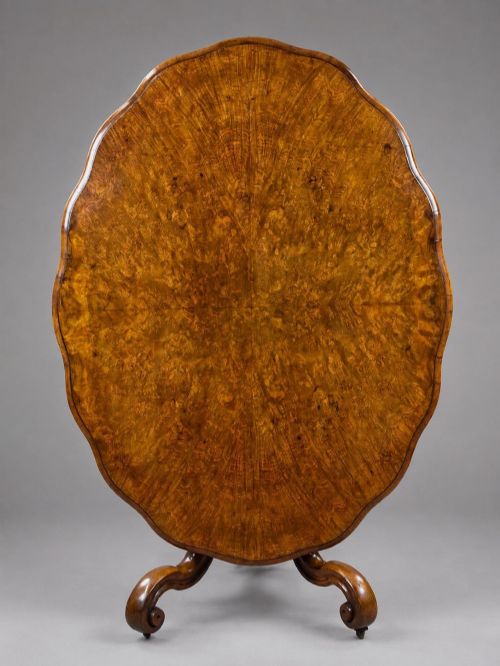
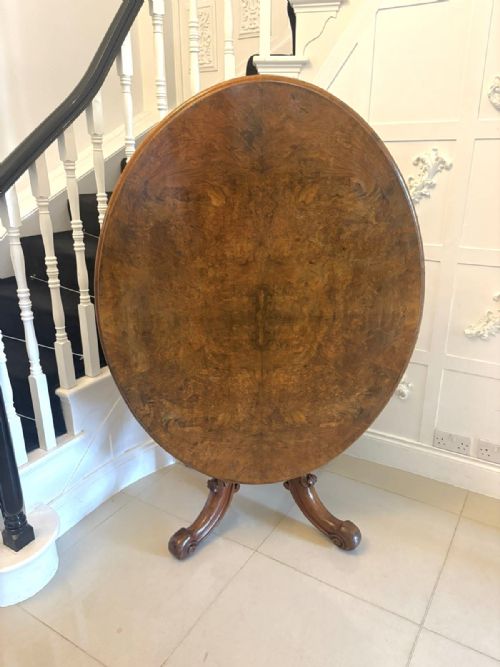
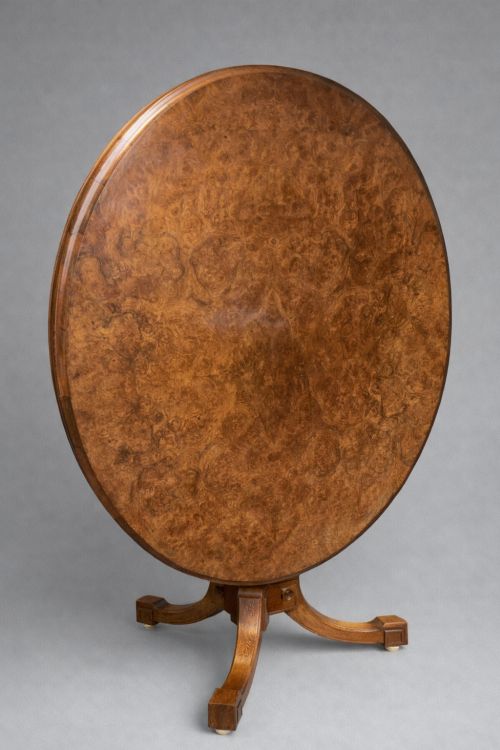
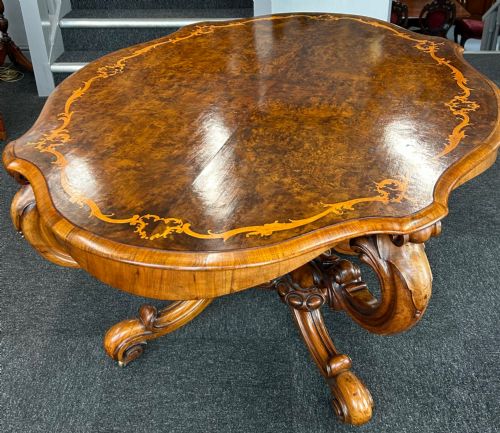

Burr Walnut Breakfast Table
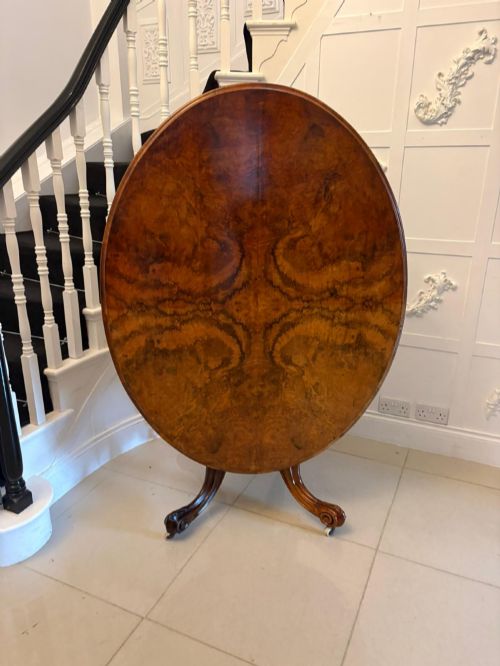
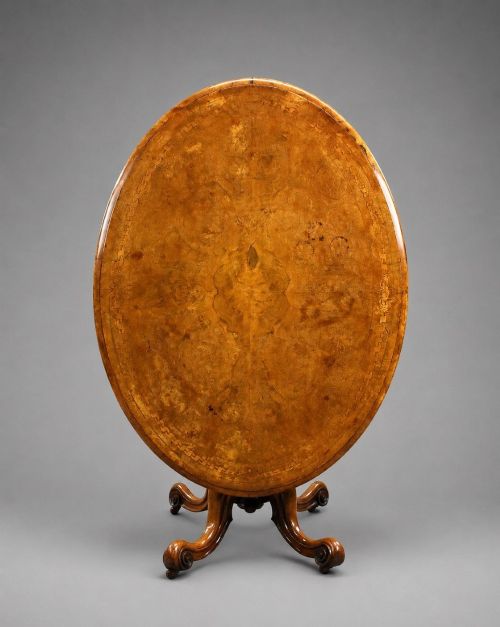
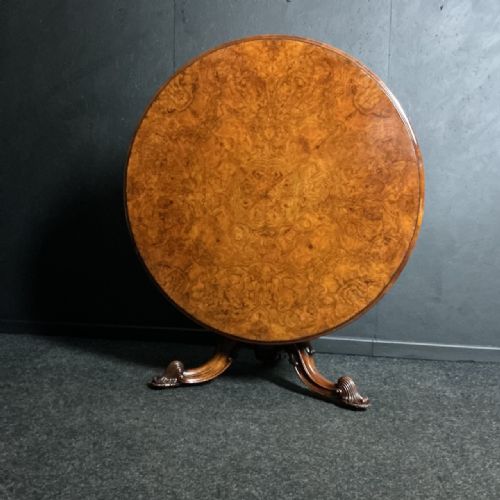
A burr walnut breakfast table is a substantial Victorian centrepiece combining figured timber veneers with robust pedestal construction, sought after for its rich grain and practical versatility.
Burr walnut breakfast tables
A burr walnut breakfast table typically dates from the Victorian era, spanning the nineteenth century around eighteen hundred and sixty. These pieces serve primarily as dining tables, centre tables, or loo tables within larger rooms.
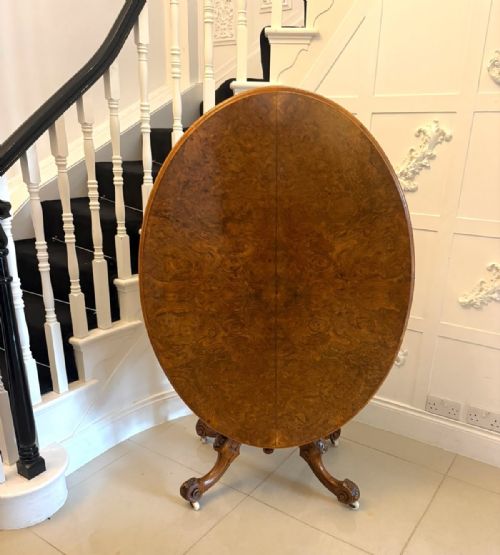
The format appears in circular and oval shapes, frequently featuring a tilt top mechanism that allows the surface to stand vertically against a wall when not in use. Oval examples often measure large enough to seat several people comfortably.
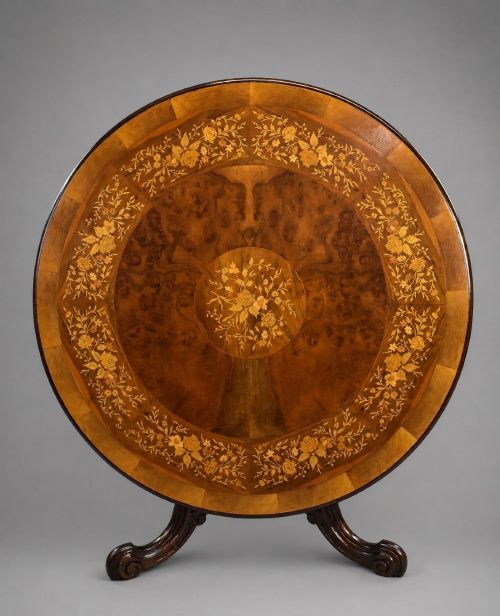
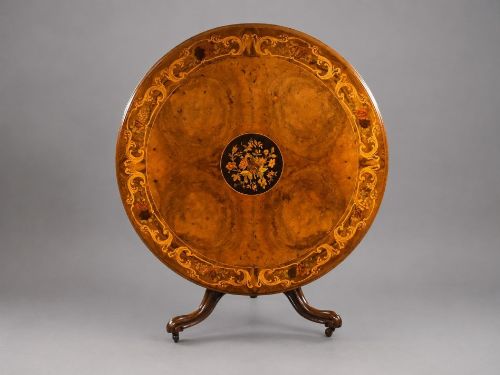
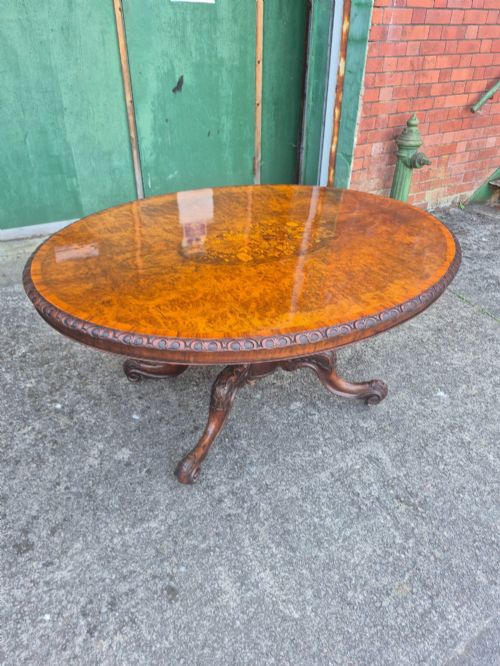
Makers and workshops of the period produced both plain figured surfaces and elaborately decorated tops incorporating marquetry inlays alongside the primary timber.
Construction and Materials
Cabinet makers utilised burr walnut veneers applied over secondary timbers to create highly figured, decorative table surfaces with distinctive swirling grain patterns. Solid walnut forms the structural elements, often complemented by contrasting ebony and mixed fruitwood inlays.
Many examples incorporate brass components within the mechanisms or castors attached to heavy pedestal bases, permitting ease of movement for large dining and centre tables.
Retail Price Guide 2026
Typical UK retail prices for burr walnut breakfast table, calculated from the Sellingantiques database of over a million retail prices indexed since 2003. This retail price guide relies exclusively on Sellingantiques data; no external sources or auction records are used, so the figures do not describe the wider market.
Tilt mechanisms let these grand tables fold flat against walls, proving the Victorians invented furniture that doubles as room-clearing ninja gear.
Evaluating Quality
Quality rests heavily on the selection and matching of the burr walnut veneer across the wide top, where symmetrical grain alignment distinguishes superior examples from standard production. The crispness of marquetry details and the stability of the central pedestal tilt mechanism also mark the tier of craftsmanship.
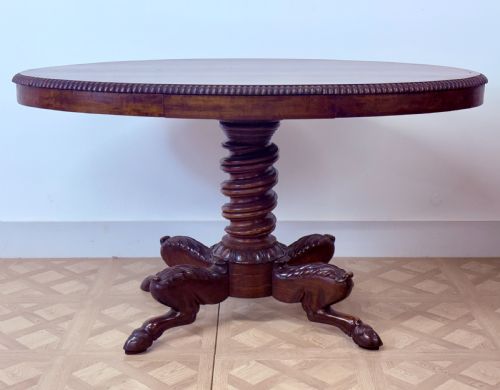
Proportion and scale dictate the visual weight of the piece, with larger tables requiring substantial, well-carved bases to support the expansive top securely without wobble or tilt sag.
Gillows Of Lancaster·T. Wilson
The Burr Walnut Breakfast Table Glossary
- Burr walnut
- A figured wood veneer harvested from the wart-like growths on walnut trees, prized for its complex, swirling grain patterns. Cabinet makers selected these veneers for high-status Victorian tabletops.
- Tilt top
- A hinged mechanism allowing the tabletop to pivot from horizontal to vertical. This design enabled large tables to be stored against walls when dining finished.
- Marquetry
- The art of applying decorative pieces of veneer to a structure to form intricate designs. Mixed fruitwoods often provide contrasting tones in Victorian tabletop decoration.
- Loo table
- A nineteenth-century card and social game table that doubled as a breakfast or centre table. These round or oval pieces frequently feature tilt top mechanisms.
- Centre table
- A freestanding table designed to be viewed from all sides rather than placed against a wall. Victorian examples often occupied the middle of large reception rooms.
Frequently Asked Questions
What is a burr walnut breakfast table?
A burr walnut breakfast table is a nineteenth-century Victorian dining or centre table featuring a highly figured wood veneer top. These pieces often include a tilt top mechanism and rest on a central pedestal base.
Originally used for morning meals and social gatherings, these tables function today as striking centrepieces in spacious dining rooms or living areas.
How do you use a tilt top table?
The tilt top mechanism operates via a release catch under the surface, allowing the heavy wooden top to pivot from a flat position to an upright vertical stance. This enables the table to occupy minimal floor space.
When locked flat, the table functions as a standard dining or display surface supported by the central column and pedestal feet.
How do I date a Victorian breakfast table?
Dating relies on examining the construction methods, wood types, and decorative styles recorded across nineteenth-century examples. Most pieces date from the mid-Victorian period around eighteen hundred and sixty.
Cabinet making techniques, such as the use of solid walnut, brass hardware, and fruitwood marquetry, help narrow the timeframe alongside recorded maker attributions.
Are these tables suitable for everyday dining?
These robust nineteenth-century tables offer generous surface areas suitable for seating several people during meals. Their sturdy pedestal construction provides ample legroom around the base.
Careful daily use requires protecting the figured walnut veneer with appropriate table coverings to prevent heat and moisture marks.