

Mid Victorian Table
When you search for a mid victorian table, you encounter the robust utility and decorative ambition of domestic furniture crafted across the nineteenth century.
Mid Victorian Table
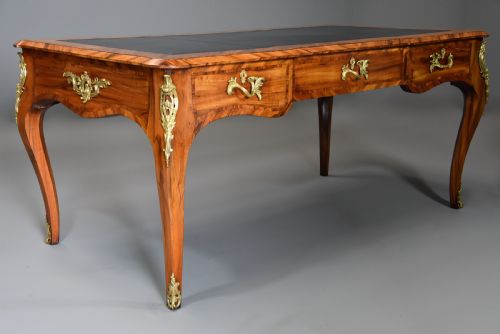
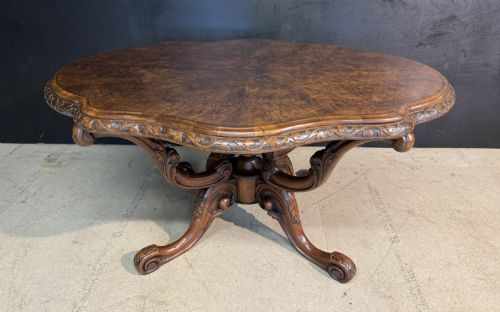
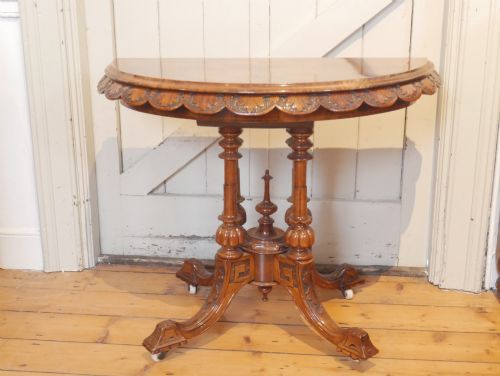
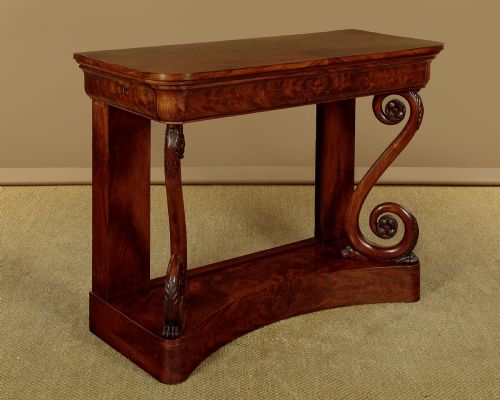
When a buyer investigates a mid victorian table, they find an array of functional household pieces spanning card tables, loo tables, centre tables, and writing desks produced during the middle decades of the nineteenth century. The selection leans heavily toward walnut and mahogany examples, reflecting the widespread domestic tastes of the period.
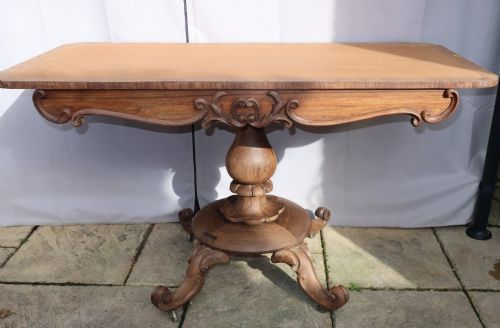
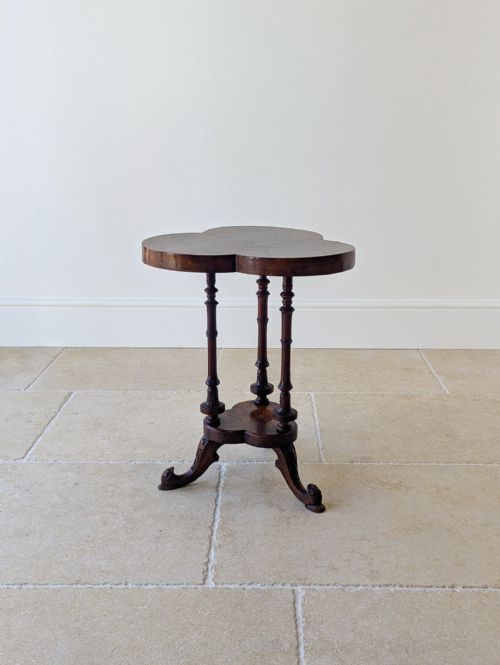
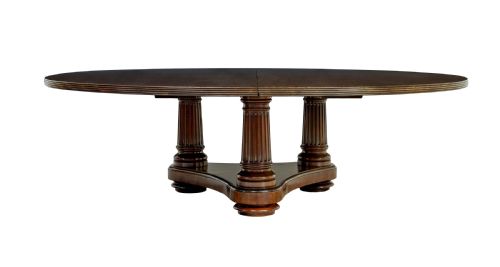
The objects vary from grand dining pieces designed for country houses to compact occasional tables, breakfast tables, and sewing tables intended for smaller Victorian reception rooms. Many incorporate clever folding mechanisms, rotating tops, or fitted interiors for games and writing.
Originating predominantly from British workshops alongside continental revival styles, these tables showcase the era's preoccupation with practical versatility combined with rich timber figures.
Materials and Technique
Makers utilised dense native and imported timbers, notably solid mahogany and structural walnut, often applying highly figured burr walnut or rosewood veneers to primary display surfaces. These woods were shaped using traditional joinery techniques, turning lathes, and hand-carving for cabriole legs or pedestals.
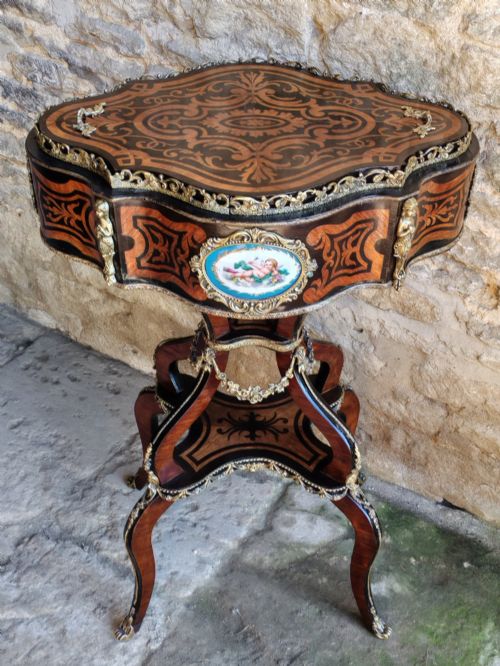
Inlaid marquetry, satinwood stringing, and brass mounts frequently decorated the surfaces, particularly on pieces influenced by French styles or designed for formal parlour use.
Mid Victorian Table Retail Price Guide 2026
Typical asking prices for mid victorian table among the pieces listed under this phrase on Sellingantiques today, from the lower quarter to the upper quarter. They describe what is for sale here now, not the wider market.
Some tables double as game boards with inlaid chess squares, proving nineteenth-century Victorians took their parlour recreation very seriously indeed.
Evaluating Construction and Materials
The distinction between ordinary and superior pieces rests on the depth of the timber figuring, the crispness of any carved ornamentation, and the integrity of the underlying joinery. Fine examples display carefully matched burr veneers and stable structural frames that withstand the test of time without major distortion.
Hardware, internal drawer construction, and the smoothness of folding or tilting mechanisms further divide standard production from pieces commissioned from premier cabinet makers.
Gillows of Lancaster·Padley Parkin and Staniforth
The Mid Victorian Table Glossary
- Burr walnut
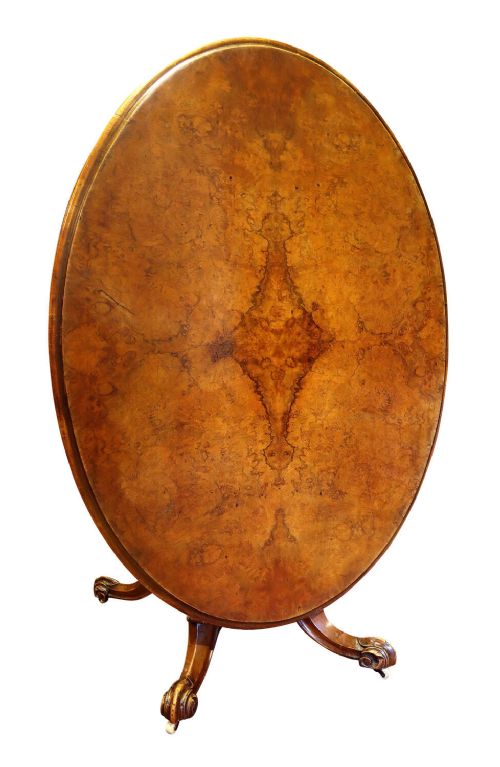
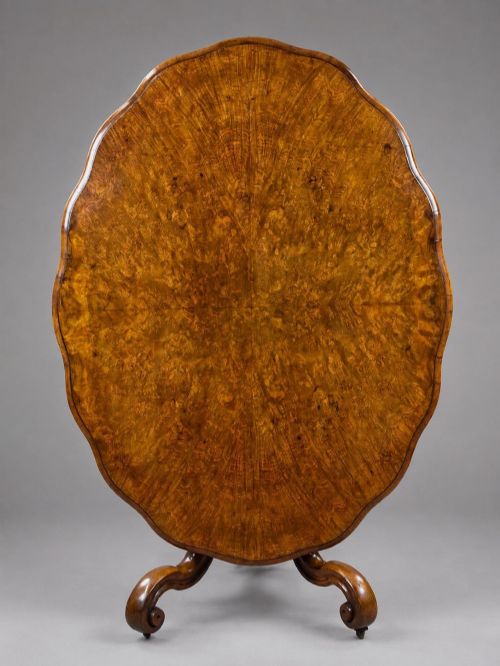
- A highly figured timber veneer harvested from the wart-like growths on walnut trees, prized for its swirling, mottled grain patterns. It became the defining surface material for luxury Victorian parlour furniture.
- Loo table
- A large round or oval card table designed for the nineteenth-century Victorian card game of loo. These tables typically feature a tilting top mechanism to save space when not in use.
- Card table
- A folding table with a hinged top that opens to reveal a baize-lined playing surface for games like whist. They often incorporate hidden wells for counters and cards.
- Étagere
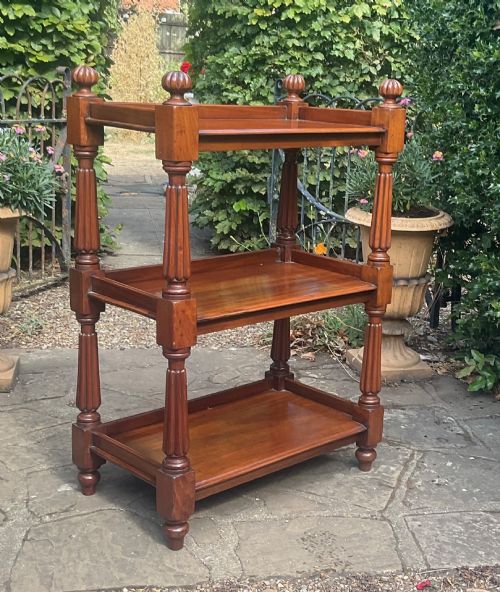
- A set of open shelves arranged in tiers, used for displaying ornaments and small decorative objects. They appeared frequently in mid-nineteenth-century drawing rooms.
- Marquetry
- The art of applying decorative veneer pieces of different woods, ivories, or metals to a structured surface to form intricate pictorial designs. Victorian makers used it extensively on walnut and rosewood tables.
Mid Victorian Table: Frequently Asked Questions
What is a mid victorian table used for today?
These tables adapt easily to modern interiors as functional writing desks, lamp surfaces, or dining tables in living spaces. Their diverse mechanical designs provide hidden storage and adjustable configurations for contemporary living.
Placing them in hallways or reception rooms allows them to serve their historical purpose while accommodating modern decorative objects and daily domestic routines.
Are these tables made of solid walnut?
Most examples utilise a stable secondary softwood or mahogany carcass underneath, onto which thin, highly decorative veneers of walnut or burr walnut are applied. This technique prevented warping while presenting an expensive, figured surface.
Structural elements like legs, pedestals and framework rims are typically fashioned from solid native or imported hardwoods to provide necessary weight and strength.
How do I care for a Victorian wood finish?
Protect the polished timber surfaces by avoiding direct sunlight and placing felt pads beneath any items set upon them. Regular dusting with a soft, dry cloth preserves the historical polish without abrasive chemical buildup.
Maintaining a stable room humidity prevents the timber from drying out and keeps delicate veneers from lifting along their edges.