

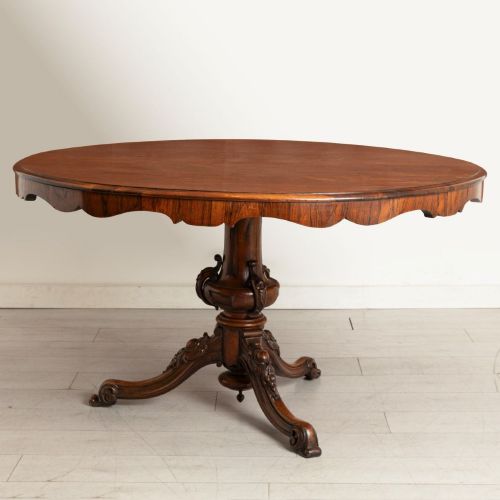
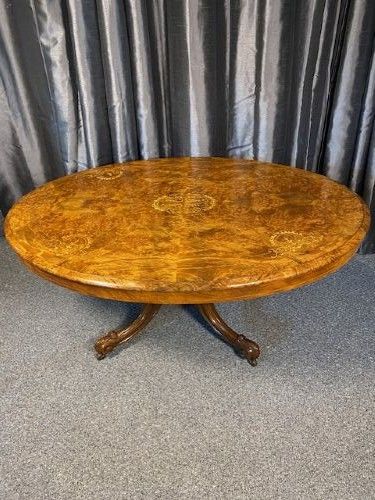
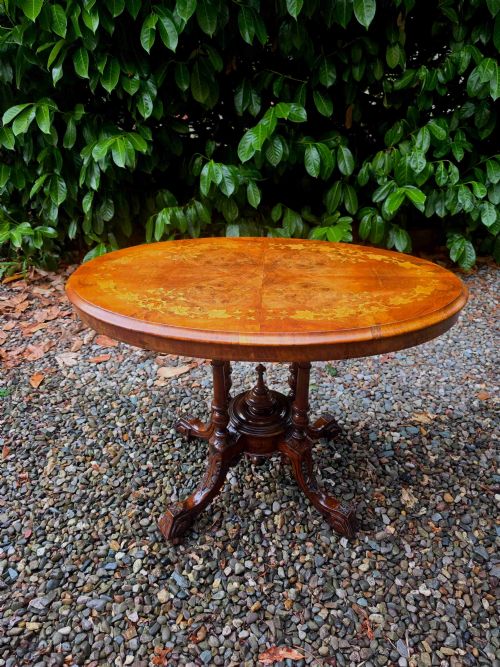
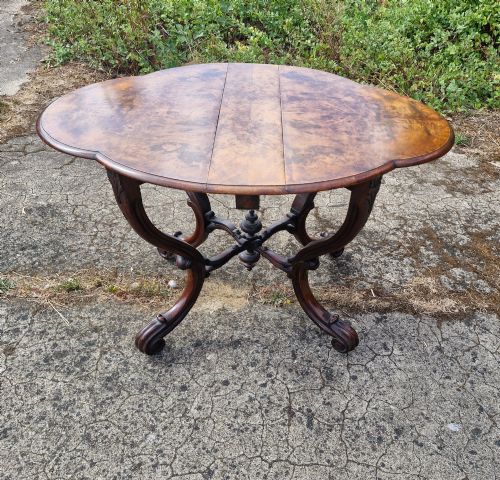
Victorian Oval Centre Table
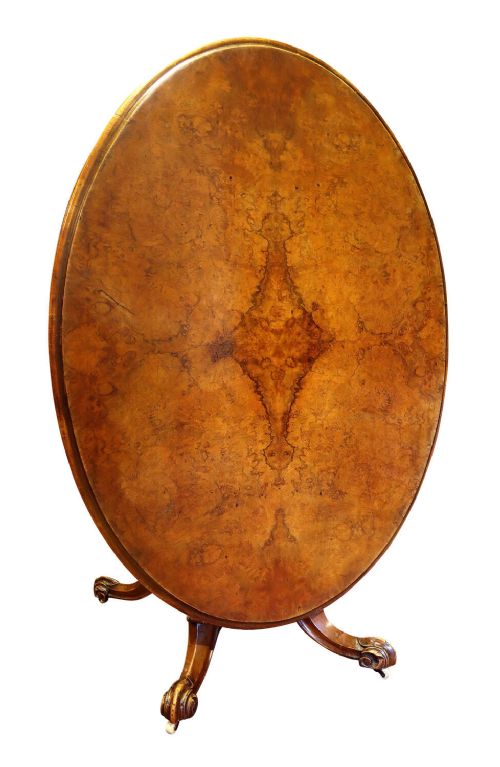
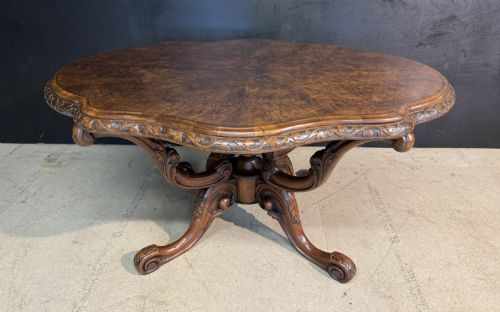
A Victorian oval centre table brings the warmth of figured timber and the sociability of a rounded top into a principal room.
Victorian Oval Centre Table
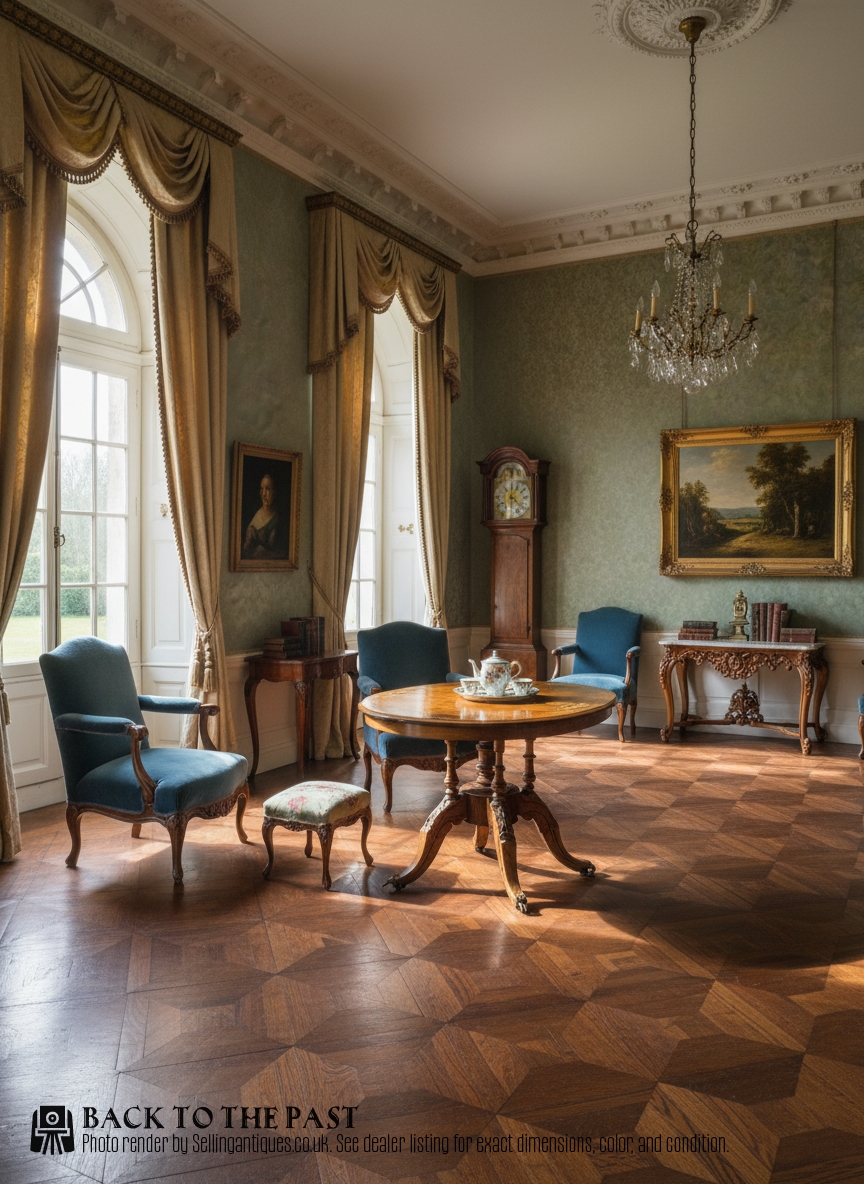
A Victorian oval centre table is designed to sit independently in a room, offering a generous top for display or dining without the hard corners of a traditional rectangular format.
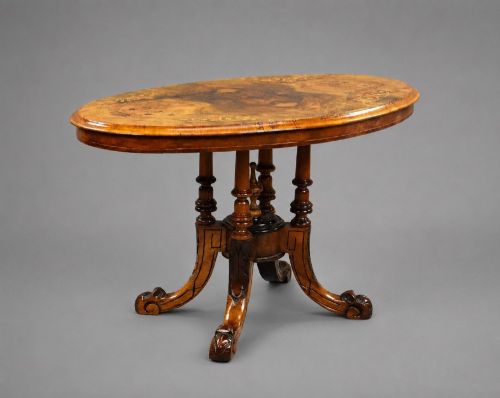
The selections span larger six-seater dining, breakfast, and loo tables alongside smaller occasional, lamp, and coffee formats that adapt the nineteenth-century shape to modern living.
These pieces originate principally from the Victorian period, with individual examples dated across the eighteen-fifties, sixties, seventies, and eighties, occasionally drawing on earlier Regency or Scandinavian traditions.
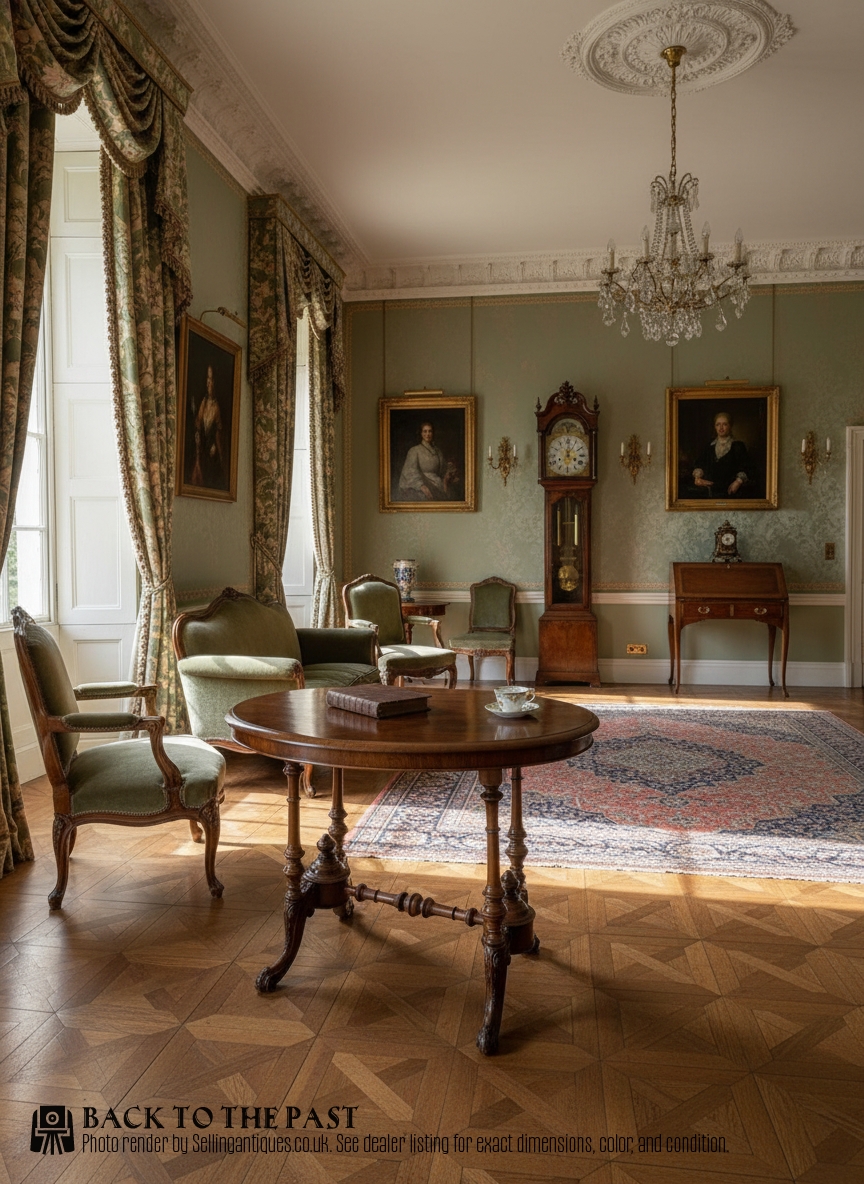
Materials and Construction
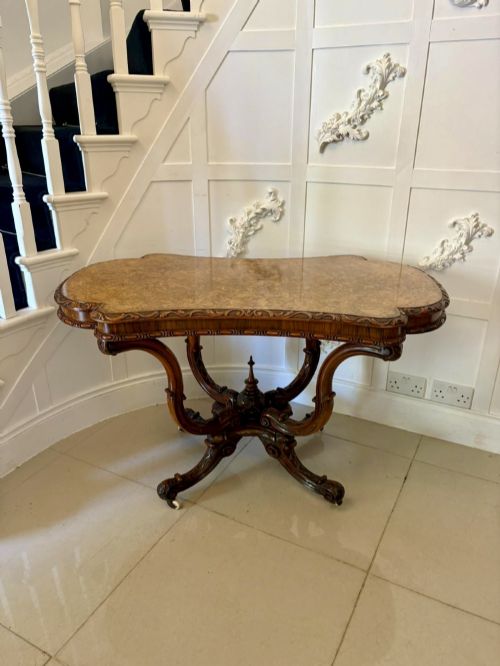
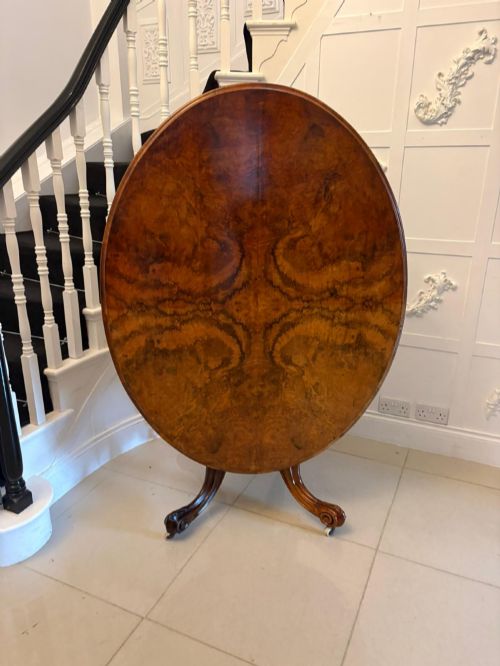
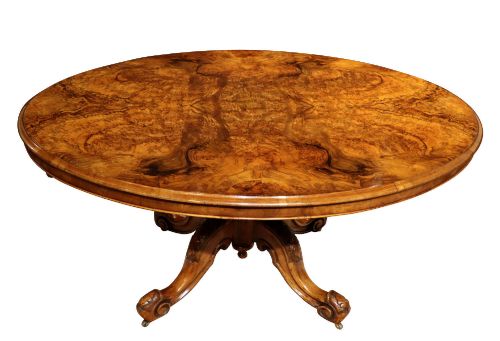
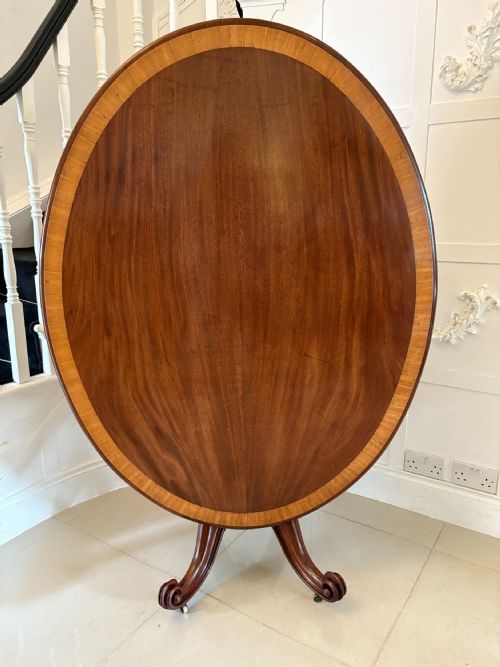
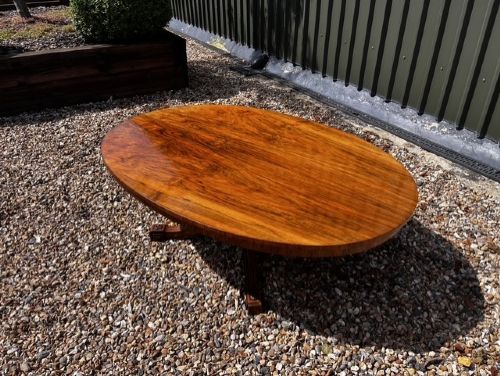
Cabinet makers utilised dense native and imported timbers, notably burr walnut, figured mahogany, and rich rosewood, selected for their striking grain patterns.
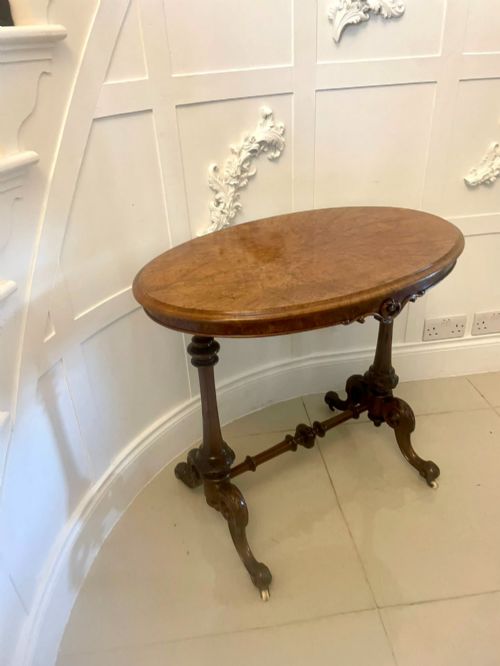
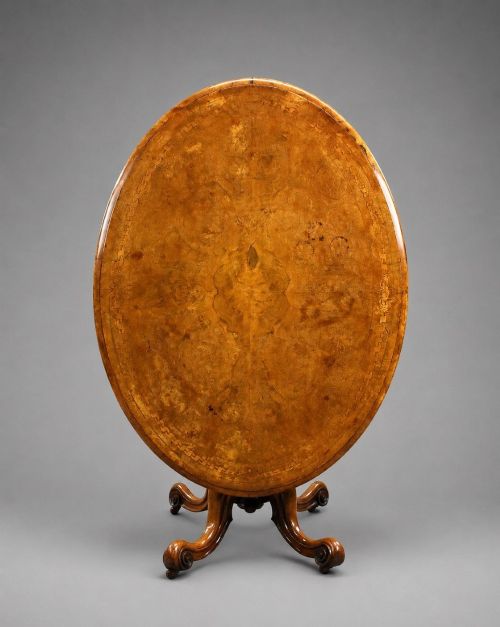
Many surfaces feature intricate boxwood inlay and marquetry, while structural elements often incorporate solid turned and carved timber bases, quadrapod feet, and tilt-top mechanisms.
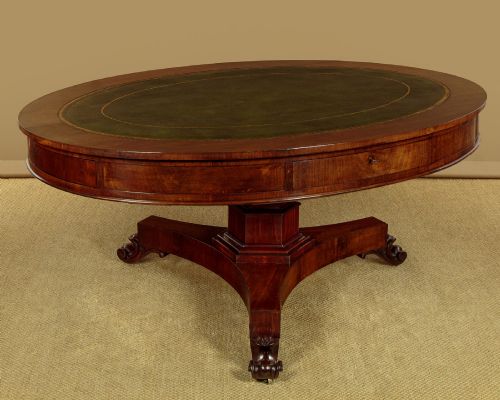
Specialised examples include inset leather writing surfaces and chess tops, combining functional utility with decorative cabinet work.
Victorian Oval Centre Table Retail Price Guide 2026
Typical asking prices for victorian oval centre table among the pieces listed under this phrase on Sellingantiques today, from the lower quarter to the upper quarter. They describe what is for sale here now, not the wider market.
Several tables include integrated chess boards within the inlaid top, ready for a Victorian match.
Judging Quality
The distinction between ordinary and exceptional pieces rests upon the choice of veneer and timber figure, where richly swirled burr walnut or deep rosewood elevates the visual presence.
Refinement in the carving of pedestals and the precision of boxwood inlay separate standard production from master craftsmanship, particularly where mechanical elements like tilt-tops operate smoothly.
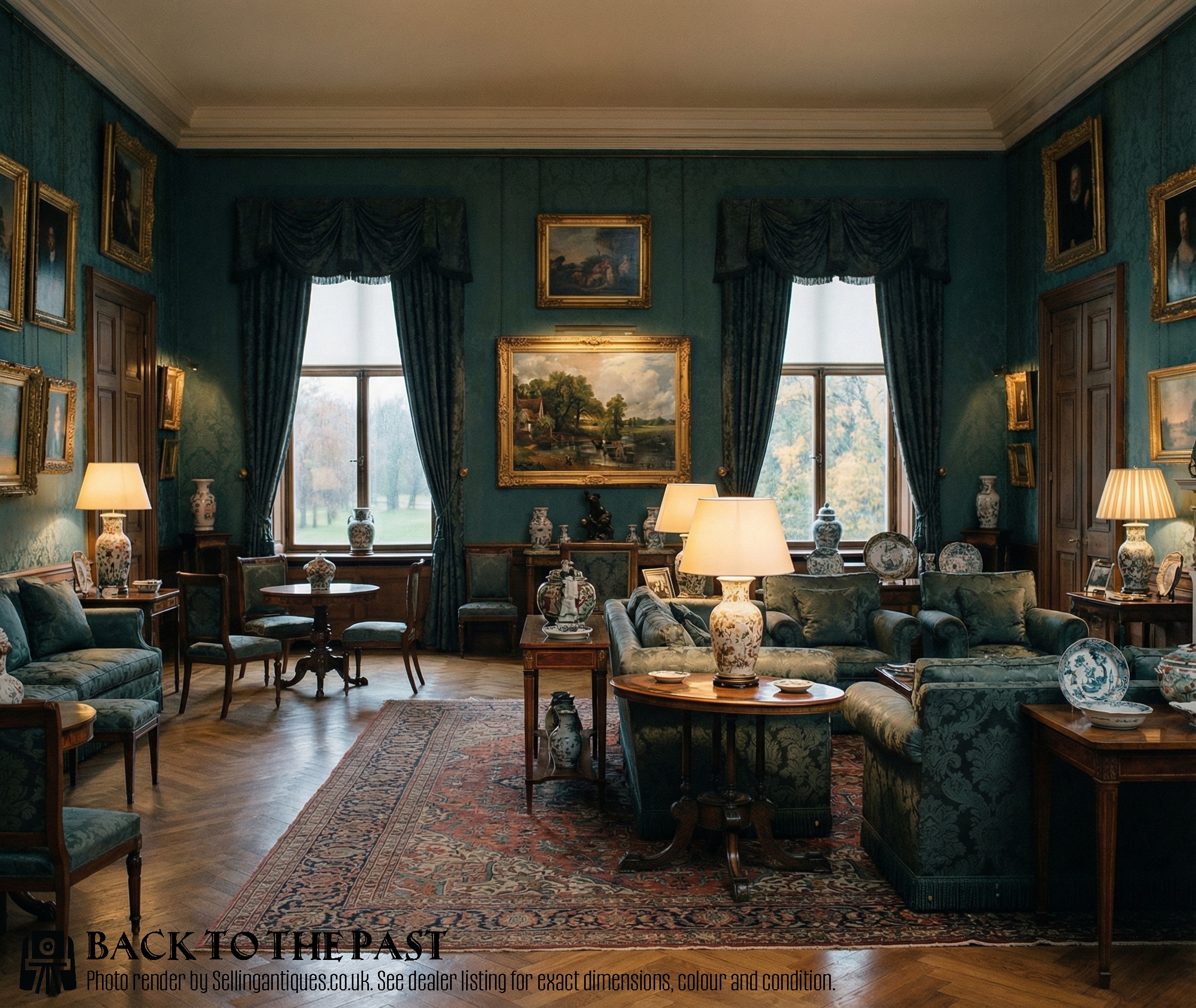
Holland and Sons
The Victorian Oval Centre Table Glossary
- Burr walnut
- A prized timber harvested from the wart-like growths of walnut trees, producing a dense, swirling grain pattern highly favoured by Victorian cabinet makers for tabletops.
- Tilt-top
- A hinged mechanism allowing the tabletop to pivot into a vertical position when not in use, originally designed to save space in smaller nineteenth-century rooms.
- Loo table
- A large Victorian parlour table designed for card games such as loo, featuring a substantial oval top supported by a central pillar and stable feet.
- Marquetry
- The art of applying small pieces of veneer in various woods to form decorative patterns and pictures on furniture surfaces.
- Quadrapod base
- A heavy four-legged pedestal support system frequently carved from solid timber to bear the weight of larger dining and breakfast formats.
Victorian Oval Centre Table: Frequently Asked Questions
What is a Victorian oval centre table?
A Victorian oval centre table is a freestanding nineteenth-century table designed to be viewed from all sides in the middle of a room rather than pushed against a wall.
These pieces range from large tilt-top dining and breakfast tables to smaller coffee and occasional formats made predominantly from walnut, mahogany, and rosewood.
How were loo tables used?
Loo tables were built for playing loo, a popular nineteenth-century card game that required a spacious circular or oval surface for multiple players.
When not in use for games, the tilt-top mechanism allowed the table to be folded flat and pushed to the side of the parlour.
How do I date a Victorian table?
Dating these pieces relies on stylistic shifts recorded across the period, moving from heavier carved rosewood and mahogany designs of the eighteen-fifties toward burr walnut with intricate boxwood inlay in the sixties and seventies.
Specific construction methods, such as the evolution of pedestal bases and tilt-top hardware, also help narrow the decade of manufacture.
Can I use an antique centre table as a coffee table?
Many smaller nineteenth-century tables and pieces adapted down from dining heights function naturally as coffee tables in contemporary interiors.
Their oval shapes soften the geometry of modern seating arrangements while providing sturdy timber surfaces for daily use.