
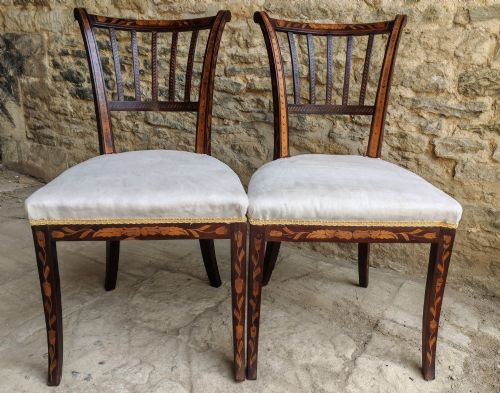

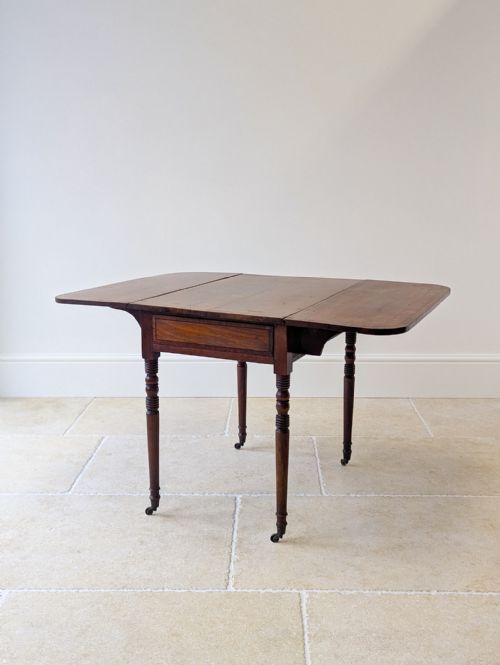
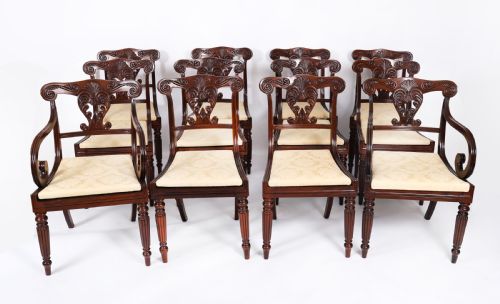
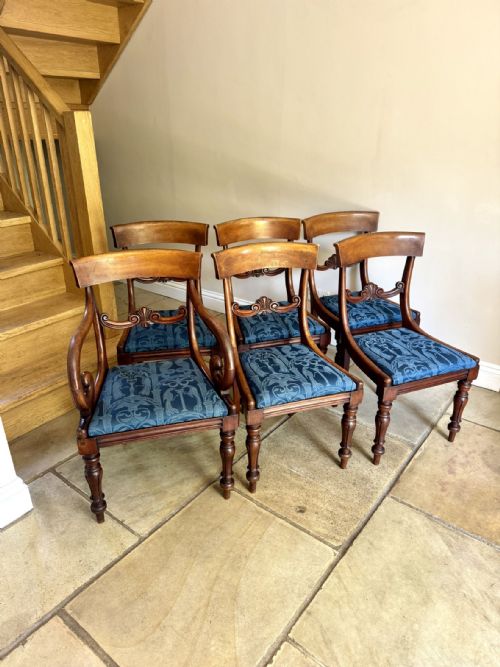


Regency Period Dining Furniture
Regency period dining furniture comprises tables, chairs, and sideboards shaped by the aesthetic of the early nineteenth century.

Regency Period Dining Furniture
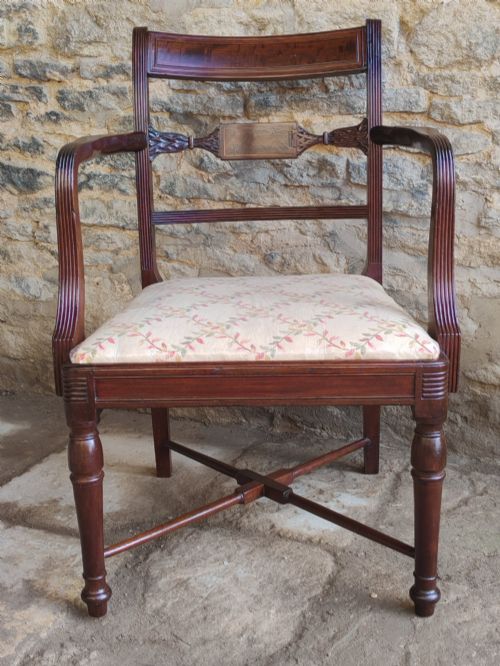
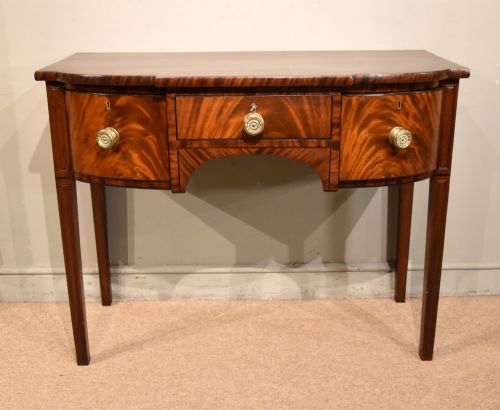
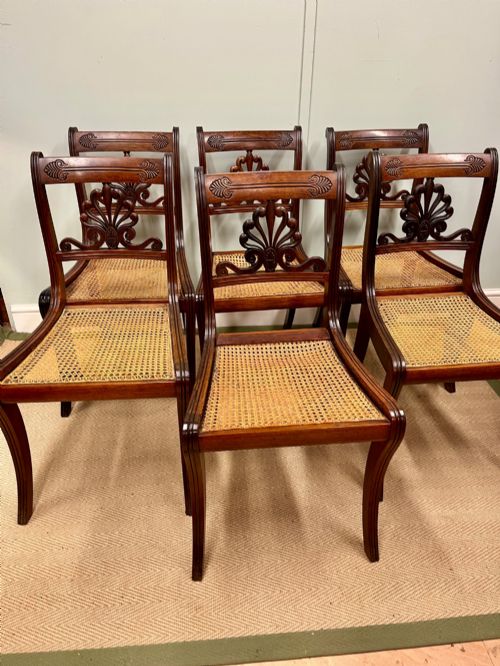
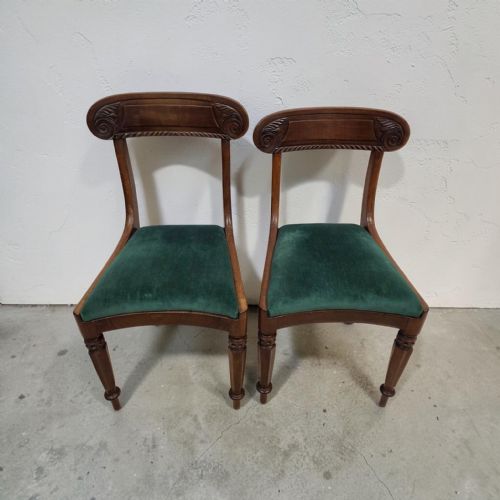
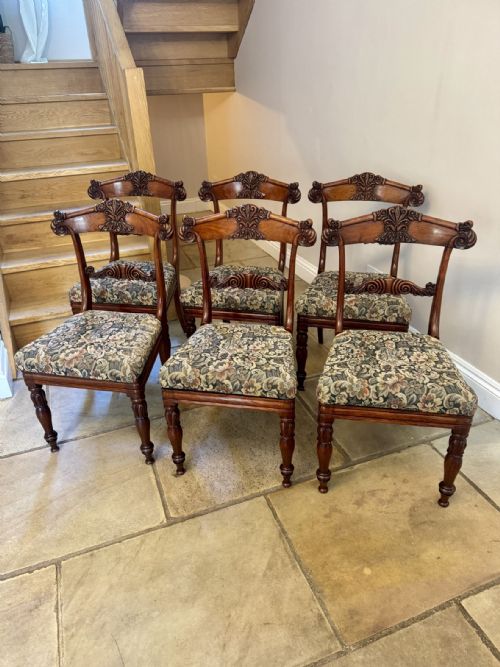
Regency period dining furniture brings together tables, chairs, sideboards, and serving pieces produced during the Regency era and associated nineteenth-century styles. Buyers hunting for regency period dining furniture will encounter dining chairs, extending tables, and large sideboards in various woods.
The selection ranges from sets of dining chairs to substantial pedestal tables and wine coolers. Mahogany and rosewood form the basis of most dining tables and chairs found in this category.
Origins stretch across regions, including Scottish, Irish, and Anglo-Indian variants alongside standard English pieces. Sets appear in various counts, from single armchairs to gatherings of twelve or fourteen chairs.
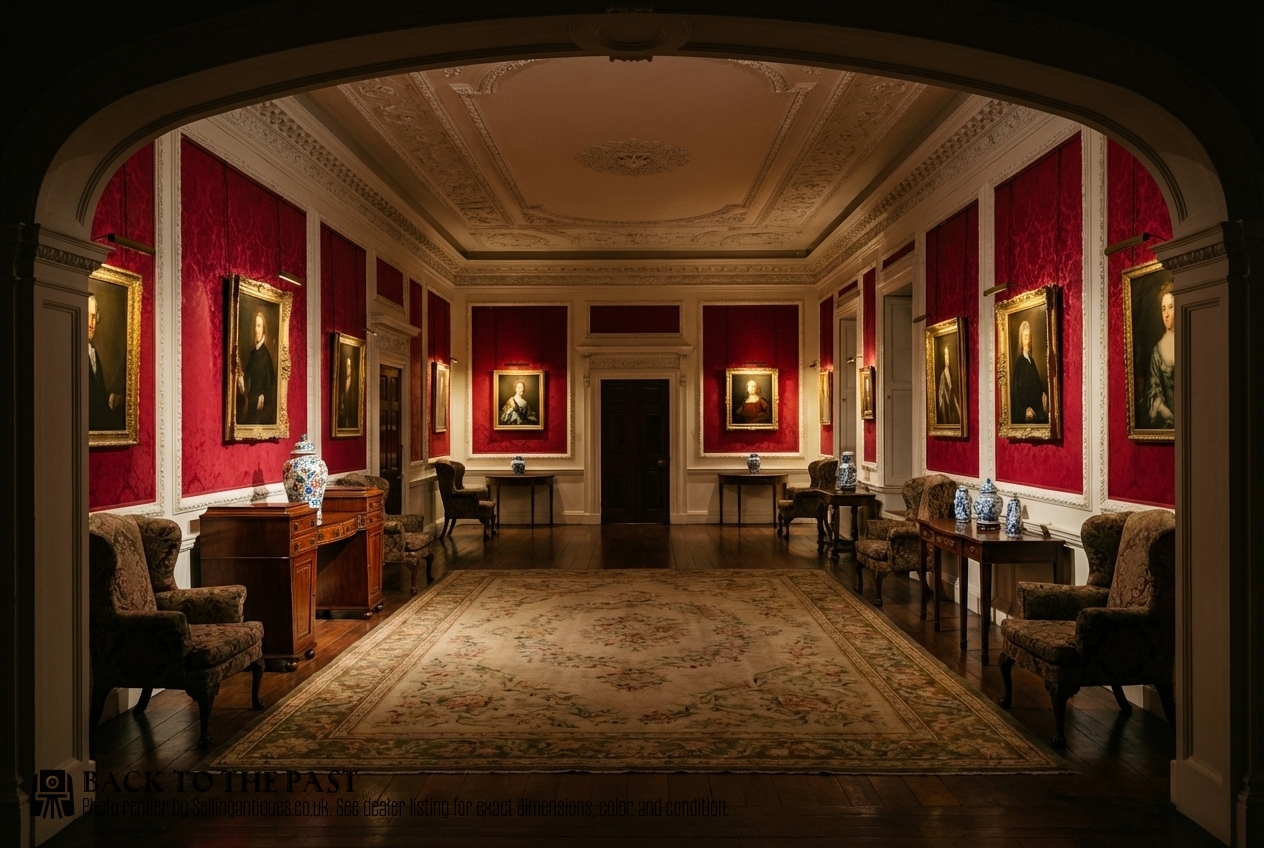
How they were made
Cabinet makers utilised solid timbers and veneers, applying flame mahogany and rosewood across surfaces to create distinct grain patterns. Brass inlay, ebonising, and marquetry enrich specific tables, chiffoniers, and chairs.
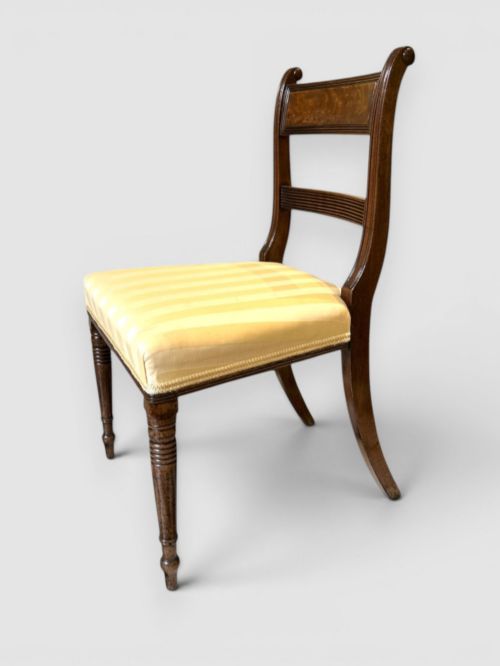
Pedestal dining tables rely on structural timber supports and drop well mechanisms, while chairs employ turned or carved wooden frames. Upholstery, fabric, velvet, and cane provide the seating surfaces for armchairs and side chairs.
Regency Period Dining Furniture Retail Price Guide 2026
Typical asking prices for regency period dining furniture among the pieces listed under this phrase on Sellingantiques today, from the lower quarter to the upper quarter. They describe what is for sale here now, not the wider market.
Listings feature mahogany, rosewood, ebony, and brass, spanning the Regency, Georgian, and Victorian periods.
What varies in quality
The standard of timber selection and complexity of carving separate standard examples from finer pieces. Flame mahogany veneers and precise brass inlay indicate higher workshop standards during the period.
Completeness of a dining set and the presence of original leaves on extending tables influence the character of the furniture. Attribution to known makers or specific regional schools adds distinction to individual sideboards and tables.
Gillows·James Mein·Mack Williams And Gibton
The Regency Period Dining Furniture Glossary
- Carver
- An armchair designed for the head of a dining table, typically matching a set of smaller side chairs. These chairs often feature scrolling arms and wider proportions.
- Chiffonier
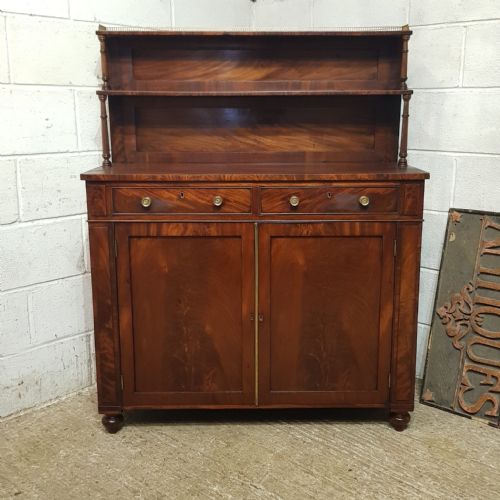
- A low sideboard or cabinet with shelves and doors, utilised for storing dining china or serving items. These pieces frequently incorporate brass gallery rails and flame mahogany veneers.
- Pedestal table
- A dining table supported by one or more central pillars rather than standard corner legs. This construction allows greater freedom for seating arrangements around the table.
- Sarcophagus wine cooler
- A large cellar or cooler shaped like an ancient stone coffin, used to chill bottles during formal meals. They appear in grand dining rooms alongside matching sideboards.
- Marquetry
- The art of applying decorative veneer pieces in geometric or floral patterns onto a wooden surface. This technique appears on tabletops and side chairs.
Regency Period Dining Furniture: Frequently Asked Questions
How do I care for rosewood dining furniture?
Keep wooden surfaces away from direct sunlight and sudden temperature shifts to protect the grain and polish. Regular dusting with a dry cloth maintains the finish without moisture damage.
Apply specialised wax polish sparingly when the timber appears dry. Avoid placing hot dishes directly onto table surfaces during dining use.
What defines a pedestal dining table?
A pedestal table rests on one or more central columns rather than four corner legs. This design supports large dining surfaces while leaving space for chairs.
Many examples include drop mechanisms or removable leaves for length adjustment. They pair with sets of mahogany or rosewood dining chairs.
How were sideboards used in dining rooms?
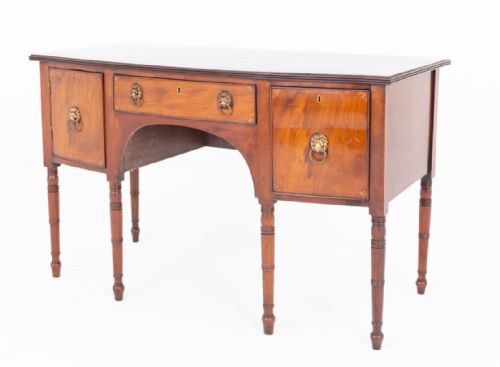
Sideboards served as storage and serving stations during formal meals in nineteenth-century homes. They held cutlery, linens, and dishes away from the main dining table.
Cabinets and drawers organise dining accessories within the piece. Larger variants often incorporate wine coolers or chiffonier attachments.
Are dining chair sets matching or assembled?
Dining chair sets range from unified matching groups to larger assembled sets combining armchairs and side chairs. Some sets feature twelve or fourteen chairs intended for large tables.
Variations in wood grain and carving style indicate whether chairs originated together. Matched sets command distinct interest from collectors seeking uniformity.