
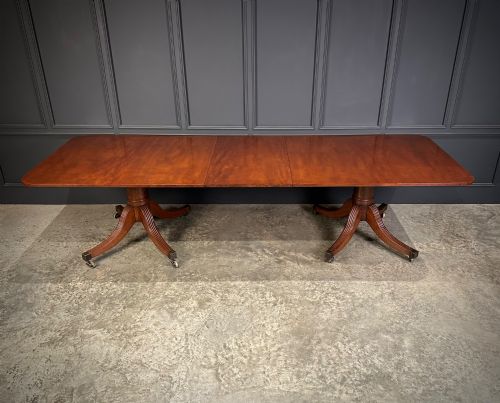
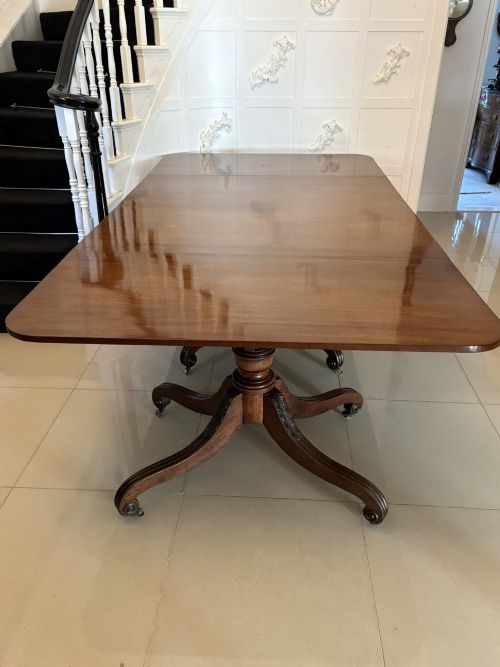
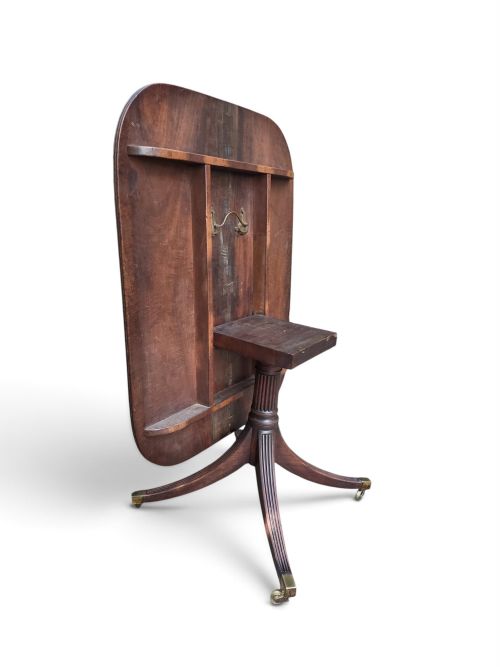
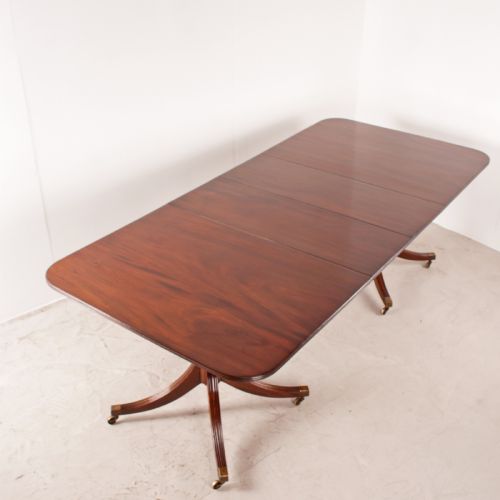
Reeded Leg Pedestal Table
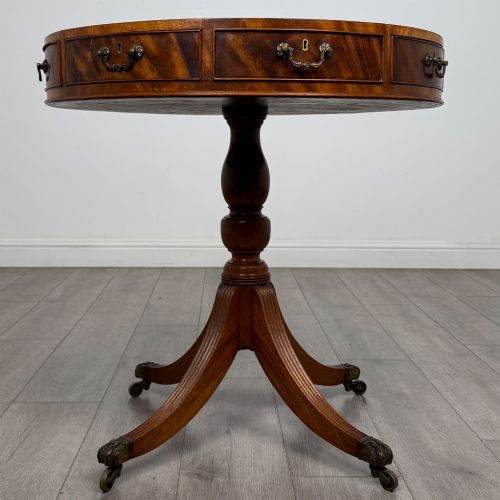
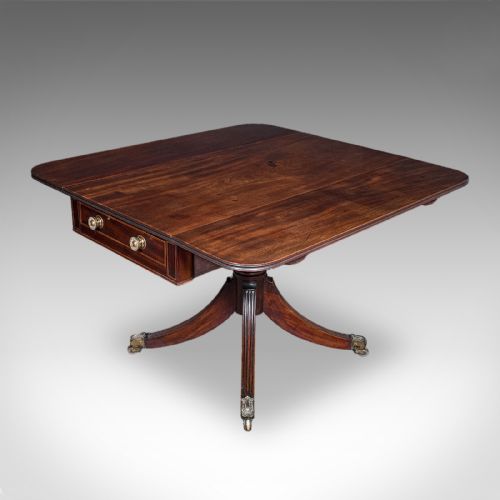
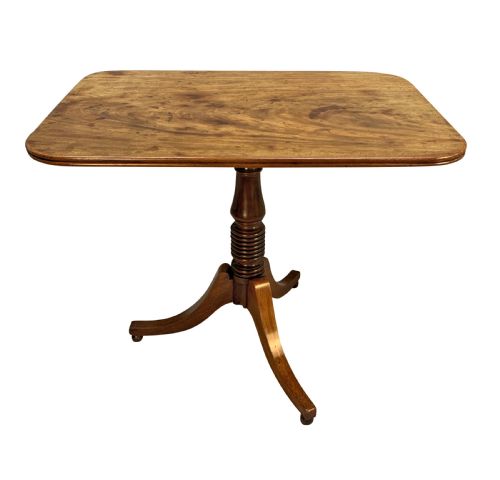
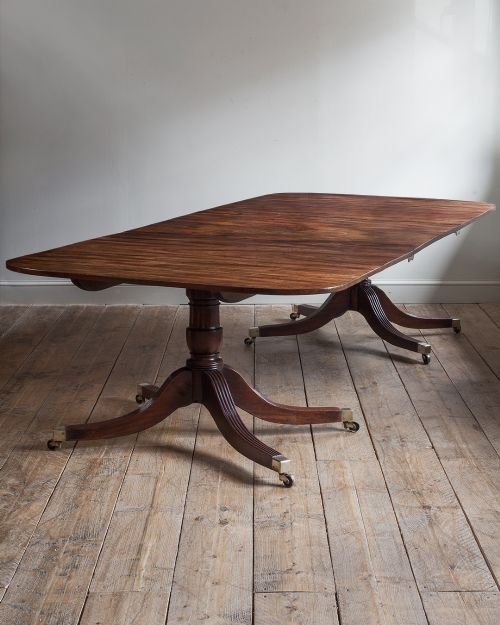
A reeded leg pedestal table brings architectural refinement to a room through turned linear details and a central pillar support.
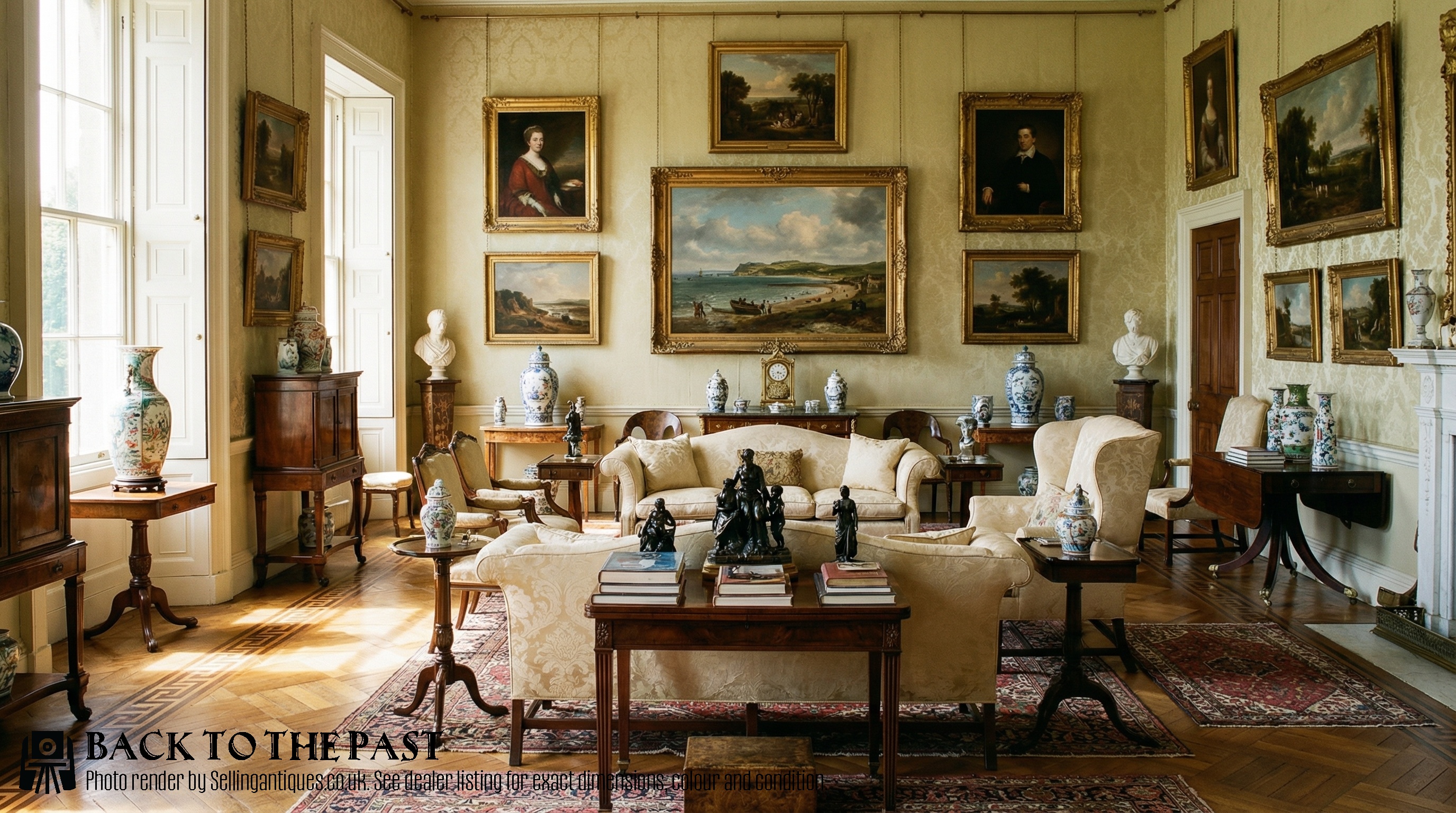
Reeded Leg Pedestal Table
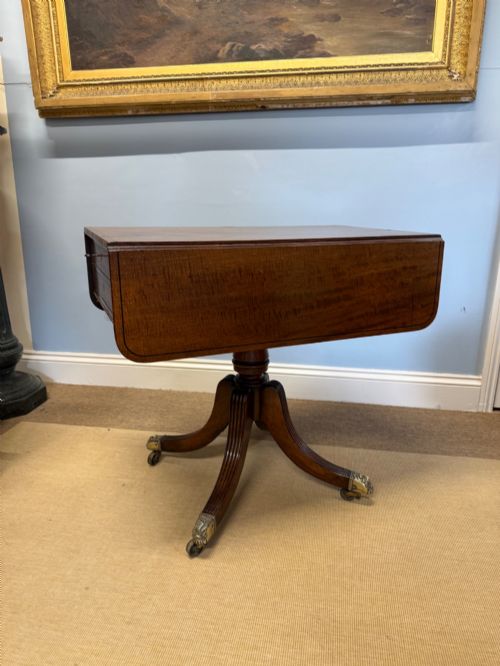
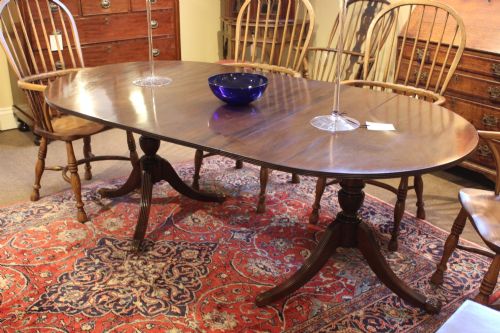
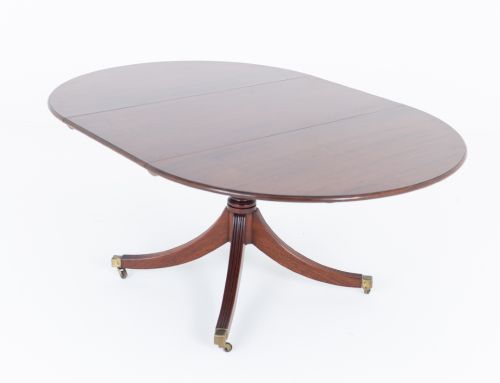
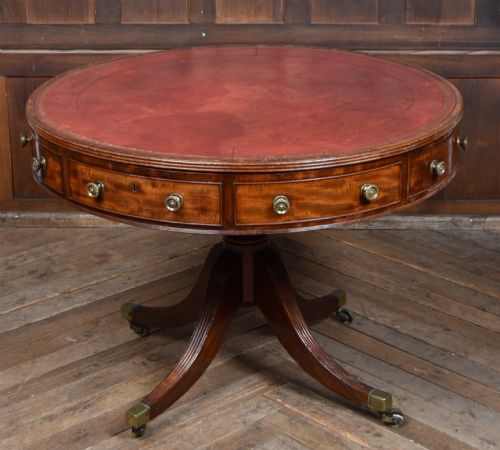
A reeded leg pedestal table encompasses dining tables, occasional tables, drum tables, and breakfast tables spanning the Georgian, Regency, and Victorian periods. Buyers search for these pieces to anchor a dining room or library with traditional woodwork rooted in the eighteenth and nineteenth centuries.
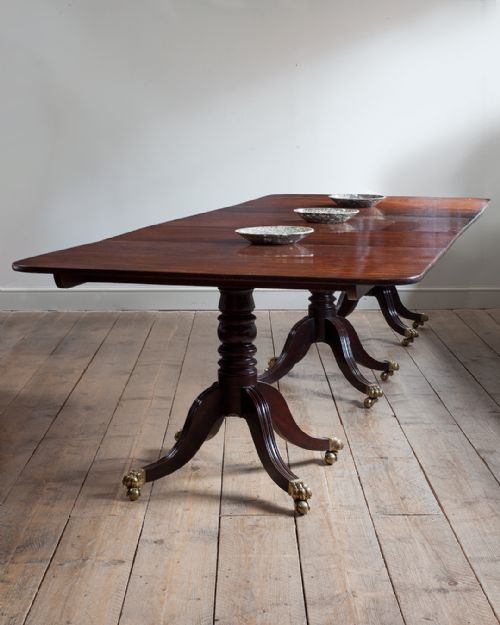
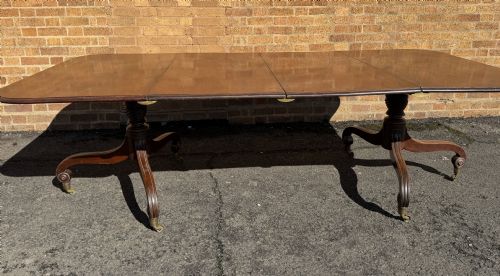
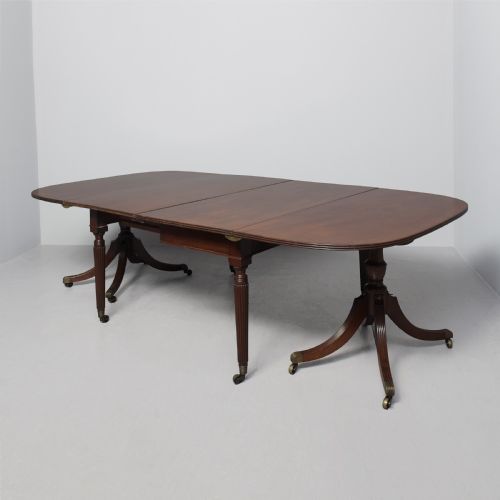
The version most commonly encountered on this page is the mahogany pedestal dining table, often featuring twin or triple pillars with extending leaves. These items appear alongside smaller side tables, coffee tables, and sofa tables reflecting Regency and Sheraton revivals from the early twentieth century.
Origins stretch from English workshops to Irish makers, utilising native and imported timbers like Cuban mahogany and rosewood. The structural format relies on a central column rising from a platform base or branching legs, topped by circular, rectangular, or D-end surfaces.
Distinctions in Standard
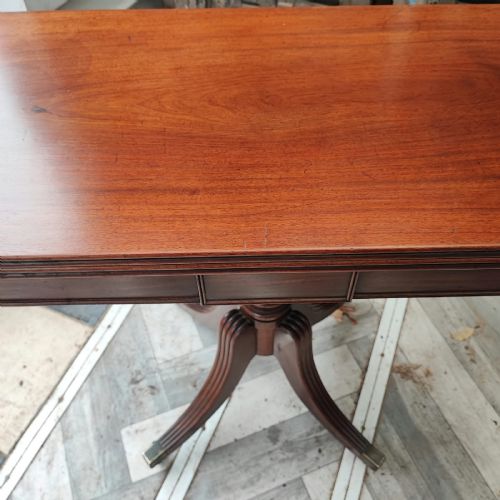
The distinction between ordinary and superior pieces rests on the precision of the timber matching and the crispness of the carved reeding. Master workshops executed mouldings with sharp, uniform depth, whereas lesser examples show softer, uneven tool marks.
Proportion and structural integrity define the upper tier of the range, visible in how well extending dining tables align across multiple pillars and leaves. The choice of dense Cuban mahogany or vibrant flame veneer elevates a piece above standard stock constructed from simpler regional timbers.
Reeded Leg Pedestal Table Retail Price Guide 2026
Typical asking prices for reeded leg pedestal table among the pieces listed under this phrase on Sellingantiques today, from the lower quarter to the upper quarter. They describe what is for sale here now, not the wider market.
Materials recorded across the inventory include Cuban mahogany, rosewood, satinwood inlay, brass, and leather.
Gillows of Lancaster·James Mein
The Reeded Leg Pedestal Table Glossary
- Reeding
- Parallel convex moulding carved into furniture legs or columns to create a textured, classical surface. This decorative technique mimics classical Greek architectural columns.
- Pedestal
- A central vertical support holding up the table top, often branching into multiple feet at the floor. It allows greater leg room than traditional four-leg configurations.
- D-End
- A table end shaped in a semi-circle that resembles the letter D. These sections frequently detach or serve as ends for extending dining arrangements.
- Satinwood Inlay
- Contrasting light wood inserted into darker mahogany surfaces to form geometric or floral patterns. Sheraton revival pieces make frequent use of this decorative method.
Reeded Leg Pedestal Table: Frequently Asked Questions
How do I seat twenty guests?
Large multi-pedestal dining tables utilise three or four pillars and multiple removable leaves to extend past eleven feet in length. This modular construction supports varying group sizes for formal dining.
To accommodate twenty or more people, look for monumental Irish or English examples featuring four heavy pillars and sturdy brass castor mountings for smooth movement.
Where does a drum table go?
A drum table functions best as a freestanding centre table or library desk due to its circular top and surrounding drawer configuration. The rotation of the top often aids access to stored papers or small items.
Placement in the middle of a room allows the piece to display figured mahogany grain from all angles without crowding wall space.
How do I identify Regency style?
Regency pieces draw on classical Roman, Greek, and Egyptian motifs, favouring dark mahogany, brass lion paw feet, and clean architectural lines. Sabre legs and prominent reeded columns appear frequently across this aesthetic.
Later revival periods from the Victorian and Edwardian eras replicated these classical proportions using similar mahogany stocks and satinwood stringing.
Can I use leaf extensions daily?
Extending tables with twin or triple pillars handle daily configuration changes through drop-in leaves supported by internal runners. Proper alignment pins ensure the surface remains level across the joins.
Removing leaves for everyday use reduces wear on the central pedestals while keeping the larger banquet format ready for gatherings.