

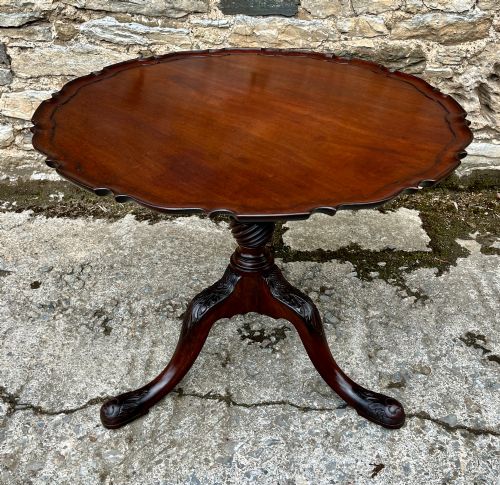
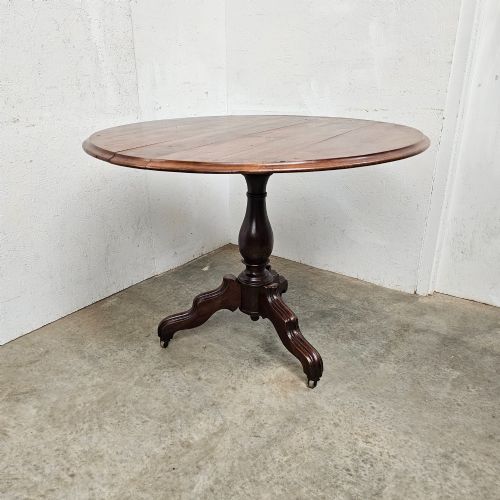


Georgian Mahogany Supper Table
When you search for a georgian mahogany supper table, you are looking at versatile dining and occasional furniture designed for evening meals and social gatherings.

Georgian Mahogany Supper Table
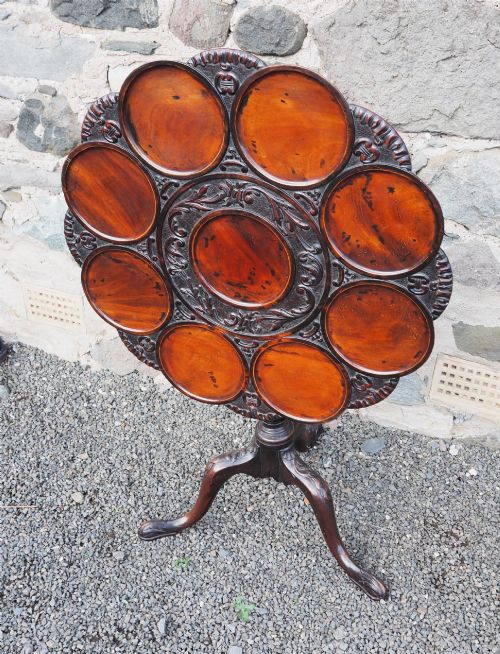
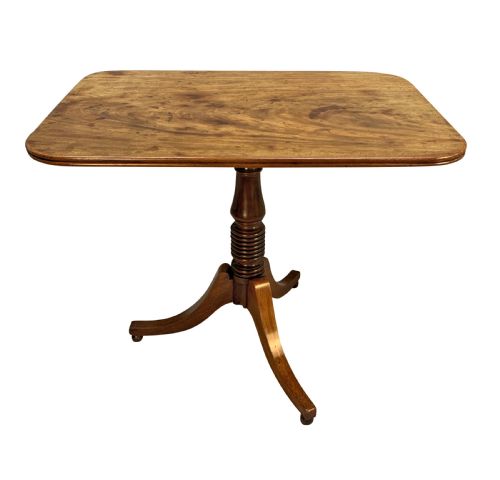
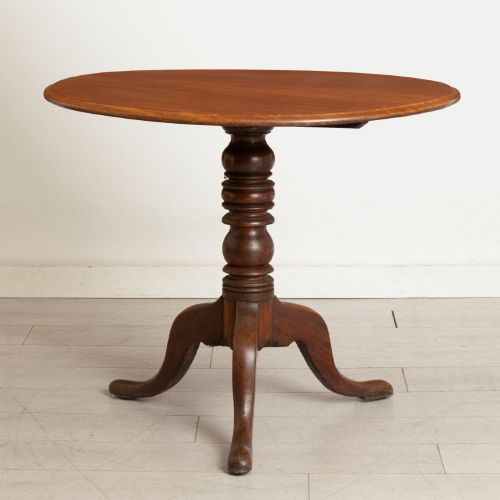
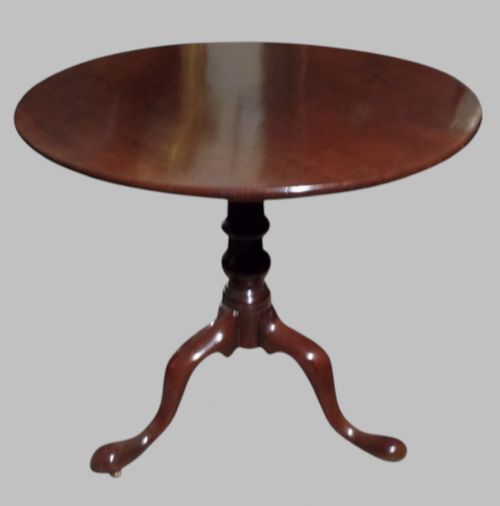
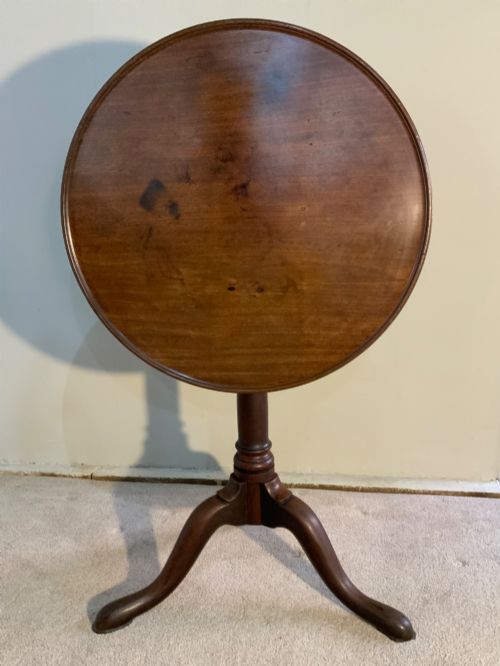
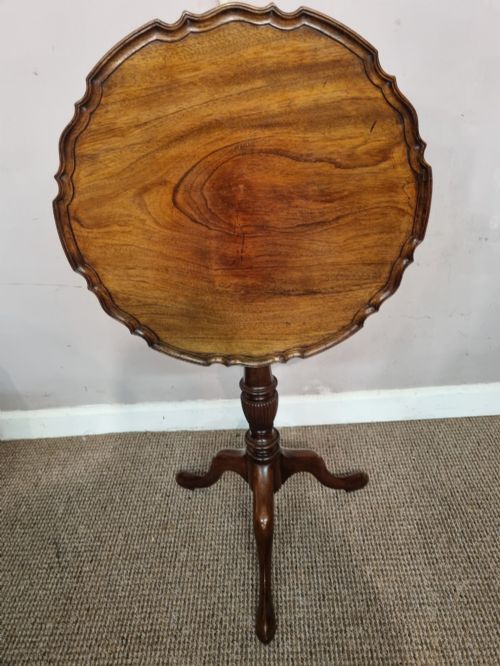
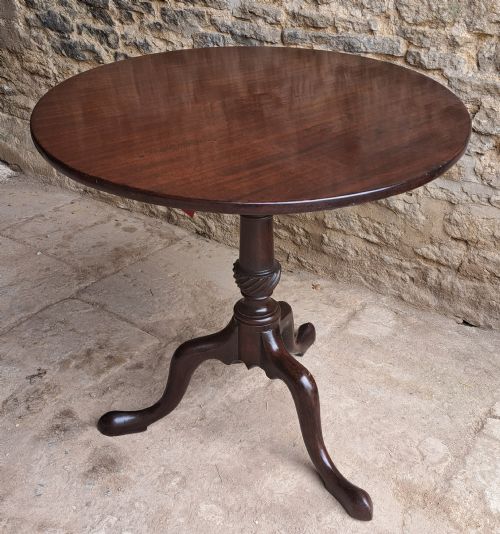
A georgian mahogany supper table is typically encountered as a circular or oval tilting top table supported on a central pillar and tripod base. These pieces span the eighteenth century and the Regency period, encompassing forms such as birdcage action tables and pie crust edge designs.
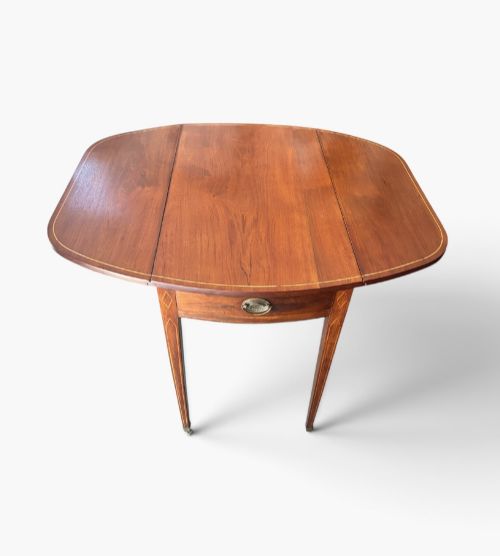
The evidence shows frequent variations including tripod tables, occasional tables, and drop-leaf formats suited for compact dining. Many examples feature snap-top mechanisms that allow the surface to be tilted vertically when not in use.
Originating predominantly from the Georgian and George III eras, these tables served dual purposes for dining and parlour hospitality. They bridge the gap between heavy dining furniture and movable occasional pieces.
How They Were Made
Construction relies heavily on solid mahogany and Cuban mahogany, occasionally accented with satinwood, boxwood, and walnut for inlay work. Cabinetmakers utilised timber with rich natural figures, sometimes pairing a single-piece top with a sturdy pivoting birdcage mechanism.
Tripod bases are joined to turned central pillars using traditional carpentry techniques, often featuring carved legs terminating in pad or claw feet. Brass fittings and iron hardware appear in internal pivots and folding mechanisms.
Georgian Mahogany Supper Table Retail Price Guide 2026
Typical asking prices for georgian mahogany supper table among the pieces listed under this phrase on Sellingantiques today, from the lower quarter to the upper quarter. They describe what is for sale here now, not the wider market.
Listings feature mahogany, Cuban mahogany, walnut, satinwood, boxwood, and rosewood across Georgian and Regency periods.
What Varies in Quality
Quality rests in the choice of timber and the crispness of carved details such as pie crust edges or tripod legs. Superior examples display figured grain patterns like flame mahogany alongside original patination.
The engineering of the birdcage or tilt-top action defines the mechanical standard of each piece. Fluid movement and tight joints distinguish high workshop output from simpler utilitarian tables.
James Mein·John Bivins
The Georgian Mahogany Supper Table Glossary
- Birdcage action
- A rotating wooden frame beneath the tabletop that allows the surface to both pivot and tilt.
- Pie crust edge
- A raised, carved decorative rim shaped in alternating curves around the perimeter of the tabletop.
- Tripod table
- A small freestanding table supported by three legs radiating from a central turned pedestal column.
- Tilt-top table
- A table with a hinged mechanism enabling the top to lock flat for use or stand vertically for storage.
- Pembroke table
- A small rectangular or oval table with two hinged drop leaves flanking a fixed central section.
Georgian Mahogany Supper Table: Frequently Asked Questions
What is a birdcage action on a table?
A birdcage action is a rotating wooden lattice structure positioned underneath the tabletop. It allows the surface to tilt vertically and swivel horizontally.
This mechanism was utilised on eighteenth-century tripod tables to save space in smaller rooms when the furniture was not in active use.
How were supper tables used originally?
Supper tables served as flexible surfaces for evening meals, card games, and social gatherings in Georgian parlours. Their movable nature allowed them to be placed near fires or pushed aside.
The tilting tops made storage against a wall practical during daytime hours when the floor space was required for other activities.
What is Cuban mahogany?
Cuban mahogany is a dense, durable hardwood harvested in the West Indies during the eighteenth and nineteenth centuries. It became prized for its deep colour and rich grain.
Craftsmen selected this specific timber for high-end dining and occasional tables due to its ability to take a fine polish.