
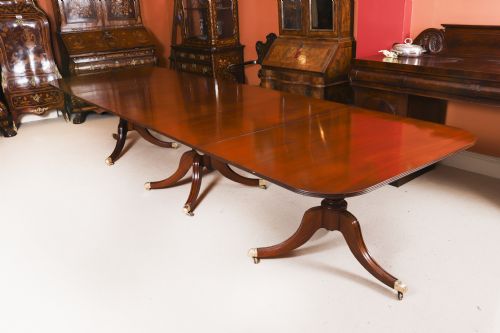


Splay Leg Dining Table
A splay leg dining table provides sturdy support and period character, bringing traditional dining forms into domestic spaces with lasting utility.
Splay Leg Dining Table
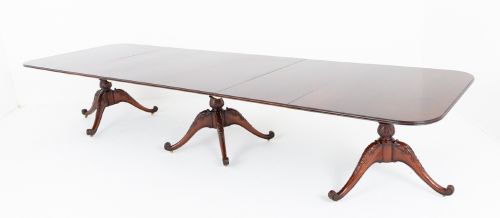
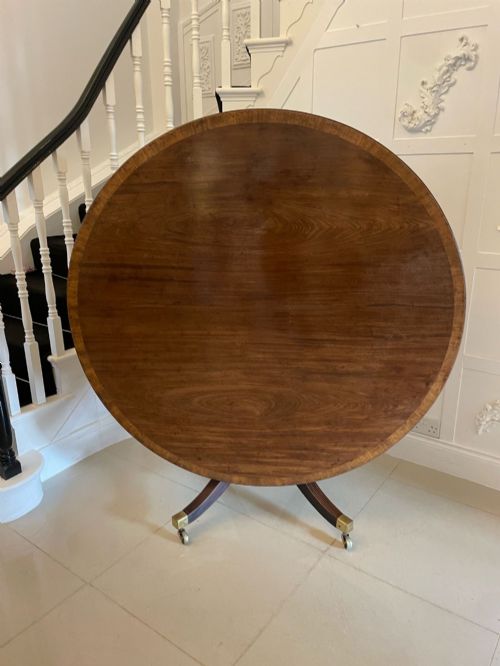
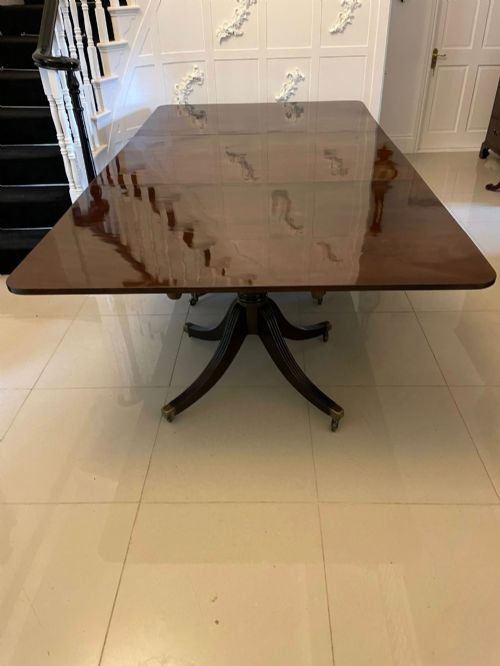
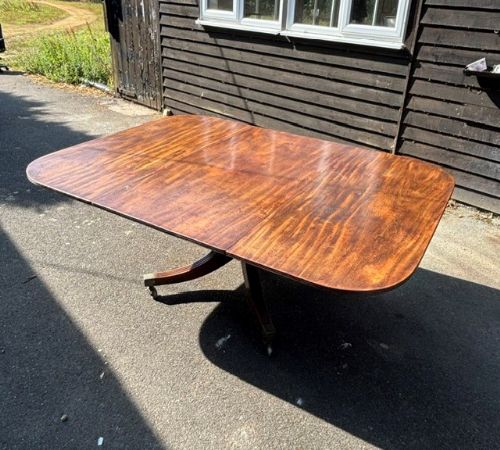
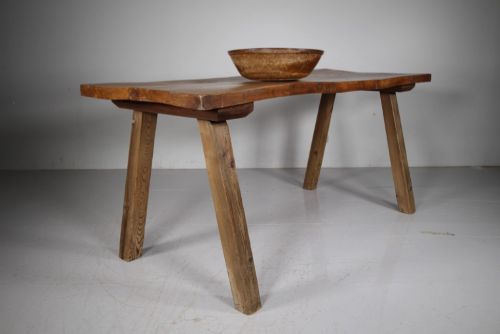
A splay leg dining table brings together formal dining pieces and smaller breakfast or centre tables spanning the Georgian, Regency, and later revival periods. Buyers searching for a splay leg dining table encounter mostly mahogany pedestal formats, alongside rustic elm and primitive vernacular examples from the early nineteenth century.
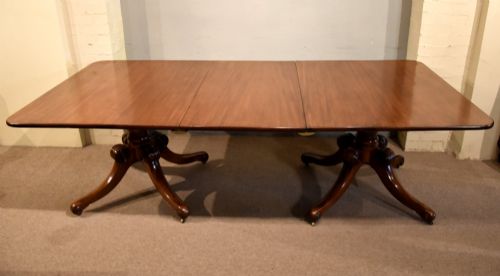
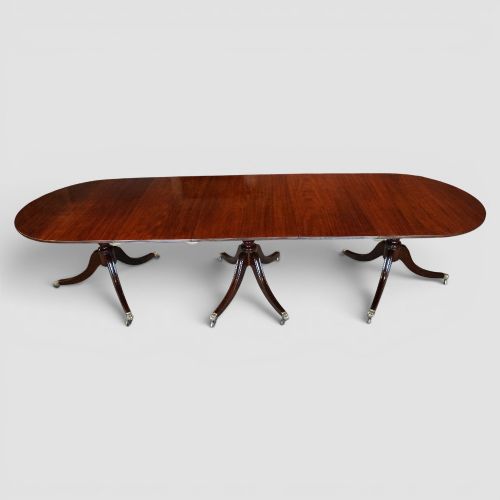
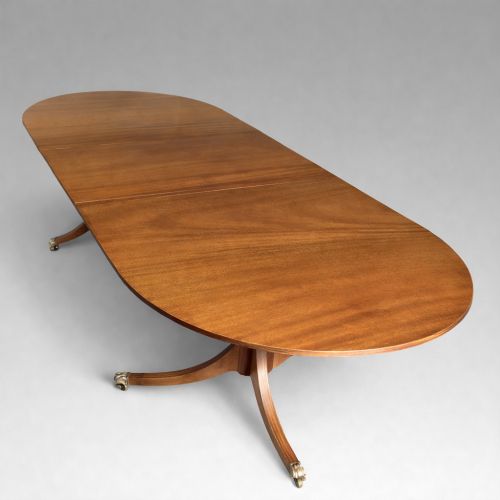
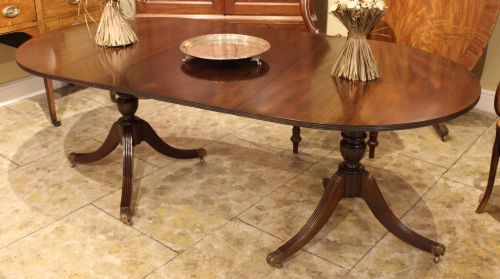
The selections range from compact circular breakfast tables seating six up to expansive triple-pillar extending tables accommodating ten to fourteen guests. These tables serve daily dining and occasional entertaining while maintaining historical proportion.
How they were made
Cabinet makers built these tables primarily using figured mahogany, Cuban mahogany, and elm, supported by subsidiary woods like pine and sycamore. Tops often feature decorative satinwood banding or fine satinwood inlay.
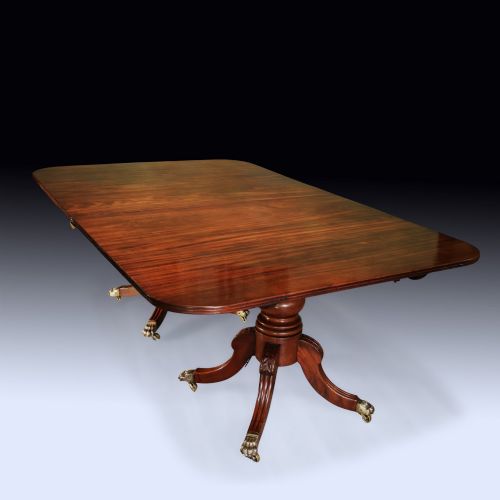
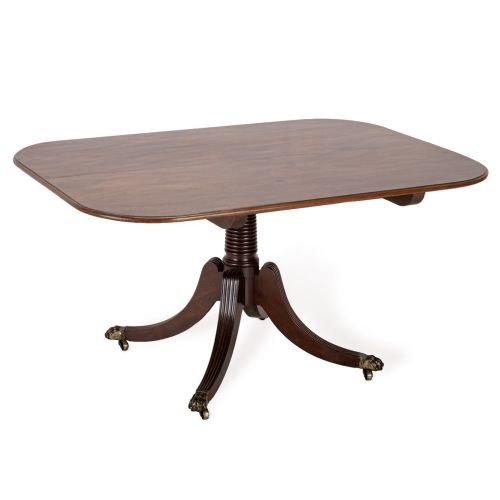
Pedestal formats rely on central turned pillars rising from splayed pillar legs, frequently fitted with brass castors for mobility. Pull-out mechanisms and extra leaves allowed larger tables to extend smoothly.
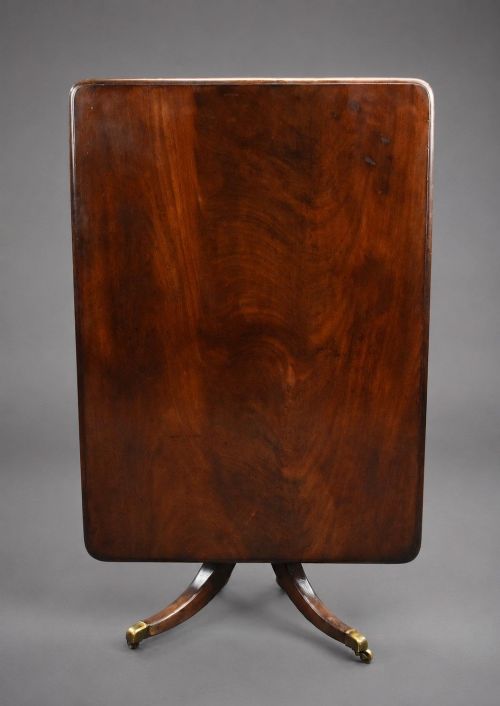
Tilt-top tables were often parked upright against walls like polite wooden shields when the parlour needed room for dancing.
What varies in quality
Quality rests in the choice of timber figure, such as richly grained figured or Cuban mahogany, and the crispness of turning on the central pillars. Finer examples display harmonious proportions between the top, the pedestal base, and the splayed legs.
Original brass fittings, subtle satinwood inlay, and smooth extending mechanisms separate the finer workshop productions from simpler provincial or later revival pieces.
Thomas Butler of London·Whytock & Reid·James Mein·Gillows
The Splay Leg Dining Table Glossary
- Splay leg
- Legs that angle outward from a central point or pedestal to provide stable floor support. This formation distributes weight effectively on pillar tables.
- Pedestal
- A central vertical column supporting the table top, often branching into splayed legs at the base. Multiple pedestals support longer extending dining tables.
- Satinwood banding
- A contrasting decorative border of pale satinwood inlaid around the edge of a darker mahogany top. This technique frames the timber grain.
- Tilt-top
- A mechanism allowing the table top to pivot to a vertical position when not in use. This design enabled tables to stand flat against walls to save floor space.
- D end dining table
- A modular dining table with semi-circular ends resembling the letter D. These sections detach or combine with central leaves to alter the table length.
Splay Leg Dining Table: Frequently Asked Questions
How do you seat guests around a pillar table?
Pillar tables use central columns rather than corner legs, which gives diners more freedom for legroom. Splayed feet provide a wide footprint to keep the table stable while seating several people.
Larger versions use two or three pedestals to support extended lengths. Adding extra leaves creates room for ten to fourteen guests without blocking chair placement.
What is a tilt-top breakfast table used for?
Tilt-top tables served morning meals or tea in smaller private rooms during the Georgian and Regency periods. The pivoting mechanism allowed the top to lock flat for use or tilt upright when not required.
This space-saving design let owners push the folded table against the wall of a parlour or library. Smaller circular formats functioned easily as centre tables between meals.
How do you date a mahogany dining table?
Dating relies on timber selection, structural joinery, and the style of the pedestal and legs. Early nineteenth-century pieces often feature solid Cuban mahogany and finely turned reeded pillars.
Revival pieces from the early twentieth century mimic these Regency and George III proportions. Inspecting the underside reveals construction methods and timber ageing consistent with specific eras.
Can these tables extend for large dinner parties?
Many multi-pillar tables include drop-in leaves and pull-out frames designed to expand the surface area. These extending mechanisms accommodate extra seating when hosting large gatherings.
When closed, the tables maintain compact proportions for daily use. Removing the leaves returns the surface to its original shorter footprint.