

Regency Twin Pedestal Table
A regency twin pedestal table brings formal dining presence and versatile extension to a room through balanced pillar supports and rich timbers.
Regency Twin Pedestal Table
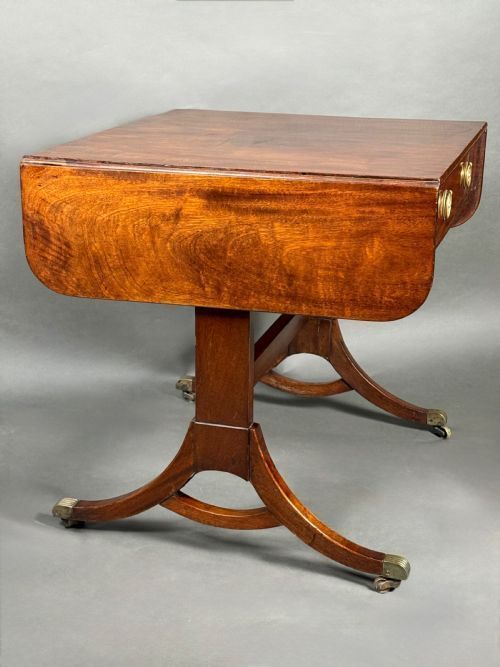
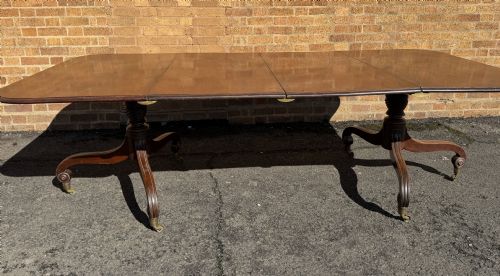
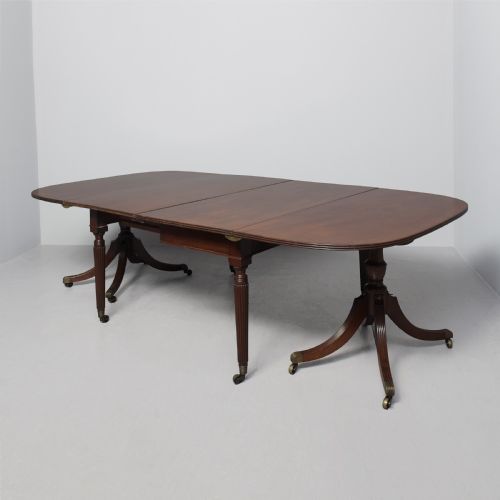
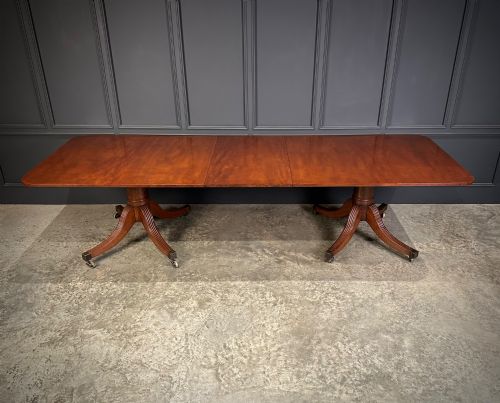
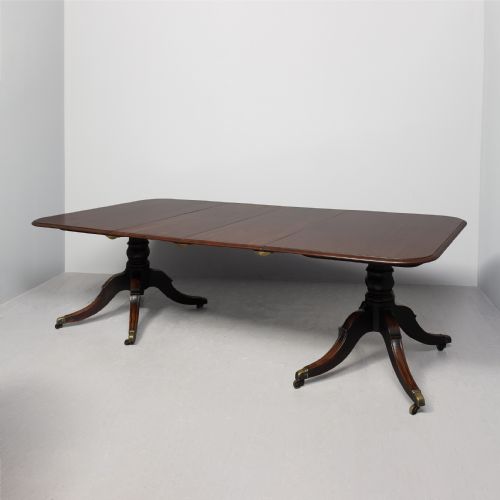
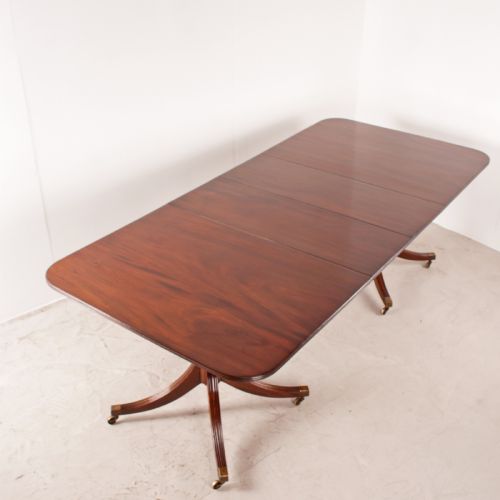
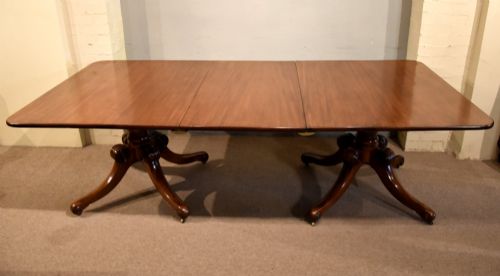
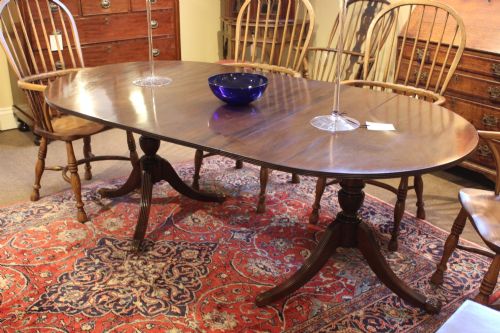
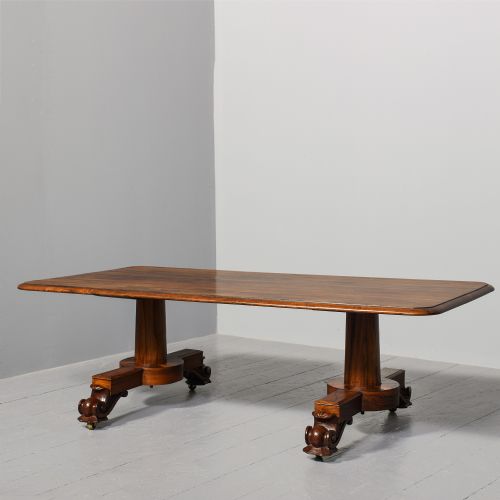
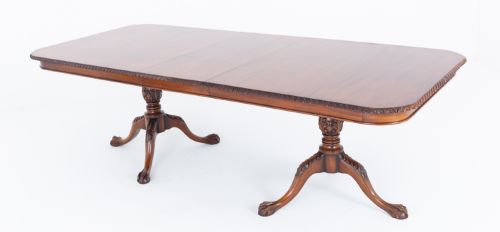
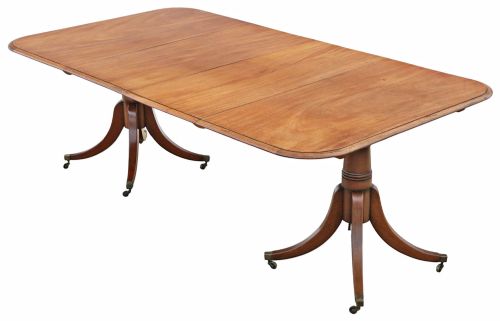
A regency twin pedestal table primarily takes the form of a dining table supported by two central pillars, frequently incorporating removable leaves for extension. These pieces span original period pieces from the Georgian, Regency, and George IV eras, alongside later revival iterations from the nineteenth and twentieth centuries.
Original pieces originate from the early nineteenth century, while revival versions reflect twentieth-century manufacturing periods. Buyers frequently encounter nineteenth-century examples alongside twentieth-century revival pieces modelled on earlier designs.
Materials and Construction
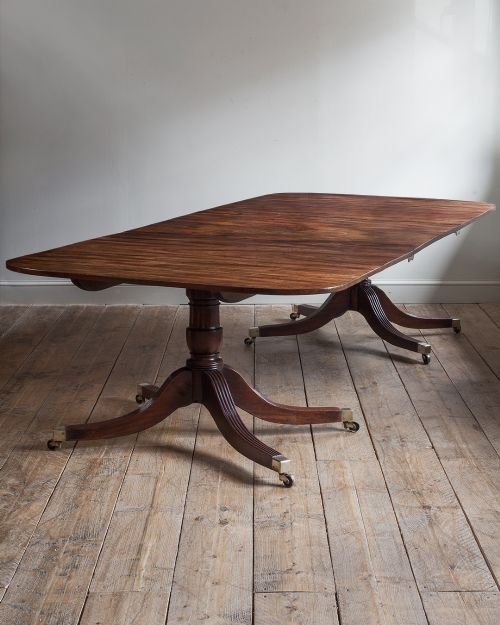
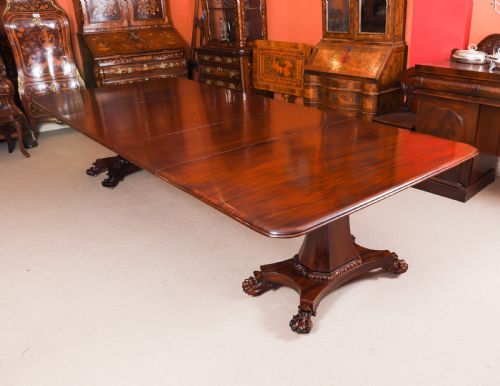
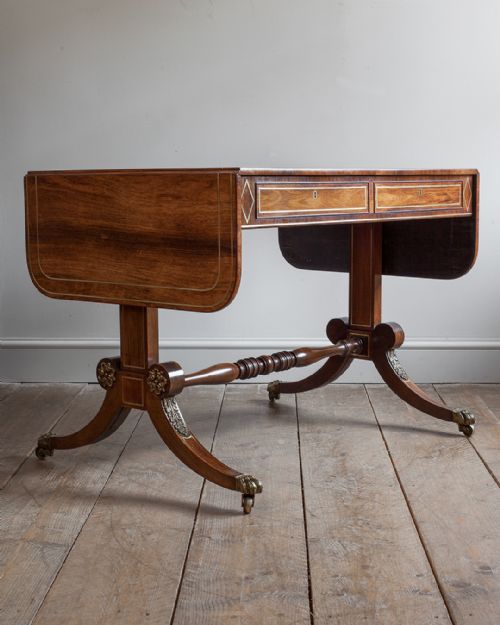
Construction relies heavily on mahogany, alongside rosewood, satinwood, and boxwood inlay for decorative contrast. Timber selection often includes flame mahogany to create distinctive grain patterns across the top surfaces.
Support systems utilise twin wooden pillars attached to split bases or pedestal feet fitted with brass hardware and glass elements. Tables incorporate drop leaves or extra removable leaves to alter the length for dining or library use.
Regency Twin Pedestal Table Retail Price Guide 2026
Typical asking prices for regency twin pedestal table among the pieces listed under this phrase on Sellingantiques today, from the lower quarter to the upper quarter. They describe what is for sale here now, not the wider market.
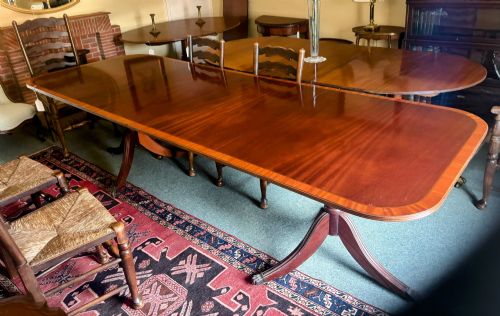
Some tables possess sixteen-seater capacities, ensuring guests sit far enough apart to require shouting across the mahogany.
Craftsmanship and Proportion
Quality separates through the selection of timber figures, such as figured mahogany or rosewood, against plain secondary woods. Superior examples display refined cabinet-making in the carving of the pedestals and the precise joining of the leaves.
Proportion and scale dictate the visual weight of the piece, where well-balanced pillars and smooth extension mechanisms define the upper tier of execution.
Gillows of Lancaster
The Regency Twin Pedestal Table Glossary
- Twin Pedestal
- A table design supported by two distinct vertical pillars rather than four corner legs. This configuration allows greater legroom around the dining seats.
- Flame Mahogany
- A veneer cut from timber where the branch junctions create a flamed or fire-like grain pattern. It provides high decorative impact on tabletop surfaces.
- D End
- A table end shaped in the form of a capital letter D, allowing multiple sections to lock together. These ends often detach to form separate side tables.
- Pedestal Foot
- The base structure resting on the floor beneath each pillar, frequently fitted with brass castors. They often feature multiple legs spreading outward for stability.
- Extra Leaf
- A removable timber panel inserted into the centre of an extending table to increase its length. These leaves allow the table to accommodate larger dining groups.
Regency Twin Pedestal Table: Frequently Asked Questions
How do I extend the table?
The table separates at the centre to allow the insertion of extra removable leaves. Pillars and pedestals shift apart on castors to support the added length.
Securing mechanisms underneath lock the leaves into place to maintain a stable surface for dining.
Where do I place a library table?
Library tables suit central spaces in a room rather than sitting flush against a wall. Their finished backs and compact twin pedestal proportions allow 360-degree access.
Pair them with freestanding chairs to create a functional workspace or reading surface.
How do I care for rosewood surfaces?
Rosewood requires dusting with a soft, dry cloth to protect the polished finish from abrasive particles. Avoid placing the timber in direct sunlight to prevent colour fading over time.
Applying appropriate wax polish occasionally maintains the natural lustre of the wood grain.
How do I distinguish original Regency from revival pieces?
Original pieces from the Regency and Georgian periods display period construction methods, timber ageing, and hand-cut joinery. Revival pieces from the twentieth century often use standardised fittings and modern adhesives.
Examining the underside of the table top and the pillar joints reveals the manufacturing era.