


.jpg)
Sabre Leg Dining Table
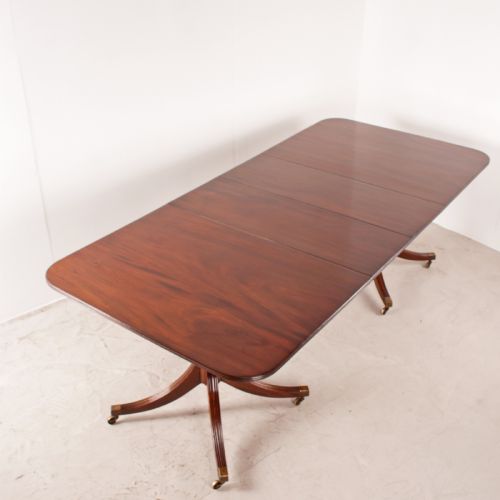
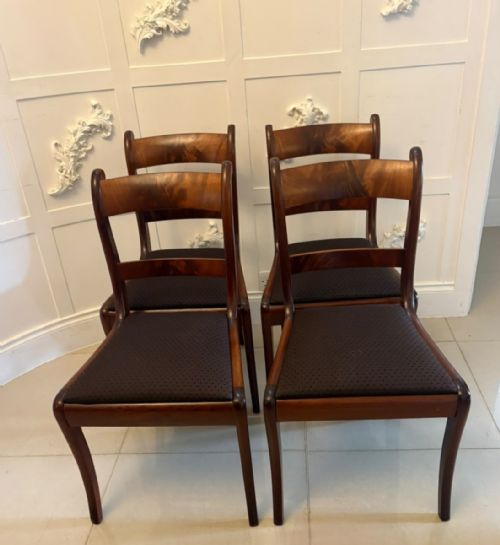
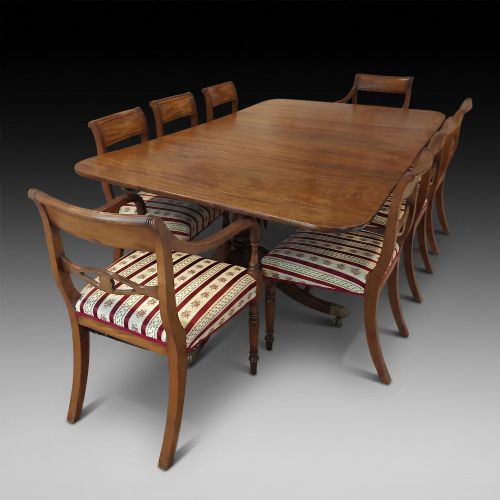
A sabre leg dining table brings genuine Regency character to a room, offering the sweeping curve of traditional supports alongside rich timber grain.
What these tables are
The sabre leg dining table spans classical forms from the nineteenth century, including the Regency period, Grand Regency style, Georgian eras, and later twentieth century interpretations from nineteen thirty. These pieces appear in forms ranging from compact tilt top breakfast tables to large extending twin and triple pedestal variants.
Buyers seeking a sabre leg dining table typically encounter twin pillar designs, breakfast tables, and Pembroke variants. The selection combines formal dining proportions with architectural timber pedestals and distinctive curved leg profiles.
Origins represented in the evidence centre upon nineteenth century craftsmanship alongside a single nineteen thirty revival piece. The forms remain consistent in their use of traditional pedestal configurations and robust dining surfaces.
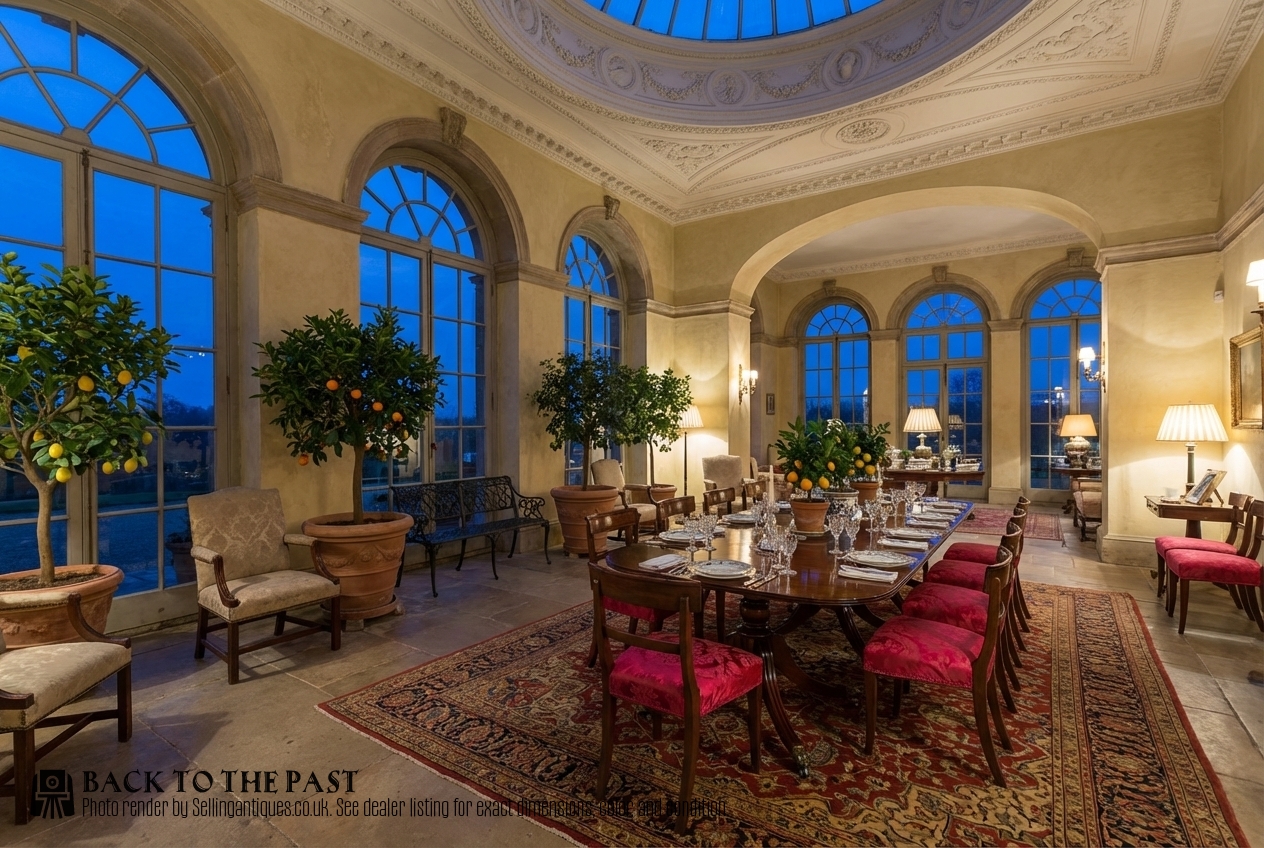
How they were made
Construction relies upon solid timbers such as mahogany and rosewood, frequently enhanced with crossbanded borders. Workshops selected these dense hardwoods for their durability and capacity to take a deep polished finish.
Metal components appear in the form of brass fittings, providing functional support and decorative contrast to the dark grain of the wood. Pedestal bases anchor multiple pillars to distribute weight evenly across the floor.
Retail Price Guide 2026
Typical UK retail prices for sabre leg dining table, calculated from the Sellingantiques database of over a million retail prices indexed since 2003. This retail price guide relies exclusively on Sellingantiques data; no external sources or auction records are used, so the figures do not describe the wider market.
The listings span the nineteenth century, Regency period, and nineteen thirty, utilising mahogany, rosewood, and brass.
What varies in quality
Quality reveals itself in the selection of timber veneers and the precision of the crossbanding along the borders. Superior examples exhibit tightly figured mahogany or rosewood grain that has aged with a deep, even lustre.
The architectural execution of the pedestal pillars and the grace of the curved leg supports separate standard production from finer workshop output. Robust construction at the joints ensures stability across large extending dining surfaces.
The Sabre Leg Dining Table Glossary
- Sabre leg
- A curved furniture support that tapers toward the foot, inspired by classical cavalry swords and characteristic of Regency design.
- Crossbanded
- A decorative border technique where veneer strips are laid perpendicularly to the main grain of the tabletop.
- Pedestal
- A central pillar or column supporting a table top, often dividing into multiple supports on larger dining formats.
- Tilt top
- A hinged mechanism allowing the tabletop to pivot vertically for storage or display when not in use.
Frequently Asked Questions
How do I care for a mahogany dining table surface?
Protect the polished wood by using mats for hot dishes and avoiding prolonged exposure to direct sunlight.
Maintain the finish with occasional applications of traditional beeswax rather than modern silicone sprays.
Are these tables suitable for everyday dining use?
The sturdy pedestal construction and durable hardwood materials make them well suited for regular family meals.
Using pads underneath table linen will help prevent accidental scratches on the antique polish.
What is the difference between a twin and triple pedestal table?
Twin pedestal versions use two vertical columns to support medium length dining surfaces effectively.
Triple pedestal variants incorporate an extra column to accommodate longer top sections for larger gatherings.
How can I identify a Regency period piece?
Look for characteristic architectural proportions, classical motifs, and timber choices like mahogany or rosewood.
Construction methods visible beneath the tabletop often reveal traditional joinery typical of nineteenth century workshops.