

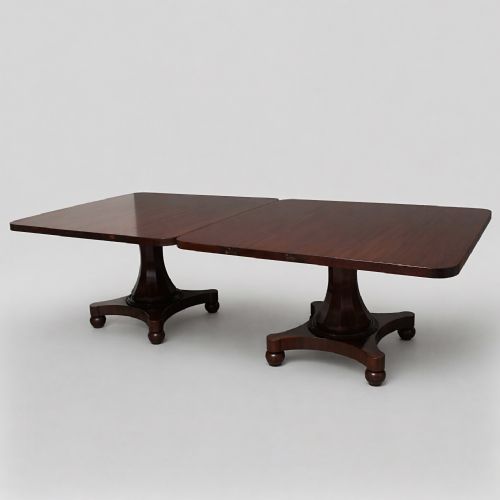


Double Pedestal Dining Table
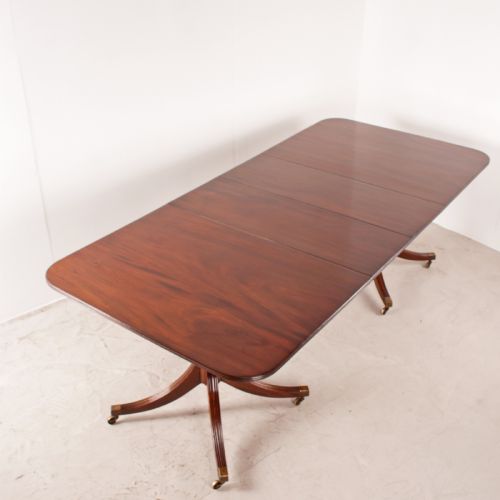
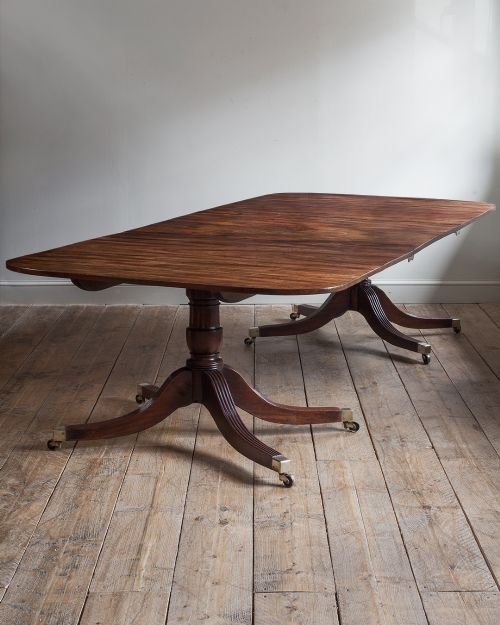
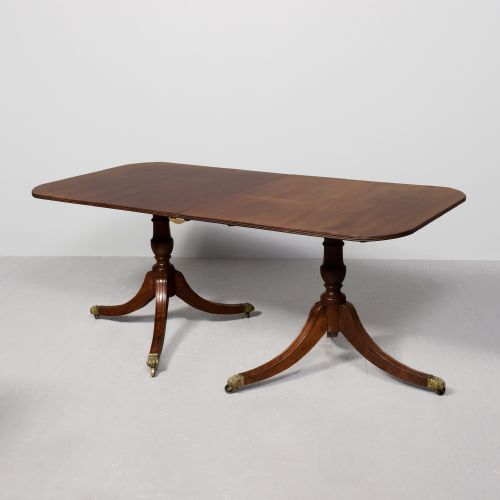
A double pedestal dining table offers a sturdy timber surface supported by two central pillars, making it a practical centrepiece for dining rooms.
Double Pedestal Dining Table
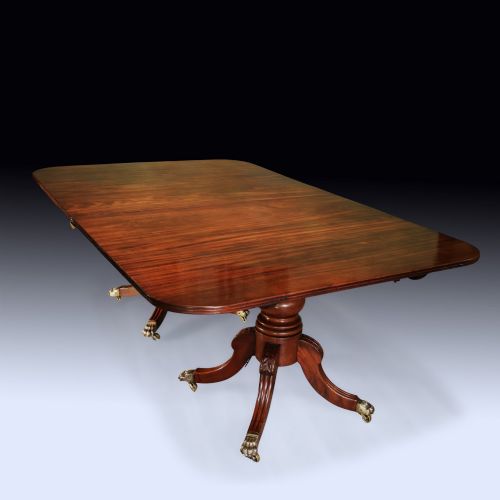
A double pedestal dining table consists of a long timber top supported by two distinct central pillars, providing ample legroom around the perimeter. These tables frequently appear from the Regency, George III, and Georgian periods, alongside later revival interpretations from the Edwardian era and the early twentieth century.
Most examples seen here are constructed from mahogany, sometimes featuring figured grains or Spanish mahogany variants. Many incorporate removable leaves to extend the surface length for larger gatherings.
The format accommodates seating arrangements ranging from compact setups to large sixteen-seater configurations. Twin pillar designs dominate the selection, offering a balanced silhouette for traditional dining spaces.
Materials and construction
Makers utilised mahogany as the primary timber, valued for its rich colour and dense grain that allowed for smooth polishing. Selected pieces incorporate figured mahogany veneers or Spanish mahogany to enhance the visual depth of the top.
Brass fittings, including castors fitted to the base of the pedestals, appear regularly to facilitate movement and protect the floor surfaces. Timber leaves were designed to be added or removed manually to adjust the table length.
Double Pedestal Dining Table Retail Price Guide 2026
Typical asking prices for double pedestal dining table among the pieces listed under this phrase on Sellingantiques today, from the lower quarter to the upper quarter. They describe what is for sale here now, not the wider market.
Some larger tables accommodate up to sixteen diners, requiring a small expedition just to pass the salt.
Judging quality
Quality rests in the selection of the timber, particularly where figured mahogany displays prominent grain patterns across the top and leaves. The proportions of the central pillars and the stability of the pedestal bases dictate the structural integrity.
Original period pieces from the Georgian and Regency eras differ from later twentieth-century revivals in their hand-finished joinery and timber ageing. The integration of matching leaves that align smoothly with the main table surface marks the work of skilled cabinet makers.
The Double Pedestal Dining Table Glossary
- Twin pillar
- An alternative descriptive term for a double pedestal table, where two vertical supports carry the weight of the top. This configuration replaced traditional four-leg formats to improve seating comfort.
- Pedestal
- The central vertical column supporting the table top, often branching into multiple feet at the base. It distributes the weight of the timber surface.
- Removable leaf
- An extra section of timber inserted into the centre of the table to extend its overall length. These can be taken out when fewer seats are required.
- Figured mahogany
- Timber featuring distinctive, decorative grain patterns caused by irregular growth. Cabinet makers reserved this material for prominent surfaces like table tops.
Double Pedestal Dining Table: Frequently Asked Questions
How do I add leaves to the table?
Leaves are separate timber sections that slot into the centre of the table when the top is pulled apart. They rest on internal alignment pins or runners.
Once positioned, the table winds or pushes back together to secure the extra surface firmly in place.
Will a double pedestal table fit my dining room?
These tables come in various lengths, often extended by removable leaves, so measuring your room dimensions is essential. Ensure you leave adequate clearance around the perimeter for chairs and movement.
The dual pillar design helps by removing corner legs that normally restrict seating placement.
How do I identify a Regency period table?
Regency tables typically date from the early nineteenth century and feature specific stylistic markers such as reeded edges or brass castors. They rely heavily on solid mahogany construction.
Later revival pieces from the twentieth century often emulate these exact design characteristics.
How do I care for a mahogany surface?
Mahogany responds well to regular dusting with a soft, dry cloth to prevent grit accumulation. Applying quality beeswax periodically helps nourish the timber and maintain its sheen.
Avoid placing hot dishes directly on the wood and keep the table away from direct heat sources to prevent splitting.