

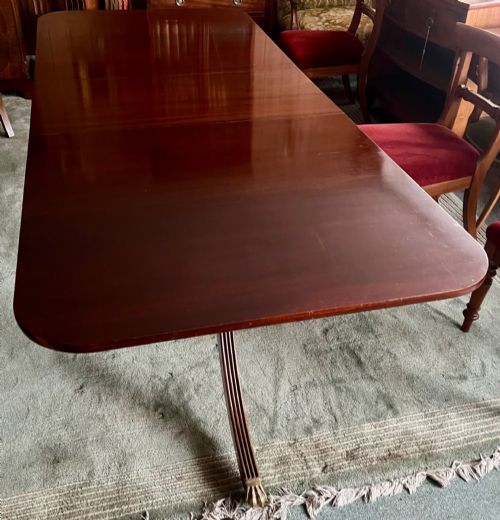
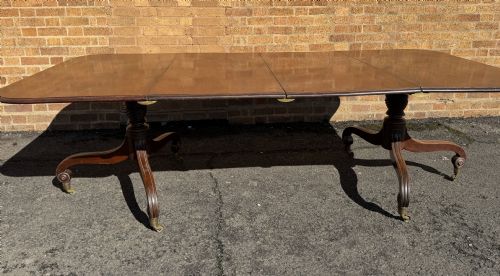
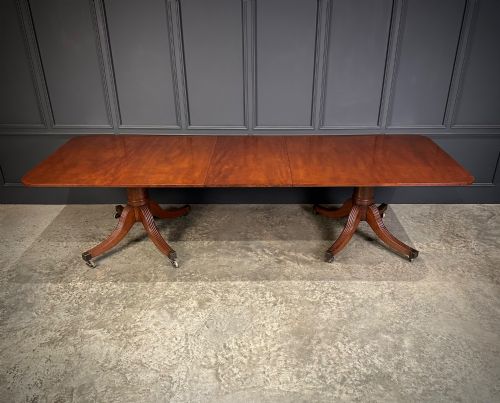
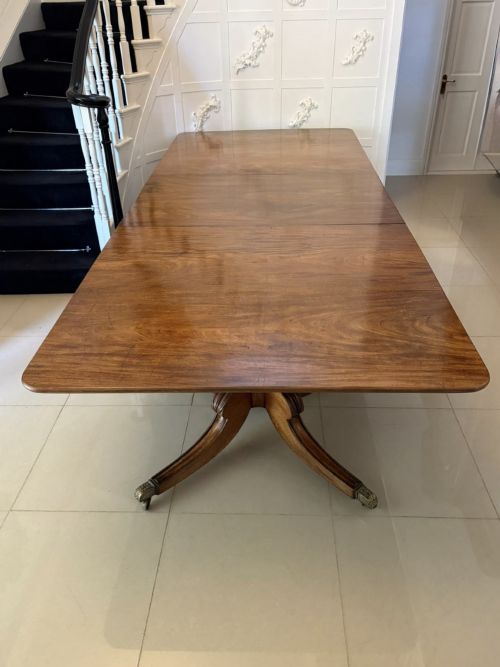

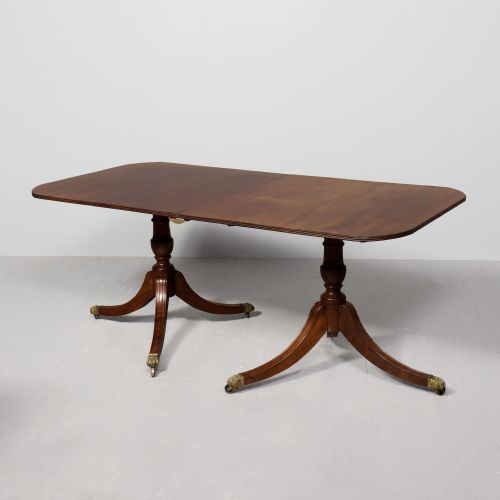


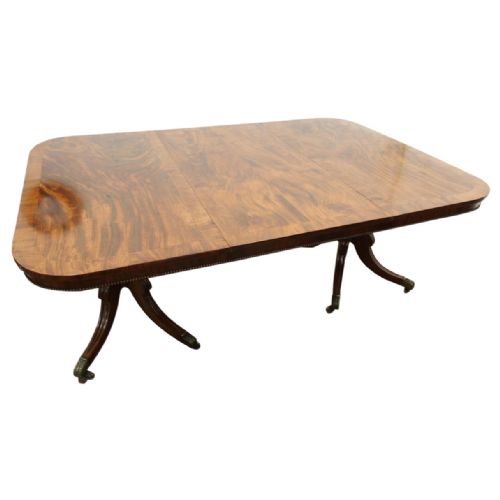

Twin Pillar Dining Table
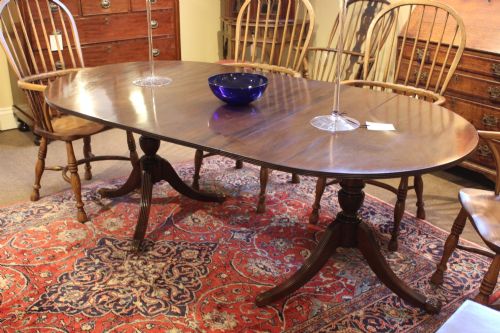
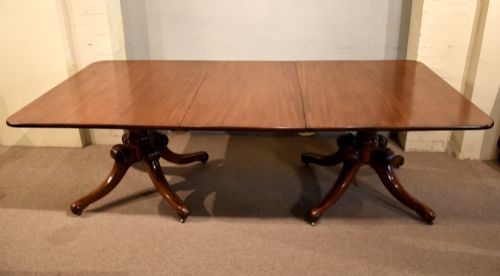
A twin pillar dining table offers a practical yet elegant arrangement for seating guests, defined by two pedestals supporting a substantial wooden top.
Twin Pillar Dining Table
A twin pillar dining table is a form of dining furniture supported by two central pedestals rather than traditional corner legs, allowing maximum legroom for seated diners.
The pieces seen on this page span from the Georgian, Regency, and George III periods through to Edwardian, 1920s, and 1930s revivals.
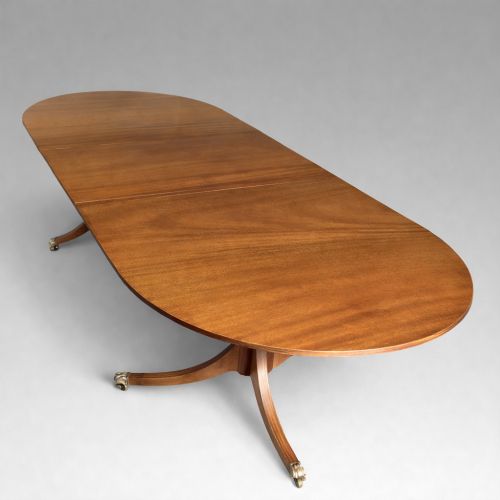
Examples frequently incorporate removable or extra leaves, making a twin pillar dining table adaptable for everyday family meals or larger gatherings.
How They Were Made
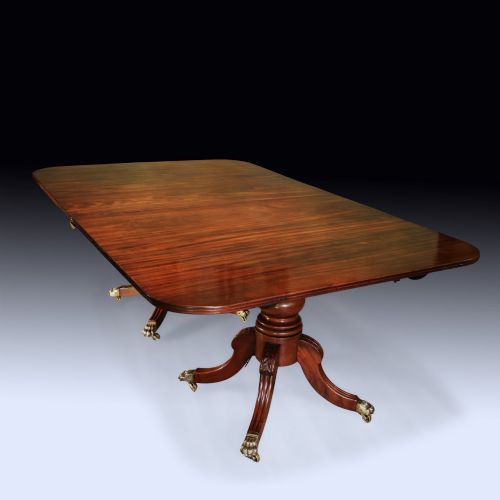
Makers constructed these tables primarily using mahogany, selected for its rich grain, strength, and durability over centuries of use.
Brass castors and fittings frequently appear on the feet of the pedestals, aiding mobility and protecting the timber.
Twin Pillar Dining Table Retail Price Guide 2026
Typical asking prices for twin pillar dining table among the pieces listed under this phrase on Sellingantiques today, from the lower quarter to the upper quarter. They describe what is for sale here now, not the wider market.
Some tables were built large enough to accommodate sixteen guests, requiring sturdy pedestals to support spirited Victorian banquets.
What Varies in Quality
The distinction between standard and exceptional pieces rests in the figuring of the mahogany timber and the crispness of the pedestal carving.
Earlier period examples from the Georgian and Regency eras demonstrate superior cabinetmaking techniques compared to later revivals.
William Trotter
The Twin Pillar Dining Table Glossary
- Pedestal
- The central upright support of the table, often dividing into three or four splayed legs. This design replaces traditional corner legs for greater seating flexibility.
- Leaf
- A removable section of timber inserted into the centre of the table to extend its length. Leaves allow the furniture to expand for larger dinner parties.
- D End
- A semi-circular end section of a dining table shaped like the letter D. When separated, these ends can function as console tables against a wall.
- Figured Mahogany
- Wood grain with distinctive patterns such as flame or curl, highly prized for its decorative appearance on table tops.
- Castor
- A small wheel attached to the base of the pedestal legs. They permit the heavy table to move smoothly across floor surfaces.
Twin Pillar Dining Table: Frequently Asked Questions
How do I use extension leaves?
Extension leaves slide into the centre of the table when the two main pedestals are pulled apart. They are secured with internal brass clips or wooden pins.
Storing leaves flat in a dry room prevents warping and ensures they fit snugly back into the table when guests arrive.
Are these tables good for small spaces?
The pedestal design allows chairs to tuck neatly underneath without corner legs obstructing the seating. This makes them surprisingly versatile in compact dining rooms.
Removing the extra leaf reduces the overall length for daily use while retaining the formal silhouette.
How do I care for mahogany surfaces?
Mahogany responds best to regular dusting with a soft dry cloth and occasional applications of natural beeswax. Avoid placing hot dishes directly on the polished wood.
Keeping the table away from direct sunlight and radiators prevents the timber from drying out and cracking over time.
How can I tell a Regency table from a revival?
Original Regency pieces display the construction methods, timber patination, and wear consistent with the early nineteenth century. Revival versions from the 1920s or 1930s often show cleaner internal joins and different secondary woods.
Examining the underside of the table top and the brass castors helps reveal the true age of the piece.